Why owners drop a different engine into a car, what the work involves, what insurers and inspectors say, and how electric conversion and tuning change the picture.
Owners swap engines mainly for more power or easier maintenance, but the work can upset weight distribution, brakes and suspension, and insurers and inspectors may object. Electric conversions replace the engine with a motor and batteries, costing around 6,000 pounds as of early 2021, while tuning adjusts what the engine already has.
American tuners like to say that the quickest route to more speed is a bigger engine under the bonnet. That is true as far as it goes, and it stops short of the bills that follow: brakes that no longer cope, an insurer that raises the premium or walks away, an inspector who will not pass the car. Whether the new power comes from a bigger engine or from batteries and a motor, the swap brings consequences well beyond the engine bay.
Why do owners swap engines?
An engine swap means taking out a car's original engine and fitting another. The replacement may be like-for-like or something the factory never offered. Most swaps chase performance with a more powerful unit, but there is a second motive that suits older cars: where the original engine has become short of spare parts, a different one is simply easier to keep running.
Economy drives another branch. Moving to a diesel for better fuel consumption is a long-established practice, and modern high-efficiency diesels mean it no longer necessarily costs performance, as older diesel swaps did. Off-road vehicles gain most, because turbo-diesels deliver high torque at low revs. Older diesels without electronic injection keep a name for reliability, especially in wet conditions.
Racing has used the idea too. Before the Class 1 regulations arrived, Super GT's GT500 class let teams fit any unit into a car, provided it came from the same manufacturer. Most cars therefore ran specially modified racing engines, and Toyota fitted highly tuned four-cylinders sourced from the Celica into its Supra GT500 racers.
The engine is the easy part. Brakes, suspension, insurers and inspectors decide whether a swap works.
What does an engine swap involve?
Everything depends on whether the engine was meant for the car. Fitting another engine that the maker intended for that model is far simpler than dropping in something entirely different. Squeezing in an engine the car was never designed to accept is slower and costlier work. Either the car is modified to take the engine, or the engine is modified to suit the car, and builders usually have to make custom engine mounts, transmission bell housing adaptors to join engine to gearbox, and a custom driveshaft.
The consequences reach beyond the engine bay. A swap can damage safety, performance, handling and reliability. A new engine that shifts the weight distribution or adds overall weight will upset vehicle dynamics, and the existing brakes, transmission and suspension may prove inadequate for the extra weight and power, which means either upgrades or premature wear and failure. Even the headlights or gauge cluster can be hard to persuade to work with the new engine.
Insurance, registration and the engine swap legal question
Paperwork is where many projects stall. Insurance companies may charge more, or refuse to cover a vehicle whose engine differs from its original configuration. Registering the car and getting it through government-mandated safety inspections can also be harder. Where smog rules are strict, as in California, a late-model car with a swapped engine may be impossible to register.
Which engines do people swap in?
| Family | Engines named | Typical destination |
|---|---|---|
| General Motors V8 | LS-based small-block; earlier small-block and big-block Chevrolet V8s | Cars from many makers |
| Ford V8 | 302 and Coyote | Light sports cars such as the MGB |
| British and Buick-derived V8 | Buick and Oldsmobile V8 of 215 cu in (3.5 L); Rover V8s of 3.5L, 3.9L and 4.2L; Morgan-licensed V8 | MGs, Triumphs and Sunbeam Alpines of the late 1960s and early 1970s |
| Honda | B-series (B16A, B16B, B18C, B18C5), K-series, J-series V6 | Civic and Integra |
| Toyota | 1JZ and 2JZ inline sixes, UZ V8 | The 1JZ and 2JZ rank among the most swapped Japanese engines |
| Nissan and Mazda | SR20DET four, RB sixes, 13B rotary | A variety of platforms |
| Subaru | EJ, including factory turbo versions | Vintage Volkswagens |
| Volkswagen | Type 2, 3 and 4; GTI 16-valve four, VR6, 1.8T | Type 1 Beetle; Mk2 Golf GTI, Jetta and Corrado |
| Porsche | 1.6L flat-four from the 356 | Popular as a source engine in the Volkswagen scene |
The LS swap and other American V8s
The LS swap fits a small-block V8 from General Motors' LS family into a car that never had one, or had a different version of it. Many consider it among the most popular swaps in America. Before the LS arrived, owners put small-block and big-block Chevrolet V8s into a long list of cars, and Ford V8s such as the 302 and the Coyote are favourites too.
Weight explains the appeal. Give a 302 aluminium heads, intake and water pump and it puts roughly 40 lb (18 kg) more over the front wheels of an MGB, yet it is substantially more powerful, and lighter, than the iron-block six in the MGC or Triumph TR6. Performance blocks for the 302 in aluminium are 60 lb (27 kg) lighter again than the usual iron ones and come in 331 cu in (5.4 L) and 347 cu in (5.7 L) sizes, but they cost significantly more.
British sports cars have a long swap history. The makers did it themselves with the Sunbeam Tiger and the MGB GT V8, and the traditional aftermarket choice has been the Buick and Oldsmobile all-aluminium V8 of 215 cu in (3.5 L). Rover V8s of 3.5L, 3.9L and 4.2L, derived from that General Motors design, are frequent substitutes, and all three of the Buick/Oldsmobile, Rover and Morgan-licensed engines fit with little fuss.
In the 1980s Chrysler sold many turbocharged models whose engines had much in common with the naturally aspirated ones built in volume. Dropping a Daytona engine into an Aries is quite common, and Mopar Performance even sold a kit that made the Daytona rear-wheel drive with a Mopar V8. Newer 60-degree Ford and GM V6s, GM's 3.4L L32 among them, take up less room than the big V8s but usually cannot match the power-to-weight ratio of the 90-degree V8s that owners fit to smaller cars. They can be very cost-effective, though, and easier to fit.
Japanese and European favourites
Honda owners reach for B-series engines, such as the B16A of the sixth-generation Civic Si, the B16B of the Type R and the B18C and B18C5 of the third-generation Integra, as well as K-series engines and, more recently, the larger J-series V6. The Toyota 1JZ and 2JZ inline sixes rank among the most swapped Japanese engines, and the Toyota UZ V8 is a relatively common swap too. The Nissan SR20DET four, the RB sixes and Mazda's 13B rotary are all swapped into many different platforms.
Volkswagen owners swap within the family. Type 3, Type 4 and Type 2 (Bus) engines often end up in the Type 1 Beetle, while water-cooled units from later cars, the 1.8T, the VR6 and the GTI 16-valve four, are fitted to the Corrado, the Jetta and the Mk2 Golf GTI, and less often the Mk1 Golf. Even lightly modified, they give an excellent power-to-weight ratio. Vintage Volkswagens also take well to the Subaru EJ, and Porsche's 356 contributes its 1.6L flat-four, among the most popular source engines of all.
How does an electric car conversion work?
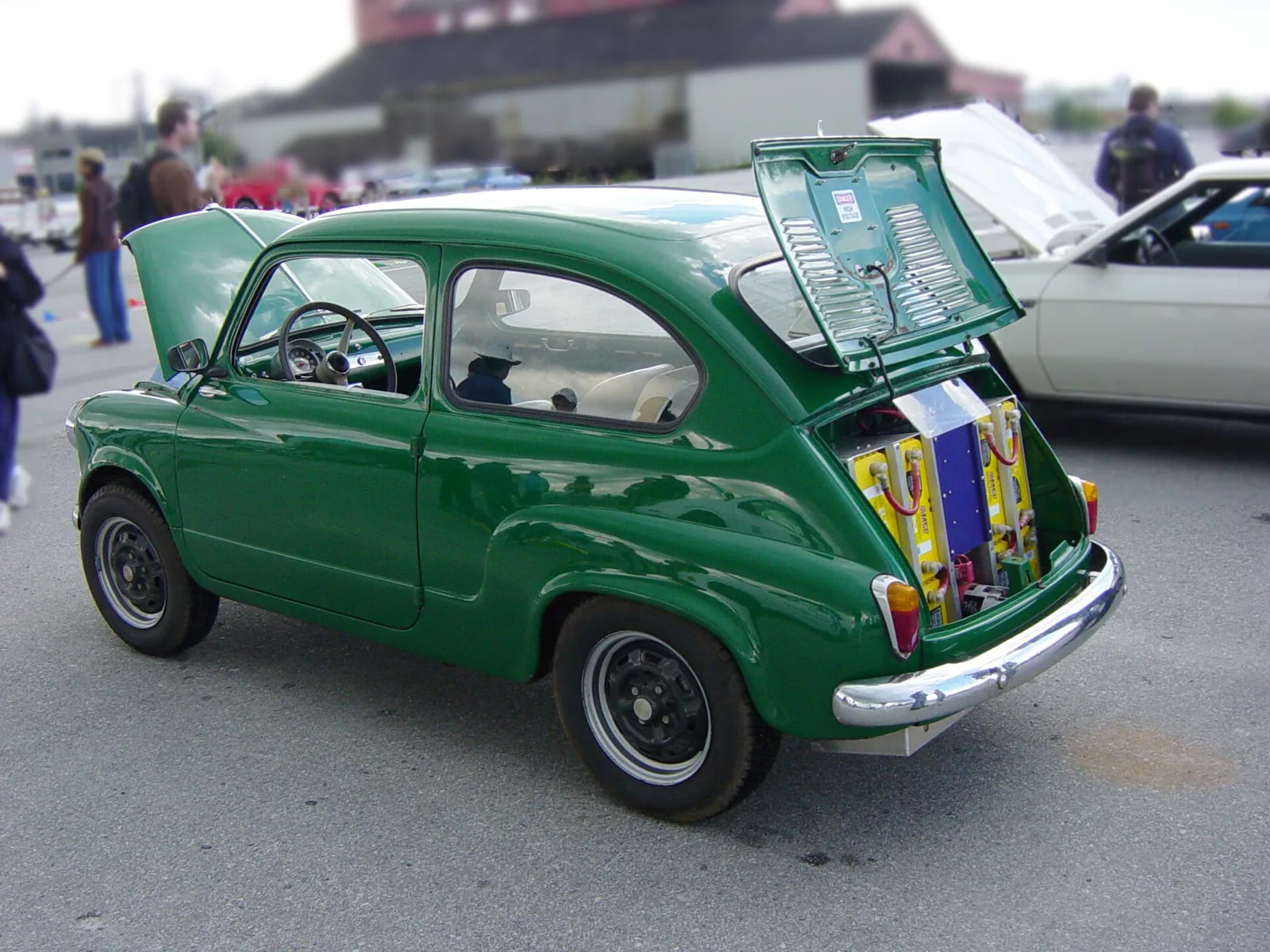
Electric vehicle conversion replaces the combustion engine and its connected parts with an electric motor and batteries, creating a battery electric car. The process starts with a donor car, whether petrol, diesel or hybrid. Out come the engine, fuel tank and gearbox, and in go an electric motor, batteries and an inverter. A hybrid donor can keep its driveshaft, since that was already designed to work with electric batteries and power delivery.
A typical conversion uses 10 main components. A battery pack supplies the power under a battery management system, a motor controller feeds the electric motor, and an onboard charger refills the pack. A DC-DC converter, a contactor and high-voltage junction box, a Hall-effect throttle, a thermal management system and a wiring harness with high-voltage cabling complete the set.
Almost any vehicle can be converted, but many people pick one that is light and aerodynamic to stretch the distance per charge, with room and load capacity for the batteries. The cheapest and most widely available cells are flooded lead-acid, followed by sealed AGM, nickel metal-hydride and lithium-ion. Batteries for conversions are often recycled from new electric vehicles that were involved in a traffic accident.
The electric version of a swap has become a category of its own. EV swaps pull the combustion engine and running gear from a car and fit one or more electric motors with a battery pack in their place, and the electric hardware frequently comes from a Tesla or another electric car that is easy to find. Several companies have been founded to offer conversions of classic cars, and some specialise in particular models such as the VW Beetle, Rolls-Royce and Jaguar.
Why convert at all?
There are two main aims. The first is to eliminate tailpipe emissions from vehicles already on the road. The second is to reduce the waste produced as cars reach the end of their lives, since older cars and accident write-offs usually go to the scrapyard, where they yield a lot of metal, plastic and fabric waste and need plenty of energy to recycle.
Price matters as well. Batteries and motors have become cheaper in recent years, and what a conversion costs hinges on several factors, including the range wanted and the cells chosen. As of early 2021, a petrol, diesel or hybrid car could be turned into a battery electric one for around 6,000 pounds (8,300 dollars). Brand-new electric cars still cost more than combustion equivalents, so conversion offers a more affordable route for many, and the industry has widened beyond classic and high-end cars.
A short history of the electric conversion
The work began with hobbyists. Among the earliest commercial converters was U.S. Electricar, founded in the 1970s to sell electrified versions of ordinary cars on lead-acid batteries. Solectria offered the Force with lead-acid cells, and its longer-range premium versions used nickel metal-hydride.
Lithium iron phosphate changed the economics. In 2008, several Chinese manufacturers began marketing LiFePO4 cells directly to hobbyists and conversion shops, and the better power-to-weight ratio meant a typical conversion could cover a range of 120-240 km (75-150 mi) from each charge. By mid-2009 prices had drifted down to roughly 350 US dollars per kWh. The cells carry a rating of 3,000 cycles against about 300 for typical lead-acid batteries, which works out at a life of around 10 years, though they call for dearer battery management and charging systems.
What holds the industry back
The biggest barrier is supply. Carmakers are reluctant to sell their technology for this purpose, so an open source community grew up beside the industry to get batteries and motors from different makers working in unison, cutting costs and easing shortages. Training matters too. Organisations such as New Electric Ireland run programmes that teach mechanics and hobbyists how to carry out conversions.
Firms in the sector have cooperated with regulators in several countries to agree safety protocols, so that the annual inspection of a conversion follows the same method as for any other electric vehicle. European rules require the converted car to keep the curb weight of its donor, and a vehicle safety engineer must assess the finished car before road use. In some countries buyers can pick a converted model of almost any make from a dealership, paying only for batteries and motor with no installation cost, an arrangement called pre-conversion.
Registering a converted car
In the United States, registration rules differ from state to state. Some demand safety inspections, usually aimed at body integrity where winter road salt causes severe corrosion, and all working safety equipment must function. A vehicle rebuilt from a salvage car may face a stricter inspection, and the process is usually harder where emissions rules are strict. Re-registering can, however, qualify a conversion for tax incentives offered in some states, Oregon among them, covering the vehicle, the charger or both. California makes provision to inspect electric conversions and exempts electric vehicles from emissions control inspections. Spain regulates what it calls transformation under Real Decreto 866/2010.
What does tuning change along the way?
Engine tuning means adjusting or modifying the engine or its control unit to improve power, economy or durability. Those goals can pull against each other, so an engine may be de-tuned in power in return for better economy or a longer life under less stress.
Remapping
The simplest stage one tuning is remapping, done mostly on turbocharged cars that have a modern engine control unit. Almost all modern vehicles carry one, mainly supplied by Bosch or Delphi Technologies, and its firmware sets the balance between fuel consumption, power, torque, emissions, reliability and service intervals. Many factory configurations do not put maximum power first, so a remap can sometimes raise performance.
Makers often fit one engine across a range and load different firmware versions, called maps, to separate the models by power. A specialist reads the original firmware through the on-board diagnostics port and moves fuel injection, boost, fuel-rail and fuel-pump pressure and ignition timing within limits meant to protect reliability, fuel consumption and emissions. The edited file is written back and the engine is tested for performance, smoke and any problems. Fine-tuning follows the feedback. Remapping may raise the temperature of the exhaust gases.
Performance tuning
Performance tuning prepares an engine for motorsport, although many such cars are built only for show or leisure. The engine must be strong enough for the extra stress, and the transmission, driveshaft and other parts that carry the load may need modifying to withstand the extra power.
The list of techniques is long. Owners can enlarge displacement by boring the cylinders or fitting a crankshaft with a longer throw, swap in a bigger or faster-opening throttle body, or use larger or multiple carburettors. Larger or more numerous valves, wider manifolds and ported cylinder heads keep the gases moving. More cam lift and optimised valve timing improve burning, though usually by raising power in one rev range at the expense of others. A higher compression ratio makes better use of cylinder pressure but can cause knock unless high-octane fuel is used. A turbocharger or supercharger packs more air in, and an intercooler removes the heat that compression adds. Nitrous oxide, E85, methanol and race fuel help in other ways, while lighter rotating parts and lower friction sharpen response.
The choice depends on the performance wanted, the budget and the engine itself. Intake, exhaust and chip upgrades usually come first, since they cost least and bring broad gains, while a camshaft swap trades low-speed smoothness against high-speed gain. Chip tuning works because engines are designed with more power in hand than they need, and the management system holds it back so the engine runs smoothly over a wide rev range with low emissions. That practice is called de-tuning. It makes for long-lasting engines and leaves room to raise output later for facelift models, and engines are now often de-tuned to hit a particular carbon output for tax reasons.
Where this goes next
The trend lines point one way. With the rise of electric vehicles, EV swaps have grown in popularity, and the conversion industry has gone from an activity for hobbyists and enthusiasts to a rapidly growing business of garages, aftermarket kits and components. Prices have fallen and demand has risen for affordable conversions alongside high-end ones, and the industry has been spurred on by the climate crisis and the shortfall in new EV availability. The supply of batteries and motors remains the biggest barrier.