How shared floors, axles and drivetrains let automakers launch many models from one engineering base, and why a recall can spread just as far.
A car platform is the shared underbody, suspension and drivetrain layout that several models use, sometimes across related brands. Automakers use platforms to cut development and parts costs and to build distinct cars on a common base. The trade-off is less differentiation and a larger recall risk if a fault is shared.
A car platform is a shared set of design, engineering and production work, along with major components, used across several models and sometimes across different marques. Automakers use platforms to lower the cost of developing new products by building many cars on a smaller number of underpinnings. The same base can wear several distinct bodies and badges.
What does a car platform include?
A platform is the underbody and suspension of a vehicle, covering the front and rear floors, the engine compartment, frame reinforcement, the axles and the distance between them. It also settles the steering type, the suspension layout and where the engine and other powertrain parts sit.
A platform is not the same thing as a platform chassis. The older term described a flat frame of heavy sheet metal, a semi-monocoque structure that could be adapted to other models without a fresh design.
Sharing always involves a trade-off. Companies gain from lower procurement costs and common development, but each shared component limits how different the products can look and feel. Managers must decide how much distinctiveness they are willing to give up for the savings.
One platform can carry a hatchback, a sedan and a minivan, but every shared part also carries a shared risk.
How do shared platforms work across models?
Platform sharing places the same core components under different vehicles. With structural equality, only the badge, the front styling, the fuel tank and the lights differ, and the rest is common, often built on one assembly line. Other arrangements share the same fixation points, so different bodywork bolts onto one base.
Engineers divide the remaining parts into head parts and system parts. Head parts, such as bodywork and fuel tanks, can vary a great deal between models. System parts, sometimes called carry-over parts, are replicated and adapted, with wheels and chassis components often identical apart from small details such as model symbols.
The chassis and drive unit form the fundamental shared core. The degree of sharing decides how similar the models feel to drive and how easily a component can be swapped between them.
Who first shared platforms?
General Motors was one of the first car companies to use this approach, applying a single chassis to a class of models across Chevrolet, Buick, Pontiac and Oldsmobile in 1908. Chrysler and Ford later followed the same principle for their own brands, with exterior styling and interior trim designed for each brand.
The chassis was common, with many shared mechanical components, while styling and trim reflected each brand and category. Chrysler used the idea for Plymouth, DeSoto and Dodge, and Ford applied it to Ford and Mercury in US markets.
Which platforms became well known?
Some of the best-known early platform chassis were the Volkswagen Beetle, Renault 4 and Citroen 2CV, all built on heavy sheet metal frames. Their flat structures were easily adapted, so the Karmann Ghia, the Renault 6, the Renault Rodeo, the Citroen Ami and the Citroen Dyane all followed on the same bones.
In the United States, platform sharing has been common since the 1960s. General Motors used one platform for the Pontiac LeMans, Buick Skylark, Chevrolet Chevelle and Oldsmobile Cutlass. In the 1980s Chrysler's K-cars all wore a K badge to show their shared base, and that platform was later stretched in wheelbase for several models.
General Motors' J platform debuted in mid-1981 across four divisions, and the A bodies that followed reused its tread width and wheelbase with larger bodywork. The Cadillac Cimarron was a much more dressed-up version of the J body, and it became a cautionary example of an economy base wearing a premium badge.
How has platform sharing changed in recent years?
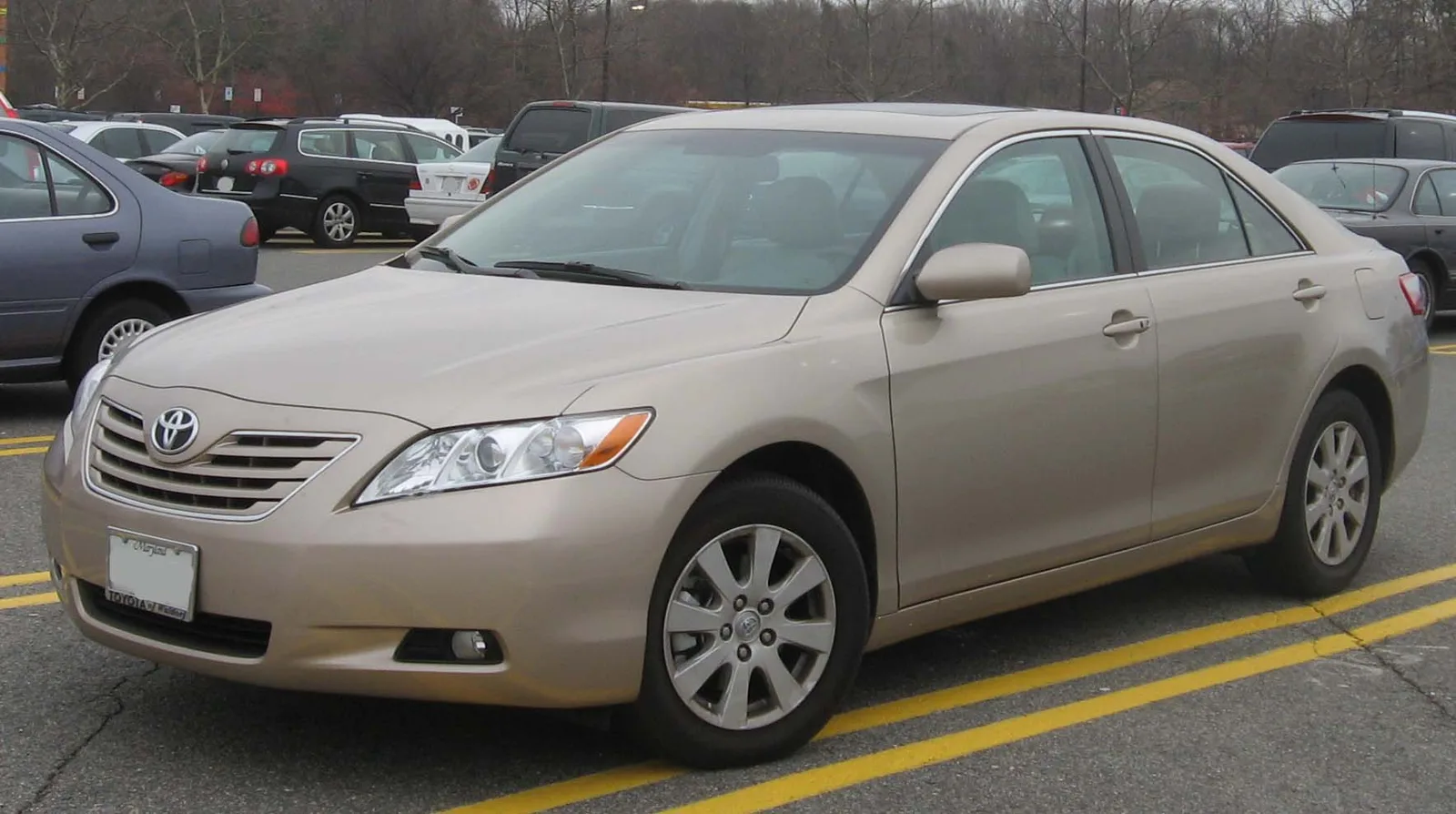
Japanese carmakers have applied the practice to their premium marques, so entry-level luxury models often sit on mainstream platforms. The Lexus ES is essentially a rebadged Toyota Camry, sharing its blueprints and assembly line, with a higher price attached to a premium badge.
Differences between shared models usually lie in styling, including headlights, tail lights and front and rear fascias, along with engines and drivetrains. Sharing is less visible now because most of it sits under the skin. Nissan's FM platform, for example, underpins both the 350Z sports car and the Infiniti FX SUV.
Volkswagen's A platform carries the sporty Audi TT and the economy-focused Volkswagen Golf, and the Chevy Trailblazer and Chevy SSR both use the GMT-360 architecture. Toyota and the Volkswagen Group have each built many well-differentiated vehicles from a small number of bases.
| Shared base | Models sharing it | Notable detail |
|---|---|---|
| General Motors single chassis | Chevrolet, Buick, Pontiac, Oldsmobile | One chassis across brands from 1908 |
| Platform chassis | Volkswagen Beetle, Renault 4, Citroen 2CV | Heavy sheet metal flat frame |
| GM J platform | Four divisions, including Cadillac Cimarron | Debuted in mid-1981 |
| Nissan FM platform | Nissan 350Z and Infiniti FX | Sports car and SUV on one base |
| Volkswagen A platform | Audi TT and Volkswagen Golf | Sporty and economy models |
| GMT-360 | Chevy Trailblazer and Chevy SSR | Largely invisible to buyers |
| Toyota Camry base | Lexus ES | Rebadged with premium trim |
What are the benefits of platform sharing?
Platform sharing reduces the number of parts a manufacturer must stock, cuts development costs and can raise quality. It also lets an automaker address several market segments from one base, and it makes it faster and cheaper to produce differentiated products.
Fewer parts means a smaller inventory task, and a platform can be tailored to a country's needs without losing quality. Standardisation improves manufacturing and logistics, and fewer part variations mean fewer defects. Ford's Explorer, Mercury Mountaineer and Lincoln Aviator are closely related vehicles aimed at mass-market, near-luxury and luxury buyers.
Because automakers spend most of their time and money on platforms, spreading that cost across several product lines allows lower prices for consumers. Economies of scale and return on investment both rise as more models share the same base.
What are the main disadvantages?
The main drawbacks are badge engineering, product dilution and concentrated recall risk. Shared platforms can make models look too similar to justify their price, and a single defect can spread to every model built on the same base. Badge engineering means one design is sold under several names, which can cannibalise sales and leave buyers comparing near-identical products.
Incompatible changes to a platform can also raise costs rather than reduce them, if the variable parts are not designed to fit the constant ones.
Luxury brands are especially exposed. The Cadillac Cimarron, the Maybach 57 and 62 and the Jaguar X-Type were all built on economy platforms, which weakened their premium image. Shared platforms can also push up the price of economy models.
Recall risk is perhaps the most expensive drawback. If a defect appears in one model that shares its platform with nine other models, the recall is magnified by ten, adding time and money to the fix. The 2009-11 Toyota recalls are often cited as an example of problems spreading across platforms and many versions of a model.