Apple's CarPlay borrows your phone. Android Automotive replaces it. As GM begins phasing out CarPlay in its electric cars, the three systems divide the market between them.
CarPlay and Android Auto project apps from your phone onto the car's screen, while Android Automotive is a complete operating system built into the car that needs no phone. General Motors said in March 2023 it would phase out CarPlay in its electric vehicles, starting with the 2024 Chevrolet Blazer EV.
In March 2023 General Motors said it would phase out Apple CarPlay in its electric vehicles, swapping in a new Android Automotive system, starting with the 2024 Chevrolet Blazer EV. It was an unusual move in a market where makers had been adding CarPlay since 2014.
What is CarPlay, and how does it work?
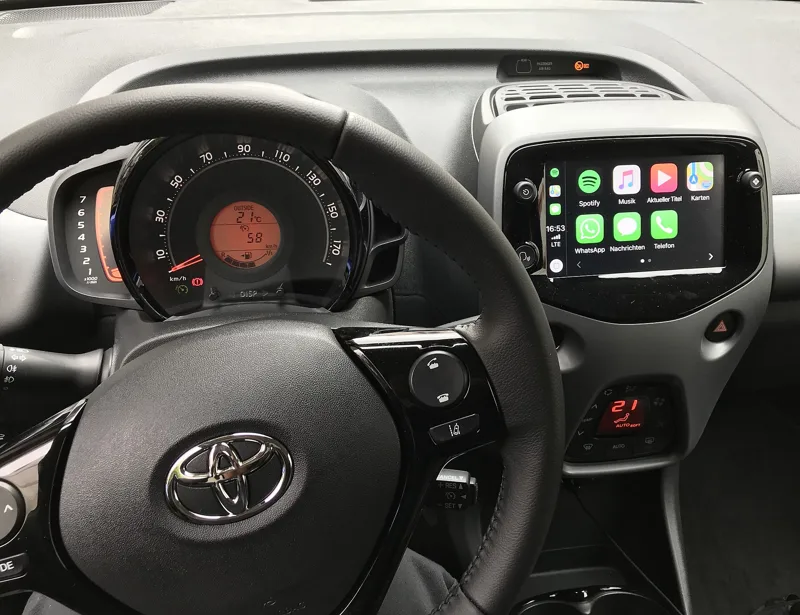
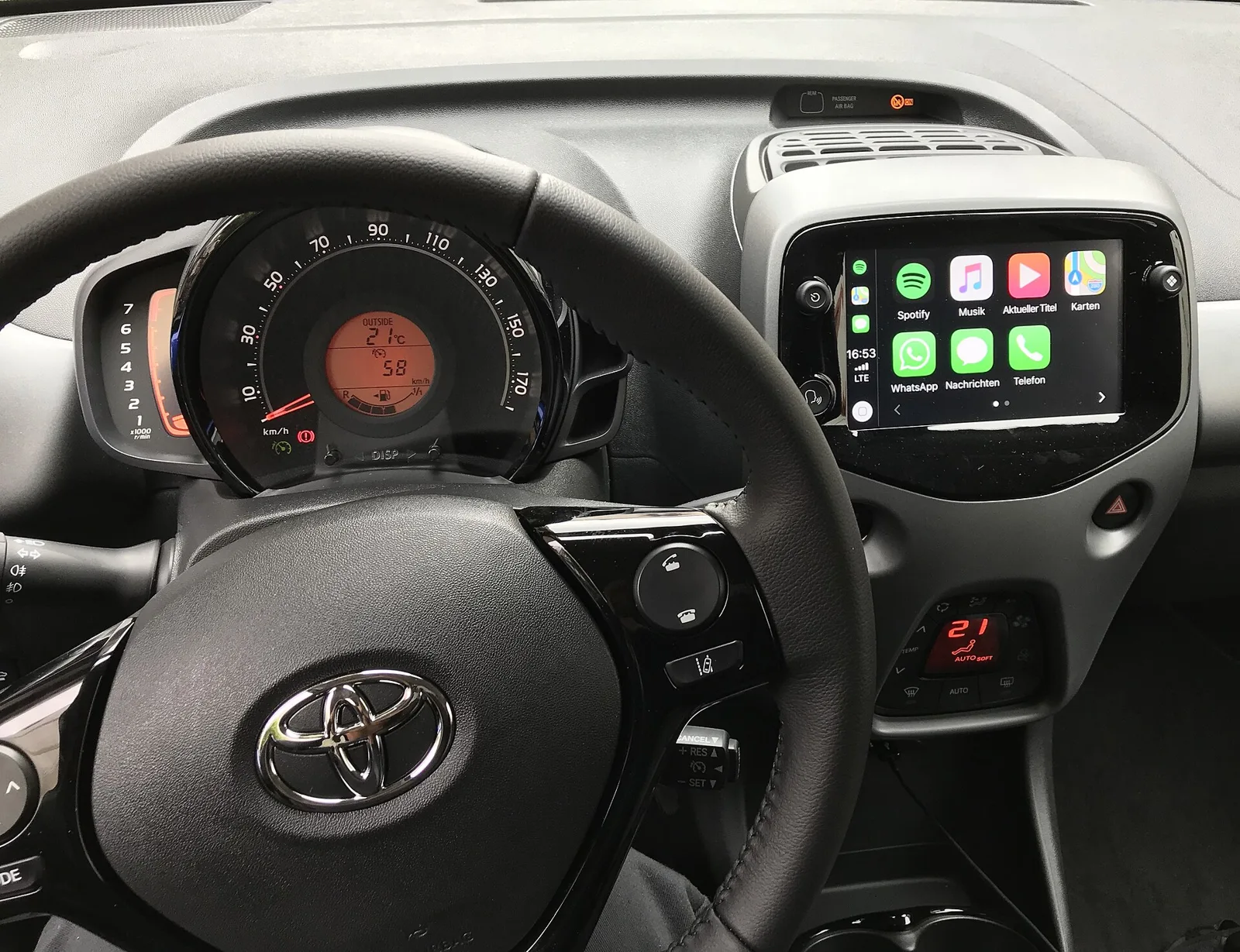
CarPlay is an Apple standard that turns a car radio or head unit into a display and controller for an iPhone. It works with the iPhone 5 and later running iOS 7.1 or later. According to Apple, more than 800 car and motorcycle models support it, and owners of other vehicles can add it with certain aftermarket audio products.
The important detail is where the work happens. The bulk of the CarPlay software lives on the connected iPhone, while the car supplies the screen, the speakers and the controls. The interface adapts to whatever the car has, whether that is a touch screen, rotary dial, physical buttons, steering-wheel controls or a hands-free microphone.
Most systems connect with a USB cable, which also charges the phone and carries audio, video and control input reliably. Wireless CarPlay is the alternative. The iPhone and the car swap network credentials over Bluetooth when they first pair, and from then on CarPlay data travels over a two-way Wi-Fi connection. Wireless support depends on both the car or head unit and the iPhone model, so in practice it tends to be found on newer factory systems and a few aftermarket receivers. Plug-in wireless adapters also exist, but they work by posing as a wired connection, so the car must still support wired CarPlay.
What runs on it?
Apple supplies apps for calls, music, maps, calendar, messages, audiobooks, podcasts, news and settings. Developers need Apple's permission to build for the system, and the apps fall into five groups: audio, such as Spotify and Audible; navigation, such as Google Maps and Waze; messaging and calling, such as WhatsApp and Zoom; food ordering and parking; and apps made by carmakers, which can control things like the climate settings, fuel level or radio.
Distraction is designed out as far as possible. Siri does a great deal of the work, speaking turn-by-turn directions and taking dictation for text messages, and weather and stock results are read aloud rather than shown. Requests that would bring up visual information may be blocked while the car is in gear. Users can switch apps off or reorder them, and the arrangement can differ from one vehicle to the next.
CarPlay turns the dashboard into a window onto an iPhone. Android Automotive is the dashboard's own computer.
What is Android Auto?
Android Auto is a Google app that mirrors features of an Android phone on the car's head unit. Once the phone is paired, the system can show supported apps on the car's display, including mapping and navigation, music, messages, calls and web search. It works with both touchscreens and button-controlled units, and hands-free voice control is offered and recommended to reduce driver distraction.
Google revealed it at Google I/O 2014 and released the app on 19 March 2015, and Hyundai was the first maker to offer it, in the 2015 Sonata. It began as a USB-only system. Since then Google has widened the reach: it announced an expansion to 36 additional countries in December 2020, and as of December 2025 Android Auto was available in 46 countries. A redesign codenamed CoolWalk, announced in May 2022, brought a split-screen layout that can show Google Maps beside a music player. Also in June 2022 the option to run Android Auto as an app on the phone itself was withdrawn, in favour of a Driving Mode inside the Google Assistant app.
It has had its critics. In May 2019 Italy filed an antitrust complaint, pointing to a Google rule that let outside developers offer nothing but media and messaging apps, which had prevented Enel from offering an app for finding charging stations. Google announced a new SDK for select partners in August 2020, with general availability by the end of that year. Aftermarket brands including Pioneer, Kenwood, Panasonic and Sony make car-audio systems that add Android Auto to cars that lack it.
What is Android Automotive, and how does it differ from Android Auto?
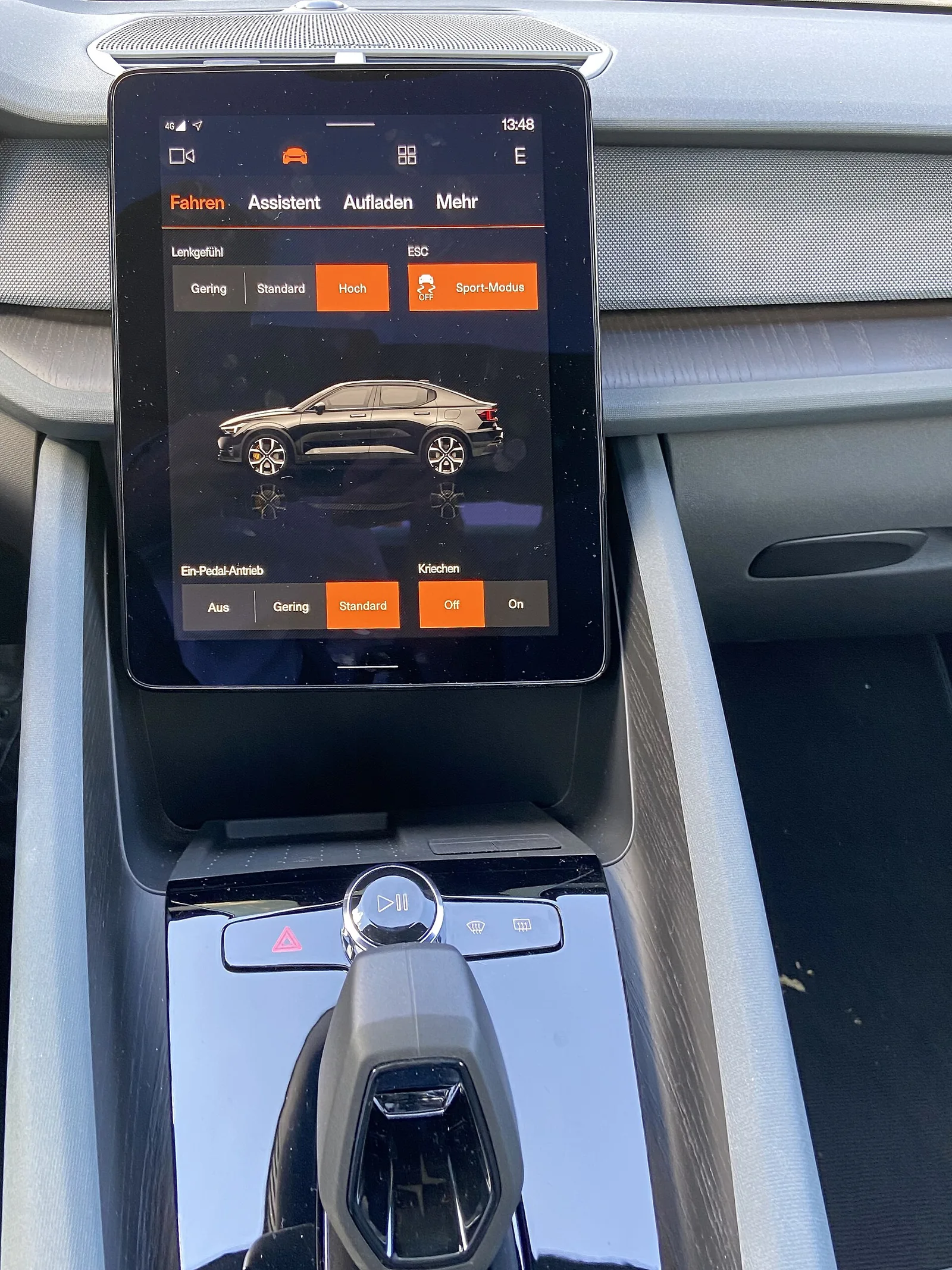
Android Automotive is a complete operating system for the dashboard, built on Android, that runs on the vehicle's own hardware. It needs no smartphone. Google and Intel introduced it in March 2017 with carmakers such as Volvo and Audi. Besides messaging, navigation and music, it aims to handle car functions such as the air conditioning.
The code is open source, so a maker can use it with or without Google Automotive Services. Those services are the bundle of apps that includes Google Maps, Google Assistant and the Play Store, and carmakers can license them. Volvo, Renault, Ford and GM use the system with the services. To talk to in-vehicle networks such as the CAN bus, Android Automotive relies on a layer called the Vehicle Hardware Abstraction Layer, which bridges the car's hardware and its software. It has access to only a limited number of apps on the Play Store.
Polestar announced the Polestar 2 as the first car with the system built in, in February 2018, and it has been on sale since July 2020. Others have since followed, and not all keep Google's apps. Lucid said in May 2021 that the Lucid Air runs the system without Google's services. BMW's Operating System 9 is based on it too, without Google's services and with the Aptoide app store, while the Volkswagen Group's One.Infotainment uses the open-source version with an app store developed with Harman International. Some Stellantis cars, such as the 2021 Dodge Durango and Chrysler Pacifica, use Uconnect 5, which is based on Android Automotive and also lacks Google's services, although Stellantis revoked a 2020 announcement that it would adopt the system more widely.
How do the three systems compare?
| CarPlay | Android Auto | Android Automotive | |
|---|---|---|---|
| Made by | Apple | Google and Intel, with carmakers | |
| Where the software runs | Mostly on the iPhone | On the Android phone, shown on the car screen | On the vehicle's own hardware |
| Phone needed | Yes, iPhone 5 or later | Yes, an Android device | No |
| Car functions | Through apps made by carmakers; more with CarPlay Ultra | Mainly apps such as maps, music and messages | Includes functions such as the air conditioning |
| Introduced | March 2014 (as CarPlay) | Released March 2015 | March 2017 |
| Apps | Developers need Apple's permission; five categories | An SDK, at first with music and messaging APIs only | A limited number of Play Store apps |
What is CarPlay Ultra?
CarPlay Ultra is Apple's next-generation CarPlay, a more integrated version that can control vehicle functions, access vehicle statistics and take over multiple screens. It was once informally called CarPlay 2. Apple announced it with Aston Martin in May 2025, and it is available only in the US and Canada.
The road to launch was slow. At WWDC 2022 Apple announced an all-new CarPlay. Manufacturers said to be planning to adopt it included Volvo, Renault, Porsche, Polestar, Nissan, Mercedes-Benz, Lincoln, Land Rover, Jaguar, Infiniti, Honda, Ford, Audi and Acura. In July 2023 Porsche announced tighter CarPlay integration through the My Porsche App, covering the climate system, ambient lighting, radio and sound, though it was not yet the all-new CarPlay. Porsche and Aston Martin were the first to show cars running the next generation, in December 2023; Aston Martin said its DB12 would be the first in 2024, while Porsche gave no timeline.
Then the date slipped. After missing the late 2024 rollout, in January 2025 Apple took the release date off its website. On 15 May 2025 it announced CarPlay Ultra, to be included on all new Aston Martin vehicles, with existing vehicles due to receive it through a future software update. CarPlay Ultra was first announced on the Aston Martin DBX707, and WWDC in June 2025 showed it running in an Aston Martin.
How did carmakers come to adopt CarPlay?
The idea goes back further than the name. In 2008 Mercedes was first to sell an audio system with iPod and iPhone integration, the Harman Kardon NTG 2.5. Apple then worked with the BMW Group's Technology Office USA on iPod Out in iOS 4, which let a car display and control an iPhone's interface. It shipped in BMW Group cars in early 2011, as the BMW and Mini option called PlugIn, and it introduced the idea of a car-specific interface for apps, rather than the simple mirroring of a phone screen that MirrorLink offered.
The project had the codename Stark. It was unveiled by Eddy Cue under the plain name iOS in the Car, on stage at WWDC 2013, and a report in January 2014 said Apple's hardware-oriented culture had caused delays. The CarPlay name arrived in March 2014 at the Geneva Motor Show, where Ferrari, Mercedes-Benz and Volvo were among the first makers on board. The first car with the full version was a Ferrari FF, in September 2014. Not everyone was keen at first. BMW officials said in June 2013 that their cars would not support it, then changed their minds, and Toyota remained a notable holdout until January 2018, when it began with the 2019 Avalon.
Some milestones followed:
- May 2015: General Motors announced CarPlay for 14 different 2016 model year Chevrolet vehicles.
- December 2015: the 2016 Volvo XC90 became Volvo's first car with CarPlay.
- January 2016: Ford announced CarPlay for all 2017 Ford and Lincoln vehicles with the Sync 3 system.
- February 2017: Harman announced the first wireless CarPlay, debuting in the 2017 BMW 5 Series.
- April 2017: the new Scania range became the first heavy truck in Europe to support CarPlay; the Volvo VNL followed in the US in July.
- October 2017: Honda's 2018 Gold Wing was the first motorcycle to get CarPlay.
- December 2019: BMW dropped its subscription requirement for CarPlay.
What is General Motors doing about CarPlay?
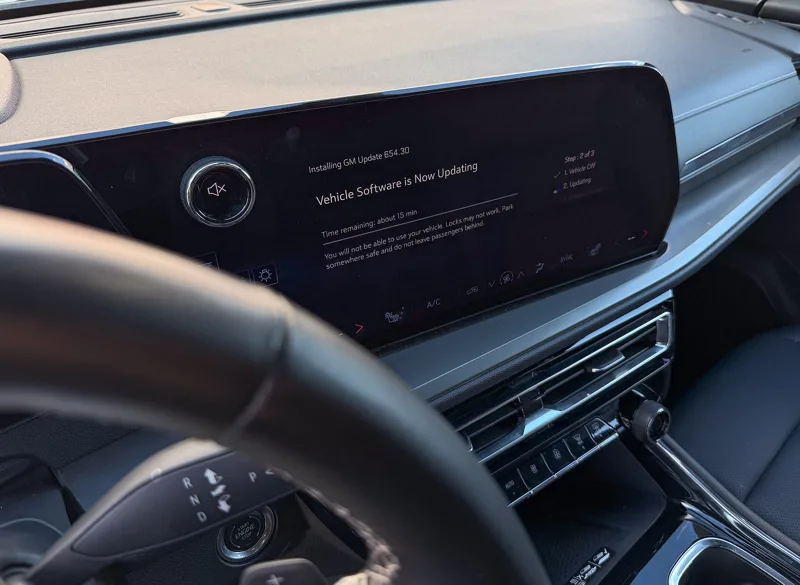
In March 2023 GM said it would drop CarPlay from its electric vehicles gradually, switching them to a new Android Automotive system. The first to go is the 2024 Chevrolet Blazer EV. Any new GM that is not electric, and any GM electric model that arrived before the Blazer EV, keeps CarPlay for the time being.
The move fits a pattern GM had already set. In September 2019 it announced that it would use Android Automotive to power infotainment in its cars from 2021, and it is one of the makers using the system with Google's services. Other carmakers are taking similar steps: Honda announced in September 2021 that it would use the system from 2022, and Hyundai Motor Group announced in December 2024 that it had adopted it. In July 2025 Mazda revealed the 2026 CX-5 as the first model with Google built-in, and during 2025 BYD updated the infotainment of selected international models so that they include Google built-in.
What does this mean for someone buying or driving a car?
For now, most buyers still get a choice. CarPlay is supported by more than 800 models according to Apple, and aftermarket head units often support both CarPlay and Android Auto, which helps owners of older cars. If wireless matters, confirm that the phone and the car are both up to it.
With a built-in system the phone matters less, because the software lives in the car. The trade-off is that what you get depends on the maker's choices. A car with Google's services offers Google Maps and the Play Store, while a car without them, such as the Lucid Air, does not have that bundle, and BMW's Operating System 9 offers the Aptoide store instead. The sensible question when shopping is which system the car runs, and whether the apps you use are on it.
Where does the dashboard go next?
Apple's next step is CarPlay Ultra, which is rolling out with Aston Martin, with existing vehicles due to get it through a future software update. On Google's side, Android Automotive OS 14, introduced in May 2023, allowed navigation apps to work with the gauge cluster and added multi-screen support for driver and passengers, and the Volkswagen Group, BMW and Porsche have all announced that their future systems will be based on it. Polestar, which launched the first Android Automotive car, said in June 2023 that it intended to use the Meizu Flyme Auto system instead in vehicles for China.