From a Dakota-based seven-seater to a Grand Cherokee sibling, the Durango carried V6, V8 and supercharged Hemi power across three decades.
Built by Dodge since 1998, the Durango is a mid-size sport utility in three generations. Its first two generations were truck-based with body-on-frame construction, while the third, from 2011, used unibody construction shared with the Jeep Grand Cherokee. Over two million have been sold.
The Dodge Durango is a mid-size SUV that Dodge has produced since the 1998 model year, and its three generations trace a move from truck engineering to unibody construction. The early cars were built on Dakota and Ram foundations, while the third generation shares its platform with the Jeep Grand Cherokee. Along the way the name has covered everything from modest V6 power to a supercharged Hemi V8.
What is the Dodge Durango?
The Durango is a seven- or eight-passenger SUV that Dodge has sold since 1998. Over two million have been sold, and the nameplate has spanned three distinct engineering approaches. It has been built at Newark in Delaware and, since late 2010, at Jefferson North in Detroit.
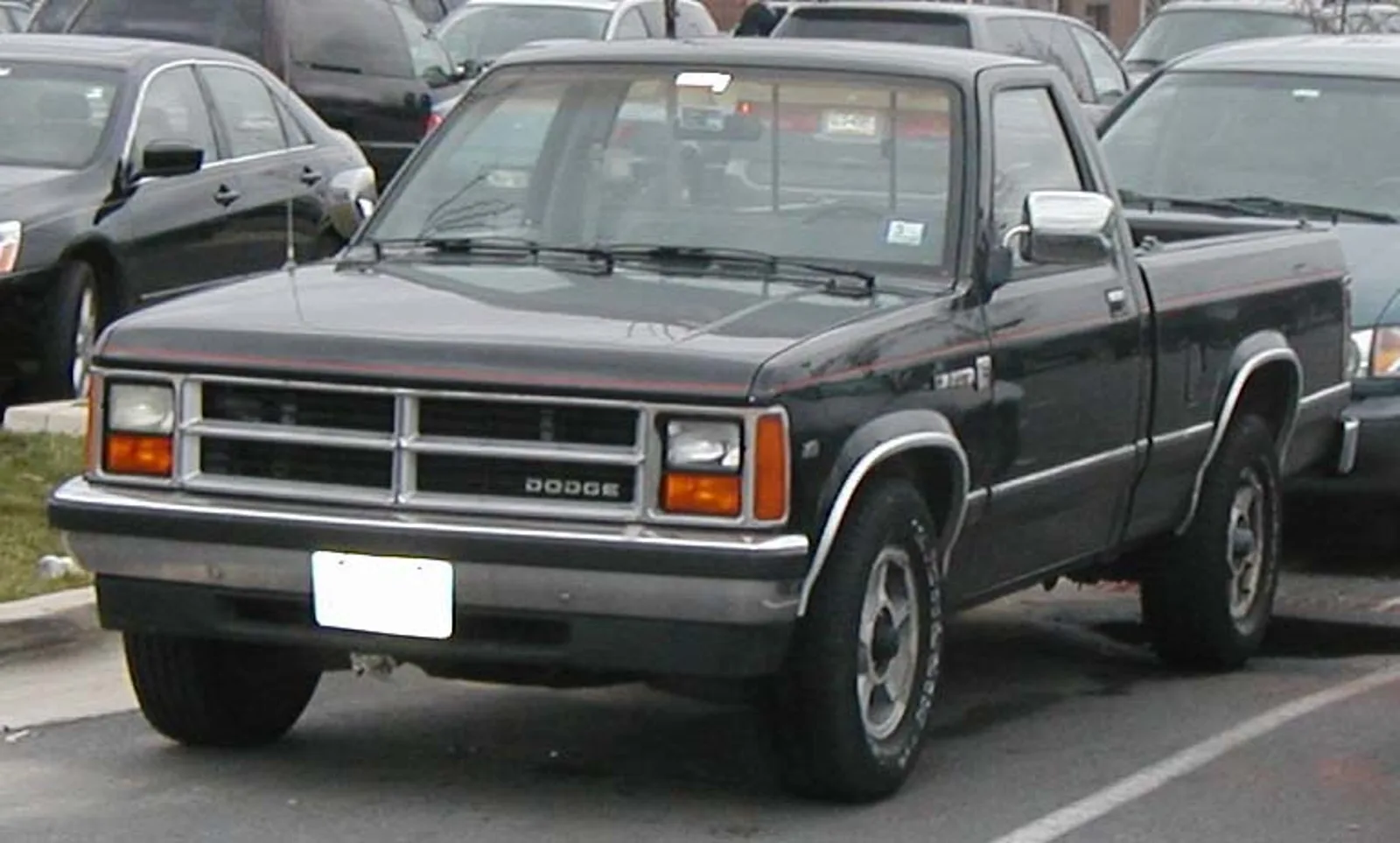
Dodge's original pitch centred on towing and toughness. The first Durango could carry up to seven people and tow up to 7,500 lb (3,400 kg) when properly equipped. Its front end, instrument panel and front seats came from the Dakota pickup, which gave the SUV a close family resemblance to Dodge's compact truck.
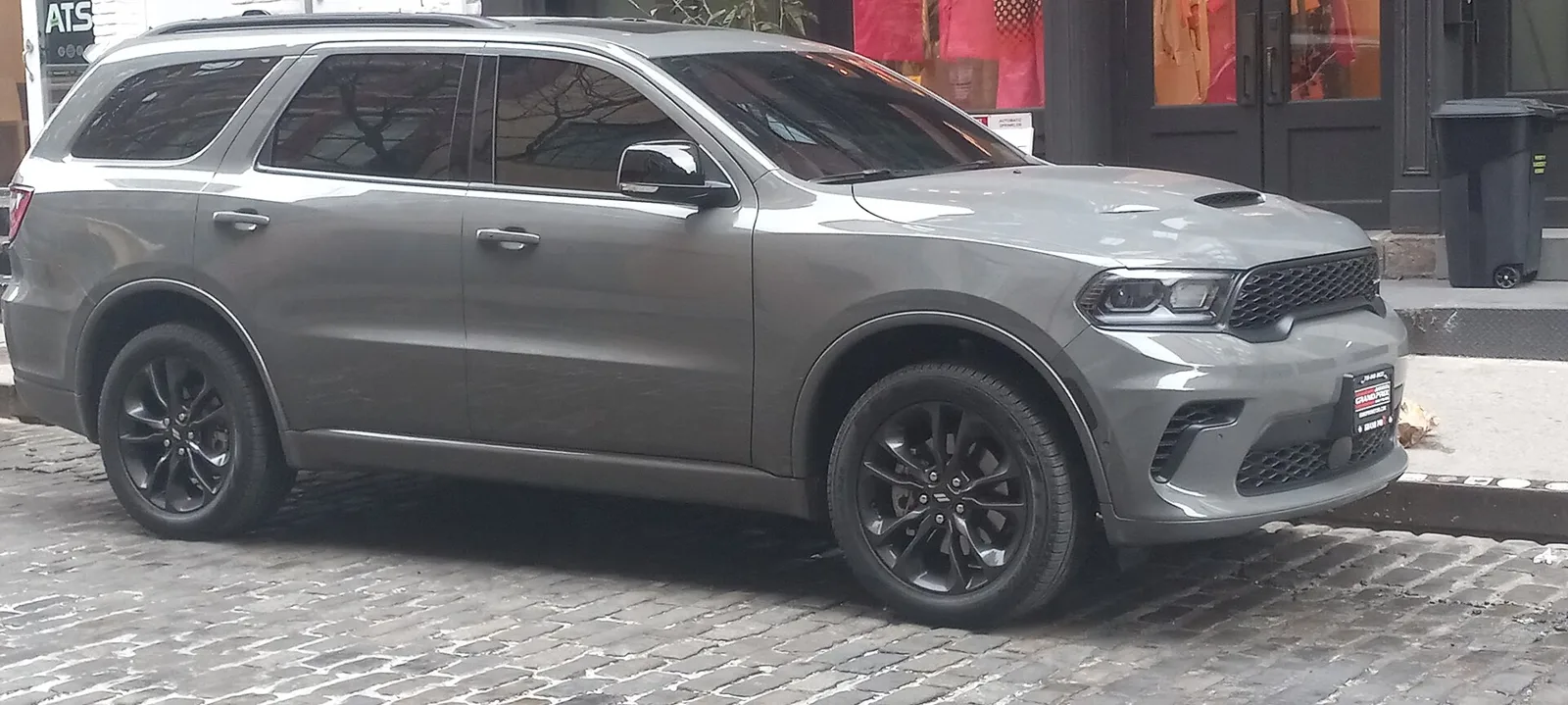
Over the decades the nameplate changed underneath as much as on the surface. Generations one and two both rode on body-on-frame construction and were built at Newark. Generation three swapped that for a unibody and moved production to Detroit, where it shared the assembly line, running gear and powertrains with the Grand Cherokee.
Three generations, one nameplate, and a steady move from truck underpinnings to unibody Grand Cherokee running gear.
How did the first-generation Durango differ from later cars?
The first-generation Durango arrived as a 1998 model with a rear-facing third row in early designs. Dodge changed that by shortening the front doors and raising the roof two inches (5 cm), which allowed forward-facing seats. Trims ran from the basic SLT to the sporty R/T, and the car's V8 options grew over the first years.
The early trim ladder was SLT, SLT Plus, Sport, SXT and R/T. The SLT Plus was the most luxurious version, with leather upholstery, fog lamps and a premium Infinity audio setup with eight speakers. The R/T was the performance flagship, combining a tuned 5.9 L Magnum V8 with all-wheel drive from 2000.
In 1999 and 2000 Dodge also built the Shelby S.P.360, a limited edition with a supercharged version of the 5.9 L Magnum V8. It made 360 hp (268 kW; 365 PS) and 412 lb ft (559 Nm) of torque. Its 0 to 60 mph time was 7.1 seconds and its top speed 142 mph (229 km/h), and the car came in Viper blue with two racing stripes down the centre.
Which engines did the Durango use?
Early Durangos used Magnum V8s from 5.2 L to 5.9 L, while the 4.7 L PowerTech V8 arrived for 2000. The second generation added a 3.7 L V6, a 5.7 L Hemi and a 2009 hybrid. The third generation settled on the 3.6 L Pentastar V6 and the 5.7 L Hemi V8.
The first V8 range started with the 5.2 L Magnum, rated at 230 hp (172 kW) and 300 lb ft (407 Nm) between 1998 and 2000. Its successor, the 4.7 L PowerTech, produced 235 hp (175 kW) and 295 lb ft (400 Nm) in the 2000 to 2003 range. The 5.9 L Magnum stayed on as the stronger choice, rated at 245 hp (183 kW) and 330 lb ft (447 Nm) from 1998 to 2003.
The 1999 model year also offered a 3.9 L Magnum V6, which made 175 hp (130 kW) and 225 lb ft (305 Nm). Few were sold, and the V6 disappeared after that year. From 2000 the range was V8 only.
What changed in the second generation?
The second-generation Durango arrived for 2004 with a fully boxed frame that matched the large Dodge Ram pickup. It grew to an eight-seat capacity with a third-row bench, and it introduced a coil-spring rear suspension for the solid axle. The 5.7 L Hemi arrived in the same generation, and a 2007 facelift added electronic stability control.
The second generation took its styling cues from the Dodge Powerbox concept, itself based on the 1999 Dodge Power Wagon concept. Its first public appearance came as the Durango R/T concept at the 2003 Detroit Auto Show. The car measured 7 in (180 mm) longer, 2 in (51 mm) wider and 3 in (76 mm) taller than the model it replaced.
The steering wheel and gauges were shared with the Dakota from 2005 to 2011, while the steering wheel alone was shared with the Ram pickup from 2004 to 2008. The Watt's linkage on the rear axle centred the solid axle and reduced rear-end skate over rough surfaces, which allowed a lower and wider cargo floor.
The 2004 range ran from the base ST, later renamed SE, to the Limited. The Limited added leather, a memory system for the driver's seat and mirrors, and an Infinity sound system with eight speakers and a subwoofer. All trims offered the 4.7 L Power-Tech V8 as standard, with the 5.7 L Hemi available on every trim except the base SXT.
From 2007 the same platform also carried the Chrysler Aspen. Chrysler unveiled the luxury three-row SUV at the 2005 North American International Auto Show, and it came in one trim, Limited, with optional all-wheel drive. The Aspen also appeared in the 2006 film Deck the Halls.
Why did production of the second generation end?
Chrysler announced in October 2008 that it would move the Newark shutdown to the end of that year. Production of the Durango and Aspen ended on December 19, 2008, which closed out the second generation after the 2009 model year. The decision came as demand for full-size SUVs fell in the economic slowdown.
The Aspen's end had two causes. Slow sales played a part, but the larger factor was the merger of the Chrysler-Dodge-Jeep dealer network.
Was there a hybrid Durango?
Yes, though briefly. The 2009 hybrid paired the 5.7 L Hemi with two 87 hp electric motors for around 400 horsepower combined. It added roughly 400 pounds (180 kg) and cost $4,000 more than the standard 5.7 L model, and Chrysler dropped it about two months after launch, with around 800 cars built.
The hybrid used a GM-designed two-stage system, and every version came with four-wheel drive as standard. Its fuel economy was the selling point, at 19 mpg in the city and 20 on the highway, compared with the standard Hemi's 13 city and 18 highway. Chrysler cited weaker demand for its full-size SUVs when it ended the programme.
How did the third-generation Durango reach showrooms?
Dodge released teaser photos and a website on August 16, 2010, and the 2011 Durango entered production on December 14, 2010, alongside the second-generation Charger. It went on sale to dealers in mid-January 2011. The vehicle had three rows of seats and a slightly longer wheelbase than the Grand Cherokee it shared a line with.
The launch line-up was the Express, a base trim that used only the 3.6 L Pentastar V6, and the Crew, which offered either that V6 or the 5.7 L Hemi. The Crew Plus added luxury features in 2011 to 2013, and the Citadel became the top luxury trim, running until 2024.
The Durango later settled into a long run of sub-trims. The SXT arrived in 2012 and the SXT Plus in 2014. The Limited sat above them from 2014 to 2016, and the GT replaced it in 2017 as a sportier model. The GT Plus followed in 2019 with heated seats, a power liftgate and a 150W inverter.
What engines did the third generation get?
The base engine is a 3.6 L Pentastar V6 producing 290 hp (216 kW; 294 PS) and 260 lb ft (353 Nm) at 4,800 rpm. A 5.7 L Hemi VVT V8 makes 360 hp (268 kW; 365 PS) and 390 lb ft (529 Nm), while a supercharged 6.2 L Hemi took the SRT Hellcat trim from 2021.
The V6 keeps 90% of its peak torque from 1,600 to 6,400 rpm. Early versions used a Mercedes-sourced five-speed automatic, but Dodge later moved to ZF eight-speed gearboxes, and the 2014 revision made the eight-speed standard. The Hemi V8 also carries a cylinder deactivation mode, the fuel-saver feature used when cruising at steady speeds on flat roads.
The supercharged Hellcat engine was dropped after the 2021 run because it could not be modified further to meet tighter emissions rules. Emissions changes allowed the Hellcat trim to return for 2023. A 6.4 L Hemi came back in 2026 in the R/T 392, and the Durango range now runs from the V6 to that larger V8.
Which updates changed the Durango after 2014?
Dodge revised the car for 2014 with an eight-speed automatic, sportier lines and a 20 in (510 mm) reconfigurable display. The 2016 Pentastar upgrade added stop/start and variable valve lift, while the 2021 update brought Uconnect 5 and the 710 hp SRT Hellcat. The 2023 restructure grouped every model into Base, Plus and Premium levels.
The 2015 R/T package added Nappa leather with radar red seats, HID low beams, a nine-speaker sound system and a 20-inch Granite Crystal wheel. It also lowered the ride height by 0.8 inch (20 mm). That package used the 5.7 L Hemi with 360 hp (268 kW; 365 PS), paired with ZF's eight-speed transmission.
The 2016 Pentastar upgrade added stop/start, variable valve lift and a 15% enhanced torque curve, and it was 4 pounds (1.8 kg) lighter despite the extra hardware. Power rose to 293 hp (218 kW; 297 PS) with a single exhaust or 295 hp (220 kW; 299 PS) with dual exhausts, and torque stayed at 260 lb ft (353 Nm).
In 2021 the Durango became the only SUV in the Dodge line after the smaller Journey was discontinued. The Dodge Hornet arrived in 2023, which made the Durango the largest vehicle in the Dodge range. The SXT Plus was priced at $40,140, $450 less than the base SXT at $40,590.
Which recalls affected the Durango?
Three recalls stand out. In 2012 Chrysler recalled 1,661 2013-model SUVs in the United States and Canada because airbags might not deploy. In 2015 it recalled 2014 and 2015 cars with 8.4-inch touchscreens after researchers showed the software could be hacked. In 2019 a recall covered 700,000 2011-2013 Durangos and Grand Cherokees for an electrical fault.
The 2012 airbag recall covered 1,449 seven-passenger vehicles in the United States and 212 in Canada and other markets. The 2015 software flaw was found by Charlie Miller and Chris Valasek and first posted on Wired. It let outsiders reach driving functions through the Uconnect infotainment system.
The 2019 electrical fault could stop the engine from starting or cause it to cut out while driving. The FCA group announced a free revision to both models and replacement of the affected parts. No accidents were reported in connection with that fault.
Durango specifications at a glance
| Specification | Detail |
|---|---|
| First generation debut | 1998 model year |
| Second generation debut | 2004 |
| Third generation debut | 2011 model year |
| Towing (first generation) | 7,500 lb (3,400 kg) when properly equipped |
| Third-generation V6 | 3.6 L Pentastar, 290 hp (216 kW; 294 PS), 260 lb ft (353 Nm) |
| Third-generation V8 | 5.7 L Hemi VVT, 360 hp (268 kW; 365 PS), 390 lb ft (529 Nm) |
| SRT Hellcat | 6.2 L supercharged Hemi, 710 hp |
| 2009 hybrid | 5.7 L Hemi with two 87 hp electric motors, around 400 hp combined |
| Production end, second generation | December 19, 2008 |
| Sales | Over two million since 1998 |