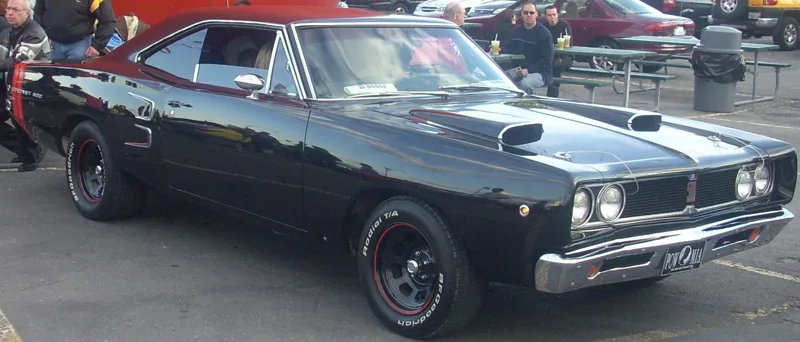
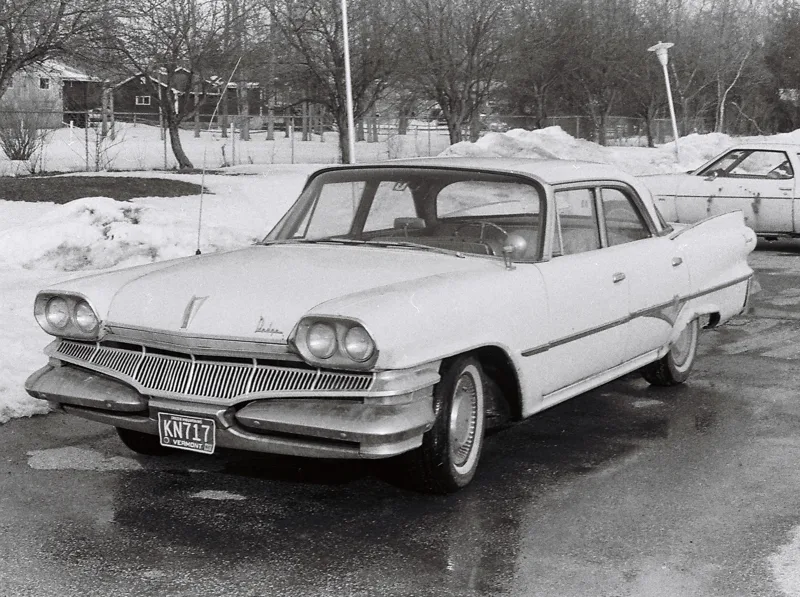
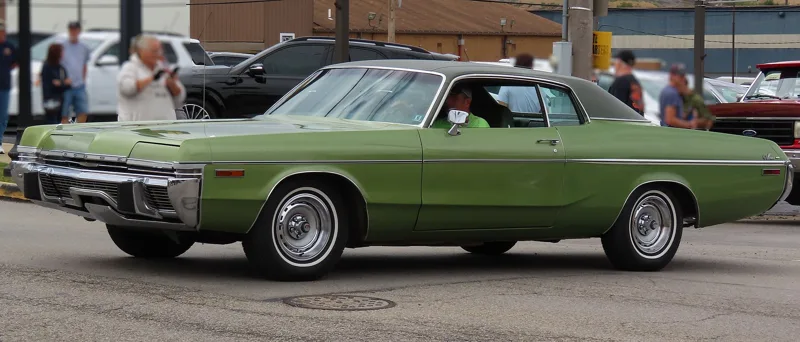
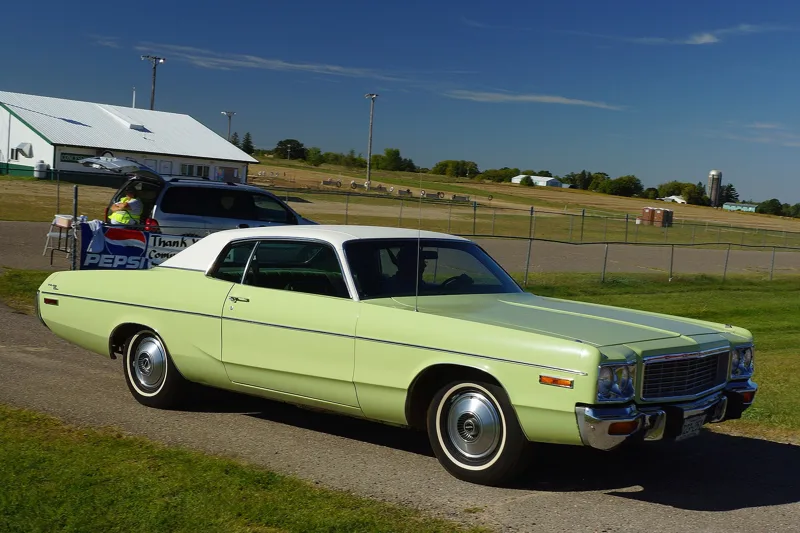
A 1981 rebadge that grew a Cummins diesel, a Quad Cab, a V10 option and a Hemi-powered sport range before becoming its own brand.
The Dodge Ram began in October 1980 as a rebadge of Dodge's D-Series pickups and B-Series vans, and it became a separate Ram Trucks brand in 2010. Its Cummins turbo diesel from 1989 coincided with the first sales rise in years, and the fifth generation debuted at the 2018 Detroit show.
Few full-size pickups have carried one nameplate through as many changes as the Dodge Ram. A 1981 relabel grew into a truck with a Cummins diesel, a Quad Cab and sport and off-road editions, before a separate brand took it over in 2010.
Where did the Dodge Ram come from?
The Ram name arrived in October 1980 with model year 1981, when Dodge relabelled its D-Series trucks and B-Series vans. Dodge had used a ram's-head hood ornament on some of its trucks as early as 1933, and the badge carried that heritage forward.
Ram was part of the Dodge light-truck line until 2010, when Ram Trucks was spun off from Dodge. Today the truck is built by Stellantis North America, which was formerly Chrysler Group LLC and FCA US LLC, and it sells under the Ram Trucks brand.
The Motor Trend Truck of the Year award has come to Ram several times, including 1994, 2003, 2010, 2013, 2014, 2019, 2020, 2021 and 2025. Those wins run from the second-generation pickup through to the fifth.
A 1981 rebadge that grew a Cummins diesel, a Quad Cab and a Hemi-powered sport range before becoming its own brand.
How did the first-generation Ram differ from the D-Series?
The first-generation trucks were facelifted versions of the D-Series pickups introduced in 1972. They used larger wraparound tail lamps, dual rectangular headlamps and squared-off body lines, and the interior received a new bench seat and a fresh dashboard.
Dodge kept the old model designations. D or Ram meant two-wheel drive, while W or Power Ram meant four-wheel drive, and 150, 250 and 350 marked half-ton, three-quarter-ton and one-ton trucks. Cabs came as standard, Club extended or crew, with 6.5 ft (2.0 m) and 8 ft (2.4 m) beds.
Power came from a 225 slant-six and 318 and 360 V8s. A Sno Commander plow package was offered on four-wheel-drive models, and the options list included aluminium turbine-style wheels, a sliding rear window and factory air conditioning.
The Club Cab was dropped after 1982 but returned for 1990. The four-door crew cab and the Utiline bed were dropped after the 1985 model year, to free up assembly space for the new Dodge Dakota, and they never came back in this generation.
When did the Cummins diesel arrive in the Ram?
The Cummins Turbo Diesel arrived in 1989, and it was the key to the truck's heavy-duty appeal. After 1978 Dodge had no big-block gasoline engine and no diesel of its own, so the heavier-duty models lost ground to rivals. Chrysler agreed a deal with Cummins to use a version of its 5.9 L B-Series engine instead of developing a new unit.
The engine was a straight-six with direct injection and a turbocharger, which set it apart from the indirect-injection V8 diesels in rival Ford and GM trucks. It needed no glow plugs, and it was offered on 250 and 350 pickups and pickup-based chassis cabs above 8,500 lb GVWR.
The Cummins coincided with the first sales increase for Ram trucks in several years. Supply was tight at first, and production only ramped up for 1991. Dodge had offered a naturally aspirated Mitsubishi diesel in 1978, but it was seldom ordered.
The 1989 model year also brought throttle-body fuel injection to the 5.9 L V8, which gained 20 hp (15 kW), and a new A500 overdrive automatic. By 1992 the engines had multi-port fuel injection, new manifolds and higher-compression heads, and they were sold under the Magnum name.
What changed with the second-generation Ram?
The second-generation Ram began development in 1986. The first concept, dubbed the Louisville Slugger, was a modular platform for a truck and a van, but that idea was scrapped in 1987. The design then moved to a more conventional truck studied under the Phoenix name, and styling designer Phillip E. Payne shaped the look.
The truck debuted on 5 January 1993 at the North American International Auto Show and went on sale on 1 October 1993. Motor Trend named it Truck of the Year for 1994, and sales jumped from 95,542 units in 1993 to 232,092 in 1994. The truck's big-rig style front end and large grille were seen as risky at the time, but they proved popular with buyers.
The second generation also brought a 300 hp (220 kW) gasoline V10, which made the Ram the first factory V10 truck. The V10 and the diesel were offered in 2500 and 3500 models, while the 1500 used the 3.9 L V6, 5.2 L V8 and 5.9 L V8.
In 1998 Dodge added the Quad Cab, with smaller clamshell doors behind the main doors. It was the first extended-cab pickup to have four doors, and the two-door Club Cab stayed on sale until 2002. The 2000 model year was cut short, with production ending in January 2000 to avoid a CAFE requirement.
What were the Ram's special editions?
The 1996 Indianapolis 500 edition was the Official Truck of the 80th Indianapolis 500, with longitudinal stripes similar to those of the Dodge Viper and a 5.9 L engine with upgraded exhaust. A total of 3,212 were built, and an SS/T version followed in 1997 and 1998 without the door sticker.
The Off-Road Edition of the second-generation truck came with a 2-inch lift, 275/70/17 all-terrain tyres, a 4.10:1 rear axle ratio, a limited-slip differential and skid plates. A separate Dodge Ram VTS concept took Viper-inspired styling and a 415 bhp V10 from the Viper GTS, and it led to the 500 bhp SRT-10 built from 2004 to 2006.
How did the third generation change the Ram?
The third-generation Ram debuted on 7 February 2001 at the Chicago Auto Show, after development from 1996 and styling by Cliff Wilkins finalised in 1998. It brought an all-new frame, suspension, powertrains, interiors and sheet metal, and production started for 2002 on the 1500 and for 2003 on the 2500 and 3500.
The 1500 dropped its beam axles for an independent front suspension, while the 2500 and 3500 kept live axles for durability. The redesigned truck sold 400,000 units in 2001 and 2002, and nearly 450,000 in 2002 and 2003. Even so, Ram trailed the Ford and GM trucks, and it could not keep pace with the F-150 in 2004.
The 2006 refresh added the Mega Cab, a 6.25-foot (2 m) cargo box with 22 inches (559 mm) of extra cab space, which allowed seating for six. A 5.7-litre Hemi, a Bluetooth Uconnect radio and rear-seat DVD were also offered, and the SRT-10 was dropped after the 2006 model year.
What did the Ram chassis cab and heavy-duty range offer?
For 2007 Dodge introduced a 3500 chassis cab with industry-standard rear frame width and wiring for outfitters. Three wheelbases were offered, and a 6.7 L Cummins rated at 350 hp (261 kW) and 650 lb ft (881 N m) was available alongside the 5.7 L V8.
For 2008 the 4500 and 5500 joined the range as Class 4 and Class 5 trucks, rated at 16,500 lb (7,484 kg) and 19,500 lb (8,845 kg). Sterling sold a badge-engineered version as the Sterling Bullet until that brand was phased out.
The 2006 half-ton engine also changed. The Multi-Displacement Hemi kept 345 hp (257 kW) and 375 lb ft (508 N m), and it could shut off cylinders under light load to add 3 mpg in the city and 4 mpg on the highway.
Which performance and off-road Rams stood out?
The SRT-10 used the Dodge Viper's V10 in a regular or quad cab with Pirelli tyres on 22-inch rims, lowered suspension and bucket seats. In 2004 it held the Guinness record for World's Fastest Production Pickup at 154.587 mph (247.3 km/h), a record overtaken by an HSV Maloo R8 in May 2006.
The Power Wagon arrived for 2005 as an off-road version built on the 2500 platform. It carried the 5.7 L Hemi, electronic locking differentials, an electronic disconnecting front sway bar, 285/70R17 off-road tyres and a 12,000-pound winch.
Several sport editions had limited runs. The Rumble Bee had 4,858 built in 2004 and 5,174 in 2005, the Hemi GTX had 433 in 2004, and the Daytona edition with its 11-inch rear spoiler arrived for 2005 with a 5.7 L Hemi.
What did the fourth generation bring?
The fourth-generation 1500 made its bow at the 2008 Detroit show as a 2009 model. The heavy-duty 2500 and 3500 followed for 2010, and the chassis cabs for 2011. Ram Trucks became its own brand for the 2011 model year.
The 1500 gained a Crew Cab body style, the optional RamBox cargo system and a five-link coil-spring rear suspension. For 2013 it added the 3.6-litre Pentastar V6 and an eight-speed automatic, and a 3.0-litre EcoDiesel V6 arrived for 2014.
In 2019 the fourth-generation 1500 stayed in production as the 1500 Classic, a lower-priced and commercial-oriented model that remained on sale until 2024.
What is the fifth-generation Ram like?
The fifth-generation Ram debuted at the 2018 North American International Auto Show in Detroit on 15 January 2018, and its heavy-duty version followed at the 2019 show on 14 January 2019. The 2019 Ram 1500 offered seven trim levels, down from 11 on the old truck.
The eTorque mild-hybrid option combined a belt-drive generator with a battery pack to add up to 130 lb ft (176 N m) to the 5.7-litre Hemi. A 12-inch touchscreen, the largest in its class, came with the new Uconnect system. Payload rose to 2,300 lb (1,000 kg), and the truck was about 225 lb (102 kg) lighter than its predecessor.
For 2025 the 1500 received a mid-cycle refresh, and the Hemi V8 gave way to a 3.0-litre Hurricane twin-turbo inline-six. The heavy-duty trucks got the ZF 8-speed automatic for Cummins-equipped models, and the Hemi returned for 2026.
What are the Dodge Ram specifications?
The table covers the main figures across the heavy-duty and light-duty range, with the 1990s V10 and Cummins diesel alongside the later Hemi and eTorque trucks.
| Specification | Detail |
|---|---|
| Name introduced | October 1980, model year 1981 |
| Second generation | On sale 1 October 1993 |
| Third generation | Debut 7 February 2001 in Chicago |
| Fifth generation | Debut 15 January 2018 in Detroit |
| V10 | Gasoline, 300 hp (220 kW) |
| Cummins 1989 | 5.9 L turbo straight-six, direct injection |
| Cummins 2007 | 6.7 L, 350 hp (261 kW), 650 lb ft (881 N m) |
| Multi-Displacement Hemi | 345 hp (257 kW), 375 lb ft (508 N m) |
| 2019 Ram 1500 payload | 2,300 lb (1,000 kg) |
| 2019 Ram 1500 towing | 12,750 lb (5,780 kg) when properly equipped |
| 4500 and 5500 GVWR | 16,500 lb (7,484 kg) and 19,500 lb (8,845 kg) |
| Transfer case low range | 2.72:1 |
How did the Ram sell in other markets?
Mexico produced its own variants, including the Ramcharger, a three-door SUV from 1998 that was never sold in the United States. Medium-duty 6500 and 7000 trucks were built at Saltillo from 1994 to 1998, with a 5.9 L V8 rated 245 hp (183 kW) and payloads of 3,041 kg (6,704 lb) and 3,274 kg (7,218 lb).
Ram trucks have not been built with right-hand drive for markets such as Australia and the United Kingdom. FCA through Ateco began selling the 2500 and 3500 in Australia in 2016 and the 1500 in 2018, with conversions carried out locally.
In 2024 the Ram Revolution concept previewed an all-electric pickup with two motors and all-wheel drive. Production of the Ram 1500 at the Warren Truck Assembly plant outside Detroit ended the same year.
How did the Ram perform in motorsport?
The Ram Pickup represented both Dodge and Ram in the NASCAR Craftsman Truck Series from 1995 to 2016. It won the Manufacturer's Championship in 2001, 2003 and 2004, and it returned to Truck Series competition in 2026. It also won the San Felipe 250 in 2008 and 2009.
Frequently asked questions
When did Ram become a separate brand?
Ram Trucks was spun off from Dodge in 2010, and the brand split took effect for the 2011 model year. The truck had been sold as the Dodge Ram before that.
Which Ram was the first with a V10?
The second-generation truck introduced a gasoline V10 rated at 300 hp (220 kW), which made it the first factory V10 truck. It was offered in the 2500 and 3500 models above 8,500 lb GVWR.
How much could a 2019 Ram 1500 tow?
The 2019 Ram 1500 could tow up to 12,750 lb (5,780 kg) when properly equipped, and its payload was 2,300 lb (1,000 kg).
What is the Power Wagon?
Introduced for 2005, the Power Wagon was built on the 2500 platform and aimed at off-road use. It had the 5.7 L Hemi, electronic locking differentials, off-road tyres and a 12,000-pound winch.