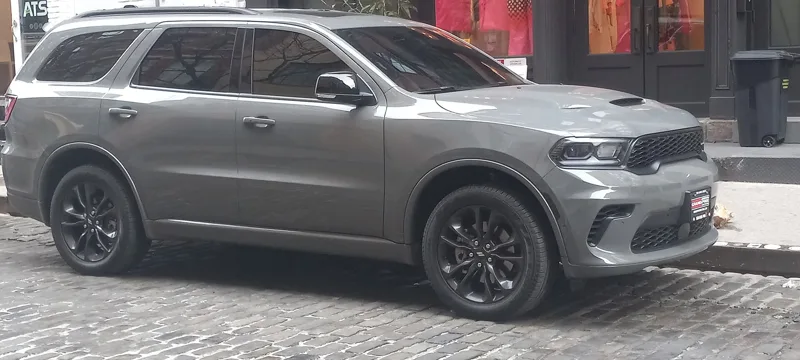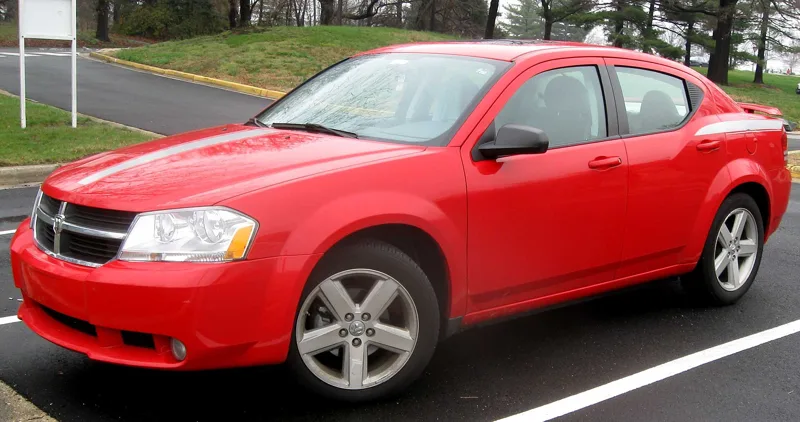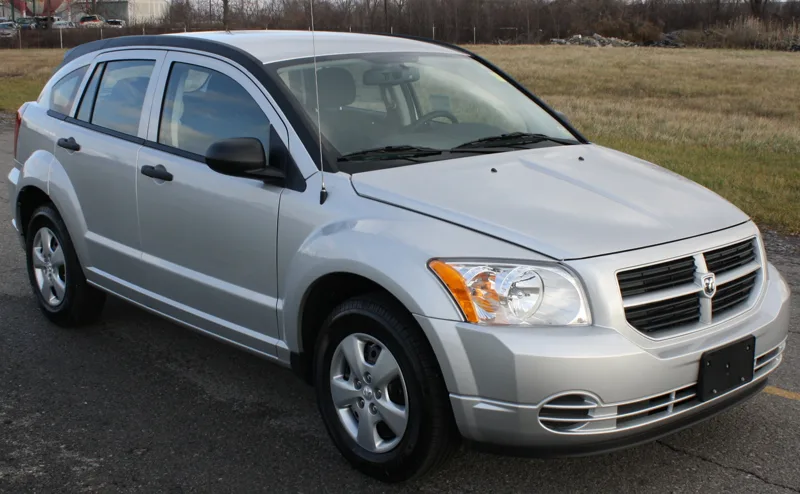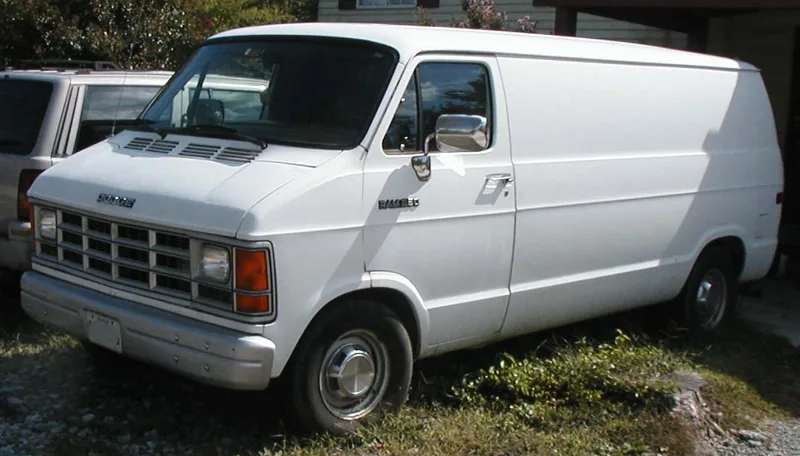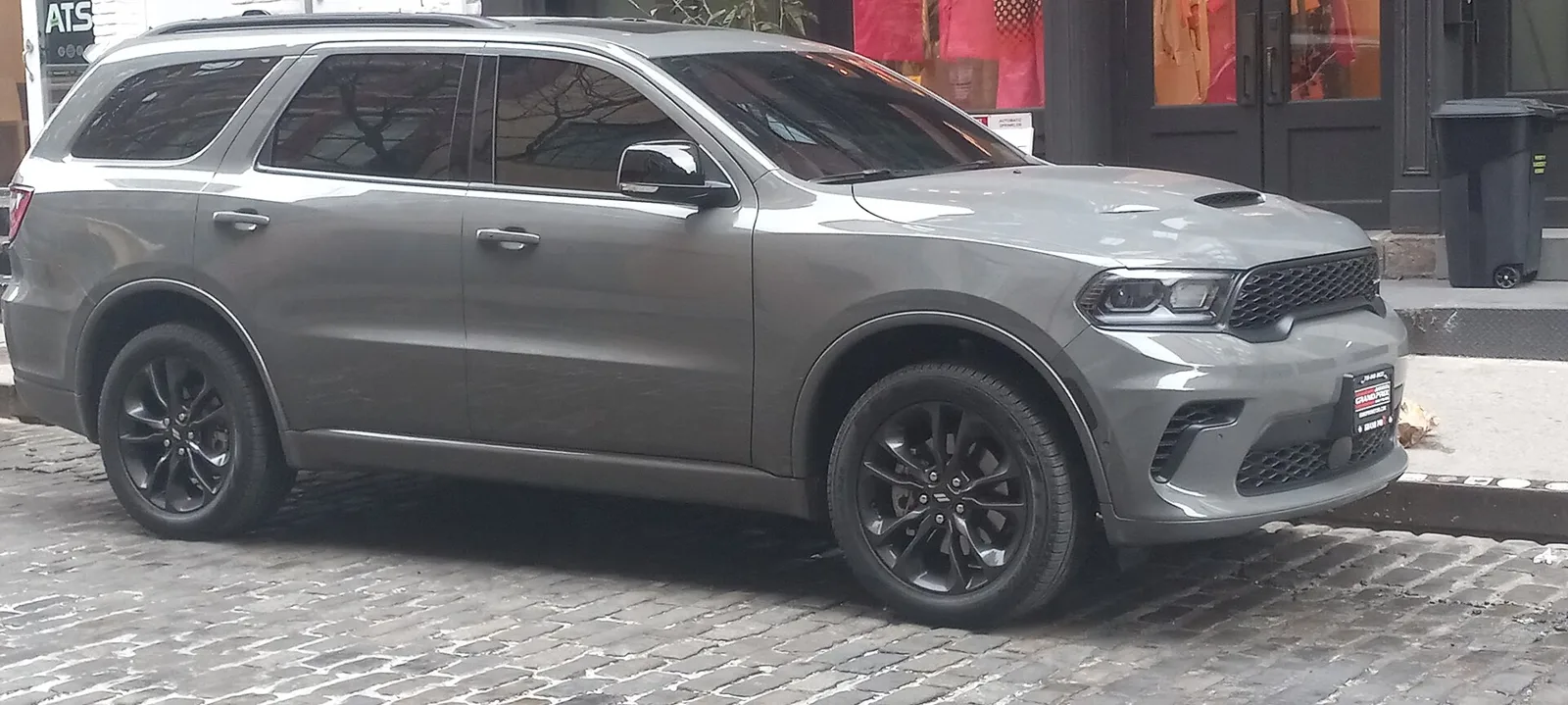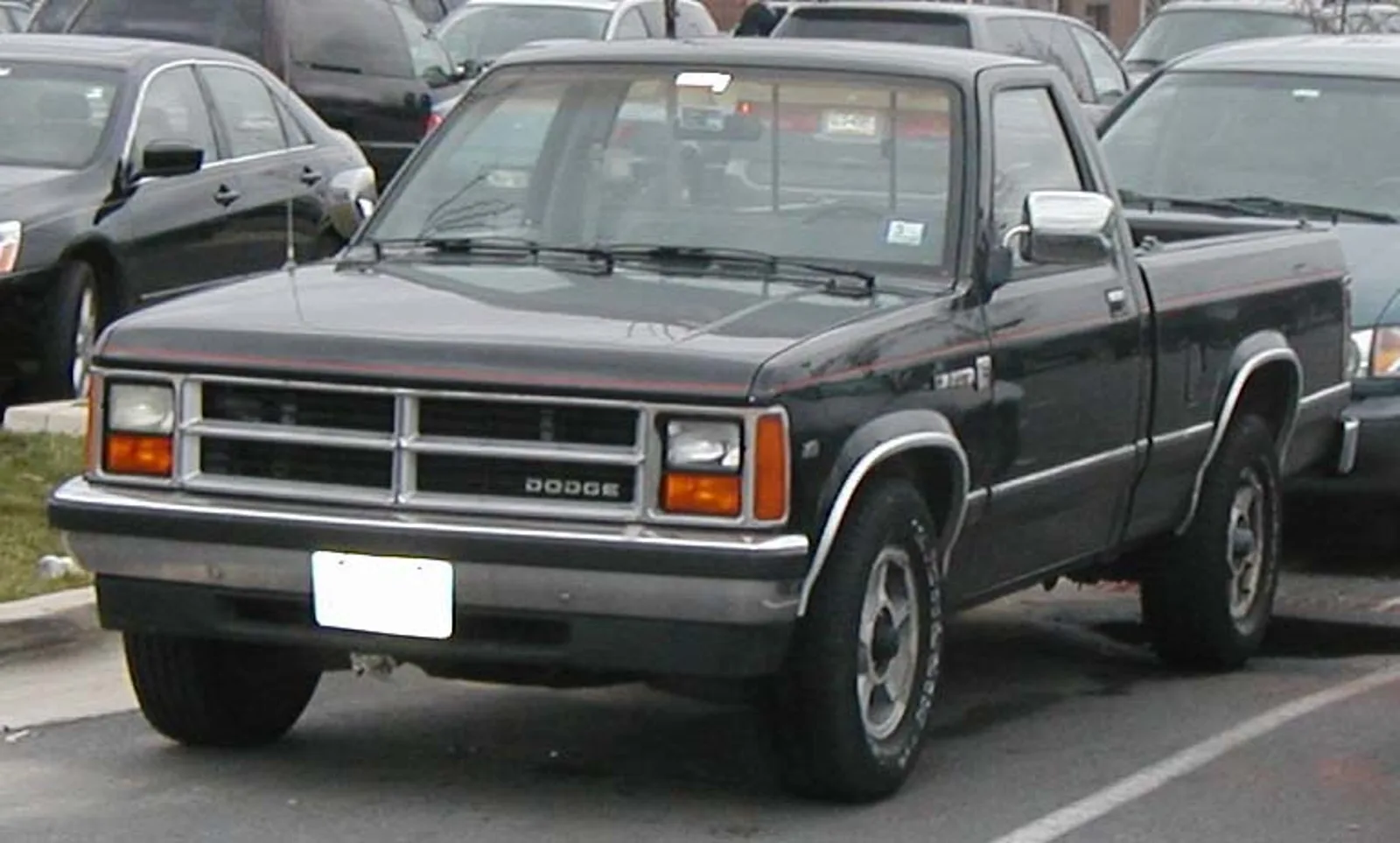
From the 1987 rack-and-pinion original to the 2011 end of production, the Dakota was built in three generations and took a Ram name for its last two years.
The Dodge Dakota was a Chrysler mid-size pickup built from 1987 to 2011 in three generations. It was the first mid-size pickup with an optional V8 and returned in 2025 as a South American model.
The Dodge Dakota was a mid-size pickup built by Chrysler and sold by its Dodge Truck division from the 1987 model year, later moving to the Ram Truck division for 2010 and 2011. It was built in three generations and was the first mid-size pickup to offer an optional V8 engine.
Every Dakota came off the line at Chrysler's Warren Truck Assembly plant in Michigan. Its body-on-frame construction and live rear axle on leaf springs were conventional, but the package gave buyers a compact truck with real towing and V8 capability, which set it apart from its rivals.
Where did the Dodge Dakota come from?
Chrysler developed the Dakota as a mid-size pickup, and it kept investment low by sharing many components with existing Chrysler products. The plant it used was the same one that built the full-size Dodge D and W series trucks, which trimmed the cost of getting the truck to market.
The N-body platform came out of the operational work of Harold K. Sperlich, who ran Chrysler's product planning in the early 1980s. Its layout gave the Dakota a sound base, and the truck was ready for production in the 1986 timeframe before its first model year on sale.
The mid-size segment at the time was dominated by smaller and cheaper pickups, so the Dakota aimed at buyers who wanted more capability than a compact but less size than a full-size truck. That positioning became the basis for three decades of Dakota development.
The mid-size pickup that offered a V8 first and kept building the tough, rear-drive Dakota until 2011.
What made the first-generation Dakota different?
The first-generation Dakota, built from 1987 to 1996, was the first pickup to use rack-and-pinion steering. That feature was fitted to 2WD models only in the early years, and early trucks did not have power steering as standard.
Four-wheel drive was offered only with the V6, and the truck came with both 6.5-foot and 8-foot beds. A five-speed manual or three-speed automatic transmission was available across the range, which gave buyers a choice of driving style.
Chrysler added a Club Cab for 1990, a two-door model with six-passenger seating. The rear seat was best suited to cargo, children and shorter adults, but it made the Dakota more useful as a family truck than the regular cab had been.
What engines did the first-generation Dakota offer?
The lineup began with a 2.2-litre K four-cylinder rated at 94 hp in 1987 and 1988. A 3.9-litre LA V6 with 125 hp arrived in 1987 and ran to 1991, and fuel injection replaced the carburettors on that engine for 1988 with the same rated output.
A 2.5-litre K four-cylinder with 100 hp was offered from 1989 to 1995, and a 5.2-litre LA V8 with 170 hp came in 1991. The 1992 and 1993 models moved to Magnum engines, with the 3.9-litre V6 making 180 hp and the 5.2-litre V8 making 230 hp, both with multiport fuel injection.
The 1994 to 1996 Magnum V6 made 175 hp and the Magnum V8 made 225 hp. The final year of the first generation saw the base four-cylinder replaced by a 2.5-litre AMC unit with 120 hp, which was a clear step up from the K-based engine it succeeded.
How were the Dakota trims organised in the first generation?
The base Dakota S came with vinyl seats, a black grille and steel wheels, and buyers could add air conditioning or power steering as extra-cost options. The Sport was the mid-range model, adding cloth trim, sport-styled steel wheels and a tilt steering column.
The Sport convertible was the only Dakota drop-top, offered from 1989 to 1991 with a manual folding roof and alloy wheels. The LE, later renamed SLT in 1994, sat at the top of the range with power windows, alloy wheels and bodyside cladding.
The Sport package was added as a mid-year release and was available only with the 3.9-litre V6, in both 2WD and 4WD. It added black bumpers, side stripes and a sliding rear window that had previously been reserved for the LE.
What were the Shelby and Li'l Red Express versions?
In 1989 Carroll Shelby built a V8 Shelby Dakota, his first rear-wheel-drive vehicle in two decades. It was a notable example of how the Dakota could be pushed toward performance, even though the Shelby was a small-volume project.
The Li'l Red Express Dakota and the Dakota Warrior were special editions built by L.E.R. Industries of Edwardsburg, Michigan. They used a step-side bed made from fibreglass and galvanneal, with the Express recalling the 1978 to 1979 Dodge Express models and the Warrior the Warlock trim.
Production of those editions ran into the hundreds, and a few were fitted with the 5.2-litre Magnum V8, which was only an option during 1992, the final year of the Express and Warrior.
How did the second-generation Dakota look?
The second-generation Dakota began development in 1991, and its exterior design proposal by Dennis Myles was approved in mid-1993 under design director John R. Starr. Design freeze came in January 1994, long before Job 1, and design patents were filed on May 20, 1994.
The 1997 model year Dakota was presented in the summer of 1996 and was built from July 1996 to July 2004. It inherited the semi-truck styling of the larger Ram, and it kept most of the first generation's mechanicals, with rack-and-pinion steering as the main change.
The second generation also carried a range of new options, including a Quad Cab from 2000. That body style had a 63-inch bed and a 131.0-inch wheelbase, and it gave buyers room for three rear passengers as well as cargo.
Which trims defined the 1997 to 2004 Dakota?
The ST was the base model, with vinyl seats, four speakers and steel wheels, and it came only with the V6. The Sport added cloth seats and alloy wheels, and it was available with every engine except the high-performance 5.9-litre V8.
The SXT arrived for 2001 as the mid-range model, adding air conditioning, a premium interior and power windows with keyless entry as an option. The SLT was the top-line model from late 2000, with premium alloy or chrome-clad wheels and a choice of every engine.
The R/T, sometimes called the 5.9 R/T, was the high-performance top-line model from 1997 to 2003. It added sport front seats, chrome-clad wheels, larger tyres and a six-speaker Infinity audio system, along with the 5.9-litre V8.
What made the 5.9 R/T so quick?
The R/T package was limited in the spring of 1998 as an option on the Sport model, and it ran until 2003. It used a 5.9-litre Magnum V8 producing 250 hp at 4,400 rpm and 345 lb ft at 3,200 rpm, mated to a 46RE four-speed automatic.
The R/T had 17-inch cast aluminium wheels on P255/55R17 tyres, a limited-slip differential and tuned suspension, brakes and steering. It sat one inch lower than the standard Dakota and could accelerate from 0 to 60 mph in 6.9 seconds, with a quarter-mile time just over 15 seconds.
Towing capacity for the R/T was 1,800 lb (816 kg), and payload was 970 lb (440 kg). Those figures reflected a truck that was more than a showpiece, even if its rear-drive performance was the main draw for enthusiasts.
What changed in the late second generation?
In 2000 the 8-foot regular-cab bed was dropped, and the 5.2-litre Magnum V8 gave way to a 4.7-litre PowerTech V8 with the new 45RFE automatic. The Quad Cab became the most flexible body style in the range.
A 2001 interior redesign brought a new dash, door panels and seats, while 2002 was the final year for the four-cylinder engine. SIRIUS Satellite Radio also arrived as an option, and a CD changer radio was offered to save space.
In 2003 the OHV V6 and the large R/T V8 were retired, and 2004 brought a 3.7-litre PowerTech V6 along with a 4.7-litre V8 option. In 2004 the cassette deck was dropped in favour of a standard CD player.
Was the Dakota built in Brazil?
The Dakota R1 was developed for Brazil in 1998 by a small team, featuring a base four-cylinder engine, a 2.5-litre VMI turbodiesel and a V8 on a reinforced four-wheel-drive chassis. Some 28 roll-in-chassis configurations were planned to be built at the Curitiba facility.
That programme was cancelled when Chrysler was bought by Daimler, but the second-generation truck was assembled and sold in Brazil from 1998 to 2001. The Brazilian work showed how the Dakota could be adapted for markets beyond North America.
What changed with the third-generation Dakota?
The redesigned 2005 Dakota shared its platform with the Dodge Durango SUV, and it was 3.7 inches longer and 2.7 inches wider than the outgoing truck. It used a new front and rear suspension and rack-and-pinion steering, along with five-lug wheels that cut costs.
The standard engine was a 3.7-litre PowerTech V6 producing 210 hp and 235 lb ft, and two 4.7-litre V8 options were available. The standard V8 made 230 hp and 295 lb ft, while the high-output version made 260 hp and 310 lb ft, and the manual gearbox was dropped from the V8 models for 2007.
The 2008 facelift added a new 4.7-litre V8 producing 310 hp and 330 lb ft, plus built-in cargo-box utility rails and heated bench seats. The Dakota was rated for towing up to 7,050 lb (3,198 kg), and the IIHS gave the generation a Good rating in the frontal offset crash test.
Why did the Dakota leave the market?
The third generation was discontinued in 2011, with the last truck leaving the line on August 23, ending a 25-year run. Sergio Marchionne, then the CEO of Chrysler Group, said at the time that the Dakota would not be replaced by a similar vehicle.
His reasoning was that compact trucks were losing popularity in North America. Fiat Chrysler later agreed in September 2014 with Mitsubishi Motors to co-develop a next-generation Triton and L200 pickup, which is sold as the RAM 1200 in some Middle Eastern countries.
Did the Dakota return after 2011?
A fourth-generation Dakota was released in August 2025 in Argentina for South American buyers. The Argentinian truck draws on parts from the Fiat Titano, and its 2.2-litre diesel makes 197 hp and 332 lb ft, sent through an 8-speed automatic with four-wheel drive as standard.
A North American Dakota was confirmed by Stellantis chief executive Antonio Filosa in 2025 and is under development, as a body-on-frame design distinct from the Argentinian model. Its arrival would close a gap that opened when the third generation ended.
What are the Dodge Dakota specifications?
| Generation | Engine | Output | Notes |
|---|---|---|---|
| First (1987 to 1991) | 3.9-litre LA V6 | 125 hp | Fuel injection from 1988 |
| First (1991) | 5.2-litre LA V8 | 170 hp | Optional V8 |
| First (1992 and 1993) | 3.9-litre Magnum V6 | 180 hp | Multiport EFI |
| First (1992 and 1993) | 5.2-litre Magnum V8 | 230 hp | Multiport EFI |
| First (1996) | 2.5-litre AMC I4 | 120 hp | Replaced the K-based four |
| Second R/T (1998 to 2003) | 5.9-litre Magnum V8 | 250 hp at 4,400 rpm | 345 lb ft at 3,200 rpm |
| Second (2000) | 4.7-litre PowerTech V8 | Replaced the 5.2 V8 | 45RFE automatic |
| Third (2005) | 3.7-litre PowerTech V6 | 210 hp | 235 lb ft |
| Third (2008) | 4.7-litre V8 | 310 hp | 330 lb ft |
| South America (2025) | 2.2-litre diesel | 197 hp | 332 lb ft; 8-speed automatic |