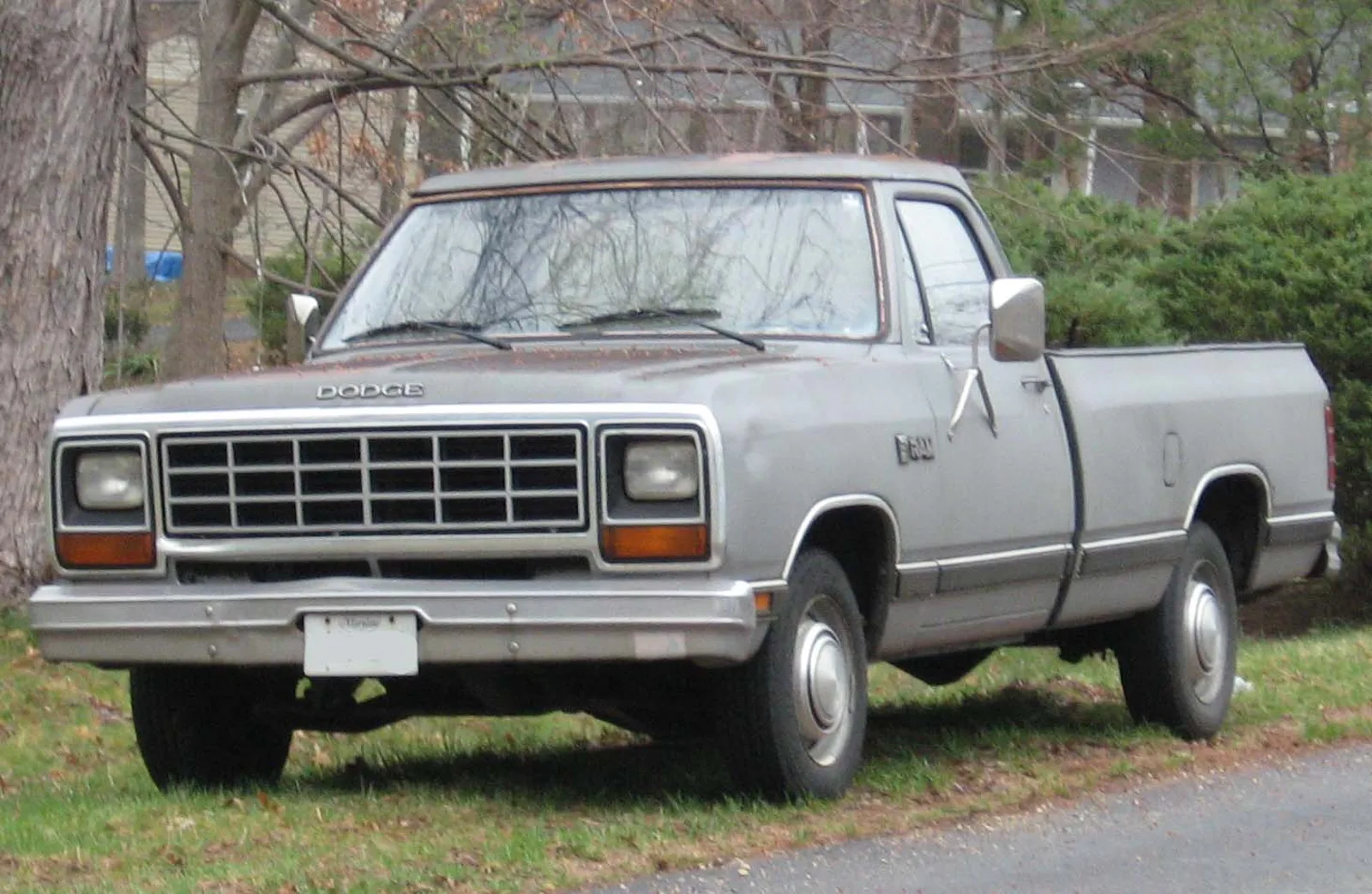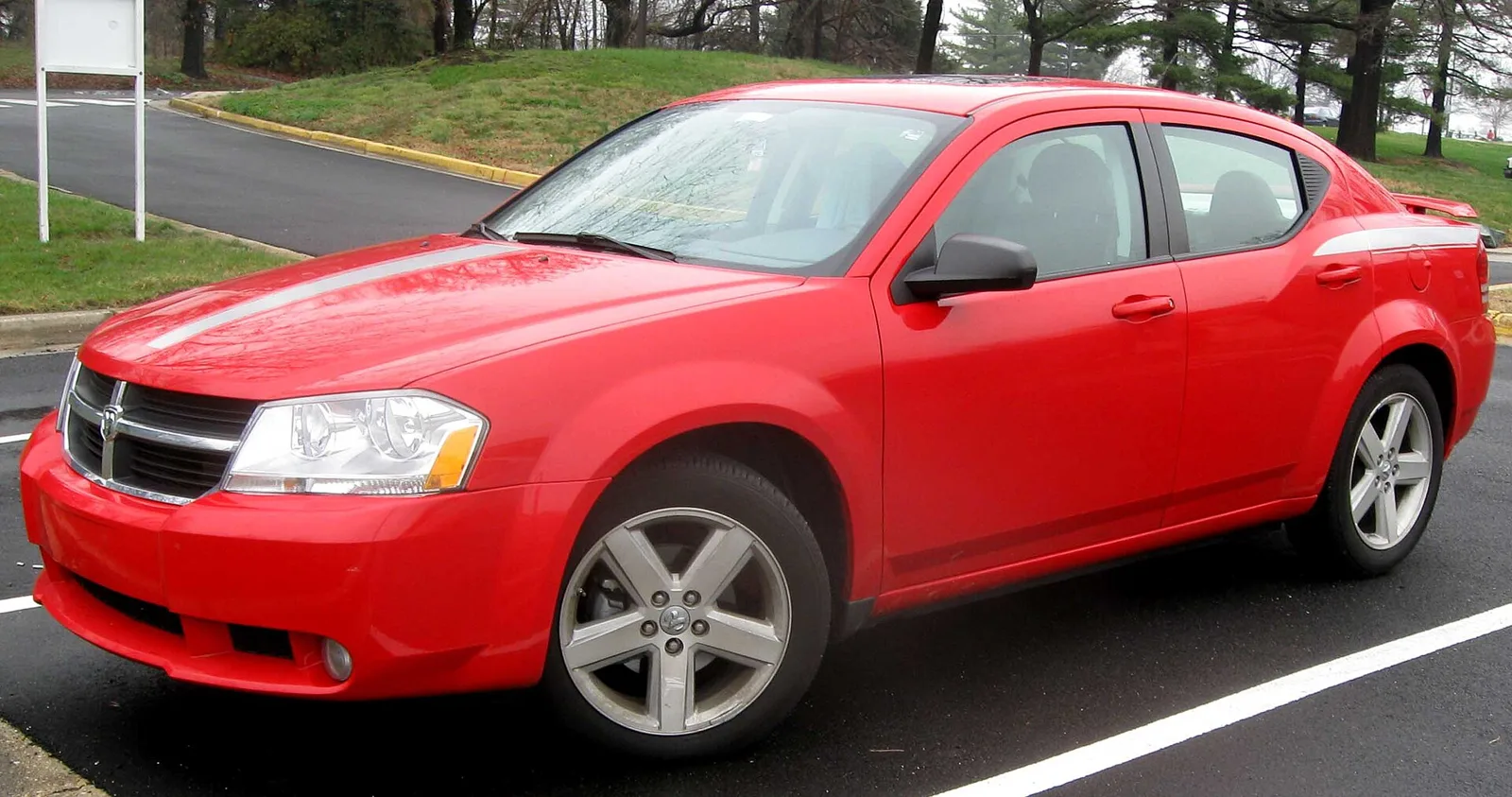
A name that appeared in South Africa, North America and Europe before settling on a mid-sized Dodge built with Mitsubishi know-how and later Chrysler engineering.
Sold as a two-door coupe from 1994 to 2000 and a four-door sedan from 2007 to 2014, this mid-sized Dodge came from a Chrysler and Mitsubishi venture for the coupe and replaced the Stratus with a 2.4 L four-cylinder base engine for the sedan.
The Dodge Avenger was a front-wheel drive mid-sized car sold under one name in two separate eras. The two-door coupe of 1994 to 2000 came out of a Chrysler and Mitsubishi venture, while the four-door sedan of 2008 to 2014 took over from the Stratus. The nameplate had surfaced in South Africa and North America decades before that, and it came back in 2023 on a Jeep.
Where did the Avenger name come from?
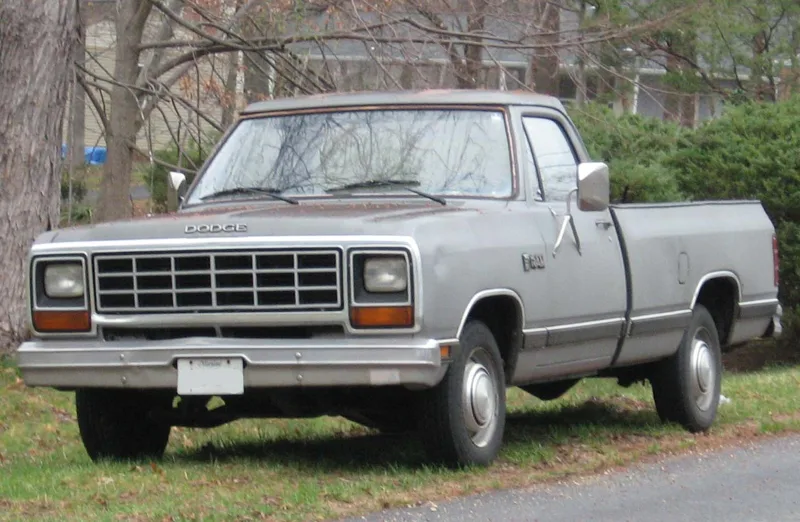
The name first appeared in 1975 on a badge-engineered Hillman Avenger sold only in South Africa. Dodge marketed that car, and Chrysler renamed it in 1976 before the model was dropped. The same basic car was sold in North America as the Plymouth Cricket between 1972 and 1974, which makes the early history unusually tangled.
Hillman engines were replaced by a Peugeot 1.6 L unit to satisfy local content rules. None of the later Avengers of the 1990s and 2000s shared anything mechanical with that first car, so the nameplate was effectively a fresh start each time it returned.
A name that wandered through three continents before settling on a mid-sized Dodge sedan that earned Good safety ratings.
How was the 1995 coupe built?
Diamond Star Motors, a joint venture between Chrysler and Mitsubishi, produced the two-door coupe from 1994 until 2000. Chrysler had sold its equity stake to Mitsubishi in 1993, and the plant became Mitsubishi Motors Manufacturing America on July 1, 1995. The coupe rode on a version of the Galant platform that also underpinned the Eclipse, with a wheelbase of 2,634 mm (103.7 in).
Diamond Star cars built from 1994 until 1996 carry DSM identification in the engine bay, a detail collectors look for when they are checking a car's origin.
What engines did the coupe use?
Buyers chose between a 2.0 L inline-four from Chrysler, known as the 420A, and a 2.5 L V6 designed by Mitsubishi. The four-cylinder came with a five-speed manual shared with the Eclipse and Eagle Talon, or a four-speed automatic. The V6 was offered only with the A604 automatic transmission.
Both engines suited a suspension that was fully independent with double wishbones at each corner. Steering came from a variable-speed rack-and-pinion unit, which kept the coupe feeling tidy on a twisty road.
How did the coupe change year by year?
The coupe received modest updates each year, but a few changes shaped how it drove and how it looked. Power rose, the V6 became more common, and safety equipment moved from optional to standard.
- 1995: standard 2.0 L DOHC 16-valve four rated 104 kW (140 hp; 142 PS) and 176 N m (130 lb-ft); optional 2.5 L SOHC V6 on the ES rated 116 kW (155 hp; 157 PS)
- 1996: V6 output raised to 163 hp with 230 N m (170 lb-ft); OBD-II made standard
- 1997: 16-inch wheels standard, a Sport model added, and the license plate moved to the rear bumper
- 1998: new Cafe Latte exterior colour and a black and grey interior option
- 1999: next-generation driver and passenger airbags added
- 2000: V6 and automatic became standard on every coupe, and the four-cylinder was dropped
Why did the coupe end in 2000?
Sales were disappointing, and the coupe was discontinued after the 2000 model year. Dodge filled the gap with a Stratus coupe for 2001. That car was built on the third-generation Eclipse platform, and Mitsubishi put it together at the old Diamond Star site, while Chrysler engineered and built the Stratus sedan.
What was the 2008 sedan?
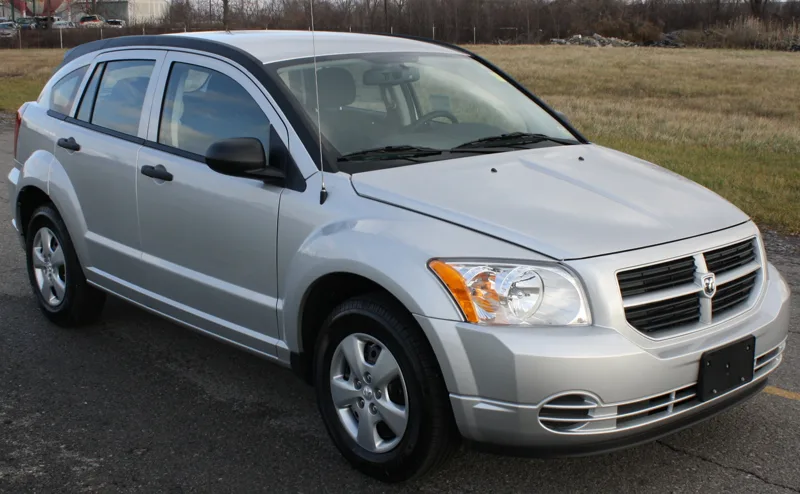
The Avenger name returned in February 2007 on a 2008 model year sedan that replaced the Stratus. Chrysler had shown a concept at the Paris Motor Show on 28 September 2006, and the production car was launched first in Europe, where it was marketed in the United Kingdom.
Ryan Nagode styled the exterior, sharing a design approach with the Journey, while Ben S. Chang designed the interior. The car filled a gap in the Chrysler range left when the Neon was discontinued four years earlier.
Which engines and trims did the sedan offer?
The base engine in the SE and SXT was a 2.4 L four-cylinder, the GEMA World Engine built in a joint venture between DaimlerChrysler, Mitsubishi and Hyundai. An optional 2.7 L V6 sat in the SXT, while the R/T came with a standard 3.5 L V6. Export markets also received a 2.0 L naturally aspirated World Engine and a 2.0 L turbocharged diesel made by Volkswagen.
- SE: the base trim in the first years and again in the later run
- SXT: the volume trim, offered with the 2.4 L four or the 2.7 L V6
- SXT Plus: a more uplevel trim that used the 3.6 L Pentastar V6
- R/T: the performance trim with the 3.5 L V6, later a sportier model
- R/T AWD: an all-wheel drive version sold only for a short period
How did the sedan change in 2010 and 2011?
The 2010 model year brought front side airbags and head-curtain airbags, along with head-impact protection in the front seats. It also dropped the optional all-wheel drive and removed the 2.7 L V6, leaving two drivetrains: a 2.4 L four with a four-speed automatic, and a 3.5 L V6 with a six-speed AutoStick gearbox on the R/T.
The 2011 model year was the first real overhaul since the car came back. A new crosshair grille, LED taillights and a redesigned dashboard arrived, with soft-touch plastics replacing the materials that had been criticised for poor fit. The 3.6 L Pentastar V6 produced 211 kW (283 hp) and 350 N m (260 lb-ft), and the trim line was rebuilt around Express, Mainstreet, Lux and Heat.
How safe was the Avenger sedan?
The IIHS rated the 2008 to 2014 Avenger, which was also sold as the Sebring until 2010 and as the Chrysler 200 from 2011, as Good overall. The small overlap test returned an Acceptable rating because of marginal dummy movement and slight intrusion into the passenger compartment.
The side test scored Good, although rib fractures were possible for the driver. Roof strength, head restraints and seats all earned Good ratings. The car won Top Safety Pick in 2009, 2010, 2011, 2012 and 2014, and it earned Top Safety Pick+ in 2013.
Who did the sedan compete with?
Dodge pitched the Avenger head to head with the Chevrolet Malibu and the Ford Fusion, two of the most popular mid-sized sedans in North America. The Chrysler Sebring, built on the same JS platform, targeted buyers of pricier American rivals such as the Mercury Milan, the Pontiac G6 and the Saturn Aura.
The launch campaign used a 30-second television advertisement that debuted on 4 March 2007 during NHL hockey. It showed a lab technician who discovers he can play a tune through the car's transmission. A second spot cast the Avenger as an everyday superhero, carrying a driver through crowded streets to a family at home.
The Chill Zone compartment, standard on every sedan, held up to four cans in the glovebox and cooled them to 4 C (40 F). It was one of the most talked-about features in the early advertising.
Where did the Avenger race?
The first-generation coupe body was used widely in the National Hot Rod Association, where Darrell Alderman and Scott Geoffrion drove as the Dodge Boys from 1994 until 2000. The coupe also contested the International Race of Champions in 1994 and 1995, a series where Dodge had been the car of choice since 1990.
In NASCAR, the Avenger replaced the Charger as Dodge's car for the 2007 Nextel Cup season. It appeared as the standard spec Car of Tomorrow body, with Avenger grille, headlights and taillights. Juan Pablo Montoya, a former Formula One driver, gave the Avenger its first win at the 2007 Toyota Save Mart 350 at Infineon Raceway, and the Charger body returned to the series in 2008.
What changed inside the 2011 Avenger?
The 2011 model year brought a fully redesigned dashboard and instrument panel, with an available 6.5-inch navigation and media screen as its centrepiece. Higher-quality soft-touch plastics replaced the materials that had drawn criticism for poor fit and finish, and the seats gained better cushioning and higher-grade upholstery.
Two-tone interior colour combinations were available, giving buyers a little more choice inside the cabin. The update was the first real overhaul since the car's 2008 return, and it made the sedan feel closer to its modern rivals.
How did the sedan reach Europe and the UK?
The sedan debuted in Europe, where British showrooms offered it as a mid-sized option. The Neon had left the range four years before, and the Avenger was meant to fill that space. It was also launched in Australia with only the 2.4 L engine.
UK marketing was dropped after Fiat's takeover of the Chrysler Group, but sales continued in the Republic of Ireland and Western Europe until late 2009. Those markets received cars that were not badged the same way as North American or South American versions.
Specifications at a glance
| Specification | Detail |
|---|---|
| Coupe production | 1994 to 2000 |
| Coupe wheelbase | 2,634 mm (103.7 in) |
| Coupe engines | 2.0 L DOHC four, 104 kW (140 hp; 142 PS); 2.5 L SOHC V6, 116 kW (155 hp; 157 PS) |
| Sedan production | 2007 to 2014, launched as a 2008 model year car |
| Sedan engines | 2.4 L four, 2.7 L V6 optional, 3.5 L V6 standard on the R/T |
| 2010 outputs | 2.4 L four 129 kW (173 hp; 175 PS); 3.5 L V6 175 kW (235 hp; 238 PS) |
| 2011 Pentastar V6 | 3.6 L, 211 kW (283 hp), 350 N m (260 lb-ft) |
| Sedan safety | IIHS Good overall, 2008 to 2014 |