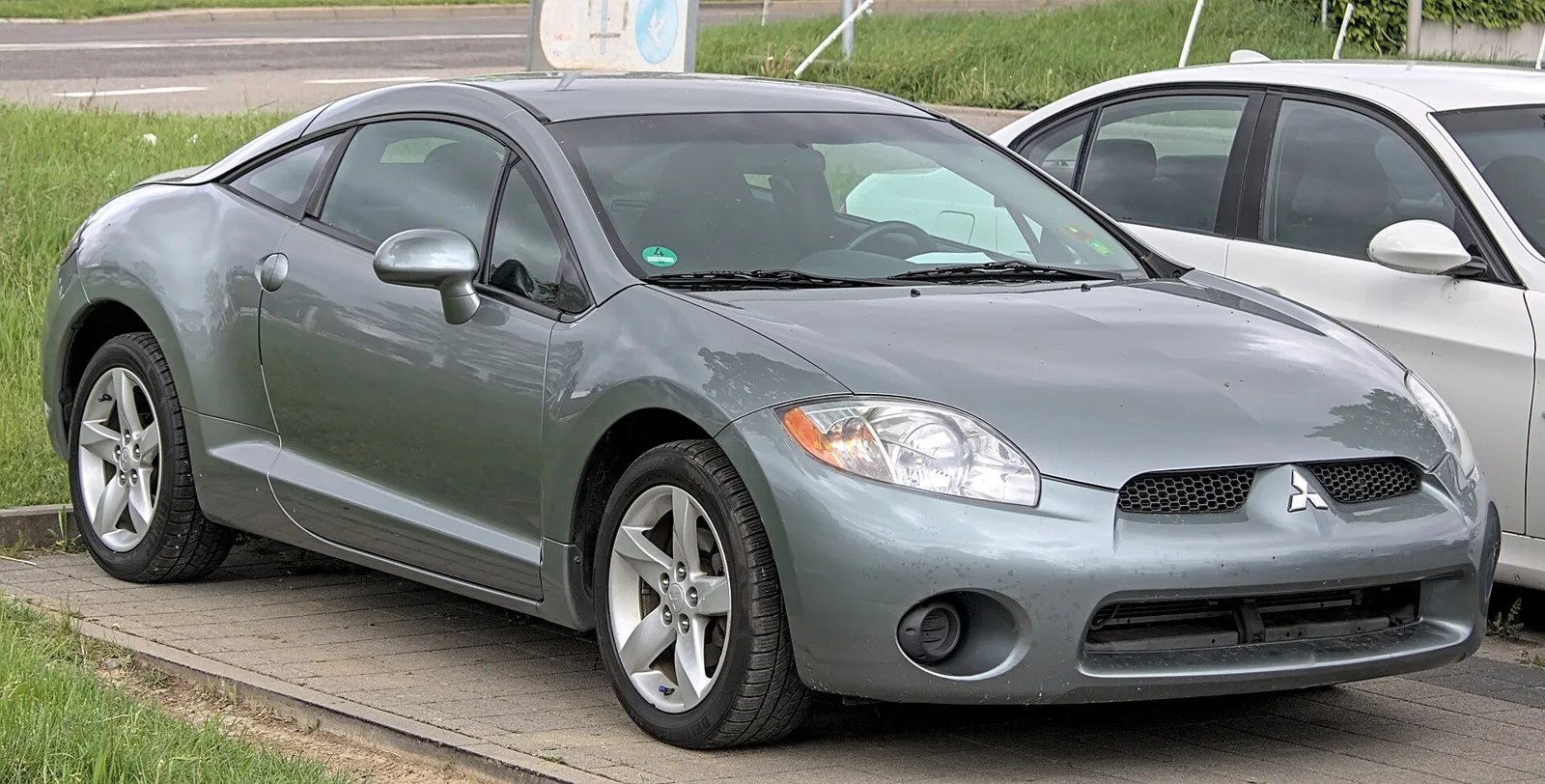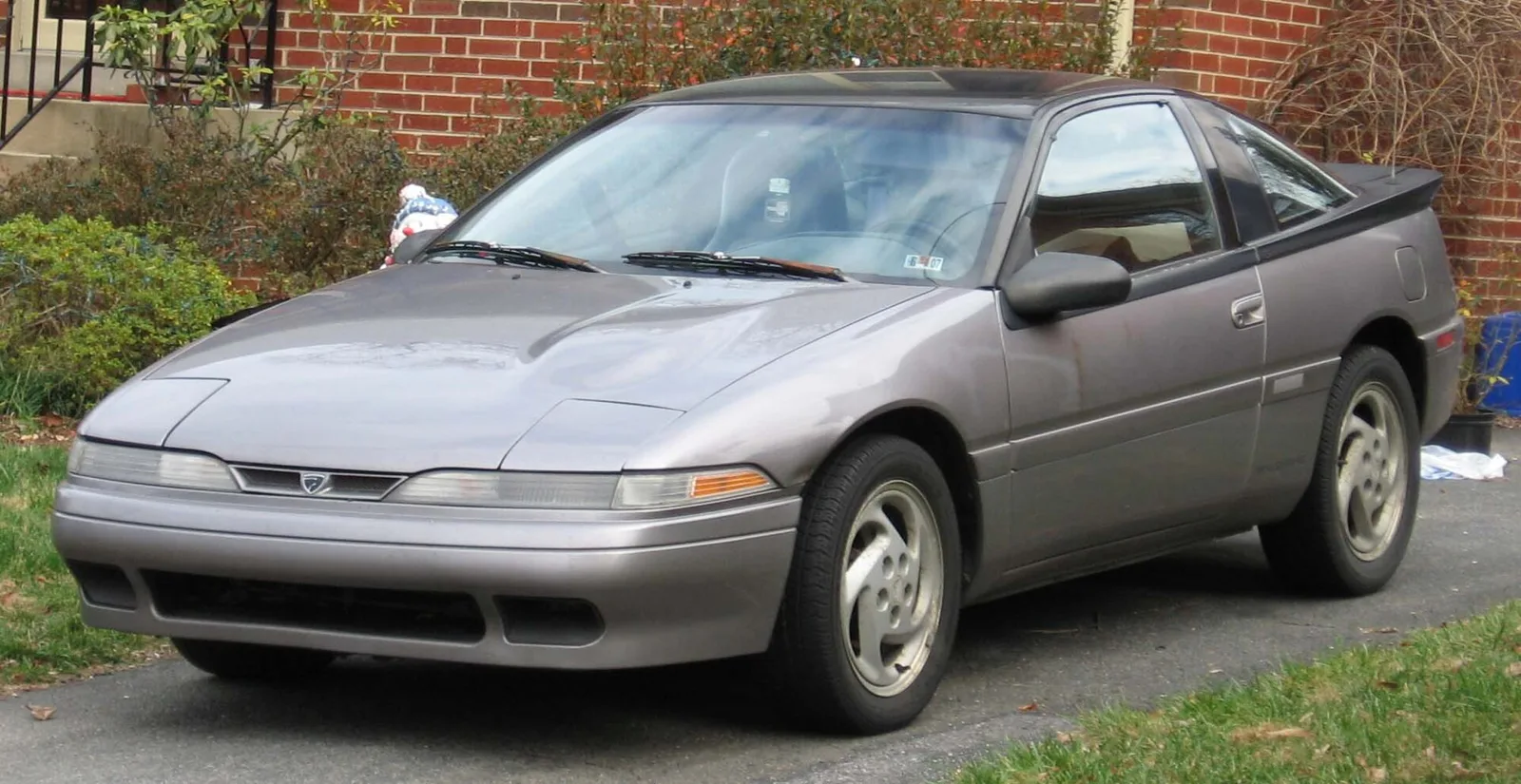
Two generations, a turbocharged Mitsubishi engine and a touring car record that ran until the Eagle division ended in 1998.
The Eagle Talon was a sport compact hatchback coupe from Eagle, a Chrysler division, sold in two generations from 1990 to 1998. It was built in a joint venture between Chrysler and Mitsubishi and shared its platform with the Plymouth Laser and Mitsubishi Eclipse.
The Eagle Talon was Chrysler's sport compact hatchback coupe, sold under the Eagle badge from the 1990 model year. It came out of a partnership between Chrysler and Mitsubishi, and it ran in two generations until the Eagle division ended in 1998.
Where did the Eagle Talon come from?
The Talon was built by Diamond-Star Motors, the joint venture of Chrysler and Mitsubishi, at its plant in Normal, Illinois. Production of the first generation began with a launch in mid-1989 for the 1990 model year, on the Chrysler D platform that its Laser and Eclipse siblings also used.
Eagle sold the Talon, while Plymouth and Mitsubishi sold their own versions. The three cars shared their mechanics exactly when options matched, covering engine, gearbox and driveline. Differences lay in wheels, colour choices, taillights, bumpers and spoilers.
A Chrysler and Mitsubishi sport coupe that won touring car titles before the Eagle name was retired in 1998.
How did the first generation look?
The first-generation car came with a two-tone body colour and a black greenhouse covering the roof, pillars and door-mounted mirrors. The 1990 and 1991 cars had pop-up headlights, while 1992 to 1994 cars used exposed composite headlights with integrated turn signals.
Every version had a bulge on the left flank of the bonnet. It was needed for camshaft clearance with the 4G63 engine, and it appeared on all versions, including the base DL.
What engines powered the first generation?
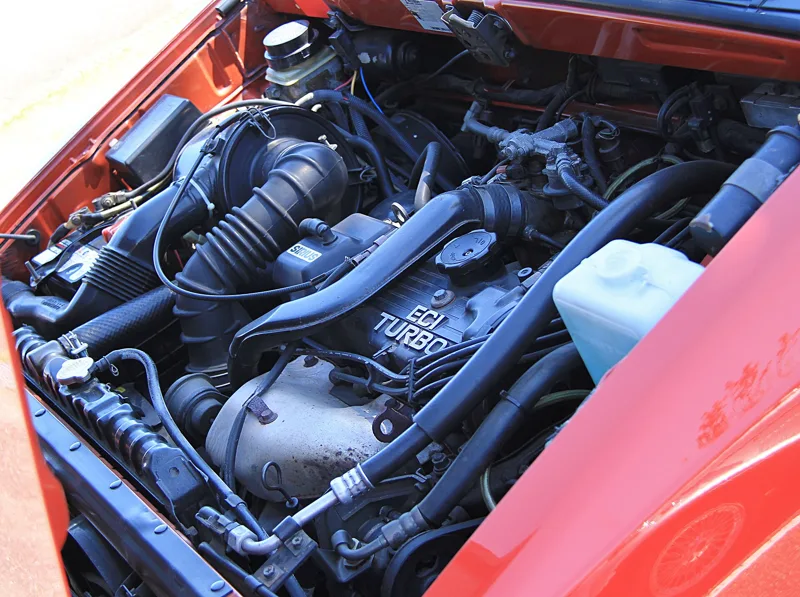
The base DL of 1993 and 1994 used a 1.8 L 4G37 engine rated 92 hp. The ES was naturally aspirated with a 2.0 L 4G63 rated 135 hp (101 kW; 137 PS), while the turbo TSi and TSi AWD used the same 2.0 L engine with an intercooled Mitsubishi 14b turbocharger.
That turbo ran 11 psi (0.8 bar) of boost. The TSi AWD was rated 195 hp (145 kW; 198 PS), while the front-wheel-drive TSi made 190 hp (142 kW; 193 PS) because of a restrictive exhaust. Automatic turbo versions were rated 180 hp (134 kW; 182 PS) because they used a smaller 13g turbo, and 1990 turbo models came only with a five-speed manual.
From May 1992 onward, first-generation cars received a 7-bolt bottom end with lighter connecting rods and a larger one-piece crankshaft girdle. That same engine also went into the 1992 Mitsubishi Lancer Evolution.
What changed when the second generation arrived in 1995?
The second generation arrived in 1995 alongside the Eclipse, and the Plymouth Laser was dropped. Turbo engines received a reworked intake and exhaust system, compression rose to 8.5:1 from 7.8:1, and a Garrett T25 turbo gave 14 psi (1.0 bar) at its peak. The T25 was smaller than the earlier turbo but spooled faster.
Suspension also changed. The first generation used MacPherson struts at the front, while the second used double wishbones at the front and a multilink arrangement at the rear. The double-wishbone front improved the roll-camber curve for better handling.
Styling set the Talon apart from the Eclipse. Its bumper cap dipped in the middle to accommodate a high-mounted number plate, its rear lights used amber turn signals, and its TSi sickle spoiler was painted black whatever the body colour. The Eclipse used a body-coloured basket handle spoiler and red turn signals.
Turbo TSi models received side skirts with embossed lettering behind the doors, while the non-turbo ESi did not. The Talon also had a black roof, where the Eclipse used a body-coloured top.
How did the 1997 update change the Talon?
For 1997 both the Talon and the Eclipse received a design update. The front and rear fascias were revised, the Eagle emblem was enlarged, and the TSi and TSi AWD wheels grew to 17 in (432 mm) from the earlier 16 in (406 mm) design.
The front gained a larger air intake, and a high-mount spoiler took the place of the old flush sickle unit. TSi models lost their side skirts, and embossed turbo lettering now sat between the doors and the rear wheels. The TSi AWD kept its permanent all-wheel drive, and the badging on the sides and rear changed to contrasting colours.
What equipment came as standard?
The ESi came with a 2.0 L DOHC four-cylinder, five-speed manual, disc brakes on all four wheels, driver and passenger airbags and cloth reclining front bucket seats. TSi added turbocharging, sport exhaust, upgraded suspension and alloy wheels, while TSi AWD added permanent all-wheel drive and cruise control.
The ESi list also covered tinted glass, a tachometer, a coolant temperature gauge, map lights, dual remote mirrors and a tilt steering column, with 195/70R14 tyres and wheel covers. TSi brought leather-wrapped steering, turbo boost and oil pressure gauges, a cassette player, a rear defogger, a cargo cover and net, lower bodyside cladding and fog lamps. Its tyres were 205/55/R16 on alloy wheels.
TSi AWD added power door locks and windows, plus 215/55/VR16 tyres, to the TSi kit. A limited-slip differential was optional on that model, and the permanent all-wheel drive system was standard.
Which trims were sold?
The first generation was offered as a base Talon from 1990 to 1992, with TSi FWD and TSi AWD turbo trims from 1990 to 1994, plus the DL and ES from 1993 to 1994. The second generation carried ESi, TSi and TSi AWD trims, each available with option packages.
Trim names matter when reading older listings. TSi denoted the turbo versions, AWD denoted permanent all-wheel drive, and ESi was the non-turbo entry point of the second generation.
Which options could buyers add?
Buyers could add air conditioning, anti-lock brakes, a four-speed automatic, a limited-slip differential on the TSi AWD and remote keyless entry with a security alarm. Power sunroofs, power driver's seats and a Homelink system were also offered on certain trims, with Homelink limited to 1996 to 1998.
Option packages were grouped by trim, and several required the four-speed automatic. The most complete TSi AWD package added leather or vinyl upholstery, a cassette or CD player with a graphic equalizer, a power driver's seat, a power sunroof and remote keyless entry. The graphic equalizer system included eight Infinity speakers.
How many Talons were built?
Production totalled 144,970 first-generation cars across 1990 to 1994, with the busiest year being 1991 at 33,537 cars. The second generation built 54,262 cars from 1995 to 1998, when output fell each year and 1998 was the lowest at 4,308 cars.
The gap between the 1991 peak and the 1998 low is large, reflecting the decline that preceded the end of the Eagle line. The yearly figures are set out below.
- 1990: 32,708 cars
- 1991: 33,537 cars
- 1992: 27,945 cars
- 1993: 26,740 cars
- 1994: 24,040 cars
- 1995: 25,066 cars
- 1996: 15,100 cars
- 1997: 9,788 cars
- 1998: 4,308 cars
How did the Talon perform in motorsport?
The Talon took the SCCA World Challenge touring car title in 1990 and 1991, then GT Touring crowns between 1993 and 1995. Eagle was among just two American makes to take the TC crown during the 1990s, alongside Oldsmobile with the Achieva from 1992 to 1994.
In the Escort Endurance series, Bobby and Tommy Archer won the 1989 Class A title in an all-wheel drive turbo car. Bobby Archer took the 1990 Super Production class title, Mitch Wright won the 1991 title in a non-turbo car, Neil Hanneman took Class D in 1992, and Willy Lewis won Class B in 1993.
The Eagle Talon TSi AWD also won the SSA class in 1989, and the Talon went on to win seven straight SCCA Pro Racing Championships with HKS and Archer Racing. The Dodge Shelby Charger had taken the SSA class of the predecessor championship in 1986. As of 2020, the Talon remained among the TC title winners.
Why did production end in 1998?
Production ended in 1998 as sales declined and Chrysler stopped promoting the Eagle brand. The last Talon rolled off the assembly line on 10 February 1998, and the 1998 model year was the rarest of all Talons, with 4,308 cars built.
In 1998 the Talon was the final model left in a shrinking Eagle range. Its final model year matched the final year of the Eagle division itself, so the car and the brand ended together.
What was the Eagle Jazz concept?
The Eagle Jazz was a 1994 concept car developed for the 1995 show circuit. It took the form of a four-door with a rounded hatchback tail and an inner hatch for loading cargo, and some of its ideas later appeared in the second-generation Chrysler Concorde.
Some observers thought the Jazz bore a strange resemblance to a four-door Eagle Talon, which makes it a curious footnote in the brand's story. Several of its design ideas later resurfaced in the Chrysler Concorde.
Did other cars use the TSi name?
Yes. The TSi nameplate was first used on the 1986 to 1989 Mitsubishi Starion wide-body, sold as the Dodge, Plymouth or Chrysler Conquest. It later appeared on a sportier Jeep Grand Cherokee ZJ in 1997 and 1998, and on the Chrysler Sebring for 2005 and 2006.
The TSi initials stood for Turbo Sport Intercooled, and the name was attached to performance versions of several Chrysler-linked vehicles. On the Talon it marked the turbo trims that defined the car's performance image.
Eagle Talon specifications at a glance
| Specification | Detail |
|---|---|
| Body | Sport compact hatchback coupe |
| Built at | Diamond-Star Motors, Normal, Illinois |
| Platform | Chrysler D platform, shared with Plymouth Laser and Mitsubishi Eclipse |
| Generations | First generation 1990 to 1994; second generation 1995 to 1998 |
| First-generation engines | 1.8 L 4G37 at 92 hp (DL); 2.0 L 4G63 at 135 hp (ES); turbo 180 to 195 hp |
| Second-generation engines | 2.0 L Chrysler 420A at 140 hp (ESi); 2.0 L 4G63 turbo at 205 to 210 hp |
| Turbo boost | 11 psi (0.8 bar) first generation; 14 psi (1.0 bar) second generation |
| Transmission | Five-speed manual or four-speed automatic |
| Production total | 144,970 first generation; 54,262 second generation |
| Last car built | 10 February 1998 |