A sport coupe built from 1990 to 2012 alongside Chrysler, with turbocharged GSX and GS-T models and an open-top Spyder.
The Mitsubishi Eclipse was a sport compact coupe that Mitsubishi built over four generations between the 1990 and 2012 model years. Diamond-Star Motors produced it through a Chrysler alliance, and the first two generations also sold as the Eagle Talon. The final car was built in August 2011 and later auctioned for charity.
Mitsubishi's Eclipse was a sporty coupe that the company built across four generations, from the 1990 model year to the 2012 model year. A convertible joined the range in 1996, and the first two generations also appeared as the Eagle Talon. Turbocharged GSX and GS-T models and the open-top Spyder gave the line much of its character.
The car was built through the Diamond-Star Motors venture that grew out of the Mitsubishi and Chrysler alliance. Each generation changed its shape, engine and platform, but the coupe kept its focus on sporty driving. The last car left the line in August 2011, and the badge returned in 2017 on a crossover.
Where did the Eclipse name come from?
Mitsubishi says the name honours an 18th-century English racehorse that won 18 races in a row and then retired unbeaten. The name was revived in 2017 for a compact crossover called the Eclipse Cross. That means the badge outlived the original coupe by several years and now sits on a different kind of vehicle.
The coupe therefore carried the name of a horse that never lost a race, even though the car itself was built for ordinary road use. The name therefore ties a road car to a horse with an unbroken record.
A sport coupe that ran from 1990 to 2012 and gave Mitsubishi a turbo and convertible range.
What did the first generation look like?
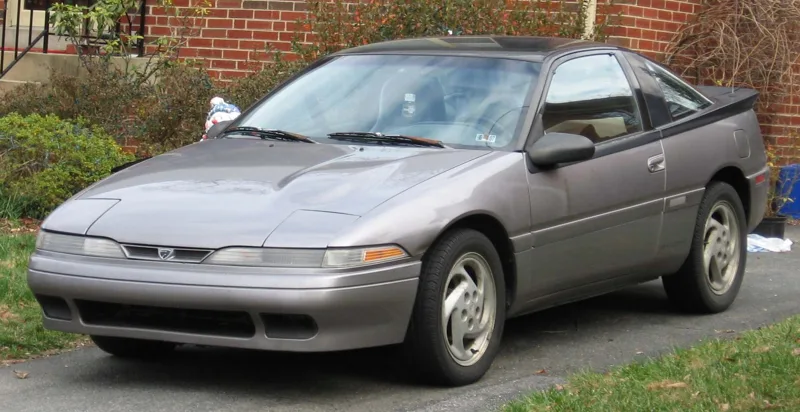
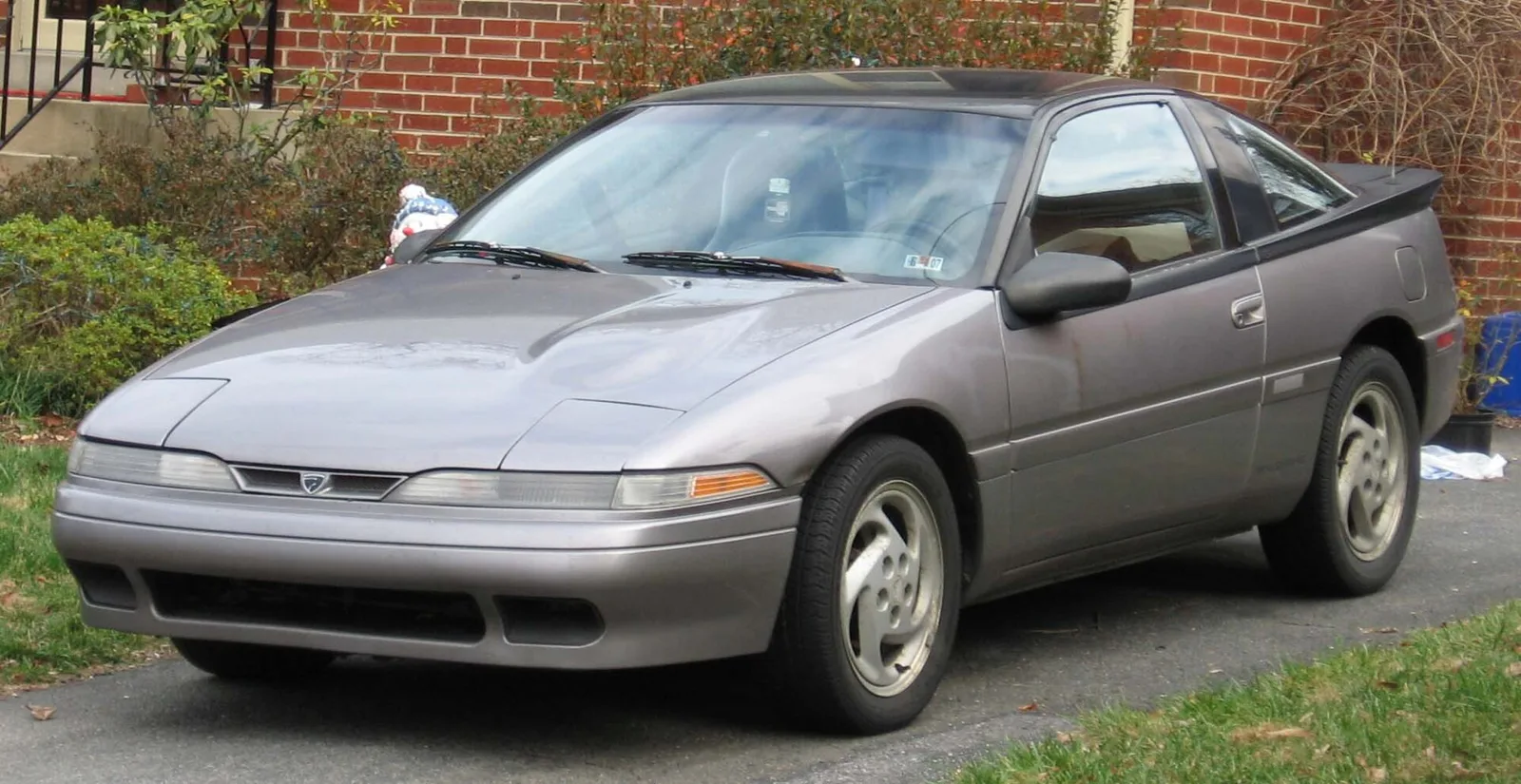
The first generation was a low, sleek coupe developed mainly for the North American market, where sales began in autumn 1989. Its hood sat so low that it needed a bump to clear the engine's camshaft cover. Most models were front-wheel drive, with the GSX the main all-wheel-drive version.
The body was revised only gradually during its life. A 1992 model year update brought more ovoid sheet metal, and the pre-facelift cars had pop-up headlights. Cars from 1992 to 1994 used exposed aerodynamic headlights instead, and the second generation replaced the first for the 1995 model year.
Which engines did the first generation use?
The base car used a 1.8 L four-cylinder rated at 92 hp (69 kW), while the GS DOHC used a 2.0 L engine making 135 hp (101 kW). The turbocharged GS Turbo and GSX models were rated at 180 to 195 hp (134 to 145 kW), with the figure depending on the transmission and model year.
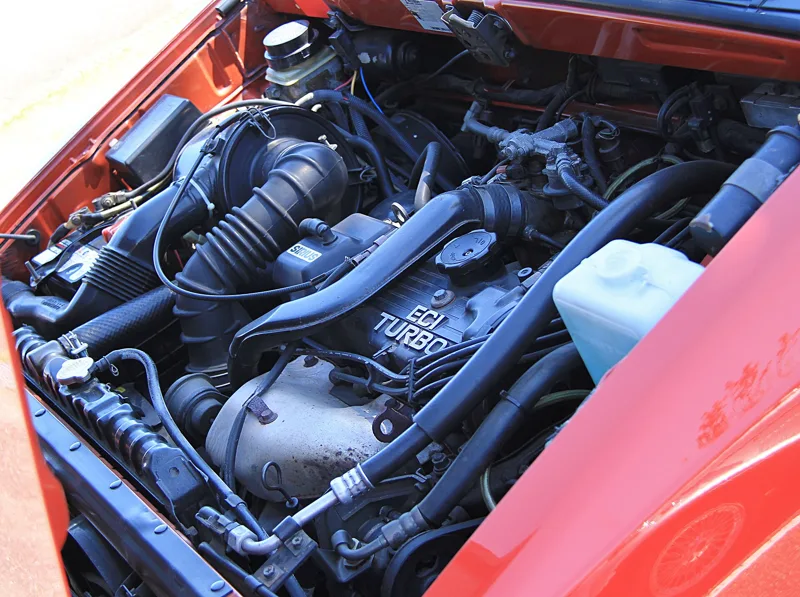
The engine sat transversely on the left side of the car, with the transmission on the right. Early engines were 4G37 and 4G63 gasoline inline-fours, so the range shared a common engine family. The 4G63 used an iron block, an aluminium cylinder head and two balance shafts for smoother running.
The turbocharged 4G63T had a 7.8:1 compression ratio and oil squirters under the pistons to help manage the extra heat that forced induction creates. Engines built up to April 1992 had six-bolt motors, and from May 1992 the design changed to seven bolts.
How did the second generation change?
The second generation arrived for the 1995 model year with dual airbags as standard, more rounded styling and a larger interior. The base RS used a 2.0 L engine from Chrysler, the 420A, rated at 140 hp (104 kW). The turbocharged GS-T was lifted to 210 hp (157 kW) and 214 lb ft (290 N m) of torque.
Compression in the turbo engine rose to 8.5:1, and a smaller Garrett T25 turbocharger set to 12 psi (0.8 bar) was fitted to reduce lag. A 1997 revision changed the grille, the headlights and the interior colours, giving the car a slightly different face.
The Spyder convertible arrived in 1996 in GS and GS-T guise, while the GSX remained the all-wheel-drive version. Those variants gave buyers an open-top option for the first time in the model's life.
What did the third generation bring?
The third generation, built from 2000 to 2005, used an extended wheelbase version of a platform shared with the Chrysler Sebring and Dodge Stratus. Its styling was described as geo-mechanical, with a hard-edged industrial look, and it followed the Mitsubishi SST design study. All-wheel drive was dropped from the range.
Two engines powered the range at launch: a 2.4 L four-cylinder rated 154 hp (115 kW), and a 3.0 L V6. The V6 made 200 hp (149 kW) in GT trim, while federal-spec cars were rated 205 hp (153 kW) in 2000 and 2001.
The 2003 GTS raised the V6 to 210 hp (157 kW), with 10:1 compression and an MVIM intake system. The third-generation powertrain was shared with the Galant, a sedan from the same maker, which tied the coupe to a wider Mitsubishi range.
Was there an electric Eclipse?
Yes. Mitsubishi built a prototype electric Eclipse in 2001 on the third-generation body. It used a lightweight electric motor and lithium-ion batteries from Japan Storage Battery, which cut charging time by 65% against nickel-hydrogen cells. The car drove over 400 km (249 mi) on one charge during the Shikoku EV Rally, a 780 km (485 mi) route.
The prototype remained just that. It shows that Mitsubishi tested electric drive on the third-generation body while the petrol cars continued in production.
What was the fourth generation like?
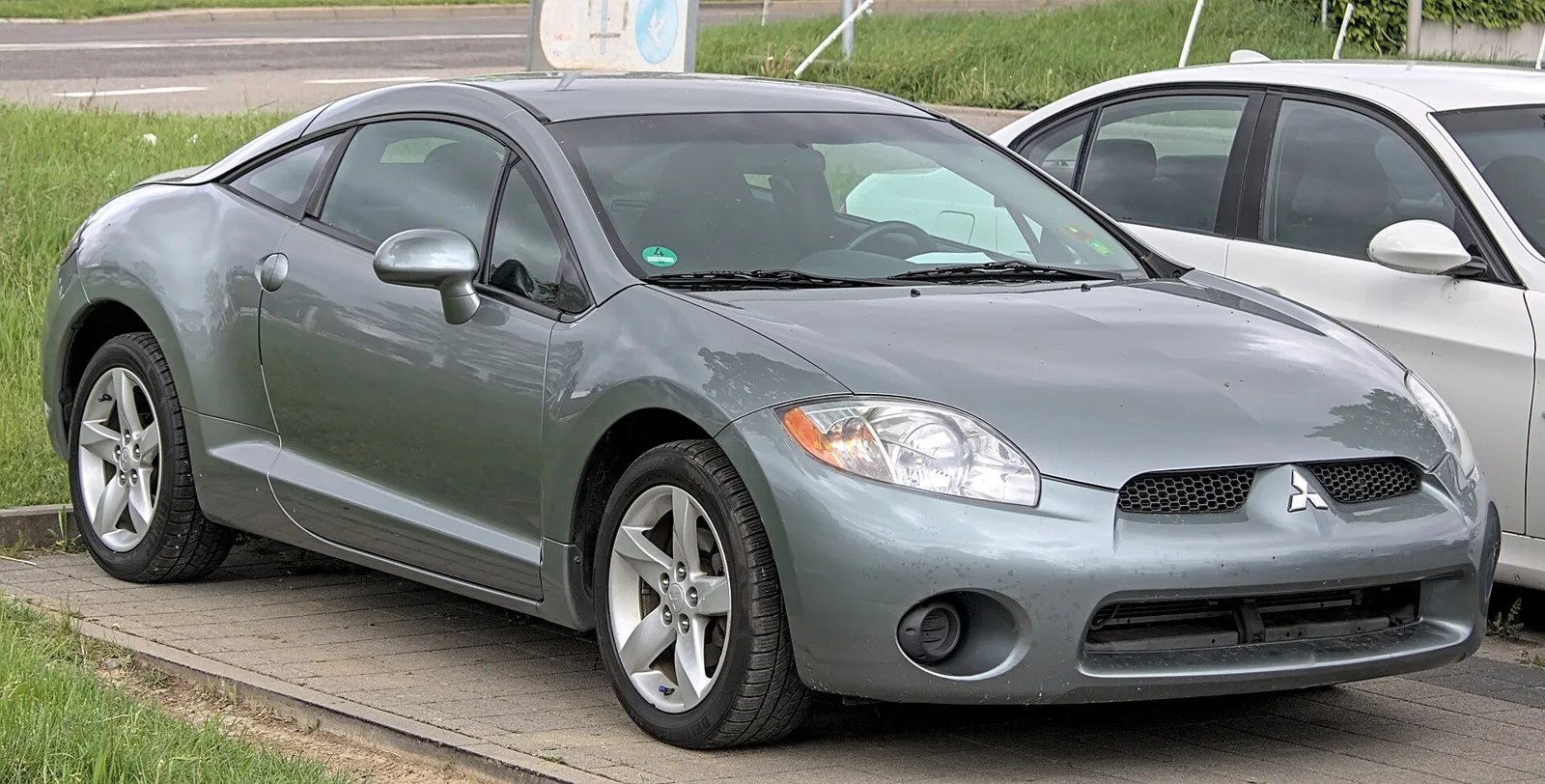
The fourth generation arrived in May 2005 on Mitsubishi's PS platform family. The GS used a 2.4 L four-cylinder rated 162 hp (121 kW), while the GT carried a 3.8 L V6 rated 263 hp (196 kW). The V6 rose to 265 hp (198 kW) from 2009.
The 2009 facelift removed the three-diamond triangle from the grille, which changed the look of the front end. The 2011 model year then brought a blackout roof, a backup camera and a suspension lowered about half an inch.
How did production end?
Production finished in August 2011, when the last Eclipse was built on 16 August 2011 in Kalapana Black. The colour was picked by Mitsubishi's Facebook community from a historical Eclipse palette. It was the only Eclipse to combine the 265 hp V6 with the commemorative SE package.
Across all four generations the total reached 906,876 units. The fourth generation was the final one, and the Eclipse name did not return on a coupe until the badge reappeared on a crossover.
The final car was auctioned by Mecum in St Charles, Illinois, on 17 September 2012, and it sold for $35,000. The proceeds went to the Japanese Red Cross to support victims of the 2011 Tohoku earthquake and tsunami, which turned the sale into a charity event.
Which recalls affected the Eclipse?
Mitsubishi recalled GSX models in March 1998, under bulletin 98V069001, because the transfer case could lock up through poor lubrication. Mitsubishi estimated that 24,275 vehicles were affected. Later recalls covered brake boosters and master cylinder seals in 2005, fuel tank brackets in 2008 and ABS corrosion in 2015.
The 2015 action covered cars built between 2005 and 2009, where corrosion in the ABS unit was the problem.
How did the Eclipse perform in motorsport?
The Eclipse also raced hard away from the showroom. A GT2-class GSX started 74th at the 1995 24 Hours of Daytona and finished 24th overall, passing 50 cars on the way. Brent Rau won three world drag racing championships in an Eclipse, and a Jett Racing car ran 6.2 seconds in the quarter-mile in November 2018.
Further results came in the years that followed:
- 1998: a GT3-class entry finished 24th at Daytona, and 1999 brought a 39th place after 455 laps.
- 2004 and 2005: Greg Collier won the NASA Super Unlimited national title in a Plymouth Laser RS Turbo.
- 2009 and 2010: a Spyder GS-T won the Super Lap Battle Limited championship.
- 2012: Mark Rybnicek won the Czech Hill Climb championship in an Eclipse.
- 2018: Jett Racing's drag Eclipse was rated at 1,600 hp, with rear-wheel drive and a 225 mph (362 km/h) top speed.
The drag and hill climb results show how far the platform could be pushed, although these were specialist cars rather than production models.
What are the Mitsubishi Eclipse specifications?
| Generation | Model years | Engines | Power |
|---|---|---|---|
| First | 1990 to 1994 | 1.8 L 4G37; 2.0 L DOHC; 2.0 L 4G63T turbo | 92 hp (69 kW); 135 hp (101 kW); 180 to 195 hp (134 to 145 kW) |
| Second | 1995 to 1999 | 2.0 L Chrysler 420A; 2.0 L 4G63T turbo | 140 hp (104 kW); 210 hp (157 kW) |
| Third | 2000 to 2005 | 2.4 L 4G64 four-cylinder; 3.0 L 6G72 V6 | 154 hp (115 kW); 200 hp (149 kW); 210 hp (157 kW) GTS |
| Fourth | 2005 to 2012 | 2.4 L 4G69 four-cylinder; 3.8 L 6G75 V6 | 162 hp (121 kW); 263 hp (196 kW), then 265 hp (198 kW) from 2009 |
Turbo output rose from 180 to 195 hp (134 to 145 kW) in the first generation to 210 hp (157 kW) in the second, a clear step up for the flagship version. Naturally aspirated power for the base four-cylinder moved from 92 hp (69 kW) to 162 hp (121 kW) across the same span.
How was the Eclipse received?
Two magazine honours stand out in the Eclipse's history. The Eclipse Turbo appeared on Car and Driver's Ten Best list from 1989 through 1992, and the second generation won MotorWeek Driver's Choice Awards in 1995 and 1996. Both honours came from automotive magazines rather than from the manufacturer.
The Ten Best recognition covered the turbo cars of the first generation, while the MotorWeek awards went to the second generation in its first two model years. Together they show that praise covered two quite different designs.
Which special editions did Mitsubishi sell?
Several special editions gave the Eclipse a limited identity. The 10th Anniversary OZ Rally closed out the 1999 run with 16-inch Enkei wheels, while the 2005 Remix Edition added chrome wheels to the GS. The 2011 GS Sport borrowed the 18-inch wheels and blackout front end that the GT carried.
A Spyder special edition reached Japan in 2004, which extended the open-top model's reach beyond North America. The 2011 blackout roof was similar to the one fitted to the 1990 model, linking the last Eclipses to the first.
How did the Eclipse sell in Japan?
In Japan, the first two generations were sold through a dedicated retail chain called Mitsubishi Car Plaza. Japanese sales of cars imported from Illinois began in 1990, a year after the first North American sales in autumn 1989. The Japanese cars were imported rather than built locally in those years.