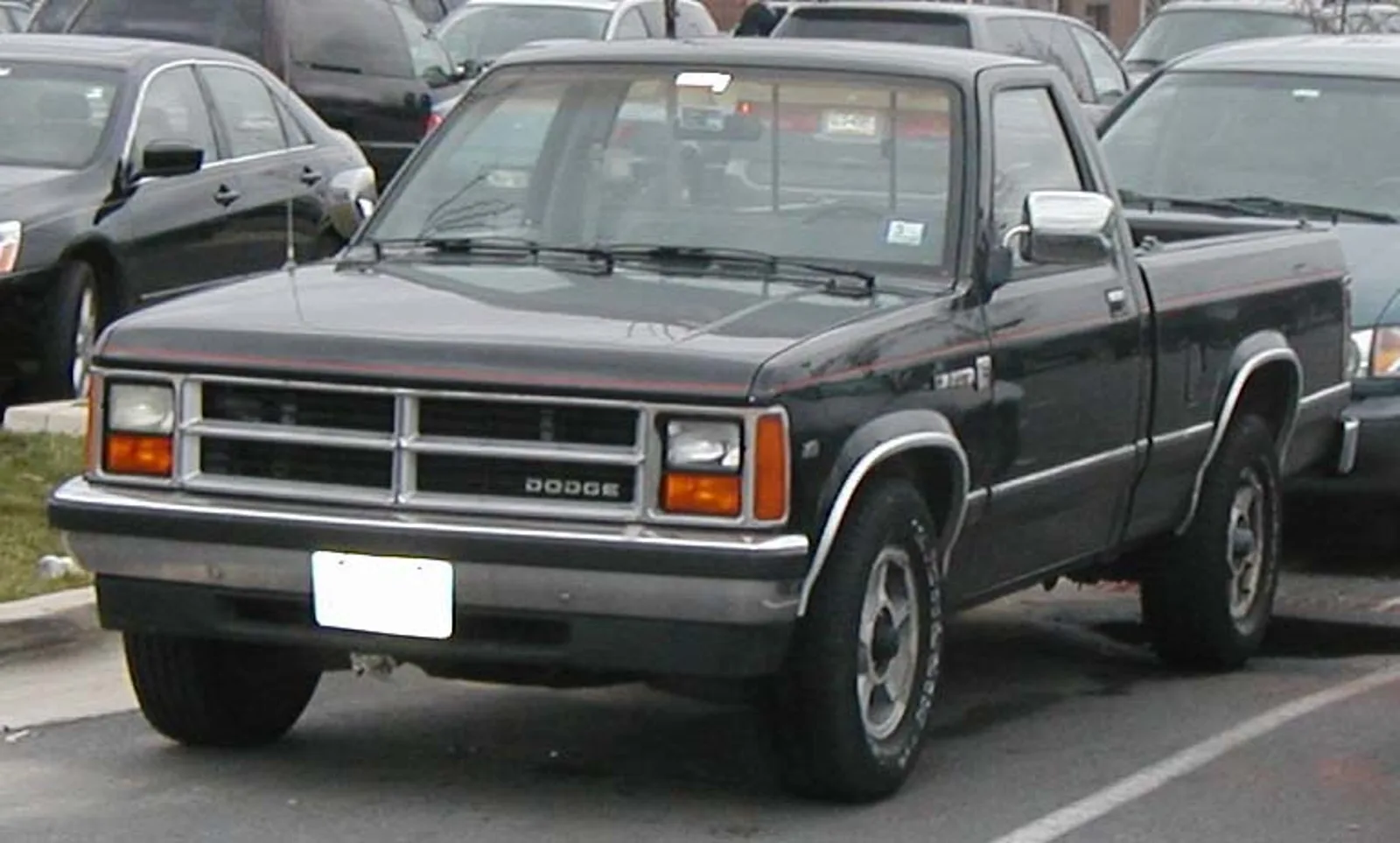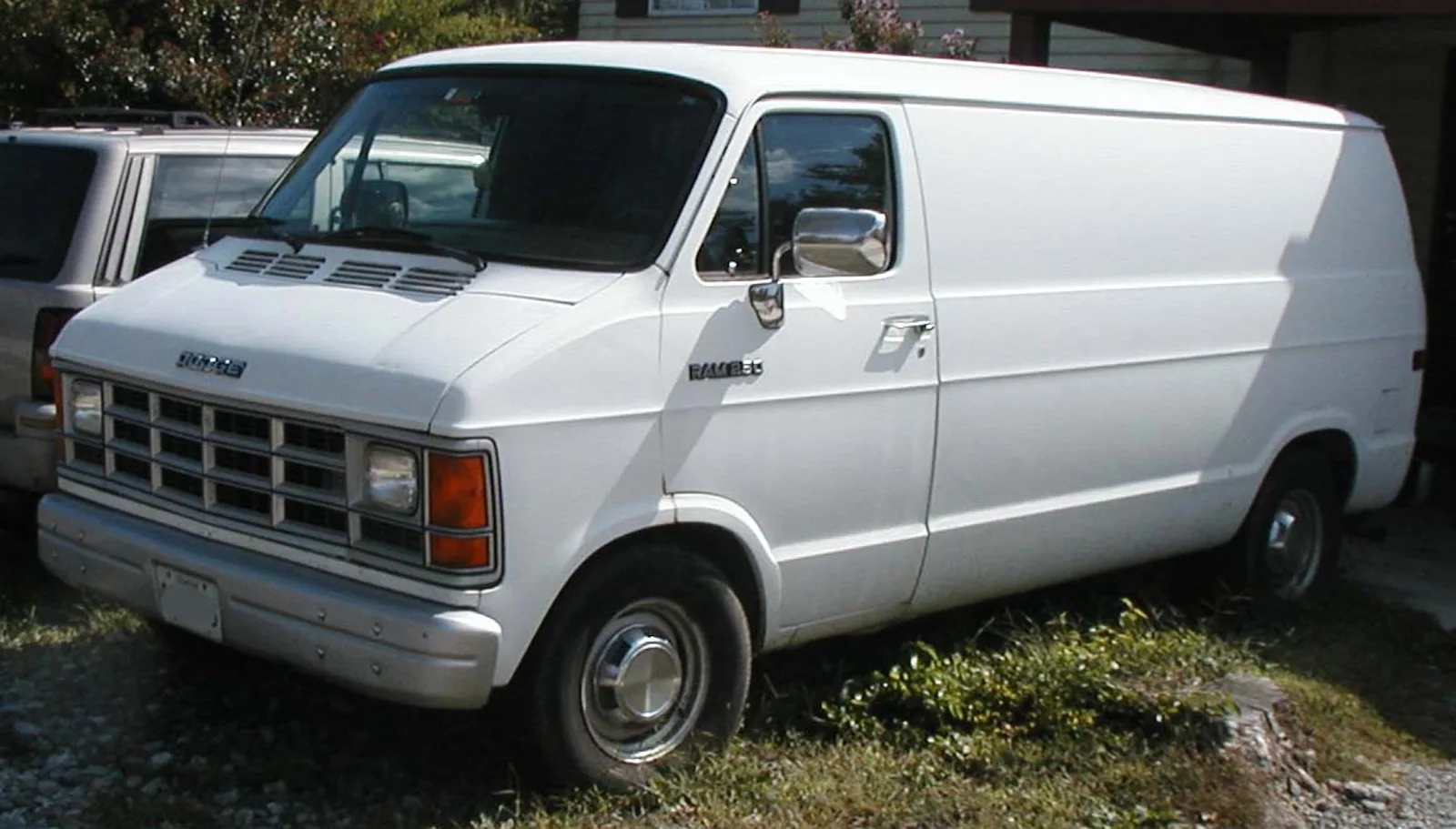
Dodge's B series van, sold from 1971 to 2003 across three generations, from the Tradesman and Sportsman to the Ram Van and its CNG variant.
The Dodge Ram Van was the B series full-size van that Chrysler built for Dodge from 1971 to 2003. Built in three generations, it used a conventional front-engine, rear-wheel-drive layout and became a fleet favourite. Passenger and cargo models were offered, along with cutaway chassis until 1979.
The Dodge Ram Van was Dodge's full-size B series van, which entered production for the 1971 model year and stayed on sale until 2003. That run ranks among the longest for any American platform, and the van went through three generations with gradual changes to its body.
The B series replaced the forward-control A100 with a conventional front-engined layout that drove the rear wheels and borrowed parts from the D series pickup. Chrysler built the vans at Pillette Road in Windsor, Ontario, throughout production, and cargo, passenger and cutaway models made up the range.
Where did the B series design come from?
The B series was built on the B platform, later called AB, and entered production in 1971. It used a single welded body-and-frame unit known as the Uniframe, which gave a lower cargo floor than earlier American vans. Engineers accepted some noise and vibration in return for a lower centre of gravity.
The trade-off was noise, vibration and harshness, which buyers had to live with. Compared with full-frame competitors, the one-piece structure handled better, and it was lighter and stronger than the arrangement it replaced.
Dodge also led the way in longer passenger vans. Its 1971 Maxiwagon offered seating for 15 passengers, and the wheelbase options gave buyers a range of cargo lengths. The 109-inch B1500 was the last full-size short-wheelbase van on sale, and it remained available through 2003.
Fleet buyers valued the vans because many components carried across model years. Service companies and upfitters could rely on parts that changed little, which kept the range popular even as trucks evolved around it.
A full-size van that stayed on sale for 33 model years and carried the Dodge name through three generations.
What did the first generation look like?
The first generation ran from 1971 to 1978 and comprised two models, a cargo van called the Tradesman and a passenger van called the Sportsman. Three payload series, 100, 200 and 300, covered half-ton, three-quarter-ton and one-ton duty, with wheelbases of 109 and 127 inches.
Moving the front axle forward made the van only five inches longer than its A100 predecessor, yet it opened up a far larger interior. The Tradesman was cargo only, whereas the Sportsman came in three trims, the base model, Custom and Royal. The Royal rivalled the Monaco station wagon from Dodge in equipment.
The Maxivan and Maxiwagon added an 18-inch rear body extension, and the Sportsman Maxiwagon could take four rows of rear seats for up to 15 passengers. The 127-inch passenger vans had a filler panel between the front and rear side doors, a feature that later disappeared.
The styling was distinctive, with a highly sloped hoodline and short front fenders. The side windows were smaller than the front door glass and shared its beltline.
Which engines and transmissions did the vans use?
The vans began with a 198 cu in Slant-6, a 225 cu in Slant-6 and a 318 cu in V8, all shared with the D-series pickup. A 360 V8 joined the range in 1972, and big-block 400 and 440 V8s were offered on the B200 and B300 from 1976.
A three-speed manual was standard, with a four-speed manual added in 1976 and a three-speed automatic available as an option.
Dodge had planned a Mitsubishi diesel of 243 CID for 1979, an option already on its pickups. That engine was shelved, so the range kept its petrol engines through the decade.
What changed year by year in the 1970s?
Small changes arrived almost every year. Front disc brakes and full chrome door handles came for 1972, electronic ignition and standard power brakes for 1973, and a redesigned plastic grille for 1974, which moved the Dodge lettering to the hood.
A sliding side door was introduced on the Maxivan and Maxiwagon, and it later became an option across the range to match the Ford and GM vans. A single-piece rear door arrived as an option on Sportsman vans in 1975, but the side-opening door stayed unique to the B series.
In 1976 the Street Van package appeared for Tradesman vans, and interior tweaks were small. The Sportsman gained a single-panel rear door as standard equipment in 1977. The body then changed much more for 1978, which started the move to the second generation.
How did the second generation change the design?
The second generation began with the 1979 model year, when the front was redesigned with a taller hoodline and a grille styled after Dodge Ram pickups. The government also counted the Sportsman passenger van as a truck, which helped Chrysler meet fuel economy rules.
Higher-trim Sportsman vans wore four rectangular headlamps, while lower trims and Tradesman cargo vans used dual round headlamps. Parking lamps wrapped into the front fenders.
In 1981 the line was renamed as the Dodge Ram Van and Ram Wagon, and the Tradesman and Sportsman names were retired. The B series designations became B150, B250 and B350, and the Mini-Ram was a passenger van in a higher trim, fitted with a bigger tank.
The Mini-Ram and Plymouth Voyager left the B series in 1984, when both nameplates moved into the Chrysler minivan line. A grille and badge revision came in 1986, and the outboard seats gained three-point belts for 1992.
The 1994 update was the biggest revision since 1978. The new front sheetmetal adopted a grille in line with the redesigned Ram pickups, the body structure was strengthened for crash protection, and the line adopted B1500, B2500 and B3500 designations. A driver airbag followed in 1995.
What was the Street Van package?
The Street Van was a factory customisation package sold from 1976 for Tradesman vans, aimed at the custom van craze of the 1970s. It added chrome trim, a Street Van logo on the doors and optional five-slot chrome wheels, and it remained available until the early 1980s.
Dodge promoted the Street Van next to the Lil Red Express and Warlock trucks under the Adult Toys banner. Buyers also received membership of the Dodge Van Clan, which came as part of the package.
For 1976 and 1977 only, buyers could order a YH3 Street Van with one driver seat, a plain steering wheel and no door decals. Most of those cars were sent to conversion companies for finishing to customer specification, so they are somewhat rare today.
Chrome-plated Street Van emblems fitted to later cars are valued by collectors and restorers when they are in good shape. Emblems through mid-1978 were stickers.
What did the third generation bring?
The third generation arrived for 1998 as the most substantial change since 1971. The body structure was upgraded for crash protection, the powertrain moved forward and the interior was redesigned with dual airbags and shared Chrysler componentry. The spare tire moved underfloor to free up cargo space.
The third generation kept a 3.9 L V6 with a three-speed automatic, while the 5.2 L and 5.9 L V8s paired with a four-speed automatic. V8s became standard on three-quarter and one-ton vans.
The front vent windows were deleted, with the mirrors relocated to the door. The engine cover shrank to give front passengers more room, and the front seats gained space as a result. For 2003 the Ram 1500 van gained rear vented disc brakes, the only B series model with rear disc brakes, and the passenger vans were discontinued.
What were the Kary Van and the Dodge 50?
The Kary Van was a factory cutaway van with a cube van rear body, built from 1973 and sold in 10-foot and 12-foot lengths. The Dodge 50 was a light commercial vehicle built in Europe from 1979 to 1993, using the cab of the Kary Van.
The Kary Van came in two widths, depending on whether it had single or dual rear wheels. It was based on the B300 Tradesman, and its cutaway body underpinned many Type C motorhomes during the 1970s. Chrysler ended production in 1979 because of its financial difficulties.
The Dodge 50 joined an American-designed cab to a British chassis, and it used Peugeot or Renault petrol engines alongside Perkins four-cylinder diesels. Chrysler Europe built it, and Renault took over after Chrysler Europe collapsed. Renault dropped the Dodge branding after 1987 and ended the line in 1993, in favour of its own Renault Master.
Did Dodge build CNG versions of the van?
Yes. Chrysler began developing a compressed natural gas version using the 5.2 L V8 in 1991. It went into larger-scale production for 1992, and about 2,000 were built, mostly for fleet sales. A short prototype run came first, and CNG development continued in the Dodge Caravan from 1994 to 1998.
The CNG version was a small programme by the standards of the main van, and its output went mainly to fleet customers.
Where were the vans built and what replaced them?
Pillette Road Truck Assembly in Windsor, Ontario, built the vans for the whole production run, while Saint Louis Assembly in Fenton, Missouri, also built them before 1980. In 2003 the Dodge Sprinter, a rebadged Mercedes-Benz, replaced the Ram Van.
The Saint Louis North plant stopped building vans after 1980, having been retooled to make K-cars. All remaining production came from Pillette Road, a plant that has since been demolished.
Dodge's Tradesman name came back in 2012, when Ram revived it for the cargo version of the Grand Caravan, which became the Ram C/V Tradesman. After 2015 the ProMaster City, a Fiat-derived model, took its place in the cargo range.
What are the Dodge Ram Van specifications?
The Ram Van was a full-size rear-wheel-drive van with a Uniframe body and frame, offered as cargo, passenger and cutaway models. The table summarises the core figures across the three generations, with engine data taken from the years each unit was offered.
| Specification | Detail |
|---|---|
| Production years | 1971 to 2003, 33 model years |
| Generations | Three: 1971 to 1978, 1979 to 1997, 1998 to 2003 |
| Wheelbases | 109 inch and 127 inch (first generation); 109-inch B1500 to 2003 |
| Payload series | 100 (half-ton), 200 (three-quarter ton), 300 (one-ton) |
| Early engines | 198 and 225 cu in Slant-6, 318 cu in V8; 360 V8 from 1972 |
| Big-block V8s | 400 and 440 cu in on the B200 and B300 from 1976 |
| Second generation V8s | 318 (later 5.2 L), 360 on 3/4-ton and 1-ton vans, 5.9 L with fuel injection from 1989 |
| Third generation engines | 3.9 L V6; 5.2 L and 5.9 L V8s |
| Transmissions | Manual until 1994, automatic only afterwards |
| CNG version | 5.2 L V8, about 2,000 built from 1992 |
| Assembly | Pillette Road, Windsor, Ontario; Saint Louis, Fenton, Missouri before 1980 |