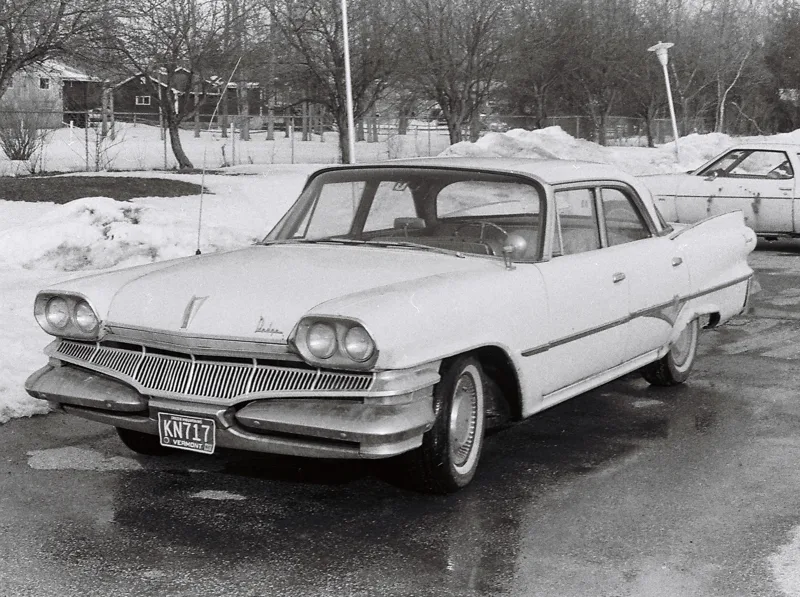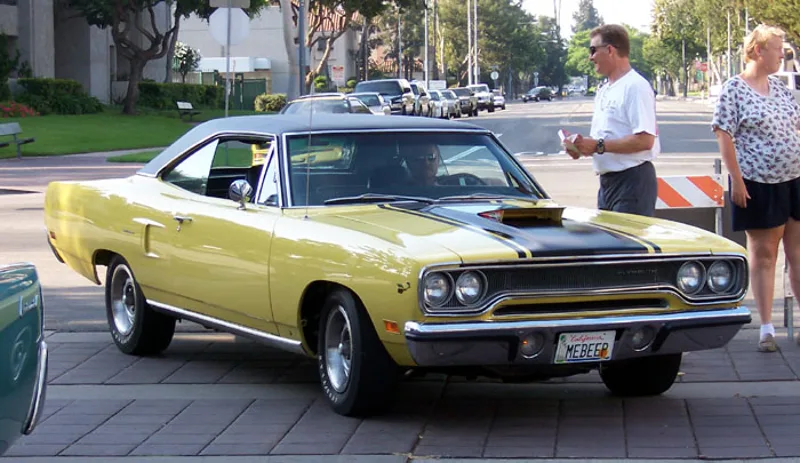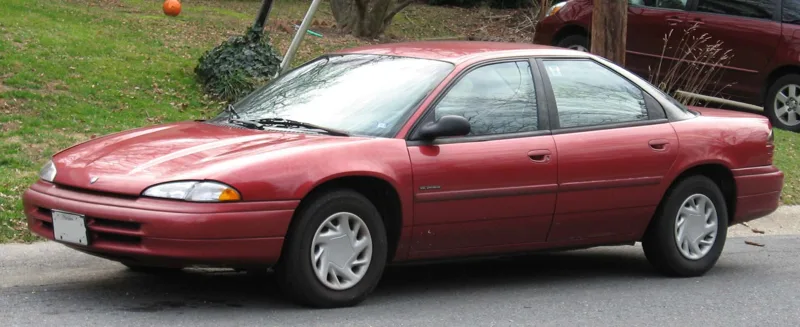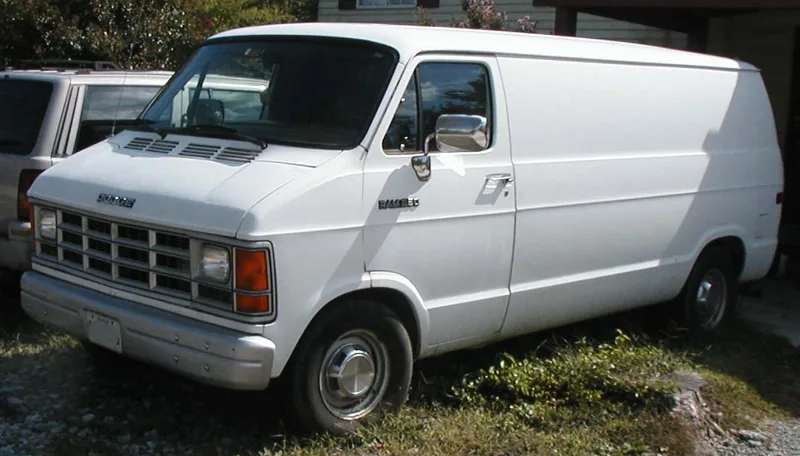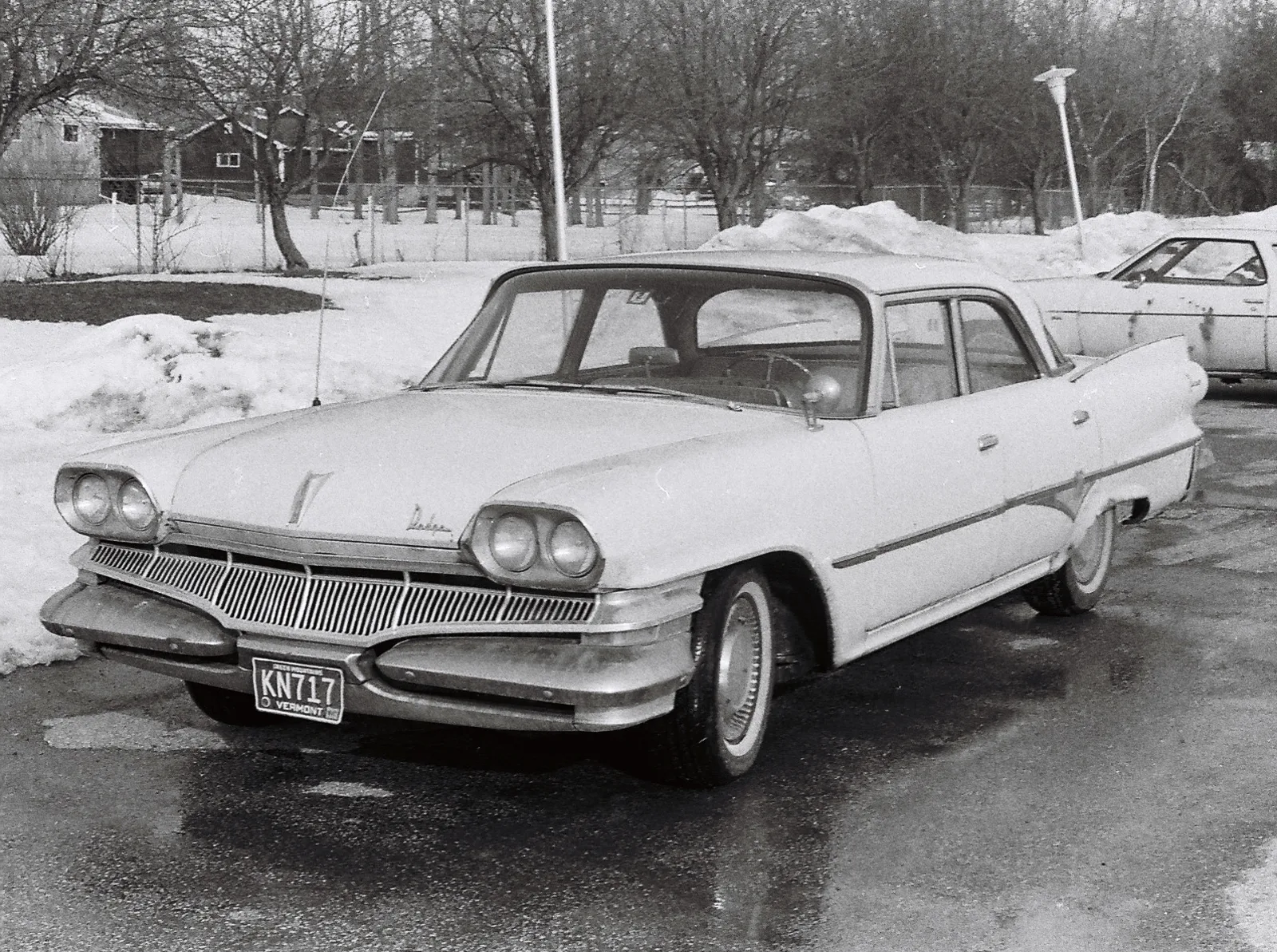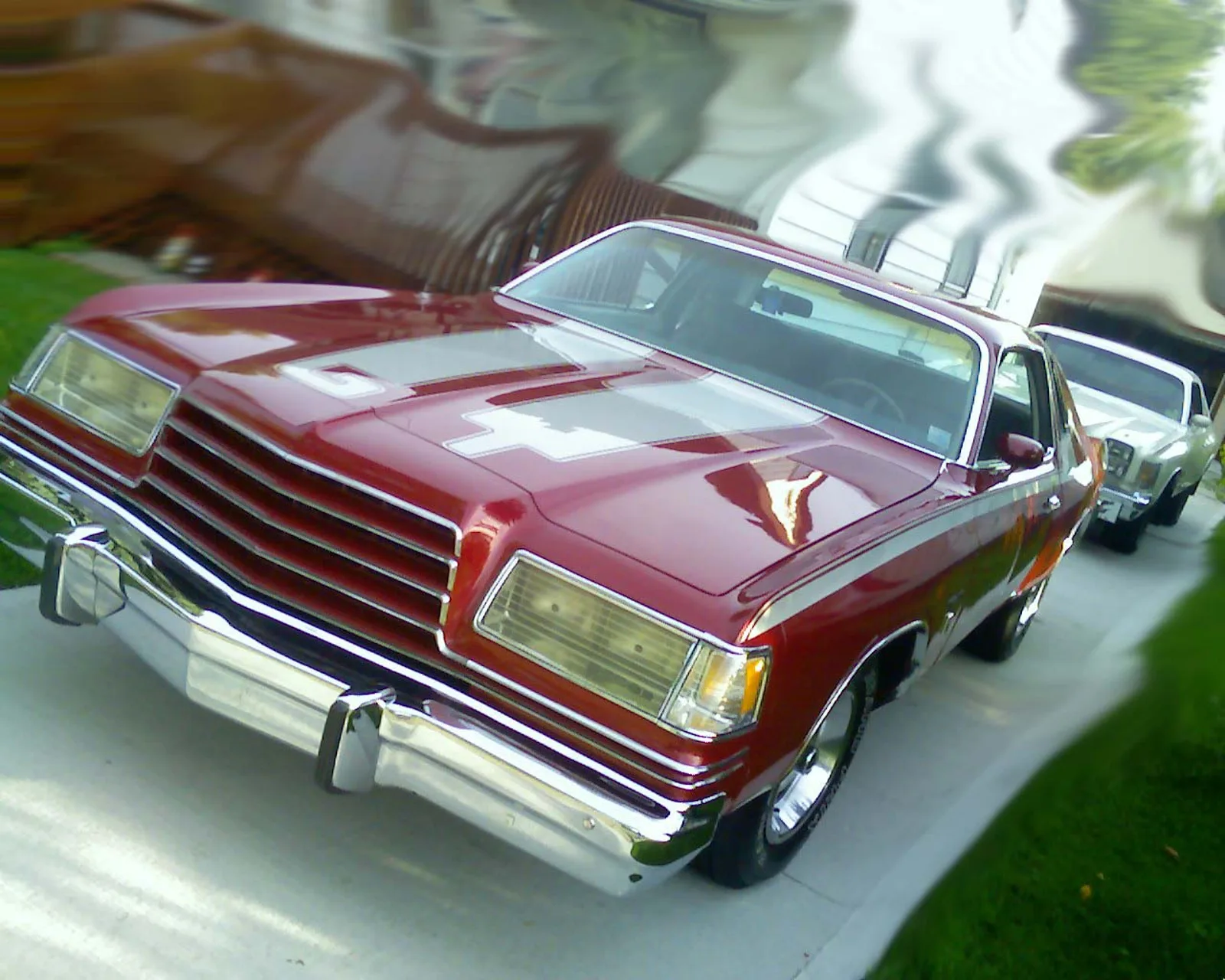
A 1978 B-body coupe, a NASCAR contender in the Petty era and a 2005 wagon with Mercedes-derived running gear and a 425 hp Hemi option.
The Dodge Magnum covered several unrelated cars, starting with a 1978 two-door coupe on Chrysler's B platform and ending with a 2005 station wagon on the LX platform. The wagon was built in Canada until production stopped in September 2008, and its SRT8 version offered a 425 hp Hemi.
The Dodge Magnum was a name Dodge applied to several unrelated cars. The first was a 1978 two-door coupe built on Chrysler's B platform and sold in the United States and Canada. The last was a 2005 station wagon on Chrysler's LX platform, which ended production on 28 September 2008.
Across its life the name also appeared on a Brazilian Dart trim level and on two different Mexican cars. Each version was a separate design, so the Magnum story is really several stories that share one badge.
What was the original Dodge Magnum?
The original Magnum arrived for the 1978 model year as a two-door coupe that supplemented the Dodge Charger. Dodge offered it as the XE or the GT, and it was the final car built on Chrysler's B platform. Its styling was a rounded-off take on the Charger, with a more aerodynamic shape.
Its styling featured four rectangular headlamps tucked behind covers that could be retracted, plus narrow opera windows and a choice of T-bar or power sunroof. Power steering, brakes and seats were standard, and the chassis used Chrysler's adjustable torsion bars running lengthwise, plus lower trailing links and anti-sway bars at both ends. Weight was about 1,800 kg (nearly 3,900 lb) at launch.
The engine line-up started with a 318 cu in (5.2 L) V8 using Lean-Burn calibration. Optional V8s were a 360 cu in (5.9 L) and a 400 cu in (6.6 L), offered with two-barrel or four-barrel carburettors. Chrysler dropped the 400 at the start of the 1979 model year, when it stopped building big-block V8s for production cars.
The GT was the performance model. It had the 400 V8 in 1978, and in 1979 a police-spec 360 V8 rated at 195 hp (145 kW) was offered with heavy-duty suspension, a special axle, GT badging and a turned-metal dashboard trim. The car was ahead of its time, with a spark control computer built in from the start, plus electronic ignition and a lock-up torque converter.
The mid-size B-body Magnum was discontinued at the end of the 1979 model year, along with its Chrysler Cordoba counterpart. Chrysler replaced it with a smaller M-body Mirada coupe, which was built for four model years from 1980 to 1983. Only 3,704 of the 1979 coupes included a T-top.
One badge, several different cars, and a 425 hp Hemi wagon that ended with the 2008 model year.
Why did Chrysler build the Magnum for NASCAR?
Chrysler developed the Magnum because the 1974 Charger, which its teams had kept racing, was no longer eligible for NASCAR from the 1978 season. Engineers reshaped the 1975 Charger body into something more aerodynamic for the big speedways, and the Magnum design was settled in the summer of 1977.
Early tests looked promising. Petty Enterprises test runs hit 190 mph (310 km/h), and Richard Petty finished second in the Daytona 125 and led over 30 laps of the Daytona 500 before a blown front tyre ended his race. The shape was not as slippery as the 1974 car, but it showed promise on test runs.
The weak point was the engine. The small-block Chrysler 360 V8 had little factory development behind it as a race engine, and that became a growing problem once cars were running in high-speed traffic.
How did the Magnum perform in NASCAR?
Its record was mixed. Richard Petty logged 7 top-five results in 17 starts with the car but never won in one, while Neil Bonnett won 3 poles and took 5 top-five finishes. In heavy high-speed traffic the Magnum did not handle well, and Petty was openly critical, saying before the season that it was undriveable at 190 mph.
By the second half of 1978, Petty and Bonnett had given up on the car and switched to Chevrolets and Oldsmobiles. Independent drivers Buddy Arrington, Frank Warren and country singer Marty Robbins carried on with little factory support, although Chrysler still supplied sheet metal and some engine parts. Arrington bought a few of Petty's cars along with spares.
From August 1978 until January 1981, between 2 and 5 independent teams ran Magnums in NASCAR races. NASCAR then moved to smaller-bodied cars, which ended the Magnum's time on the circuit. It never matched the racing heritage of earlier Chrysler cars, but it had moments of its own.
Kyle Petty made his debut in one of his father's year-old Magnums in the 1979 Daytona ARCA 200 and won the race. He raced 5 NASCAR events with leftover cars in 1979, but those cars were written off in crashes before the 1980 Daytona 125.
Petty later recognised the car with a commemorative decal showing his number 43 on a Magnum, issued for his 1992 Fan Appreciation Tour. As of December 2012, only 2 NASCAR Magnums survived. One ex-Petty car is in the Talladega NASCAR museum, and Marty Robbins's 1978 No. 42 car has been restored and is owned privately in southern California.
What were the Brazilian and Mexican Magnums?
In Brazil the Magnum was the top-of-the-line version of the Dodge Dart from 1979 to 1981, and it sat above the Dart Gran Coupe in the luxury segment. In Mexico the name went on a rear-wheel-drive two-door in 1981 and 1982, then on a sporty K-car coupe from 1983 to 1988.
The Brazilian Dart was built at a former Simca factory, where more than 92,000 cars were sold between 1969 and 1981. The Magnum used the 318 cu in V8 found across Dodge's coupe and sedan range in Brazil, and it carried a unique fibreglass front with four headlights for a more modern look.
The 1981 and 1982 Mexican Magnum used a 360 cu in (5.9 L) V8 rated at 300 hp (224 kW), a Carter ThermoQuad four-barrel carburettor, heavy-duty suspension and a Dana 44 differential. Flat black window trim and Magnum lettering on the front fascia and fenders marked it out, and it was offered for just those two model years.
The K-car-based Mexican Magnum was a sporty two-door built from 1983 to 1988. For 1983 and 1984 it was officially called the Dodge Magnum 400. Its engines were a 2.2 L four in 1983 to 1986, a turbocharged 2.2 L from 1984, and two 2.5 L fours in 1987 and 1988. The turbo version was advertised as the fastest car in Mexico and was the nearest local equivalent to the American Daytona Turbo.
For 1987 the turbo gained an intercooler, and its power rose from 140 to 150 hp (112 kW). In 1989 the Chrysler Shadow GTS replaced the K-car Magnum.
What did the 2005 Magnum offer?
The 2005 Magnum was a rear-wheel-drive station wagon on Chrysler's LX platform, built at the Brampton plant outside Toronto, Ontario, from 2004 to 2008. Four engines were offered, from a 190 hp (142 kW) 2.72 L V6 in the SE up to the SRT8, whose 6.1 L Hemi made 425 hp (317 kW).
| Specification | Detail |
|---|---|
| Platform | Chrysler LX, rear-wheel drive |
| Body | Station wagon |
| Assembly | Brampton Assembly Plant, Ontario, Canada, 2004 to 2008 |
| SE engine | 2.72 L V6, 190 hp (142 kW) |
| SXT engine | 3.5 L V6, 250 hp (190 kW) |
| RT engine | 5.7 L Hemi V8, 340 hp (254 kW) |
| SRT8 engine | 6.1 L Hemi V8, 425 hp (317 kW) |
| Transmission | Four-speed automatic; five-speed Mercedes-derived unit on SRT8, AWD SXT and RT |
| All-wheel drive | Option on SXT and RT from 2005 |
| Europe and Australia | Sold as the Chrysler 300 Touring |
Chrysler's engineers said that the car's structural foundation, including the toe board, safety cage and load-path philosophy, was shared with Mercedes-Benz, its partner at the time. Several parts came from Mercedes models of that time, among them the rear suspension cradle, the five-link rear from the E-Class W211, and the double-wishbone front from the S-Class W220.
Mercedes also supplied the CAN bus electrical architecture, cabin electronics, the seat controls, the cruise control stalk and the ESP and ABS systems. The 5-speed NAG1 W5A580 automatic went into the SRT8, the AWD SXT and the RT. AWD models used Mercedes-Benz 4MATIC transfer case components, and later cars swapped the metal key for a Mercedes-derived laser key ignition.
Car and Driver put the 2005 Magnum on its Ten Best list for that year. The wagon was the only body style the Magnum name carried on the rear-wheel-drive LX platform.
How quick was the SRT8?
The SRT8 used a 6.1 L (370 cu in) Hemi producing 425 hp (317 kW), with 20-inch wheels, firmer suspension and bigger Brembo brakes. Motor Trend timed it at 5.1 seconds from 0-60 mph (97 km/h), then 11.7 seconds to 100 mph (161 km/h). The quarter-mile came up in 13.1 seconds, and the car was doing 108 mph (174 km/h) at the finish.
The SRT8 made its debut at the 2005 Los Angeles show, based on a concept shown at the 2003 show, and went on sale as a 2006 model. It shared the 6.1 Hemi with the 300C SRT8, and its body work included a revised front and rear fascia and a more prominent lower body treatment. Best New Modern Muscle Car was the title it earned at the 2006 Canadian Car of the Year awards.
A 29R Road and Track trim, branded Red Badge, arrived in 2007 and 2008 with most of the SRT8 options. It left out the 6.1 Hemi engine and the Brembo brakes.
What changed for the 2008 model year?
For 2008 the Magnum received a facelift and an interior updated in line with the Dodge Charger. The nose gained headlights with squared-off profiles and a smaller, rectangular grille, and the SE, SXT and RT models received two new colours, Mineral Gray and Light Sandstone. The SRT8 gained a new hood scoop, a honeycomb-mesh grille and a larger lower grille with brake cooling ducts.
The new look moved the car nearer to the Charger, its platform sibling, and away from the Chrysler 300. Because the car was cancelled at the end of that same model year, the facelift was available for just one season.
Why was the Magnum cancelled?
Chrysler announced on 1 November 2007 that four models, the Magnum among them, would be dropped once the 2008 model year ended, as part of a restructuring programme. Production ended on 28 September 2008. Chrysler said the Magnum sat alongside the PT Cruiser convertible, Crossfire and Pacifica as cars that were not earning their keep.
The Dodge Journey took over from both the Magnum and the short-wheelbase Dodge Caravan, so the Magnum's departure closed one chapter of Dodge's wagon line and opened another with a different vehicle.
How did the Magnum sell in Europe and Australia?
In Europe and Australia the car was sold under the Chrysler 300 Touring name. It was largely identical to the US Magnum, but used the Chrysler 300C front end and interior, and it was right-hand drive for Australia and the UK. The range also offered a 3.0 L CRD turbo diesel, and the car was assembled in Austria.
Because the Magnum and the 300 shared a platform, the Dodge front end can be replaced with the front styling of a 2005-2010 Chrysler 300 with little custom fabrication. Swapping in the Charger's front fascia is possible but more involved, and the Challenger's fascia is not a direct bolt-on despite the shared platform.
What is the Magnum's legacy?
Each era left a different mark on the name. The NASCAR cars are now rare, with only 2 NASCAR Magnums still in existence as of December 2012. The 2005 to 2008 wagon, with its Mercedes-derived chassis parts and Hemi V8 options, is the most recent version of the name.
The name also shows how one badge can cover very different machines. A B-body coupe, a Brazilian Dart trim, a K-car-based Mexican coupe and a Canadian-built wagon all carried it, and each was built for a different market and period.