From Fiat-backed beginnings and the Aronde to the 1307 European Car of the Year and the Chrysler years that ended the brand.
Simca was a French automaker founded in November 1934 by Fiat S.p.A., and it became one of France's largest postwar carmakers, came under Chrysler control in the 1960s, and its remains passed to Peugeot after Chrysler Europe collapsed in 1977.
Simca began as a French arm of Italy's Fiat and grew into one of the biggest carmakers in postwar France. Its models included the Aronde, the Ariane taxi and the rear-engined 1000, and the brand eventually passed into Chrysler's European business.
The story runs from Fiat-backed beginnings through a difficult postwar fight, a long Chrysler era and a final Peugeot chapter. The sections below follow that path in order.
Who founded Simca and what did the name mean?
The company was run from July 1935 to May 1963 by the Italian-born Henri Pigozzi, and the name Simca replaced Simca-Fiat in 1938. Fiat S.p.A. was behind the business from the start, and that Italian link shaped its early identity. Its full title referred to industrial mechanics and automobile bodywork.
Pigozzi began working with Fiat founder Giovanni Agnelli in 1922, buying old bodies for recycling. He later became Fiat's General Agent in France, and SAFAF, the company that handled Fiat cars there, was founded in 1926.
By 1934, as many as 30,000 Fiat cars were sold by SAFAF. That figure showed how strong the Fiat network had become in France before Simca existed as a manufacturer.
Born from Fiat's French business, Simca survived wartime suspicion and Chrysler control before Peugeot retired the name.
How did Simca's first cars come about?
The company bought the former Donnet factory in Nanterre in 1935. Its first cars were the Fiat 508 Balilla and Fiat 518 Ardita, badged Simca-Fiat, and the Simca 5 followed as a version of the Fiat Topolino with a 570 cc engine.
The Simca 5 took its name from the first digit of that 570 cc displacement. A 6CV version of the Fiat 508C-1100 arrived late in the prewar period, and the Simca 5 and Simca 8 stayed in production until the war began.
The firm remained closely tied to Fiat, and the shorter name Simca only replaced Simca-Fiat in 1938. That closeness would later shape how the company was viewed after the liberation of France. Its Italian links were a real liability once the country's mood turned against anything tied to the occupation years.
Did the war spare the Simca factory?
Simca was unique among the big four French carmakers in avoiding serious bomb damage to its plant. Cars continued to be produced in small numbers throughout the occupation, and after liberation in 1944 the company won an American army contract to repair Jeep engines.
Persistent suggestions linked Pigozzi's close relationship with the Agnelli family, and Fiat's influence with the Mussolini government, to relatively favourable treatment during the occupation. After liberation those ties became a liability in a climate of recrimination.
The Pons Plan, the government's five-year plan for the car industry, came into force on 3 January 1946. It proposed merging Simca into a combine called GFA, which reflected the politics of the time.
What was the Simca-Gregoire and why was it abandoned?
The Simca-Gregoire was a front-wheel drive small car developed during the war by Jean-Albert Gregoire, who also favoured aluminium car bodies. The design was ready for production by September 1946, but Gregoire resigned from Simca early in 1947.
Gregoire had joined the Simca board as General Technical Director a few weeks after liberation, to prepare the AFG for production at Nanterre. Pigozzi owed his position at the company to Gregoire's intervention with national politicians.
Pigozzi remained cautious. He had little enthusiasm for a mass-market front-wheel drive car, and the Citroen Traction Avant had bankrupted its maker in the mid-1930s. The four-door equivalent of the AFG became the Panhard Dyna X, while Simca's designers clothed the underpinnings in more conventional bodies.
Which Simca models came after the war?
The Simca 5 and Simca 8 were displayed at the October 1946 Paris Motor Show, looking almost identical to their prewar versions. A new car arrived in 1948 with the Simca 6, which had an overhead valve 570 cc engine and launched ahead of the Fiat equivalent.
During the first eight months of 1947 Simca exported 70% of the cars it produced. That placed it behind Citroen at 92%, Renault at 90%, Peugeot at 87% and Ford France at 83%.
Simca was handicapped in the struggle to maximise exports because it could not compete directly with its principal Italian shareholder, Fiat.
What was the Simca Aronde and why did it matter?
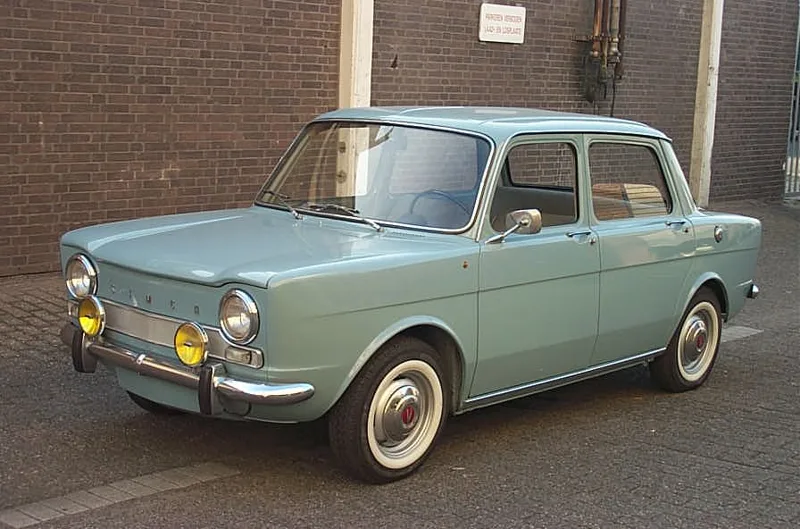
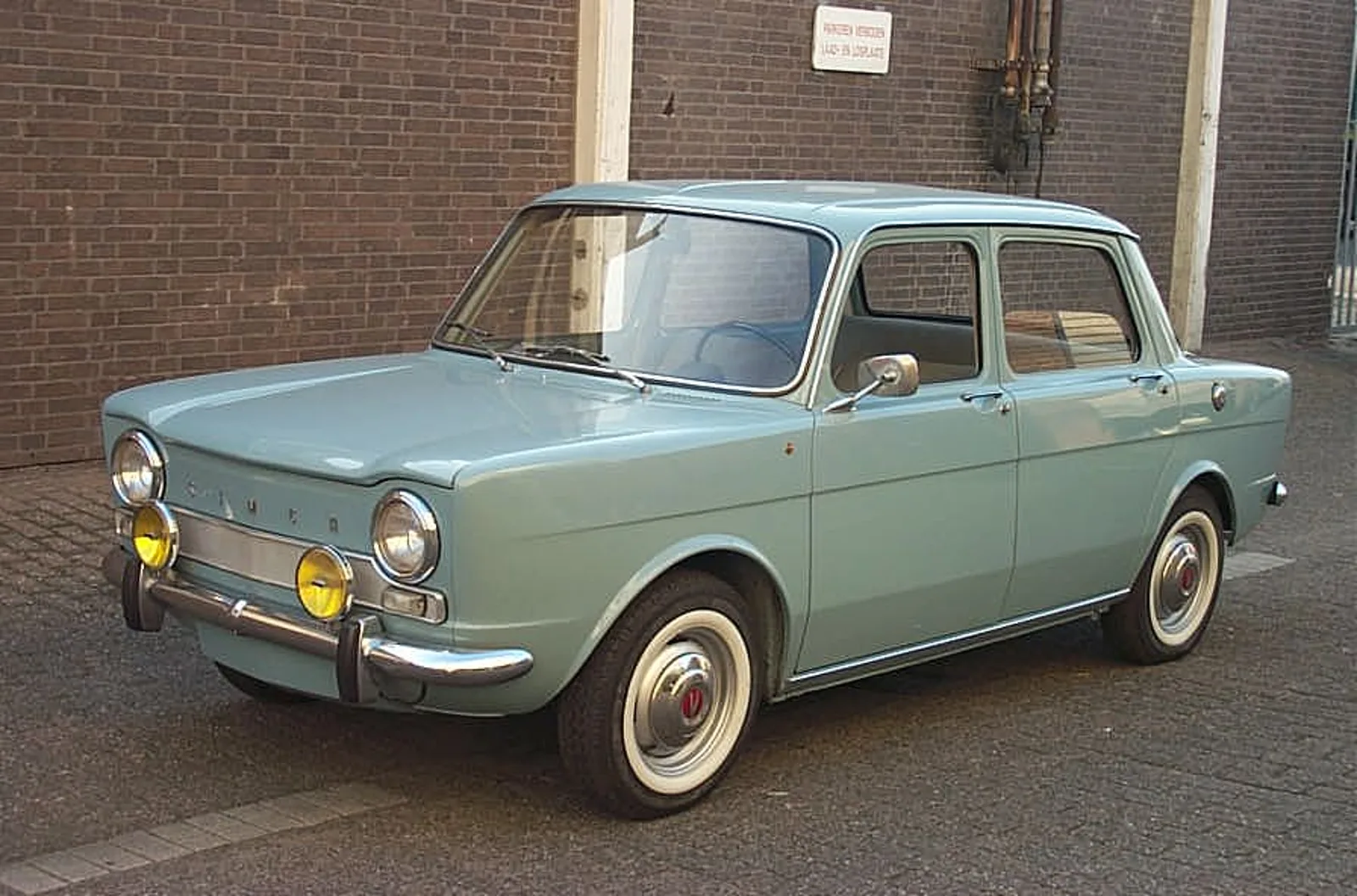
The Aronde arrived in 1951 as the first Simca built without a Fiat design. Its 1200 cc engine helped output reach 100,000 units a year, which gave the company the momentum it needed.
Following that success, Simca took over the French truck maker Unic in 1951, the Poissy plant of Ford SAF in 1954, and Saurer in 1956. In 1958 it also bought the French Talbot-Lago manufacturing company.
The Poissy plant had ample room for expansion. Simca consolidated French production there and sold the old Nanterre plant in 1961, and by 1959 the combined output of the two sites had exceeded 225,000 cars.
How did the Ford Vedette and Ariane fit into the range?
The Ford purchase added the V-8 Vedette range to the Simca stable, and it was built in France until 1962. An Aronde-powered version called the Ariane arrived in 1957 and became popular as a taxi because it was economical with a large body.
In Brazil the Vedette's 2.4-litre V8 entered production in March 1959. It was built under a variety of names until the Simca badge was retired there in 1969.
The rear-engined Simca 1000 followed in 1961, with a sporting Simca-Abarth offspring arriving in 1963. The 1000 Coupe debuted in the same year as the Abarth version.
What happened to Simca in Brazil?
Simca do Brasil was originally 50% Brazilian-owned, but Chrysler took control of the Brazilian arm after it took over Simca France in 1966. The Simca badge was retired in Brazil in 1969, and later models were sold as the Simca Esplanada.
President Juscelino Kubitschek visited the plant before his 1956 inauguration, and he jokingly invited the company to build in his home state of Minas Gerais. Simca did submit a proposal, but it was accepted only with conditions and it set up in Sao Paulo.
Brazil's GEIA rules delayed Simca's access to hard currency and left it short of parts. The company developed a reputation for low quality that it was never able to shake off.
What was the Simca Fulgur concept?
The Simca Fulgur was a concept that Robert Opron designed in 1958, first shown at the 1959 Geneva Auto Show. It aimed to preview motoring in the year 2000, and it went on to New York and Chicago.
The concept was to be atomic powered, voice controlled and guided by radar. It used two wheels balanced by gyroscopes when driven above 150 km/h, and the name Fulgur is Latin for flash or lightning.
The Fulgur remained a showpiece rather than a production plan, but it captured the optimism of the period in which Simca was building its most ambitious designs.
How did Chrysler take control of Simca?
Chrysler bought 15% of Simca from Ford in 1958, in a deal that Henry Ford II was later reported to have regretted. Fiat was still the dominant shareholder, but in 1963 Chrysler raised its stake to a controlling 64% by buying from Fiat.
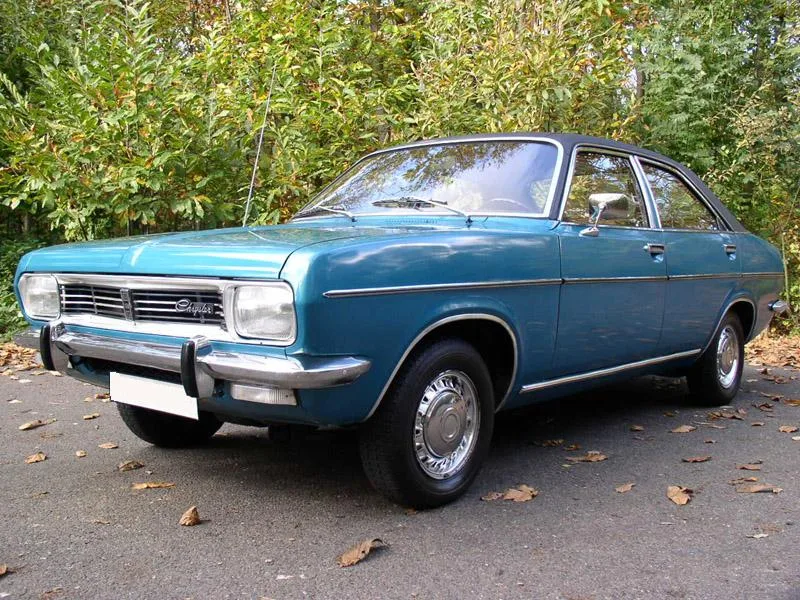
Chrysler later extended its holding to 77%, and Fiat still retained 19% in 1971. Chrysler also bought the British maker Rootes in 1964, which formed the basis of Chrysler Europe, and from 1967 Simcas carried the Chrysler pentastar alongside the Simca badge.
On 1 July 1970 the company title was changed to Chrysler France. The Simca name remained on the cars even as ownership moved further from Paris.
What were the Simca 1000 and 1100?
The rear-engined Simca 1000 arrived in 1961 and was followed by a Simca-Abarth sporting version in 1963. The 1000 Coupe, with a Bertone body by Giorgetto Giugiaro and four-wheel disc brakes, debuted that same year.
Car Magazine described the 1000 Coupe as the world's neatest small coupe. In 1967 the 1200S Bertone Coupe appeared, and after a 1970 upgrade it reached almost 112 mph (180 km/h), which makes it the quickest standard Simca built.
The 1100 arrived in 1967 with front-wheel drive and independent suspension all round, and it continued in production until 1979. For some time it was the best-selling car in France.
Why did the 1307 and Horizon matter?
The 1307 and the Horizon each won European Car of the Year when launched, in 1976 and 1979. The 1307 was sold in Britain as the Chrysler Alpine, and the Horizon also appeared under Chrysler and Dodge names.
The range carried the 1307, 1308, 1309 and 1s510 names. In the United States the Horizon became the Dodge Omni and the Plymouth Horizon, which shows how far the car travelled beyond its French roots.
How did Chrysler Europe end and what came next?
Chrysler Europe collapsed in 1977. Peugeot SA took the remains the following year at a nominal price of US$1.00, and it also took on the debts. In France the cars sold respectably, but in Britain they trailed rivals from Ford, British Leyland and Vauxhall.
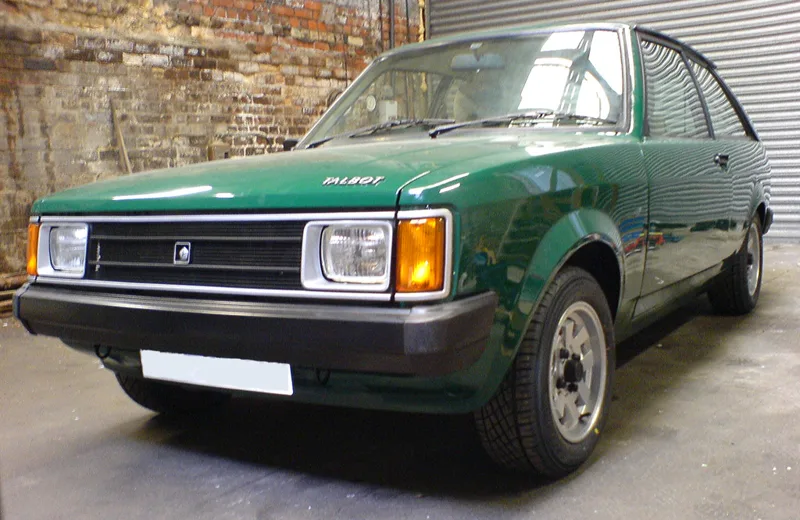
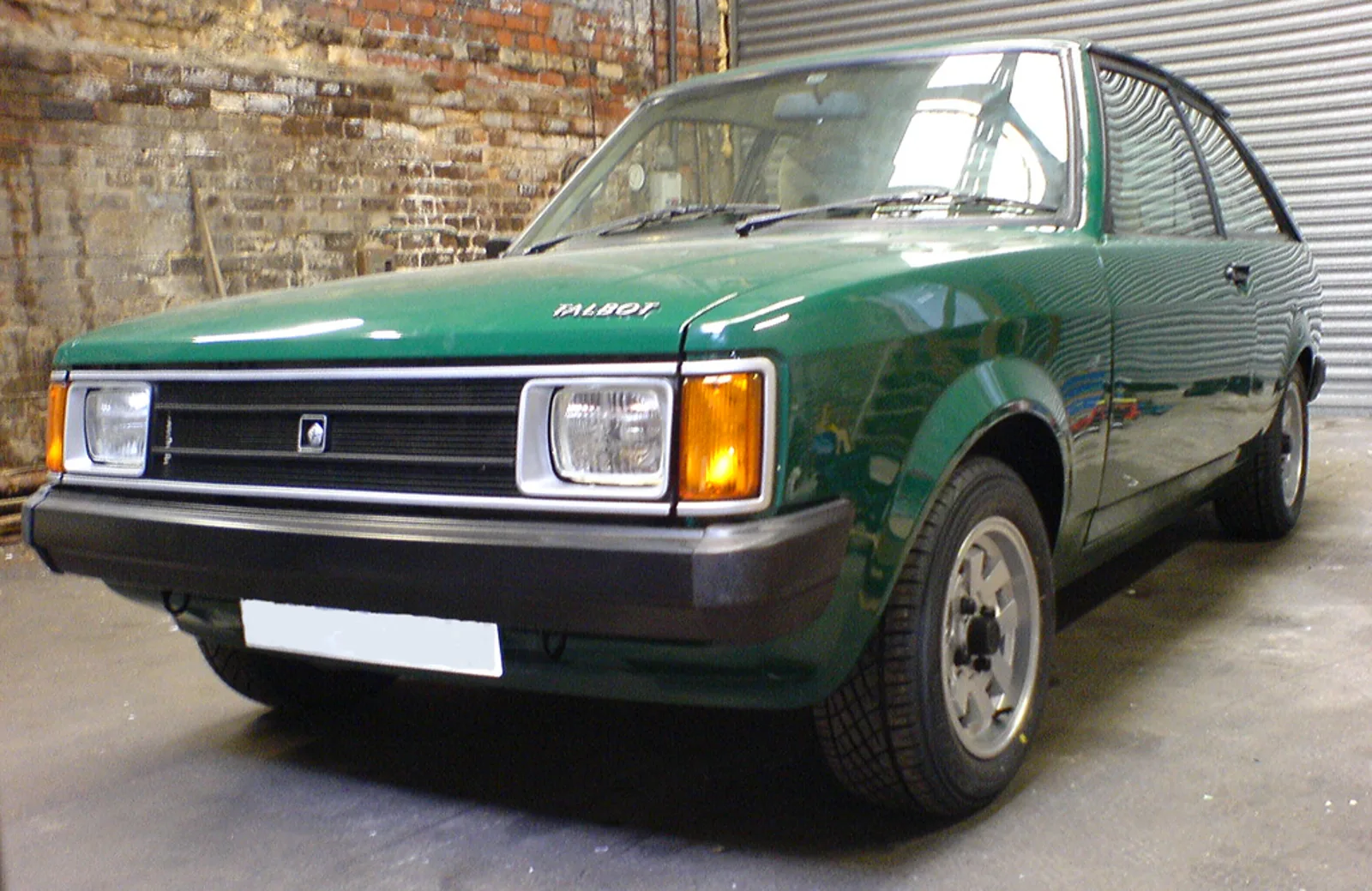
Simca and Rootes models were all gone by the end of 1981. The Simca-based Alpine and Horizon carried on for a while under the Talbot badge, which later survived into the 1990s on commercial vehicles.
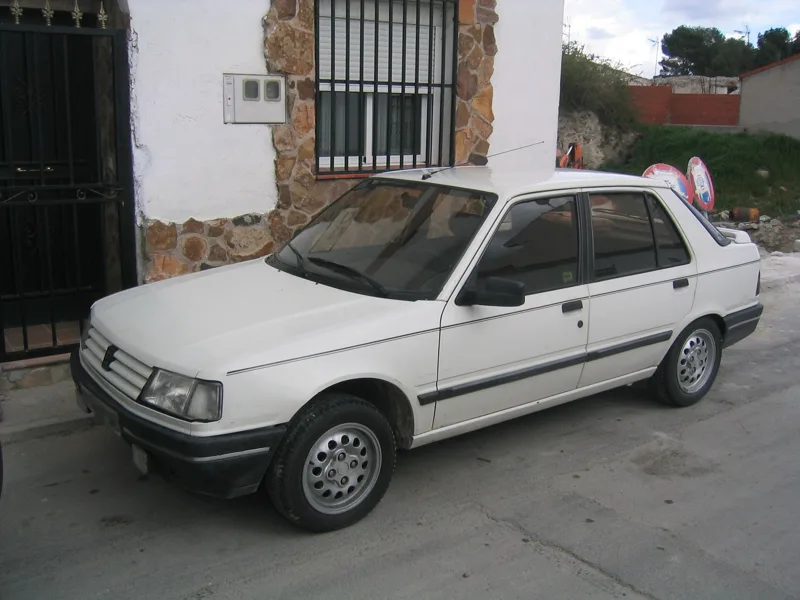
Peugeot eventually abandoned the Talbot name, and the last Simca design was launched as the Peugeot 309 instead of the planned Talbot Arizona. The 309 used Simca engines until October 1991, about 18 months before production ended.
What models did Simca offer?
The model list ran from the Simca 5, 6, 8 and 9 to the 1000, 1000 Coupe and 1100, then on to the 1300/1500 and 1301/1501 and the Chrysler-era 1307 range. Brazilian models such as the Esplanada, Regente and Tufao were built under the same banner.
The Matra-Simca Bagheera and Matra-Simca Rancho came later in the range. The Simca Vedette was also built under licence by Simca do Brasil with names including Chambord, Alvorada, Profissional and Presidence.
Did Simca compete in motorsport?
Simca is better known for road cars than for a long competition record. The Simca Gordini Type 15 Grand Prix racing car appears in its model list, and the 1200S Bertone Coupe stood out as a fast road car.
Its sporting identity came mainly through road models such as the 1000 Coupe and the Simca-Abarth, which set the tone for the brand's performance cars.
What is the Simca legacy today?
Simca is remembered as one of France's biggest postwar carmakers, with the 1100 once the best-selling car in France and the 1307 and Horizon both winning European Car of the Year. The former Simca assets are now owned by Stellantis as of April 2026.
The brand's history shows how much its identity was shaped by owners in other countries. Fiat built it, Chrysler ran it, and Peugeot finally retired the name.