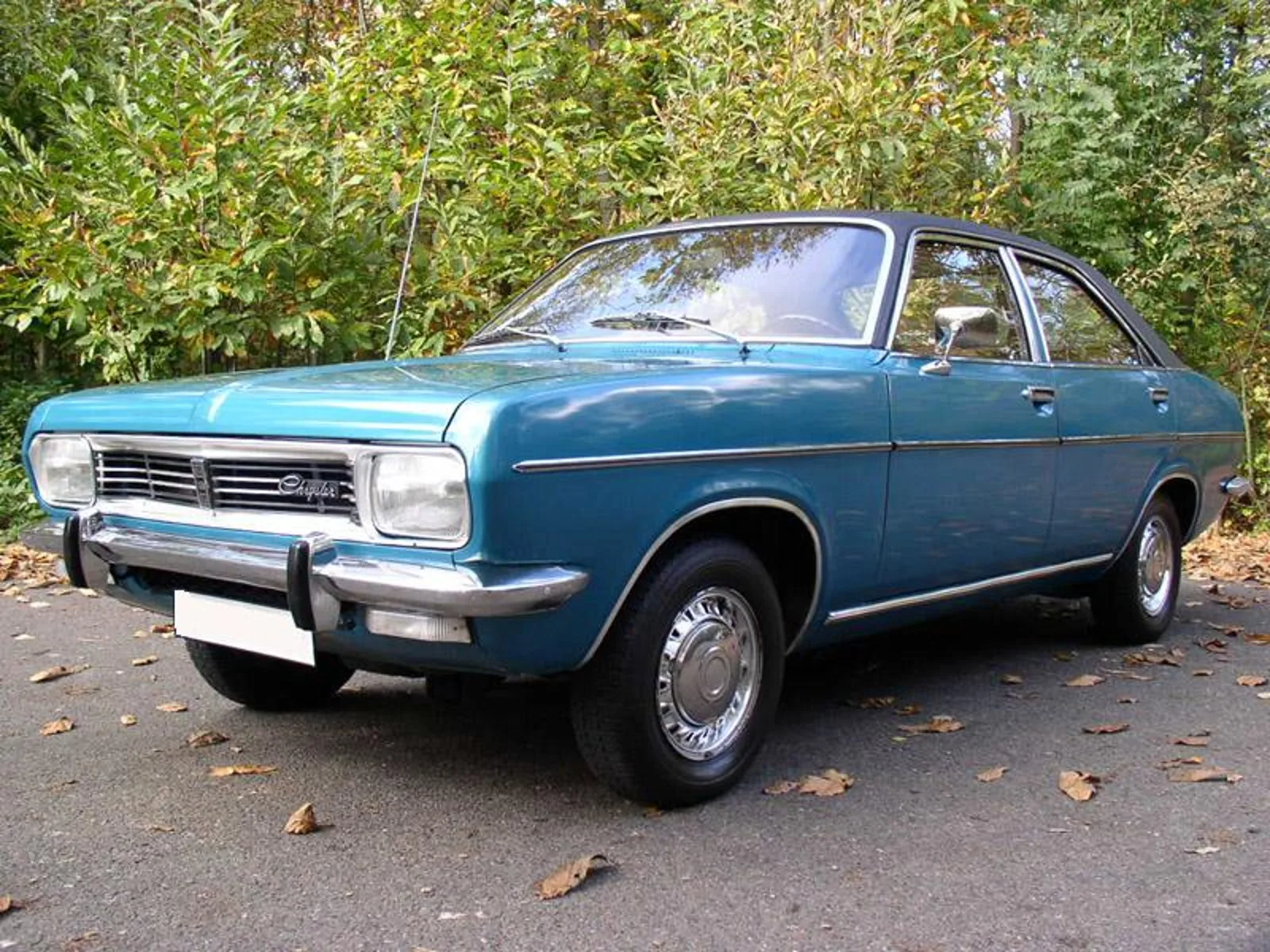
A Rootes and Simca joint project from 1970, built in Paris and later Spain, that never found its footing in France or Britain.
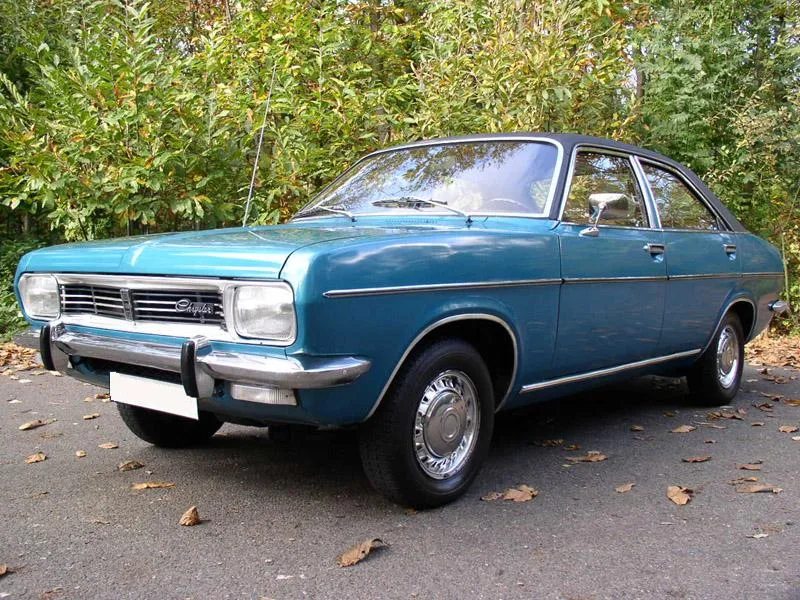
The Chrysler 180 was an executive car made by Chrysler Europe from 1970 to 1975, combining Rootes and Simca development. It was built in Poissy and later in Spain, offering 1.6 and 1.8 litre petrol engines with a 2.0 litre option from 1973.
Chrysler Europe's 180 was one of a family of executive cars sold under several names from 1970 to 1975 at Poissy, near Paris. The project brought together Rootes and Simca, and the car was later assembled at Chrysler's Spanish subsidiary. It struggled in France and Britain but became a strong seller in Spain.
Where did the Chrysler 180 come from?
The car grew out of two separate programmes. Chrysler had gradually taken financial control of both Simca and Rootes during the 1960s, but there was little effort to coordinate their operations. The first common European Chrysler car was therefore the result of two development programmes running side by side.
In France, Simca was working on Projet 929, its first large car since the Vedette ended in 1961. In Britain, the Rootes team began the C Car in 1966, led by design chief Roy Axe. The car was meant to replace the Humber Hawk, which ended in 1967, and it was planned to appear under the Hillman, Sunbeam 2000 and Humber names.
Rootes was also developing a fresh V6 in 2.0 and 2.5 litre sizes, set at a 60 degree vee. Its engineers also considered De Dion tubes for the rear suspension, a feature shared with the Rover P6, and a five-speed gearbox that was advanced for its day. One of the engineers on the C Car was Tony Wheeler, who later founded the Lonely Planet travel guides.
An American-styled executive car from Paris and Coventry that found its best home in Spain.
How did the two designs differ?
The Projet 929 was planned with four-cylinder engines rather than a V6, because the French tax system based costs on engine size and would have made a V6 prohibitively expensive. Simca's team prepared three styling proposals, which set out very different visions for the car.
Simca's own design team produced the 929 XA, whose angular lines gave it a top-heavy look. Bertone designed the 929 XB, which was much rounder and somewhat reminiscent of contemporary BMWs. The 929 XC was drawn in Chrysler's Detroit studios and looked very American, resembling a smaller version of the Australian VE Valiant.
The C Car, by contrast, was an enlarged take on the Hillman Avenger, with twin headlamps and a light bar at the rear. Its early designs were inspired by American Chryslers of the period, which set it apart from the more restrained European proposals.
Which design did Chrysler choose?
In early 1969 Chrysler recognised that two potentially competing cars were under development and asked for both the British and French proposals to be presented to the general management of Chrysler Europe. The decision was to proceed with the British C Car programme, but with two versions for the UK and French parts of the business.
Chrysler funded a new plant and a development centre for the Rootes Group at the Whitley works in Coventry. Roy Axe brought in Curt Gwinn, a former Chrysler USA designer, to lead the project's styling. By then the C Car closely resembled an enlarged Hillman Avenger.
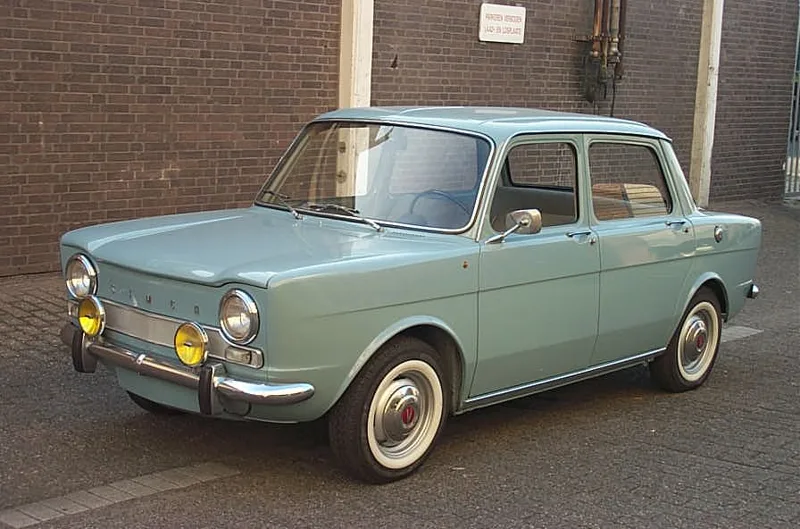
In 1970 Chrysler reviewed the programme again and cut it down to a single version, built at Simca's Poissy factory in France for all markets. Responsibility passed to Simca, where the car became known internally as the Simca 1800.
Simca restyled the nose with rectangular single lamps and removed interior features that Rootes had planned, among them genuine wood, leather and air conditioning. The V6 development was scrapped, even though the tooling for the new engine had already been installed at Rootes' Humber Road factory.
How powerful was the Chrysler 180?
The launch range comprised the 160, the 160 GT and the 180, named after the engine displacement in the Simca tradition. The 160 used a 1632 cc engine rated at 80 PS (59 kW), while the 160 GT and the 180 were both rated at 97 PS (71 kW).
The 180 used a 1812 cc unit, so the 160 GT came with the larger engine despite its name. The production cars had a four-speed manual gearbox, with a three-speed automatic available as an option, and the rear used a coil-sprung live axle.
The 2.0 litre model joined the range for 1973, unveiled at the Amsterdam Auto Show in February that year. Its 1981 cc engine was available only with Chrysler's TorqueFlite automatic, and the model had a full-length vinyl roof, bumper-mounted driving lights and a small 2L badge on the C-pillar.
How did the Chrysler 180 perform in tests?
A Chrysler 180 saloon was tested by British Motor magazine in April 1971, a few months after the model's UK launch. At the top end it managed 101.0 mph (162.5 km/h), and it reached 0-60 mph (97 km/h) in 12.4 seconds. Fuel use came out at 13.0 L/100 km, or 21.7 mpg imp (18.1 mpg-US).
The tested car ranked third out of five UK rivals identified by the magazine, with the Ford Cortina Mk III 2000 GXL and the Vauxhall VX 4/90 finishing above it. The review was written at a time when new models were generally met with uncritical enthusiasm by British motoring writers.
The magazine's verdict was that the car was a very pleasing machine that only just fell short of being a luxury sporting saloon.
Why did production move to Spain?
Assembly was shifted from Poissy to Villaverde, the Spanish works run by the subsidiary Barreiros. Barreiros had long built Simca and Chrysler models for the sheltered Spanish market. Now it became the only plant producing the whole range, supplying every market.
Sales picked up in the new home market, where local coachbuilders went further and built estate and stretched versions. The line-up stayed mostly unchanged elsewhere, although the 160 was not offered in Spain, which received a new diesel model instead.
The Chrysler 180 found its best market in Spain after production was transferred there in the later 1970s. It was the country's most successful home for the car, and the Spanish sales story stands in sharp contrast with the experience in France and Britain.
What was the Spanish diesel?
The Spanish diesel was a four-cylinder with indirect injection, mated to a four-speed manual transmission. It delivered 48 kilowatts (65 hp) and came with the most basic 160 dashboard, using the Barreiros 2.0 L diesel engine that was not offered in other European markets.
A change to the Spanish line-up was forced by the introduction in November 1978 of a taxation system similar to France's horsepower-based tax. The new 13 CV band imposed a rate of 35%, and it covered both the petrol and diesel 2.0 litre models.
The petrol 2.0 litre was replaced by an automatic 180, while the diesel had to be modified to avoid higher taxation. Its displacement was cut from 2007 cc to 1917 cc without losing real output, which kept it just below the 1920 cc border of the 13 CV band.
Why did the car struggle in France and Britain?
The marketplace was very different in France and the UK. A mixed heritage and a brand with little history in these markets worked against the car with buyers and critics who favoured home-grown models, and there was little to make it stand out among similar cars that already held established positions in the class.
By 1976 UK sales had not reached 10,000 in total, and sales had settled at about 2,000 a year, below the company's expectations. French sales were weak enough that the aged Simca 1501 returned to the price list for 1974, having stayed in production largely for overseas buyers.
Rivals also outpaced it. The German Auto Katalog noted that the car resembled the Opel Rekord C, although that car was four years old by then. In Britain the Rover SD1 was a stronger rival, and the Chrysler lacked the six- and eight-cylinder engines that competitors offered without French tax penalties.
Chrysler also gave the model little support. Advertising was limited, updates were scarce and insignificant, and no upmarket version with power windows or central locking was offered, even though those features were available on the smaller Simca 1307 launched around the same time.
What happened after the PSA takeover?
In 1979 Chrysler Europe was sold to the French PSA group because of Chrysler's financial difficulties. Some minor changes followed in the range. The 1.8 litre engine was discontinued, and in France the 1610 gained the 2.0 litre engine, which made it technically an 11 CV car, although the name did not change.
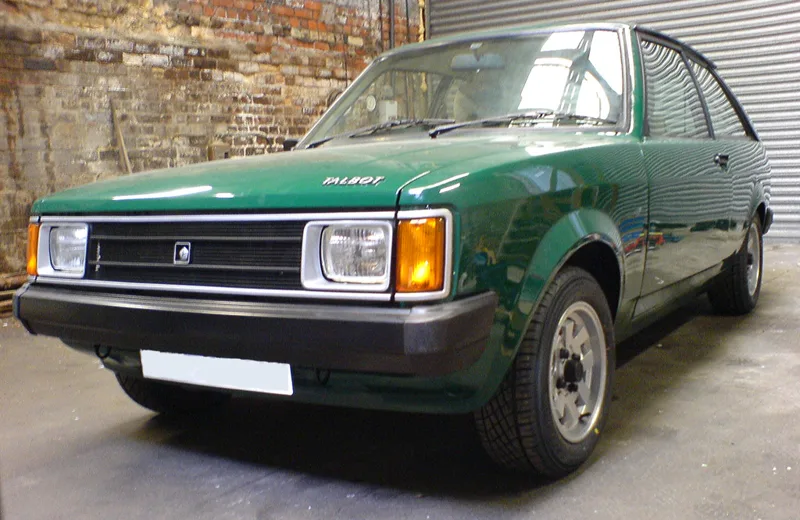
From 1 August 1979, PSA renamed the former Chrysler Europe cars as Talbots, so the Chrysler-Simca 1609 and 1610 became the Talbot Simca 1609 and 1610. In Britain the car became the Talbot 2 litre, and the range ran for only one year under the new names.
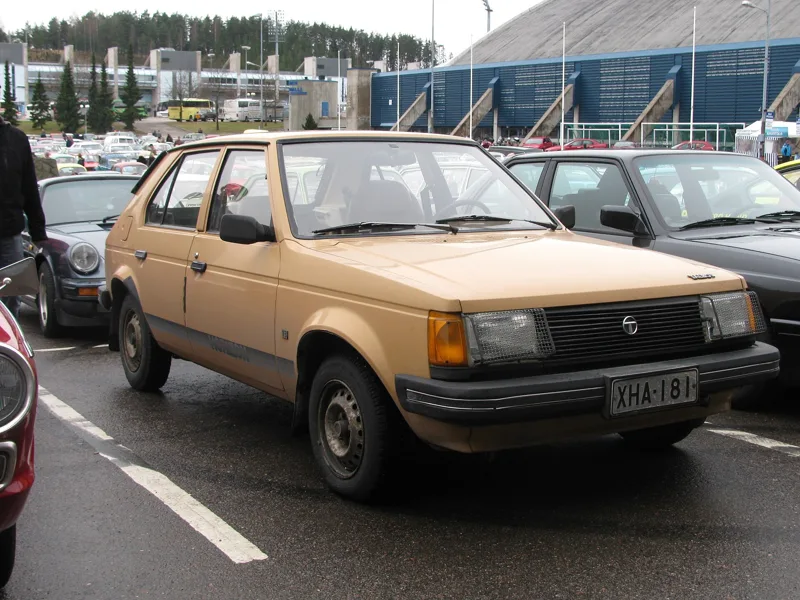
PSA presented a replacement for 1981, the new Talbot Tagora. Peugeot first intended the Solara, a saloon derived from the Alpine, as its successor, and that car arrived in April 1980. Petrol 1610 production stopped at Barreiros, but diesel versions continued under the Talbot badge until 1982 for the Spanish market.
What was the Chrysler Centura?
The Centura was a variant of the Chrysler 180 built in Australia from 1975 to 1978 by Chrysler Australia. It came with a choice of four-cylinder and six-cylinder engines, mated to manual or automatic transmissions, and it was positioned as a medium-sized model.
To accommodate the larger straight-six, the Centura had a larger nose and a modified radiator grille that allowed more airflow. Four round headlamps completed the change, giving it a look that distinguished it from the European cars.
Chrysler 180 specifications
| Specification | Detail |
|---|---|
| Production | 1970 to 1975 at Poissy; later Barreiros, Spain |
| Chrysler 160 | 1632 cc, 80 PS (59 kW) |
| Chrysler 180 | 1812 cc, 97 PS (71 kW) |
| Chrysler 2 litre | 1981 cc, TorqueFlite automatic only |
| Spanish diesel | Four-cylinder, indirect injection, 48 kilowatts (65 hp) |
| Top speed (1971 test) | 101.0 mph (162.5 km/h) |
| 0-60 mph (1971 test) | 12.4 seconds (97 km/h) |
| Fuel consumption (1971 test) | 13.0 L/100 km, 21.7 mpg imp |
| Chrysler Centura | Australia, 1975 to 1978 |
| Successor | Talbot Tagora, presented for 1981 |