The hip-curve Rekord that passed one million built, carried a CIH engine range from 58 PS to 106 PS and spawned the Commodore and Brazil's Opala.
The Opel Rekord C was a large family car built from 1966 to 1971. It came as a saloon, estate, coupe and cabriolet, used four-cylinder engines from 58 PS to 106 PS, and sold 1,276,681 examples.
The Opel Rekord Series C was a large family car introduced in August 1966 as the replacement for the short-lived Rekord B. It remained in production until the Rekord D took over at the end of 1971. Its 1,276,681 cars made it the first Rekord to pass one million built, and its engines ran from a 58 PS four-cylinder to a 106 PS sports version.
When was the Opel Rekord C launched?
The Rekord C arrived in August 1966, replacing the Rekord B after less than a year on sale. The new bodywork was completely fresh, although the car inherited most of its engines from its predecessor. It stayed in production for four and a half years, until the Rekord D replaced it at the end of 1971.
Opel's Technical Director and Chief Engineer, Hans Mersheimer, had set the parameters for the new Rekord back in 1963. He retired in 1967, and the car that emerged from his plans went on to become the most successful Rekord built up to that point.
A large family Opel with a hip-curve and a CIH engine range that reached 106 PS, selling 1,276,681 cars.
How was the Rekord C styled?
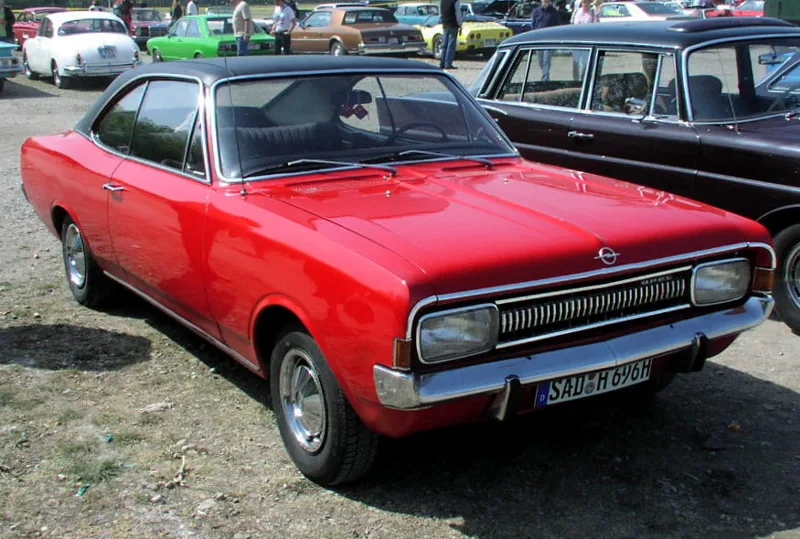
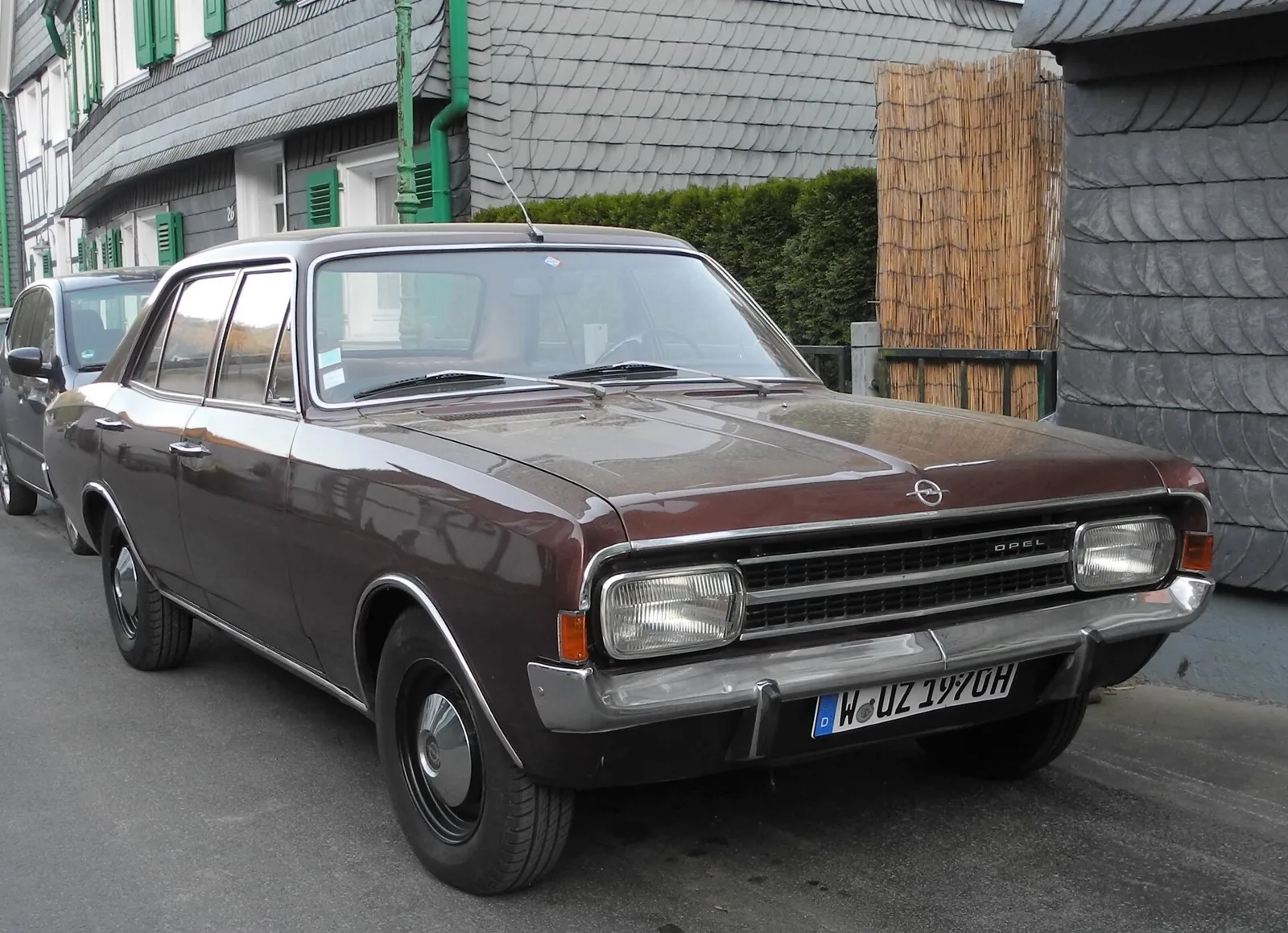
The design was built around a hip-curve on the lower window line ahead of the C-pillar. Enthusiasts called this the Coke-Bottle line, and the car became known as the Cola-Flaschen-Rekord. An alternative design without the hip-curve on the rear doors was also prepared, and it was the work of Opel designer Herbert Killmer.
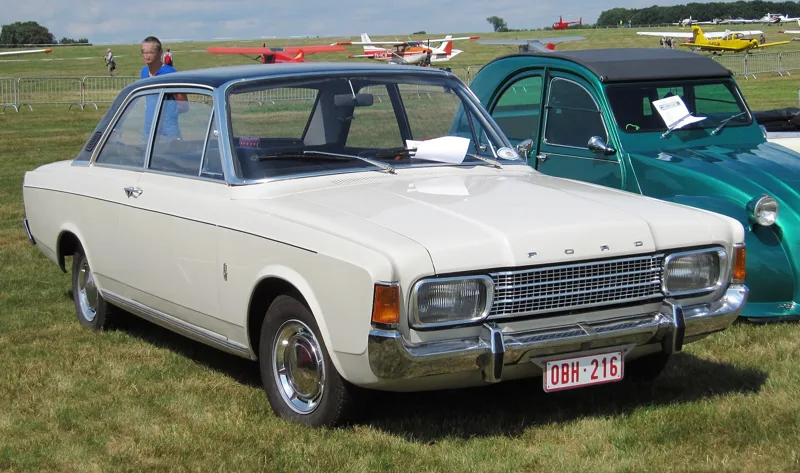
The hip-curve design was the one that reached production. Its rival, the Ford 17M, was introduced in 1967 with a variation on the same line. That car was then relaunched in a simplified form less than a year later because of poor sales.
The low bonnet line was one result of the engine layout. The camshaft-in-head engines allowed the bonnet to stay low, which fitted the stylish shape that the designers wanted for the car as a whole.
What body styles did the Rekord C come in?
The Rekord C was offered as a saloon with two or four doors, which was the top seller. Opel also built a three-door Kombi estate, and a five-door estate was offered for the first time in a Rekord. A three-door delivery van shared the estate's bodywork, except for metal panels in place of the rear side windows.
A factory-built coupe was introduced in 1967 with no fixed B-pillar, so that both side windows could be lowered together. A cabriolet was also available, built as a coach-built conversion of the coupe by Karl Deutsch.
The Deutsch cabriolet cost DM 4,000 more than the coupe on which it was based. Karmann developed a separate cabriolet based on the two-door saloon, but it never went into volume production. Four Karmann pre-production examples are believed to survive.
Which engines powered the Rekord C?
Most Rekord C engines were four-cylinder units from the CIH family introduced in the Rekord B. The camshaft sat in the head, drove the valves through rocker arms, and was chain-driven from directly above the cylinders. This arrangement allowed the low bonnet lines that the designers wanted.
The 1500, 1700 and 1900 four-cylinders
The entry engine was the 1492 cc unit, known as the 1500, which produced 58 PS (43 kW) when the car launched. Its output was raised to 60 PS (44 kW) in 1969. The 1500 was withdrawn early in 1970.
The 1698 cc engine, known as the 1700, launched with 60 PS (44 kW) and a compression ratio of 8.2:1. Its output rose to 66 PS (49 kW) in 1967. The 1700 S used the same block and produced 75 PS (55 kW), a step up in the four-cylinder line.
The 1897 cc 1900 S produced 90 PS (66 kW) at a compression ratio of 9.0:1. In November 1967 the 1900 H arrived with a compression ratio of 9.5:1, which lifted output to 106 PS (78 kW). It used two Weber 40 DFO carburettors and was branded the Rekord Sprint. The Rekord Sprint saloon was withdrawn once the coupe outsold it, which left the coupe as the sporting Rekord.
The six-cylinder engines
The six-cylinder option arrived in December 1966 as a 2239 cc engine producing 95 PS (70 kW). Its cylinder dimensions matched those of the 1492 cc four, which was a shared design detail between the two engine families.
The six-cylinder Rekord was withdrawn in August 1968. The Commodore followed in February 1967 on the Rekord body, and it offered a choice of three six-cylinder engine sizes.
How did the Rekord C's chassis and safety features work?
The front suspension used a newly developed axle with double wishbones and coil springs, and the rear used four trailing arms with coil springs. The wheelbase was 6 cm longer than the Rekord B, and the car was virtually 6 cm wider. Dual circuit braking was carried over from the previous car, together with front disc brakes and a brake servo.
Safety was a clear priority. The Rekord C had a padded dashboard in place of the painted one, along with a telescopically collapsible steering column. Front and rear ends were designed as crumple zones to protect the passengers in a collision.
The Rekord B's strip speedometer was dropped in favour of a conventional dial. Taken together, the new chassis, brakes and safety equipment made the Rekord C a more modern car than the one it replaced.
Which transmissions were offered?
The standard transmission was a manual all-synchromesh gearbox. Customers could choose three or four forward speeds until 1970, after which only the four-speed was offered. The coupe had a floor-mounted gear lever, which was also available as an option on other bodies.
Three-speed cars could be ordered with an Olymat automatic clutch from Fichtel and Sachs. Larger engines could be specified with the General Motors Powerglide two-speed automatic. In 1968 this was replaced by the three-speed TH180 from the General Motors plant at Strasbourg.
What special editions did Opel build?
Opel sold budget versions of the Rekord C as special editions. In October 1967 the Spar-Rekord arrived with a reduced specification and was offered only in grey. A second batch followed in grey or light blue. Both batches were aimed at budget buyers, as their reduced specifications suggested.
The Rekord Holiday appeared in showrooms in July 1971, late in the car's life. It was priced attractively and came with a package of extras that included a steel panel sunroof, supplementary front lights and a heated rear window.
How many Rekord Cs were built?
Opel built 1,276,681 Rekord Cs, making it the first Rekord to break the one million barrier. It was also the first middle-class Opel to exceed one million cars. The car was produced for four and a half years before the Rekord D took over.
In September 1971 Opel built its ten millionth car since production began in 1899. Opel number ten million was a Rekord C CarAVan, the estate version of the car.
How did the Rekord C compete in Germany?
The Ford Taunus 17M was the nearest rival in price, size, power and target market. It was introduced in 1967 and heavily facelifted in 1968. Between 1967 and 1971 the Ford 17M, also known as the P7, sold a total of 710,059 units.
The Rekord never challenged the smaller and cheaper Volkswagen Beetle for the top spot in West German sales. Its lead in its own class was never again threatened by Ford Germany or anyone else. Opel also had three top-selling ranges in the German market, a first for the company since the war. The Ford 17M shows how quickly buyers could reject a design: its hip-curve had to be simplified less than a year after launch.
Where else was the Rekord C built?
General Motors assembled a sedan called the Ranger in small numbers at Antwerp from 1968 and at Biel from 1970.
The Chevrolet Opala was launched at the Sao Paulo Motor Show in November 1968. It combined the Rekord C body, with a different front grille and lights, and used Chevrolet engines. Its 3.8-litre engine was overhauled to 4.1 litres in 1970.
In Mexico the car was sold as the Opel Rekord Olimpico, a name that celebrated the 1968 Olympic Games.
What are the Rekord C specifications?
| Specification | Detail |
|---|---|
| Introduced | August 1966 |
| Replaced by | Rekord D at the end of 1971 |
| Wheelbase change | 6 cm longer than the Rekord B |
| Width change | Virtually 6 cm wider than the Rekord B |
| Entry engine | 1492 cc, 58 PS (43 kW), later 60 PS (44 kW) |
| Mid engine | 1698 cc, 66 PS (49 kW), 8.2:1 compression |
| Sport engine | 1897 cc, 90 PS (66 kW), 9.0:1 compression |
| Top engine | 1900 H, 106 PS (78 kW), 9.5:1 compression |
| Six-cylinder | 2239 cc, 95 PS (70 kW) |
| Entry price | DM 6,980 |
| Production | 1,276,681 |
Legacy and reception
The Rekord C's total marked a milestone for the Rekord name. That total of 1,276,681 cars gave the model a lasting place in the company's history.
Opel had two designs ready for the car, with and without the hip-curve, and the hip-curve version was the one that reached production. The Rekord kept its place at the top of its class.
The Ranger, the Opala and the Rekord Olimpico show how the car travelled beyond Germany. Each one carried the Rekord C's body or name into a new market, and each was built on the back of the same design work.