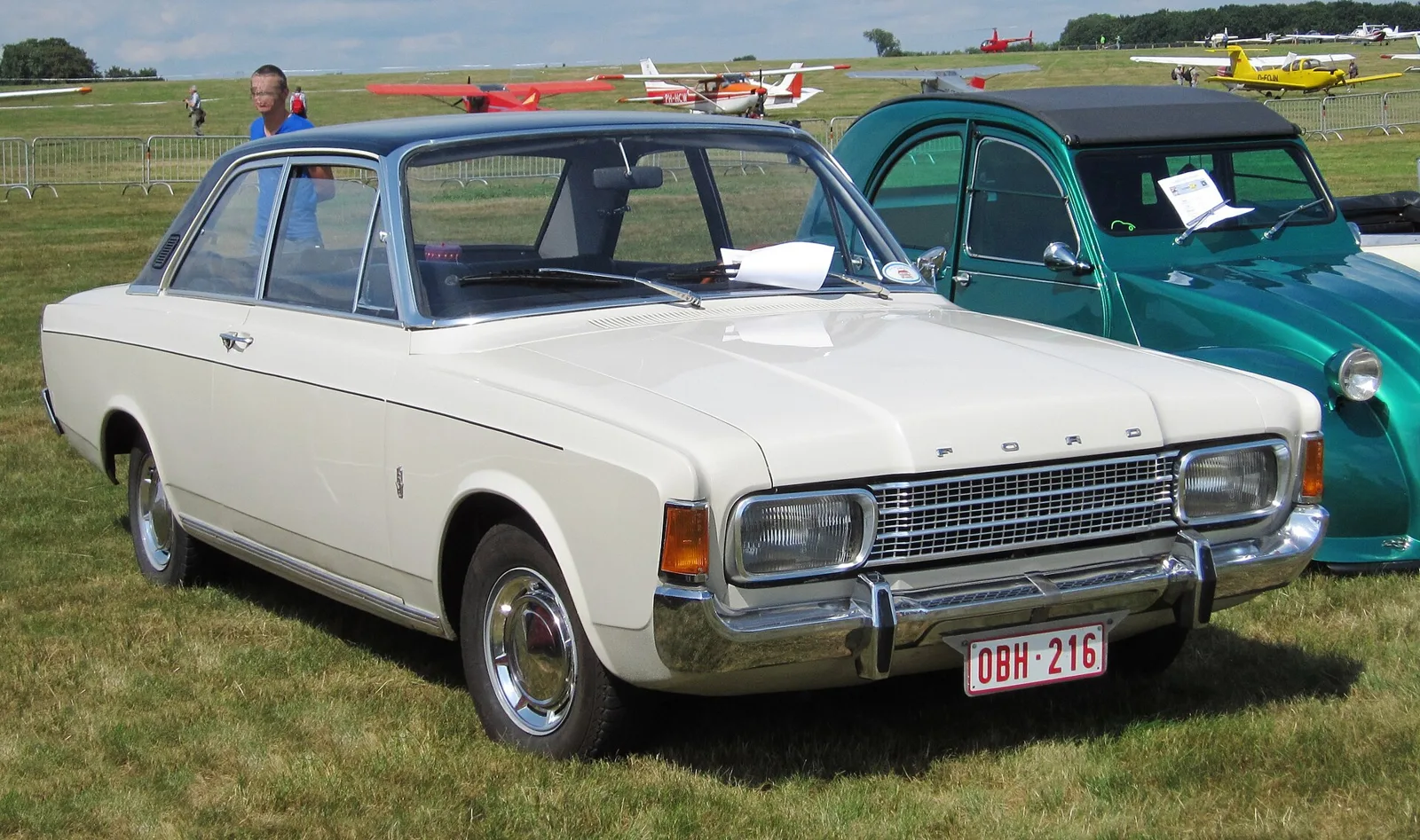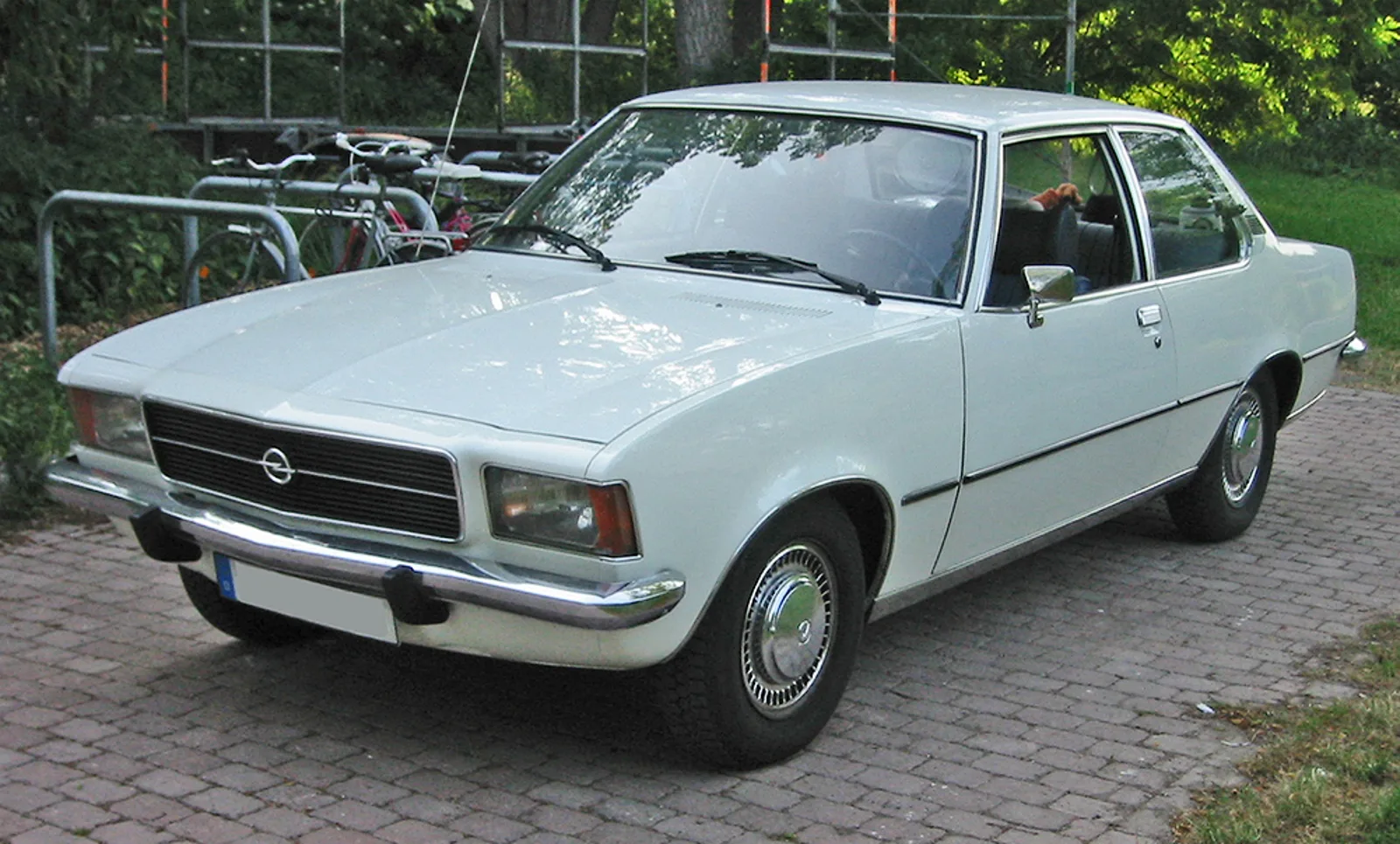
Opel's large family saloon of 1972 to 1977 kept the Rekord C wheelbase, carried a BMW-like style and sold over a million cars.
The Opel Rekord D was a large family car built at Russelsheim from late 1971 until 1977. It sold 1,128,196 units, offered petrol and diesel engines in four body styles, and inspired GM versions in Belgium, South Africa and Iran.
The Opel Rekord Series D was a large family car that replaced the Rekord C at the Russelsheim plant in late 1971 and went on sale in West Germany in early 1972. It kept the Rekord C's wheelbase but wore an entirely new body, and it sold more than a million units before the Rekord E took over in 1977.
What did the Rekord D look like?
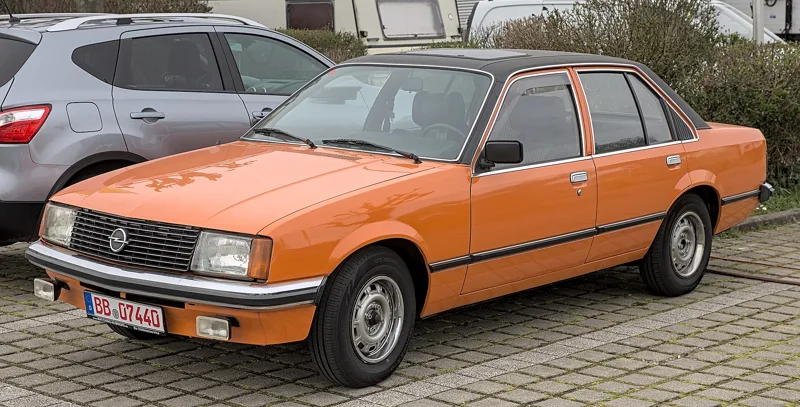
The Rekord D was styled by Chuck Jordan and had a body that was entirely new, even though it kept the Rekord C's wheelbase. The coke-bottle look of its predecessor was dropped in favour of a larger glass area, and a discreet nod to the Hofmeister kink, a BMW signature for a decade, appeared on the car.
Vauxhall, Opel's English sister company, put out the Victor Transcontinental three months after the Rekord D, and the two cars looked close in form. None of the exterior panels matched, but they shared floor pressings and several hidden components, which points to close contact between the two development teams.
A large Opel with a BMW-like feel that passed a million sales and spawned GM versions on three continents.
Why was it first called the Rekord II?
Early advertising used the name Opel Rekord II, because the letter D might confuse buyers in a country where a D after a Mercedes-Benz name meant a diesel. That name was quietly dropped, and the car became known simply as the Rekord D.
At launch the Rekord D came only with petrol engines, as every earlier Rekord had. The diesel arrived in September 1972, and the range then grew to cover saloons, estates, vans and coupes.
Which body styles did the Rekord D come in?
The Rekord D was a monocoque steel car with seating for five, offered in several body styles. The saloon, available with two or four doors, was the top seller, and the Caravan estate came with three or five doors. A factory-built coupe was also offered, though it lacked the pillarless look of the Rekord C coupe.
Some export markets, Austria among them, received a three-door delivery van. It was essentially the estate with metal panels in place of the rear side windows, which gave self-employed traders certain tax advantages. That version was not offered in West Germany itself.
The coach-built cabriolet conversions of earlier Rekords disappeared. Karl Deutsch, which had converted the Rekord C, ceased operations in 1971 as cabriolets fell from favour ahead of North American safety rules that would have demanded costly roll-over bars.
Which petrol engines did the Rekord D use?
The petrol engines came from the Rekord B generation of 1966 and used a camshaft-in-head layout, with rocker arms operating the valves. The stroke stayed at 69.8 mm, and the bore changed to alter capacity. The smallest unit was a 1698 cc engine with 8.2:1 compression and 66 PS (49 kW).
A twin-barrel carburettor version of the 1698 cc engine, sold as the 1700 S, made 83 PS (61 kW) at 9.8:1 compression. Drivers had to pay for higher-octane fuel, and fuel economy suffered. The 1900 S used a 1897 cc unit to produce 97 PS (71 kW) and a top speed of 165 km/h, making it the fastest Rekord D at launch.
Opel also published SAE power figures early in production. They gave the 1900 S 105 PS (77 kW) at 5,200 rpm and 17.1 kg-m (168 N-m; 124 lb-ft) at 3,800 rpm. That engine was the only one offered by Opel's Japanese importer.
How did the 1975 lead law change the engines?
The 1975 lead law in West Germany more than halved the lead permitted in petrol, and similar rules followed across western Europe. Oil companies responded by cutting octane ratings at the pump, which left the 98 octane fuel needed by the high-compression engines scarce and expensive.
The entry-level 1700 N lost 6 PS and fell to 60 PS (44 kW). The high-compression 1700 S was withdrawn, and a low-compression 1897 cc version, sometimes called the 1900 N, produced 75 PS (55 kW) at 7.6:1. The 1900 S fell from 97 to 90 PS (71 to 66 kW) after its compression was lowered to 8.8:1, so it could run on the new super grade fuel.
Sweden and Switzerland had stricter emissions rules, and the engine there produced only 88 PS (65 kW), while the 1700 was discontinued altogether. To compensate, Opel enlarged the bores and launched a 1979 cc 2000 S in September 1975 with 100 PS (74 kW). Even so, it did not match the 106 hp of the older Rekord C 1900 H.
What diesel engines were offered?
The first diesel Rekord arrived in September 1972, and it was aimed at the taxi trade that Mercedes-Benz dominated in West Germany and in several export markets. Its four-cylinder 2068 cc diesel was a newer design rather than a development of the CIH petrol engines, and it produced 60 PS (44 kW).
The Caravan estate was not offered with the diesel at first, but a five-door diesel estate joined the range at the 1973 Frankfurt Motor Show. The engine's Bosch injection pump and conventional overhead camshaft made it taller than the petrol units, which is why diesel Rekord D bonnets carry a hump along the centre.
From December 1974 a smaller 1998 cc diesel was offered, mainly for Italy, where the 2-litre threshold affected car tax rates. Its bore shrank from 88 mm to 86.5 mm, and its output fell from 60 PS to 58 PS (43 kW). That engine was the forerunner of the 2-litre diesel fitted to the Opel Ascona from 1978.
What transmissions did the Rekord D have?
The standard transmission was a manual all-synchromesh four-speed. Early cars had a column-mounted lever, while a floor-mounted gear change marketed as the Sportschaltung was available from the start on petrol cars, first as an option and later as standard equipment.
Buyers of all but the smallest engines could also specify a three-speed automatic. It was the TH180 unit from the manufacturer's new transmission plant in Strasbourg, and it was the only automatic offered on the range.
How did the Rekord D handle and brake?
Steering and suspension were based on those of the Rekord C. At the front, unequal-length double wishbones carried an anti-roll bar, springs and dampers. The rear used a live axle located by four trailing arms, a Panhard-rod-like arrangement and an anti-roll bar, with progressive-rate coil springs at all four corners.
The steering was a recirculating ball system on a collapsible column. The brakes were a dual-circuit hydraulic system with a servo, using discs at the front and drums at the back. Larger-engined versions added a brake force limiter for the rear brakes.
Which trims and special editions were sold?
The range began with a base Rekord, then moved up to the luxury Rekord L and the sporting Rekord Sprint. The Sprint had a matt black front grille and extra dials, including a rev counter. In 1975 the Rekord Berlina arrived with a still more opulent level of comfort and equipment.
When production reached one million in 1976, Opel celebrated with a special edition called the Rekord Millionar in September 1976. Other editions included the Rekord Maharadscha, the Rekord Hit and the Rekord Sport, while many markets received local tax-driven specials.
Where else was the Rekord D sold?
The Rekord D sold across most of Europe and farther afield, both in its own right and through licence-built versions. Austria and several other markets received windowless vans, and Italy took a sub-2-litre diesel from December 1974.
Japanese buyers received only the 1900 S engine, which could be chosen as a four-door saloon, a two-door coupe or a sporting SR coupe with a matt black bonnet and full instrumentation. In Japan the automatic transmission was optional, as was right-hand drive.
How well did the Rekord D sell?
The Rekord D sold 1,128,196 cars in a little over five and a half years, making it the second Opel Rekord to pass a million units. The million mark was reached in the late summer of 1976, but the car moved more slowly than its predecessor, and its sales dropped off toward the end of production.
The 1973 oil crisis changed how buyers saw large cars, since cheap fuel now looked like a thing of the past. In 1975 Opel introduced the second-generation Ascona, half a class smaller, which became the Rekord's most serious rival in Opel's own showrooms. The Audi 100, introduced in 1968, also grew into a formidable competitor as the decade advanced.
How was the Rekord D received?
The car drew a warm welcome in the market at the end of 1971. Its style and dynamic qualities were compared with a BMW rather than an Opel, and some described it as the best BMW ever to come out of Hesse. Yet the price was competitive, and rivals such as the Volkswagen 411 were seen as having missed the mark by comparison.
Did General Motors build versions of the Rekord D?
General Motors built several versions of the Rekord D outside West Germany. The Ranger B was assembled at Antwerp from 1972 and was first shown alongside the Rekord D at the 1972 Geneva Salon. Locally assembled Chevrolet versions also appeared in South Africa and Iran.
The Ranger B had twin headlights in place of the Rekord's single rectangular lights, repositioned indicators and a grille with a horizontal bar. It used the Rekord's 1697 cc (83 hp) or 1897 cc (97 hp) four-cylinder engines, or the 2.5 litre six-cylinder units of the Commodore. Buyers did not see it as sufficiently different, and Rangers were withdrawn from showrooms by late 1975.
In South Africa, the Chevrolet 3800 and 4100 arrived in December 1972, followed by a four-cylinder 2500 in 1973. The engines came from Chevrolet, while the bodies were locally built Rekord Ds with twin round headlights. Outputs were 104.4 kW (142 PS; 140 hp) and 115.6 kW (157 PS; 155 hp) respectively.
The Rekord D was also assembled in Iran from 1974 until 1977, where it was branded the Chevrolet Iran. Those cars used 2500 and 2800 cc six-cylinder GM engines, and Iran General Motors built them.
What are the Opel Rekord D specifications?
| Specification | Detail |
|---|---|
| Production | 1,128,196 cars over about five and a half years |
| Launch | Late 1971 production; West German sales from early 1972 |
| Successor | Opel Rekord E, replacing the Rekord D in 1977 |
| Body styles | Saloon (two or four doors), Caravan (three or five doors), coupe and export van |
| Entry petrol | 1698 cc, 8.2:1 compression, 66 PS (49 kW) |
| Mid petrol | 1700 S, 1698 cc, 9.8:1 compression, 83 PS (61 kW) |
| Top petrol at launch | 1900 S, 1897 cc, 97 PS (71 kW), 165 km/h |
| Larger petrol from 1975 | 2000 S, 1979 cc, 100 PS (74 kW) |
| Diesel | 2068 cc four-cylinder, 60 PS (44 kW), from September 1972 |
| Smaller diesel | 1998 cc, 58 PS (43 kW), from December 1974 |
| Manual gearbox | Four-speed all-synchromesh |
| Automatic gearbox | Three-speed TH180, optional on all but the smallest engines |
| Brakes | Discs at the front, drums at the rear, rear brake force limiter on larger engines |