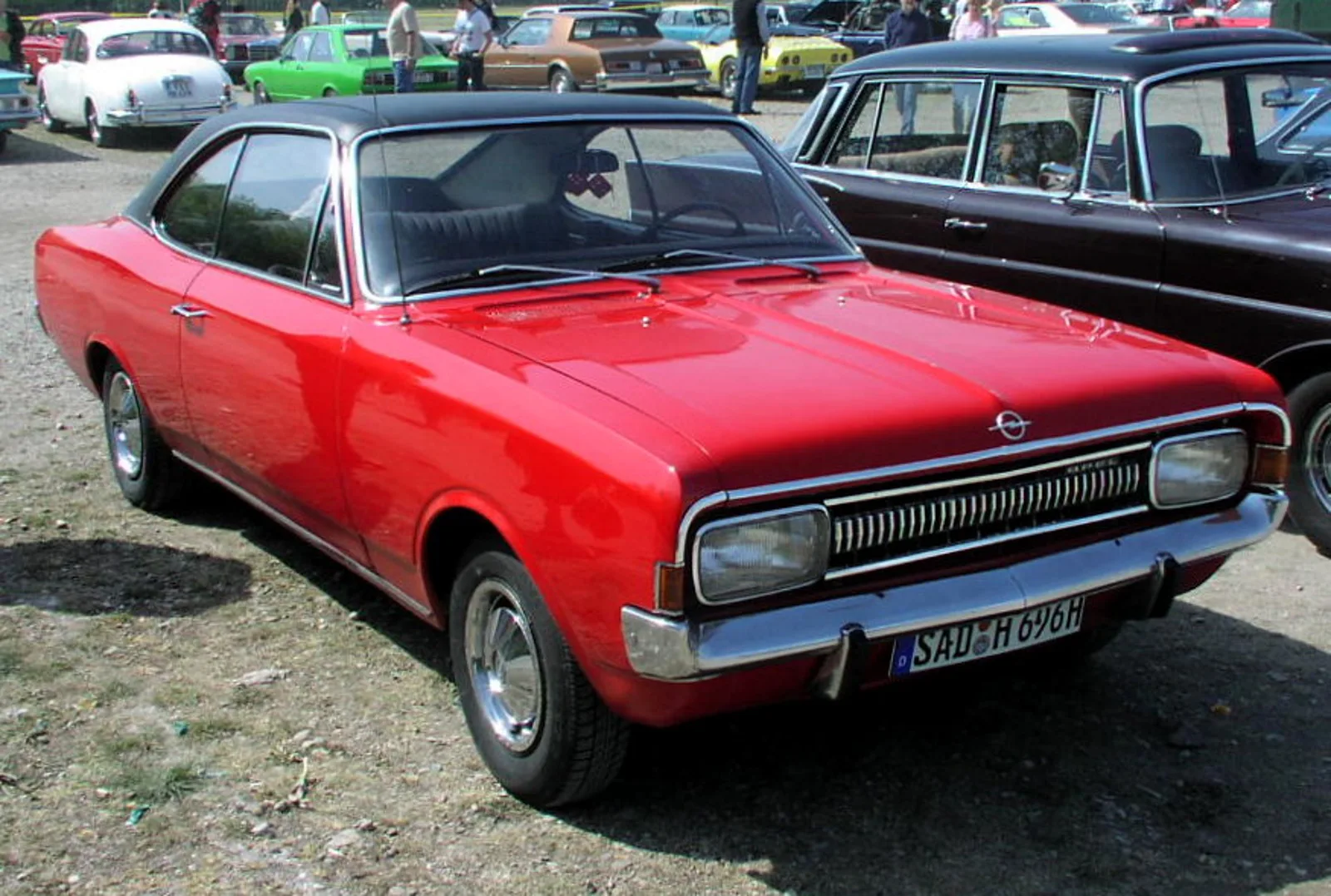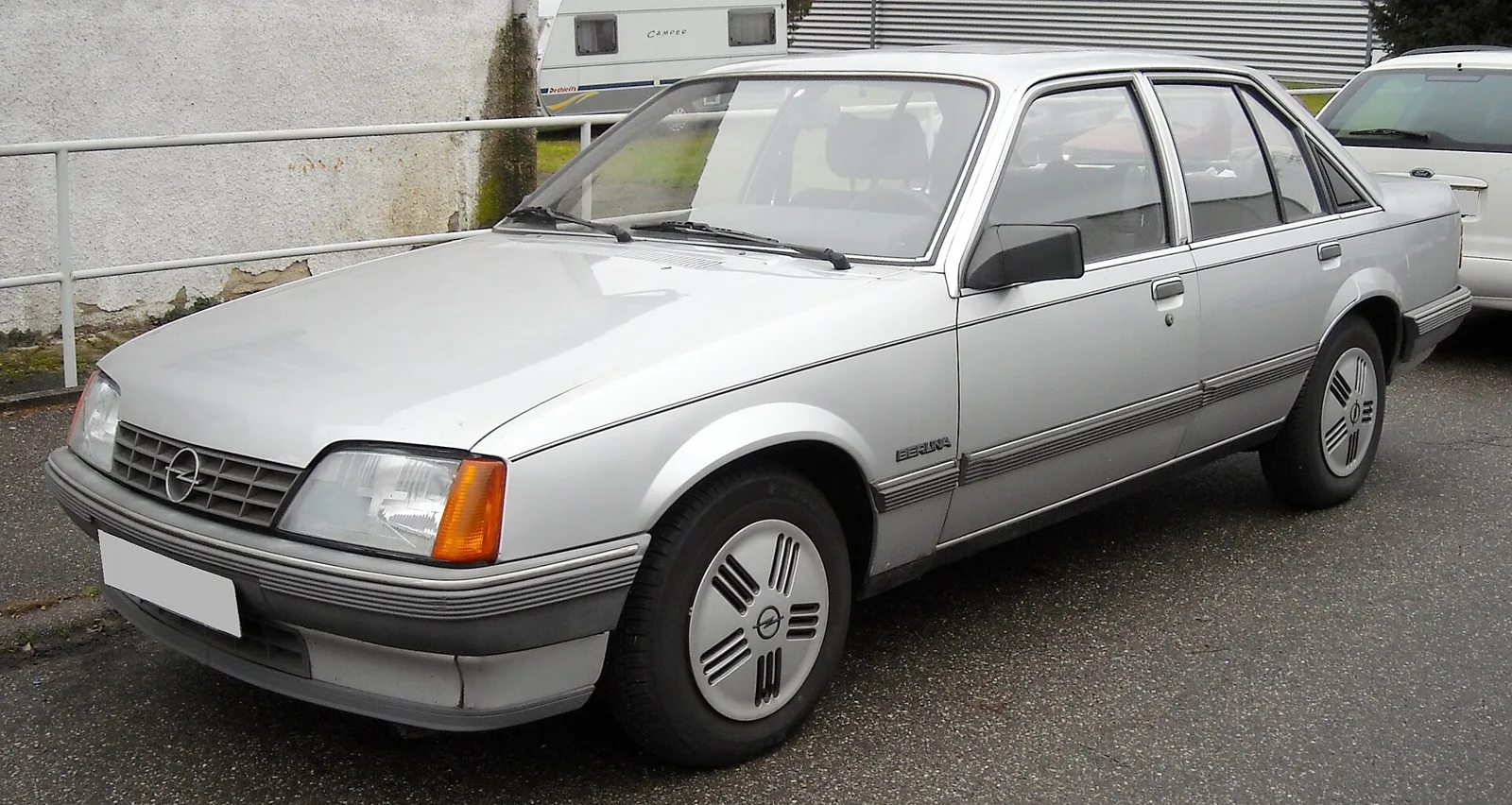
From the Olympia Rekord of 1953 to the Rekord E that became the first Holden Commodore, a family car that sold in very large numbers.
Opel's Rekord ran from 1953 to 1986 in eight generations and sold roughly ten million cars. The Rekord C and Rekord E were the strongest sellers, and the Omega succeeded the line in 1986.
The Opel Rekord was a large family car that Opel built in eight generations, and roughly ten million of them found buyers between 1953 and 1986. Vauxhall and Holden also sold versions of it, and Holden's Rekord-based car became the first Commodore.
A run that long gives a useful picture of how German family motoring changed. The Rekord began as a modest postwar sedan and finished as a range of saloons, estates, vans, coupes and convertibles, and it stayed in Opel's line until the Omega replaced it.
Where did the Rekord name come from?
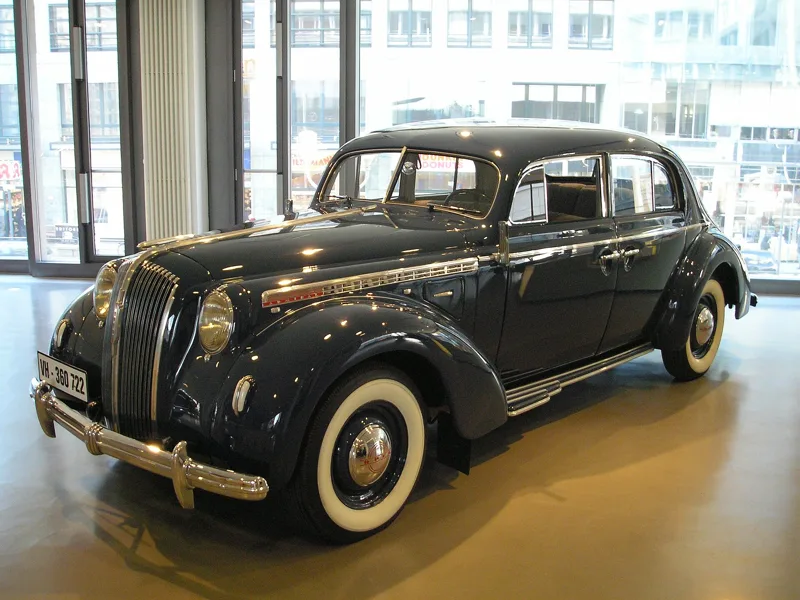
The Rekord name began as a companion to the Olympia, a name Opel had used since 1935. The Olympia Rekord arrived in March 1953 as the successor to the pre-war Olympia, and the Rekord name gradually became the main name of the range. The Olympia name returned in 1967 on a separate, smaller car.
Enthusiasts identify the generations by Opel's internal codes, such as Rekord P1 or Rekord B. The cars themselves carried no such badges, so most owners only ever knew the Rekord name.
Eight generations, roughly ten million cars and a Holden Commodore that began life as a Rekord.
How did the Olympia Rekord start the line?
Production ran to 1957 across four versions, and around 580,000 left the factory. Its 1488 cc engine made 40 PS (29 kW; 39 hp) at first, and output climbed to 45 PS (33 kW; 44 hp) in 1956. Early 1953-54 sedans borrowed their look from scaled-down Chevrolets.
Prices in Germany began at DM 6,410 in the first model year, rising to DM 6,710 at the top of the range. Saloons, cabriolets and estates were offered at launch, and the cabriolet disappeared from the line in 1957.
What changed with the Rekord P1 and P2?
The Rekord P1, built from July 1957 to July 1960, had a larger and more modern body with a wraparound windscreen and rear screen. It introduced two-tone paintwork to German buyers, a fashion that came from America. A reduced-specification version sold as the Opel Olympia earned the nickname Bauern-Buick, or peasant's Buick.
A semi-automatic gearbox called the Olymat arrived for model year 1959. That year the new base model, the Opel 1200, took the place of the Olympia, and a 1680 cc engine producing 55 PS (40 kW; 54 hp) followed for 1960.
Prices in Germany for the 1958 and 1959 model years ran from DM 5,785 to DM 6,845. Karosseriebau Autenrieth of Darmstadt also converted a small number of two-door P1 saloons into coupes and cabriolets, at DM 9,380 for the coupe and DM 11,180 for the convertible.
Appearing in 1960, the Rekord P2 carried a bigger body but a similar wheelbase, and its new styling did away with the wraparound windows. It was built as a saloon, estate, delivery van, pick-up and convertible, and a works coupe joined in August 1961. A more luxurious L version arrived in June 1962, with a 1700 S engine at the top of the range. Prices in Germany ran from DM 6,545 to DM 7,770, and 787,684 units were made, and Autenrieth kept offering a few convertibles, priced at DM 11,635.
How did the Rekord A and B compare?
The Rekord A brought completely new bodies on a wheelbase stretched to 103.3 in (2,620 mm). Its line-up repeated the P2's saloons, estate, van and coupe, and a Rekord L-6 arrived in March 1964 with the Opel Kapitan's 2.6-litre six.
Front disc brakes cost an extra DM 200, and a four-speed gearbox with a floor shift added DM 180. Karl Deutsch of Cologne sold a small run of convertibles: the 1700 S version cost DM 11,765 and the 2600 car DM 13,060. In total, 885,292 A-series cars were built.
Transitional in nature, the Rekord B offered a mild facelift. Its real purpose was to bring in the more oversquare cam-in-head four-cylinder engines of 1500, 1700 S and 1900 S, which every later Rekord used until 1986. Its range of prices stretched from DM 6,980 to DM 9,570, and 296,771 of them were built.
Why did the Rekord C sell so well?
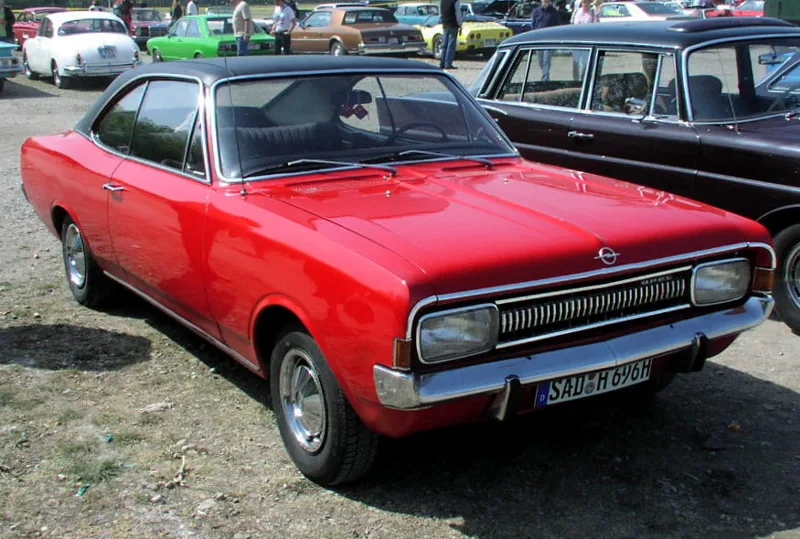
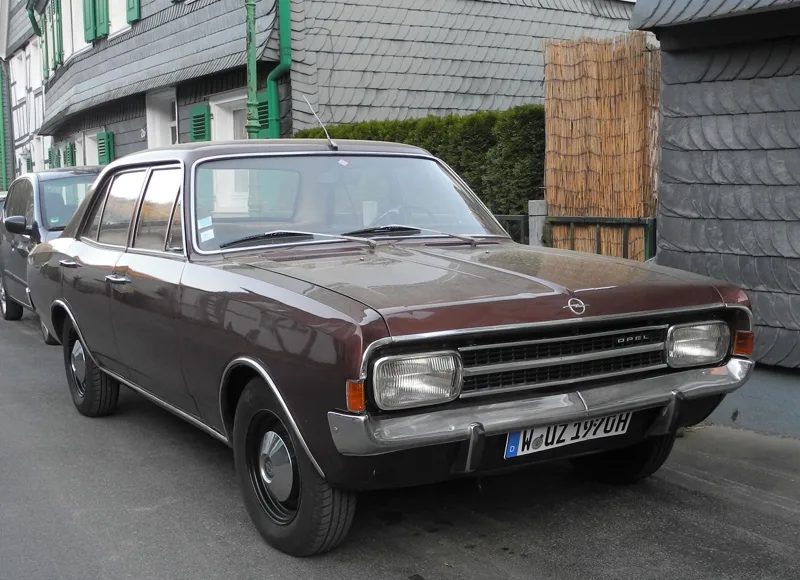
The Rekord C sold 1,276,681 units, the largest total of any Rekord. It was reliable and roomy, and its coke-bottle body line gave it a stylish profile. It was the most successful Rekord of all.
Two- and four-door saloons, two- and four-door estates, a delivery van and a two-door hardtop coupe made up the line. Four-cylinder engines from 1500 to 1900 cc sat alongside a 2200 six, which remained available until 1968.
Opel made a serious attempt at the taxi trade in 1967. That year's taxi rode on a 113 in wheelbase and cost DM 9,950, but the version lasted only one year. Karl Deutsch of Cologne continued to sell convertibles in limited numbers.
Taking over the role of the Rekord L-6, the Commodore A was a better-equipped six-cylinder car. The Ascona, launched in September 1970, then absorbed some of the cheaper Rekord versions, and the 1.5-litre unit disappeared from the range at that point.
Which Rekords were built outside Germany?
The Ranger was a Rekord-based range assembled at Opel's Antwerp plant in Belgium for the wider European market. Its styling stayed close to the Rekord, but the Ranger carried four headlamps in its grille. Initial models were the Ranger 130 and Ranger 153, and 1970 brought the Ranger 1900, the Ranger 2500 and an SS variant.
South Africa built its own Ranger, sold as South Africa's Own Car with a springbok on the grille, and a station wagon followed. In Brazil, Chevrolet sold the Rekord C as the Opala and the Comodoro from 1968, and those models stayed in production until about 1992.
Iran General Motors assembled Rekord D based Chevrolets, the 2500 and 2800, under the Chevrolet Royale name from 1974 to 1977. South Africa used the same body for its Chevrolet 2500, 3800 and 4100 models, and the six-cylinder cars could be told apart by their four round headlights.
How did the Rekord D and E differ?
Between 1972 and 1977 buyers took about 1.1 million Rekord Ds. Because the name was easily mistaken for a diesel, sales literature often used Rekord II, and a 2068 cc diesel joined the gasoline range. The diesel's taller engine gave its bonnet a raised midsection.
Gasoline power came from 1897 cc and 1698 cc cam-in-head fours, and the six-cylinder version was called the Commodore B. Buyers could choose a four-speed manual with a floor or column shift, or a TH-180 automatic. The Ranger line moved onto this body too, gaining a 1.7-litre engine in 1972 and a larger unit in 1974. Most Rangers were sold in continental Europe, particularly the Benelux countries, and the line ended after the 1976 model year.
The Rekord E arrived in 1977 and ran in two parts. The E1 lasted until 1982, and the E2 carried on with a facelift. The E1 was also sold in South Africa as the Chevrolet Rekord before becoming an Opel in 1982, and the E2 stayed in production there into the early 1990s. Over 1.4 million were made, sold as a two- or four-door saloon and as a three- or five-door estate.
In the United Kingdom, Vauxhall sold the Rekord E as the Carlton from 1978, with a restyled droopsnoot nose. Until 1982 the two versions fought each other in UK showrooms, and after the facelift most Opels were withdrawn from sale there.
The Rekord E also gave Holden its first Commodore, which covered the VB to VL series. Those cars sold in Australia and New Zealand between 1978 and 1988.
Rekord specifications by generation
| Generation | Years | Engines and wheelbase | Units |
|---|---|---|---|
| Olympia Rekord | 1953-1957 | 1488 cc, 40 to 45 PS; 2,487 mm (97.9 in) wheelbase | About 580,000 |
| Rekord P1 | 1957-1960 | 1488 cc, 45 PS; 1680 cc, 55 PS; 2,540 mm (100 in) | 509,110 in 1958-59 alone |
| Rekord P2 | 1960-1963 | 1488 cc, 50 PS; 1680 cc, 60 PS; 2,540 mm (100 in) | 787,684 |
| Rekord A | 1963-1965 | 1488 cc to 2605 cc, up to 100 PS; 2,620 mm (103.3 in) | 885,292 |
| Rekord B | 1965-1966 | 1492 cc to 2605 cc, up to 100 PS; 2,639 mm (103.9 in) | 296,771 |
| Rekord C | 1966-1971 | Four- and six-cylinder engines | 1,276,681 |
| Rekord D | 1972-1977 | 1897 cc, 1698 cc and 2068 cc diesel | About 1.1 million |
| Rekord E | 1977-1986 | Four- and six-cylinder, saloon and Caravan | Over 1.4 million |
How did the Rekord range end?
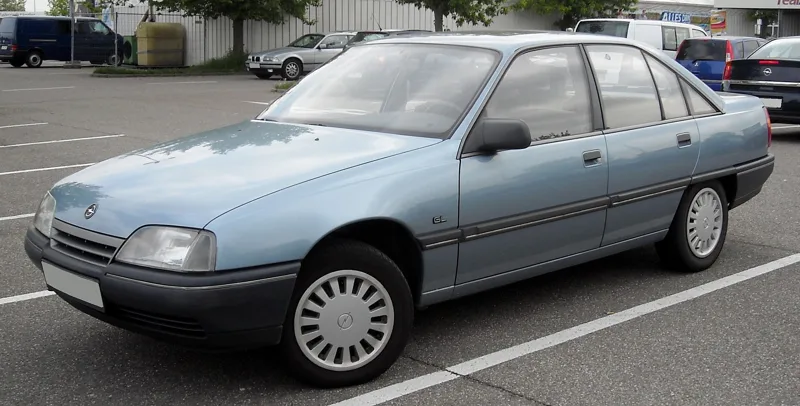
Production finished in the autumn of 1986, when the Opel Omega took over the role. The Vauxhall version kept the Carlton name to the end, and the Rekord's cam-in-head engines had powered every generation since the B.
Across eight generations the car moved from a postwar sedan with a Chevrolet look to a range of estates, vans and sports coupes. Few family cars of the era did as much to put a manufacturer's name into so many driveways.