A 1967 to 1986 executive car from Opel, built on the Rekord, with a fuel-injected GS/E and a name that lived on in Australia until 2020.
The Opel Commodore was an executive car that Opel produced from 1967 to 1986, sold as the six-cylinder version of the Rekord. Holden in Australia adopted the name and kept it until 2020. Its fuel-injected GS/E variant of 1970 was Opel's attempt to enter the performance market.
The Opel Commodore was a six-cylinder executive car that Opel sold from 1967 to 1986, positioned above the Rekord it was based on. The name then travelled far beyond Germany, from Holden's Australian range to a Chevrolet-branded car in South Africa and a Vauxhall badge in Britain. Its story is largely one of an upmarket family car that found many homes.
Opel used the name in Europe from 1967 until 1982, while South Africa kept it until 1986. Holden in Australia adopted the nameplate and used it until 2020. The last generation was also sold in the United Kingdom, mainly as the Vauxhall Viceroy.
Where did the Commodore come from?
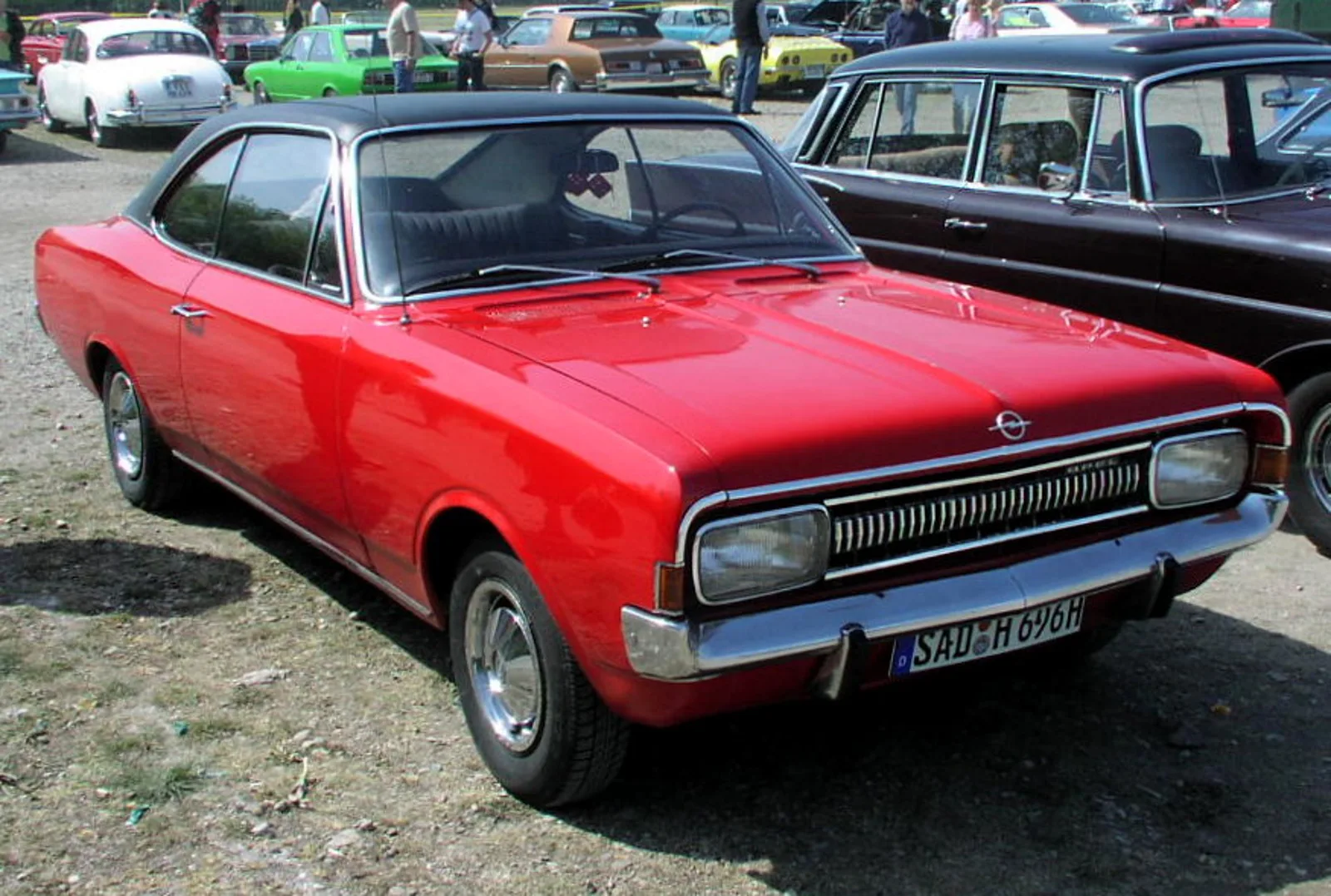
The Commodore began as an up-market version of the Rekord. Opel had offered a Rekord-6 with a 2.6-litre six since March 1964, and it launched the Commodore in February 1967 as a faster model. The Commodore A used the Rekord C body, and it was offered as a two-door or four-door notchback saloon and as a two-door hardtop coupe.
The six-cylinder engine had first appeared in the Rekord late in 1966. Its 2.2-litre size shared cylinder dimensions with the four-cylinder 1492 cc Rekord engine, which is why the two units were closely related. When the six left the Rekord in July 1967, it became the entry-level power unit for the new Commodore.
An executive six-cylinder that Opel launched in 1967 and that a fuel-injected GS/E turned into a performance car.
What did the Commodore A offer at launch?
The launch engines were a 2.2-litre six and a 2.5-litre six developing 115 PS (85 kW) with a single carburettor. In September 1967 the sporty GS arrived with a dual-carburettor 2.5-litre six rated at 130 PS (96 kW), which set the tone for the range.
For 1969 the 2.2-litre six was dropped, and the two-speed Powerglide automatic gave way to Opel's new three-speed automatic. From September 1969 the base 2.5-litre engine was uprated to 120 PS (88 kW). Both remaining engines received hydraulic lifters, a new exhaust system and six camshaft bearings for smoother running.
Other changes that year moved the handbrake lever from under the dash to a position between the front seats. The fuel tank also grew from 55 to 70 litres, giving the car a longer range between fill-ups.
What was the GS/E and why did it matter?
The GS/E arrived in March 1970 as the most sporting Commodore, with a 2.5-litre six fitted with Bosch D-Jetronic fuel injection. It produced 150 PS (110 kW; 148 bhp) and carried a claimed top speed of 197 km/h (122 mph). Opel had seen how performance models helped rival makers, and the GS/E was its attempt to win a place in that market.
The E in the name stands for Einspritzung, the German word for fuel injection. The GS/E dropped the carburettors used by the earlier GS cars, and the change marked a clear step in engineering for an executive saloon of the period.
Bosch's D-Jetronic was the company's first commercially produced electronic fuel injection system. The letter D stood for drucksensorgesteuert, meaning pressure-sensor regulated. The system measured pressure inside the intake manifold, a principle that later became the basis of the MAP sensors found on modern cars.
Injection went directly into each cylinder rather than into a shared inlet plenum. That needed a cylinder head made specifically for the engine, which made the GS/E unique and expensive to produce and to buy.
Fuel injection added 20 PS (15 kW) to the 2.5-litre engine, which made it more powerful than the larger 2.8-litre unit. The injected 2500 E delivered 196 N m (145 lb ft) of torque at 4,500 rpm, with the compression ratio unchanged at 9.5:1.
Opel claimed a 0-100 km/h time of 9.5 seconds for the GS/E, a figure close to a Porsche 911 of the same era. The Porsche 911T of 1970 had 25 PS (18 kW; 25 hp) less than the GS/E, but it cost more. The GS/E coupe later became known affectionately as the German Charger.
How did the Commodore A sell?
Production of the Commodore A reached 156,330 cars, including 2,574 GS and GS/E variants. The GS/E was the smallest slice of that total.
The April 1970 GS 2800 used a detuned, carburetted 2.8-litre six giving 145 PS (107 kW). It filled the gap between the GS and the fuel-injected GS/E.
General Motors also used the Rekord C and Commodore A platform in other markets. The Ranger was sold in mainland Europe and South Africa, and the Opala was built and sold in South America from 1968 to 1992, giving the platform a long life beyond Opel.
What changed with the Commodore B?
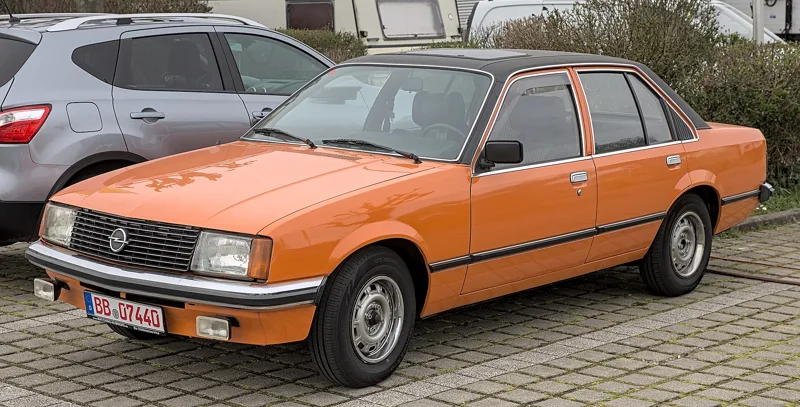
The Commodore B, launched in 1972, was based on the Rekord D. Four models were offered: 2500 S, 2500 GS, 2800 GS and 2800 GS/E, all as a four-door saloon and a two-door hardtop coupe. The fastback body of the first car gave way to a more conventional three-box design.
Depending on specification, the 2.5-litre unit gave 115 or 130 PS (85 or 96 kW). Carburetted 2.8-litre engines produced 130 or 142 PS (96 or 104 kW), and the fuel-injected 2.8 in the GS/E made 160 PS (118 kW).
In 1974 new emissions regulations led to the 2.5-litre models being dropped. The 2.8-litre engines were detuned to 129, 140 and 155 PS (95, 103 and 114 kW). Production of the Commodore B ended in 1977.
Did the Commodore race?
The Commodore had a motorsport career, and the GS/E was the model that raced. A car prepared by Steinmetz took part in competition, while the Commodore B also appeared in racing through the Jumbo Commodore. That car contested the 1974 interserie with a 6.0-litre V8 and large wings.
The Jumbo Commodore was almost unrecognisable as an Opel, given its wings and output. Its huge engine did not translate into results, and it never enjoyed much success on the track.
Where was the Commodore built outside Europe?
Opel Commodores were built in Iran between 1974 and 1976 under Chevrolet names, with both 2.5-litre and 2.8-litre engines, by Pars Khodro, the local General Motors partner. In South Africa the model was assembled as the Chevrolet 2500, 3800 and 4100 and became a top seller there. The South African Commodore was sold as a Chevrolet from 1978, and the name changed to Opel Commodore in 1982.
The first Iranian Royale left the production line on 15 January 1974. It sold well at first, but it had not been re-engineered for local conditions. Low ground clearance and carburettor trouble damaged its reputation, and the car was withdrawn by early 1977.
Belgium and Switzerland assembled the Rekord and Commodore from complete knock-down kits in the 1970s. Those cars carried the name Ranger, and they differed from the originals in having different grilles and trim before being exported to various countries.
What was the Commodore C?
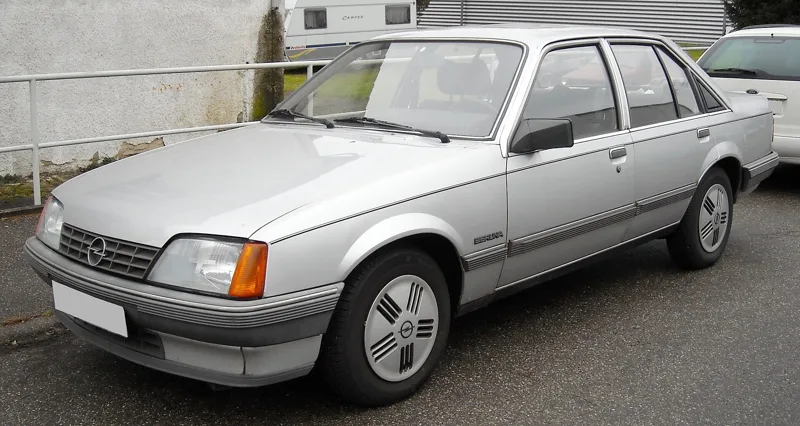
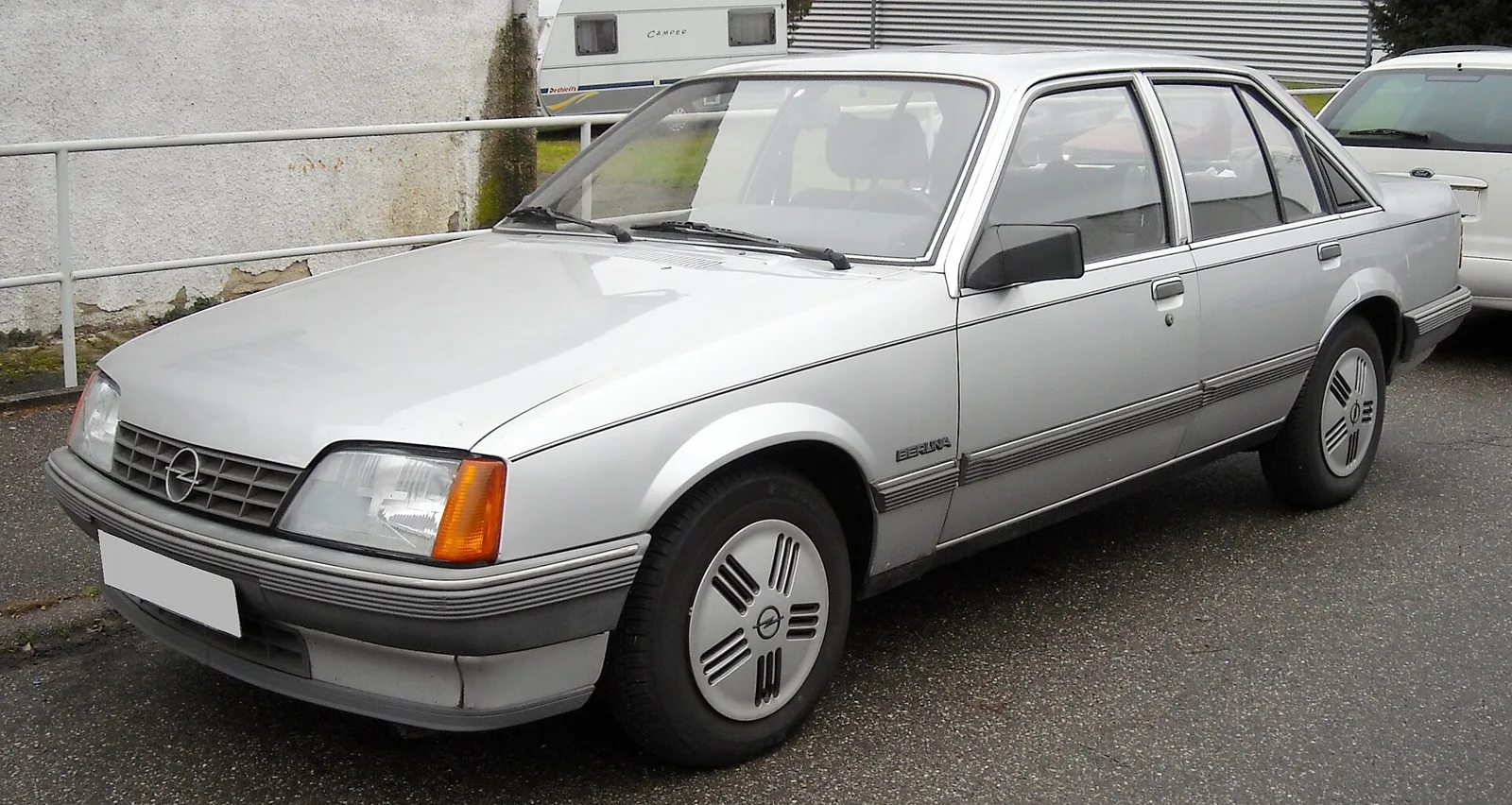
The Commodore C was first shown in late 1977 alongside the Rekord E, and it entered series production in October 1978. It was a larger and more luxurious version of the Rekord, and it had no coupe version. The Opel Monza, the coupe version of the Senator, took that role instead.
The Commodore C was never a commercial success. Its engine was the straight-six 2.5-litre unit, rated 115 PS (85 kW; 113 hp) in standard form and 130 PS (96 kW; 128 hp) with fuel injection. It occupied an uncomfortably narrow niche between the Rekord and the Senator, and it used more fuel than the three-litre Senator. Its outdated six also had little torque at low engine speeds and was noisy.
A two-door notchback saloon remained available until June 1981. The new model's front end echoed the larger Senator, and in Britain the car was sold as the Vauxhall Viceroy, a more luxurious version of the Carlton.
An estate version, called the Voyage in Germany, was offered from April 1981 until production ended in 1982. It became a mainstay of the Holden range in Australia, and it was also available in the Chevrolet range in South Africa.
How many Viceroys survive in Britain?
A one-off Viceroy estate was built in 1981 for Queen Elizabeth II, so that she could carry her Corgi dogs. That car still survives. As of 2006, only 15 Vauxhall Viceroys were registered in the UK.
The estate was never offered by Vauxhall as a Viceroy in regular production, so the royal car remained a one-off within the British range. Its survival gives a clear picture of how small the British fleet became.
When did the Commodore end?
Opel dropped the Commodore in Europe in 1982. In South Africa, General Motors South Africa, later known as Delta, offered a revised Commodore until 1986. That version combined the Rekord bodyshell with the front end of the revised Senator.
The South African revision was also sold with the same three-litre inline-six, producing 180 PS (132 kW). The Commodore name thus outlasted the German line by four years, because South African production continued after Opel had left Europe.
How did the engines work?
All Commodore engines were 12-valve CIH straight-sixes, ranging from 2.2 to 2.8 litres. The 2.2-litre engine used a single-barrel carburettor, while the 2.5 and 2.8 used double-barrel units. Only the GS/E broke that pattern, because its fuel injection replaced the carburettors altogether.
Bosch's D-Jetronic was an early form of multi-point injection. Bosch later sold the patent to Japanese companies, which went on to produce injection systems based on the same design.
What happened to the South African Commodore?
South African production of the Commodore began in July 1978, roughly alongside the launch of the Rekord E in that market. It originally used Chevrolet pushrod inline-sixes of 3.8 or 4.1 litres, and the 4.1 was offered only as a sedan with automatic transmission. Those engines replaced the earlier Chevrolet 3800 and 4100 models.
The car was sold in standard form or as a GL, and the two trims gave South African buyers a choice of equipment levels. The model was assembled locally and sold through the Chevrolet network until the name changed.
Why did the Commodore B end?
The Commodore B ended production in 1977, after the 1974 emissions rules had reshaped its range. The 2.5-litre models did not survive those rules, and the 2.8-litre engines were detuned instead. The Commodore C that followed was a different car, first shown in late 1977.