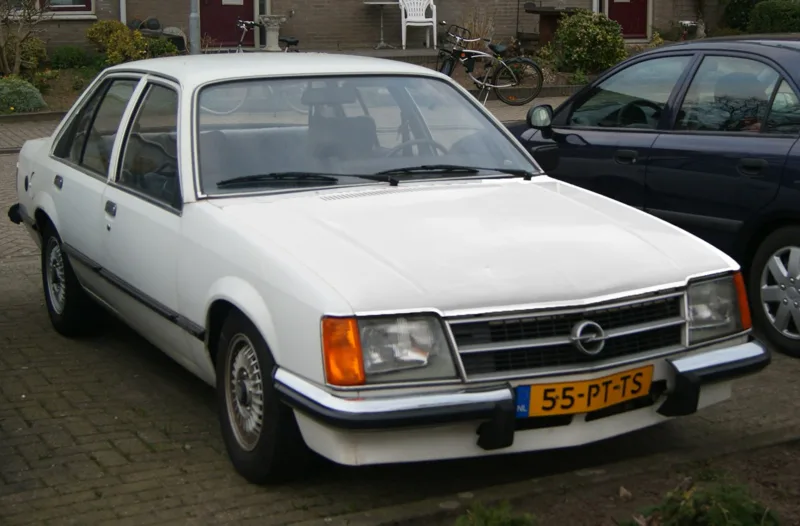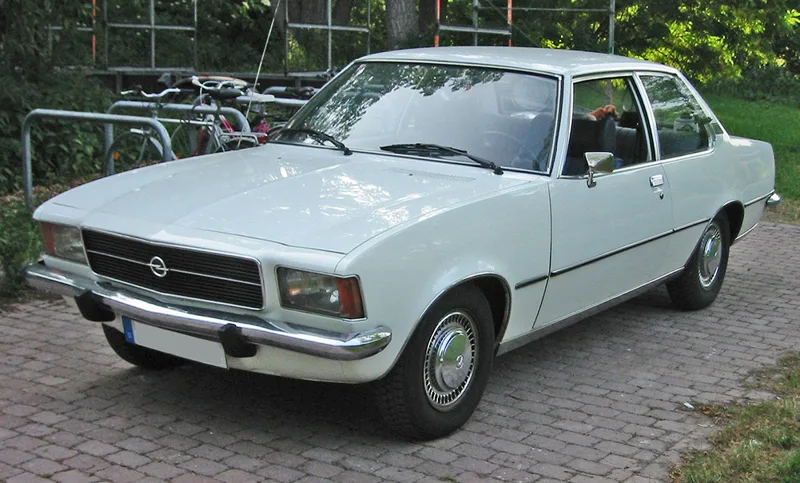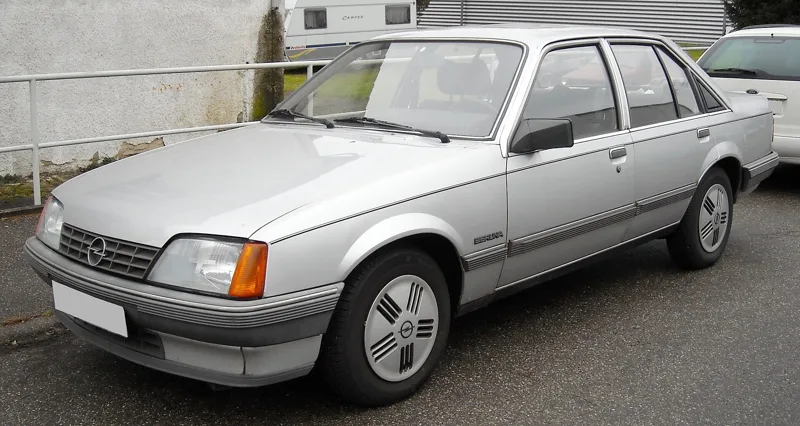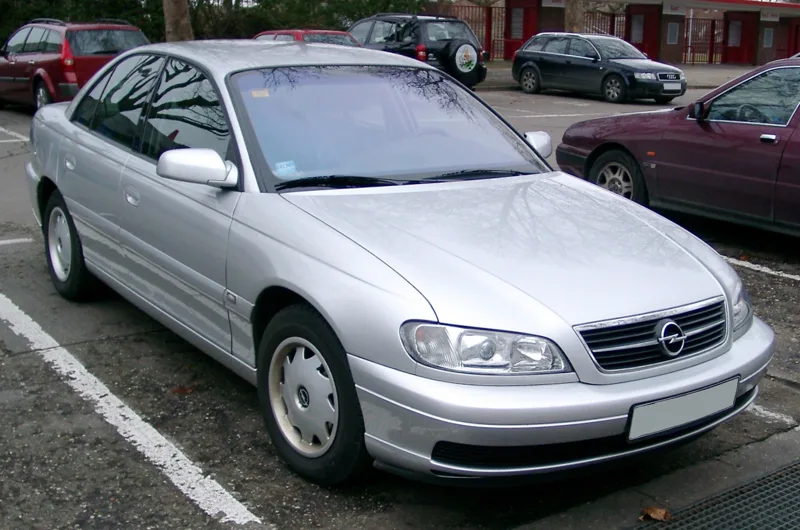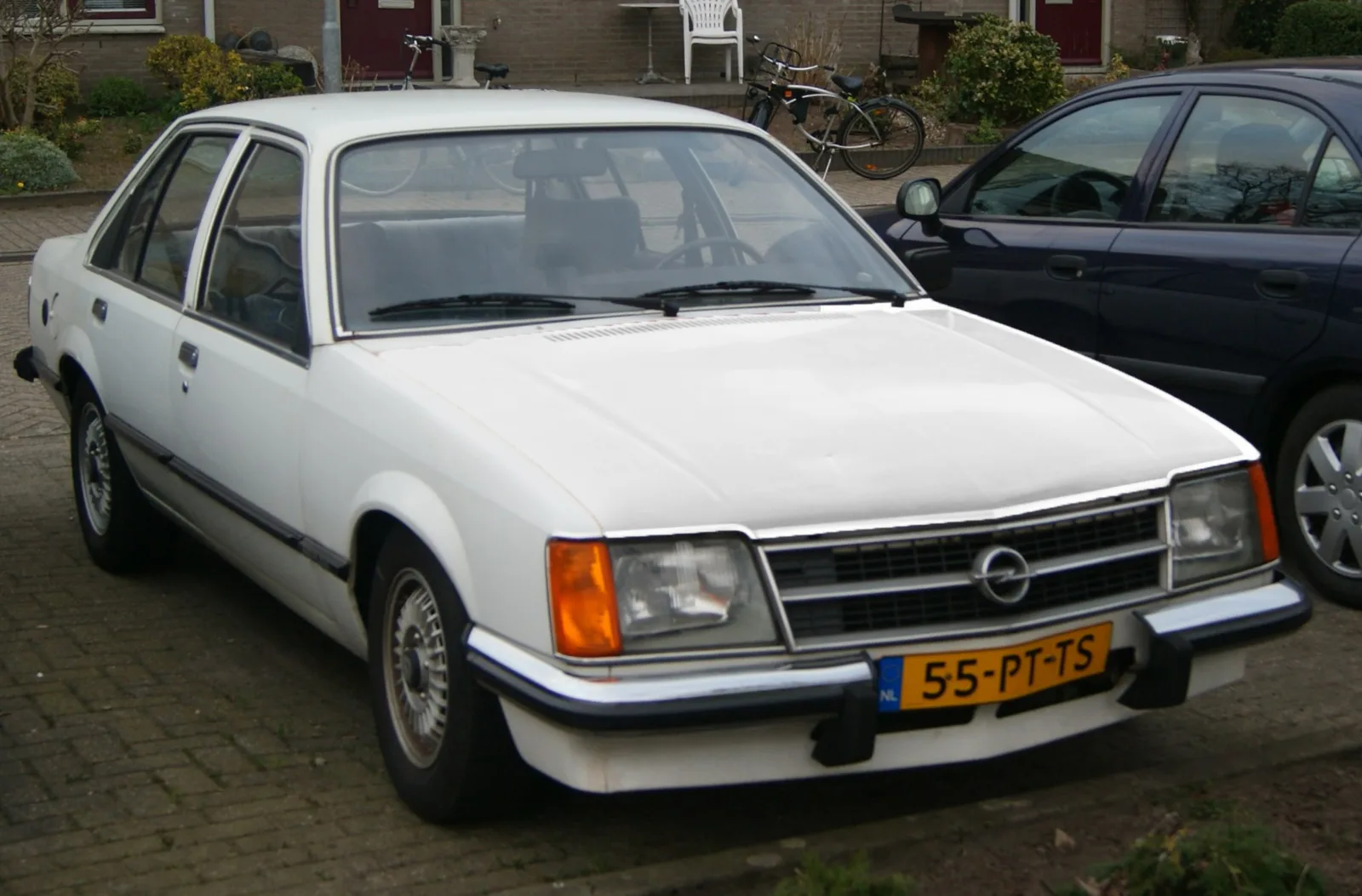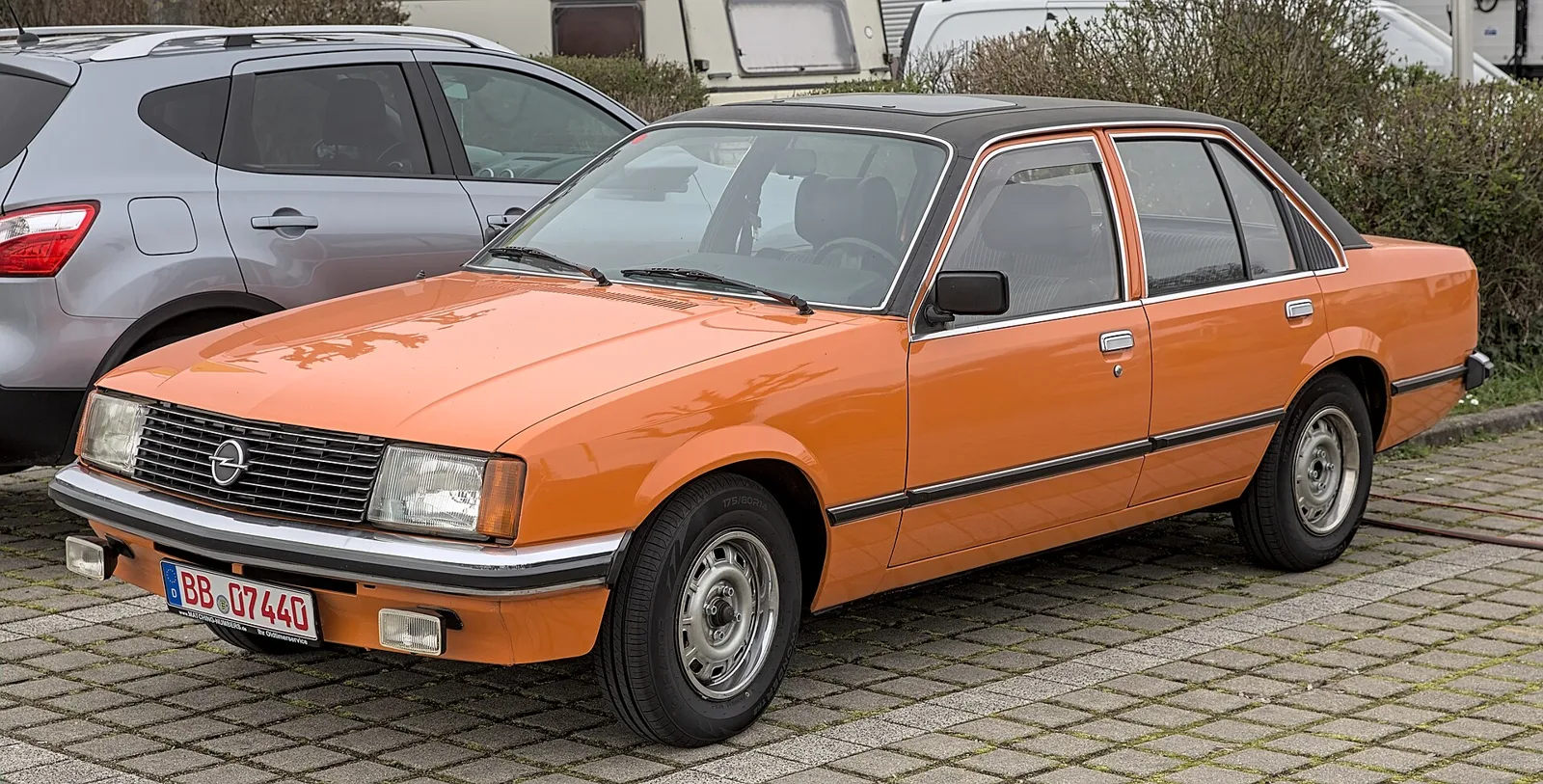
A 1977 Russelsheim launch that ran for nine years, shifted from the E1 to the E2 in 1982 and reached 1,400,000 Rekord Es in total.
Built from 1977 to 1986 in two versions, the E1 and E2, the Opel Rekord E offered four-cylinder petrol and diesel engines. It sold about 1.4 million cars before the Omega took over at Russelsheim.
The Opel Rekord E was a large family car that replaced the Rekord D on Opel's Russelsheim production lines in August 1977. It ran for nine years, longer than any previous Rekord generation, and it was divided into an E1 before 1982 and an E2 after its facelift. The car sold roughly 1.4 million units, and the Vauxhall Carlton version was sold in the UK.
When did the Rekord E go on sale?
The Rekord E was launched at the 1977 Frankfurt Motor Show and went into production in August 1977, following the summer shutdown. It shared its wheelbase and most of its engines with the car it replaced, but the bodies were completely new. The corresponding Opel Commodore C was essentially the same car with six-cylinder engines.
The Rekord E was slightly wider, longer and higher than the Rekord D, and with its larger windows it was significantly heavier. Inside it was noticeably more spacious. The car came with claims of a 0.42 Cd drag coefficient for the E1.
The car was later reworked in October 1982. Its central body, windows and principal substructure were retained, but the car's ends were restyled and several significant new engines were introduced. The pre-facelift cars are known as the E1, and the post-facelift cars as the E2.
A nine-year Opel family car that ran from the E1 to the E2 and sold roughly 1.4 million examples.
How long did the Rekord E stay in production?
The Rekord E's nine-year production run was longer than that of any previous Rekord generation. It became the third Rekord to exceed one million units built, although it took longer to reach that figure than its predecessor. The total included the Vauxhall Carlton sister model produced for the UK market.
The Omega, which was more aerodynamic, took over from the Rekord E at the end of summer 1986. The replacement marked the end of the car's long run in the range.
The Rekord was developed as part of a family of cars that General Motors came to call its V-platform. Various derivative versions were built by other GM divisions around the world, which gave the car a wider international reach than its predecessors.
What bodies did the Rekord E come in?
The Rekord E was a unibody steel car seating five people. The saloon was the top seller, available with two or four doors, and the four-door car comfortably outsold the two-door. Saloon production during the E1 years was 769,086 cars, split between 127,544 two-door and 641,542 four-door models.
The E1 Caravan estate was built in 167,501 examples, of which 26,652 were three-door and 140,849 were five-door. A three-door delivery van was also offered, essentially identical to the estate except for metal panels in place of the rear side windows. Some 30,477 Rekord E1 delivery vans were produced.
The range dropped the two-door coupe body, a first since 1961. The coupe market had been catered for since 1970 by the Opel Manta, which offered a stylish alternative for buyers who put style ahead of rear headroom.
What changed with the E2 facelift?
In October 1982 the E2 facelift cut the drag coefficient to 0.36 Cd. The front and rear ends were redesigned, and the bonnet was reshaped to give a smoother profile. The boot was raised by 20 mm and luggage capacity rose from 480 to 490 litres.
The two-door saloon was withdrawn with the E2 change, which left a choice of four-door saloons and three- or five-door estates. A delivery van remained in production, but only 8,958 were built between 1982 and 1986, compared with 30,477 E1 vans.
The E2 kept the same wheelbase, but the overhangs were longer. The car ended up exactly the same length as the BMW 5 Series, a comparison that reflected the Rekord's move towards the prestige end of the market.
Which petrol engines powered the Rekord E1?
Petrol engines used the Camshaft in Head layout that Opel had introduced in 1966. The stroke was fixed at 69.8 mm, and differences in capacity came from varying the bore. The entry unit was a 1698 cc 1.7N producing 60 PS (44 kW) at a compression ratio of 8.0:1, but it dropped off the list in 1980.
The more popular entry engine was the 1897 cc 1.9N, with a low compression ratio that suited basic petrol. It produced 75 PS (55 kW), and an Austrian version, the A19N, gave 70 PS (51 kW) to suit local tax rules.
The 1979 cc 2.0 engine came in three forms. The 2.0N produced 90 PS (66 kW) at 8:1, the 2.0S produced 100 PS (74 kW) at 9:1 and needed super fuel, and the 2.0E produced 110 PS (81 kW) with fuel injection. The 2.0E was the first Opel Rekord to feature injection, supplied by Bosch in the form of L-Jetronic and later LE-Jetronic.
How did the E2 engines change the range?
The E2 replaced the low-compression 1.7N, 1.9N and 2.0N engines with the GM Family II engine, which had a light metal cylinder head and a conventional overhead camshaft. For the Rekord E2 a 1796 cc version of the Family II engine was fitted, first seen in the Opel Manta.
The 1.8S produced 90 PS (66 kW) at a compression ratio of 9.2:1 and needed higher-octane fuel. The 1.8N gave 75 PS (55 kW) at 8.2:1 for economy-minded buyers. From August 1985 a fuel-injected version with a catalytic converter, the 1.8 i Kat, gave 100 PS (74 kW).
The 2.0E remained the only Rekord with injection until 1984, when a 2197 cc version of the fuel-injected four, the 2.2E, arrived. Its piston stroke was extended from 69.8 mm to 77.5 mm. In Italy the 2.0E stayed on sale for tax reasons, and it continued in Switzerland and Sweden while the 2.2E was not yet certified there.
What diesel engines were offered?
The Rekord E launched with a 2068 cc diesel producing 60 PS (44 kW), which was replaced in August 1978 by a 2260 cc unit rated at 65 PS (48 kW). The taller diesel engine needed a long hump on the bonnet to clear the block, which made the diesel cars easy to spot.
Diesel Rekords were particularly popular in France, Italy and the Benelux countries. A 1998 cc diesel producing 58 PS (43 kW) was offered for markets where cars with engines above two litres attracted high tax. The 2.0 D with automatic transmission had a top speed of 132 km/h (82 mph).
In 1983 the E2's 2260 cc diesel rose to 71 PS (52 kW). In 1984 a turbocharged 2.3-litre diesel arrived with 86 PS (63 kW). It was Opel's first turbocharged engine, and it was offered in the luxurious CD trim with a five-speed manual.
How were the transmissions and suspension set up?
The standard transmission was a four-speed all-synchromesh manual with a floor-mounted lever. Buyers of 1979 cc petrol cars could pay DM 520 for an optional four-speed with overdrive, although few did. A three-speed TH180 automatic came from the Strasbourg plant, and the five-speed Getrag manual arrived in 1982.
The E1 had MacPherson struts at the front, which were lighter and cheaper to make than the earlier wishbone arrangement. At the rear the car kept a beam axle with trailing arms and a Panhard rod-type system. The sports package fitted gas-filled rear shock absorbers, which firmed the ride.
The E2 kept the live rear axle with a Panhard rod and added differential bushings. The front struts became more supple, and the springs were changed to variable rate units, which allowed a softer ride with less body roll when driven hard.
What did the Rekord E's trim levels include?
The E1 was offered as a base car, the Rekord Luxus and the Rekord Berlina. Each step added more chrome, protection strips along the sides and differently shaped wheels. The Berlina had a steering wheel with four thin spokes instead of two thick ones.
Air conditioning was offered for the first time on an Opel Rekord, although the price was given only on application, and very few E1s were delivered with it. Special editions such as the Regent, Royale, Classic, Touring and SR/E were sold with packages of options at lower prices.
The E2 trims were renamed in 1985 as LS, GL and GLS, and the CD luxury model had been added in March 1983 to fill the gap left by the Commodore.
How did the Rekord E sell against its rivals?
The E1 sold at approximately the same rate as its predecessor, which was commercially successful. Some 962,218 Rekord E1s were built between 1977 and 1982. But West Germany was a large market, and the Rekord did not dominate family car sales as its predecessors had done.
Ford's Granada and Consul produced 1,619,265 cars between 1972 and 1977, a much higher figure than the Rekord. Audi produced 896,299 Audi 100s between 1976 and 1982, and the Rekord faced a stronger challenge from prestige brands as the years went on.
After 1982 the E2 was produced at less than 60 percent of the annualised rate of the E1. Opel was squeezed between mainstream and premium rivals, and the Rekord's share of the family car market fell as a result.
How did the Rekord E spread to other markets?
The E1 was the basis of the 1978 Holden VB Commodore in Australia, which was strengthened to cope with local conditions. In the UK the Vauxhall Carlton was an Opel Rekord E adapted for the British market, with a different bonnet at first.
From 1978 South Africa sold a Chevrolet Rekord with a 2319 cc engine producing 90 PS (66 kW), and the Port Elizabeth plant assembled the cars from kits. In 1984 South Africa switched to the E2, and in mid-1991 a 3.8-litre V6 with 130 kW (177 PS) became available.
In Korea, Saehan built the Rekord and Royale with Opel engines from 1492 cc, 1897 cc and 1979 cc. The company later became Daewoo, and the car continued in Korean production until 1993. After 1986 the South African assembly business passed to Delta Motor Corporation.
What are the Rekord E specifications?
| Specification | Detail |
|---|---|
| Launch | August 1977, 1977 Frankfurt Motor Show |
| E1 years | 1977-1982 |
| E2 years | 1982-1986 |
| Drag coefficient | 0.42 Cd (E1), 0.36 Cd (E2) |
| Entry petrol | 1698 cc 1.7N, 60 PS (44 kW) |
| Top petrol | 2.0E, 110 PS (81 kW), fuel injection |
| E2 petrol | 1796 cc 1.8S, 90 PS (66 kW); 2197 cc 2.2E from 1984 |
| Diesel | 2260 cc, 65 PS (48 kW); 71 PS (52 kW) from 1983 |
| Turbo diesel | 2.3-litre, 86 PS (63 kW) from 1984 |
| E1 production | 962,218 (1977-1982) |
| Total built | About 1.4 million |