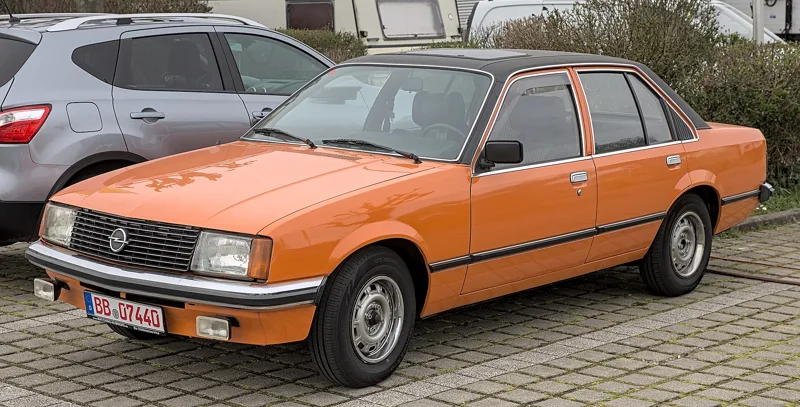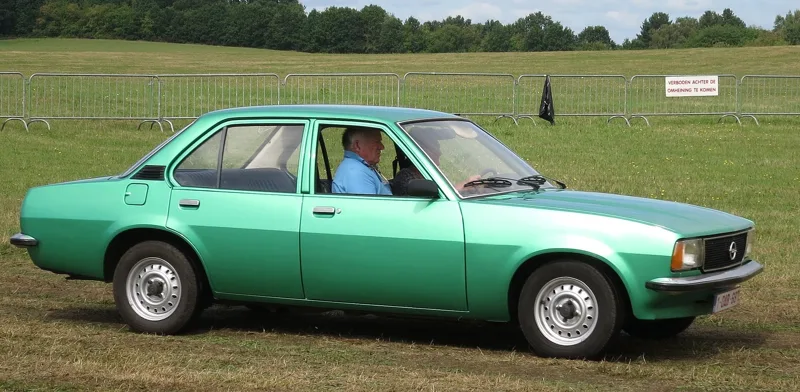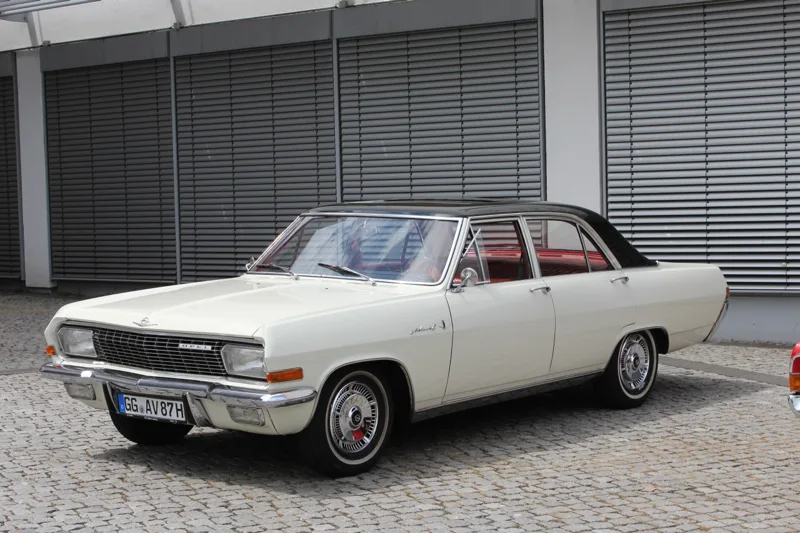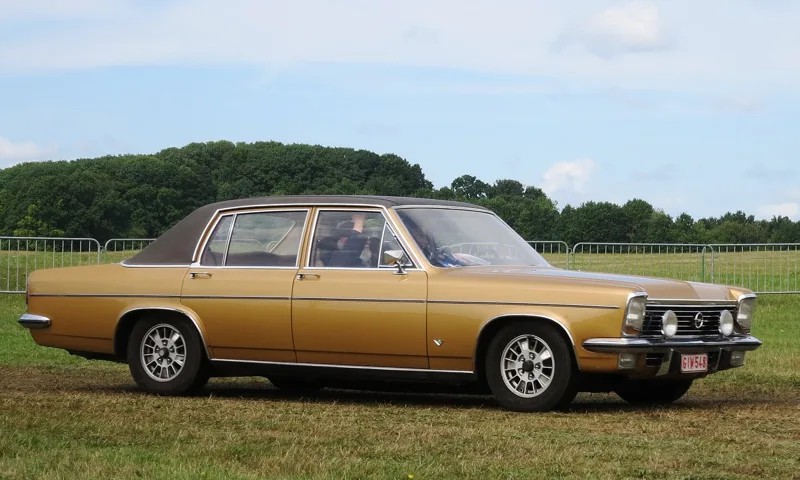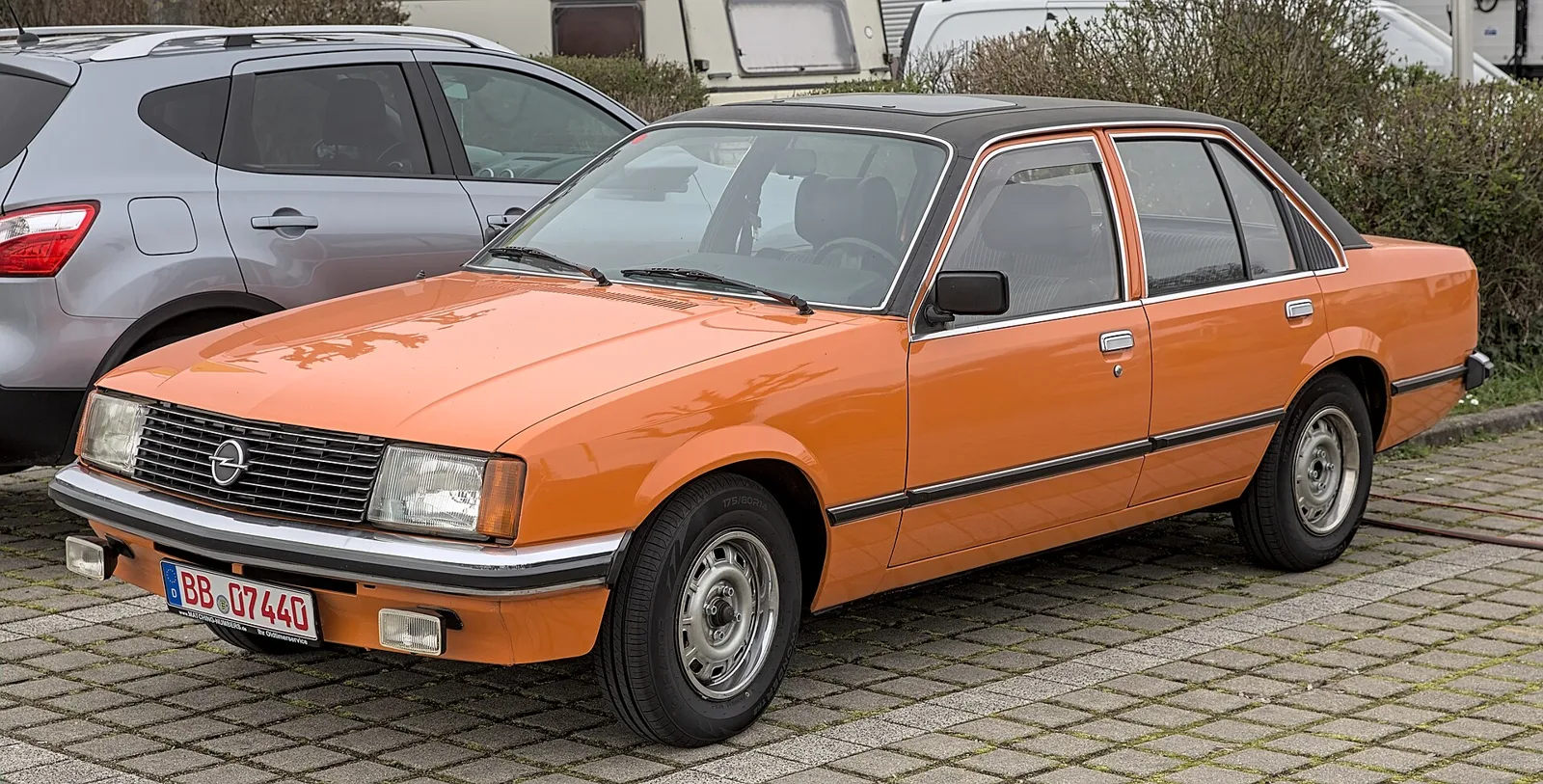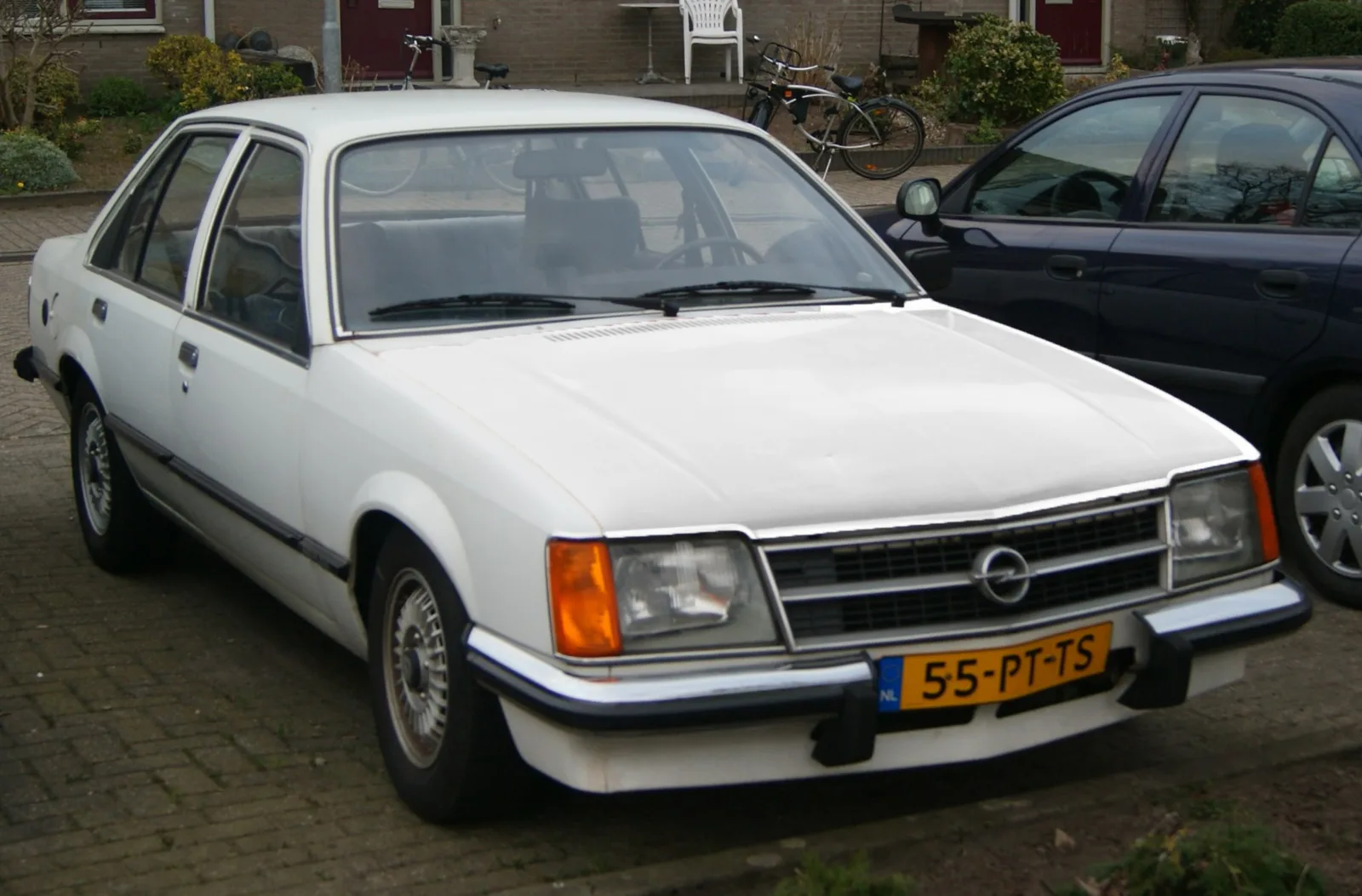
A six-cylinder car that filled the gap between the Rekord and the Senator, then vanished without a successor after 1982.
The Opel Commodore C was a six-cylinder upper-middle-class car from Adam Opel AG, built from October 1978, with production ending in August 1982. It was positioned between the Rekord and the Senator, and 82,820 were built. Vauxhall, Holden and Chevrolet each sold their own versions in other markets.
The Opel Commodore C was an upper-middle-class six-cylinder car that Adam Opel AG, then part of General Motors, put on sale in October 1978. It sat between the Rekord E and the Senator A, and Opel built 82,820 of them before production ended in August 1982.
Why did Opel build the Commodore C?
Opel's board decided in 1975 against a successor to the KAD-B models, so the Commodore C, already well advanced, moved up the model hierarchy. Selling a lightly modified Rekord body with six-cylinder engines as a Commodore had reached its limits with more demanding buyers.
The car had not begun life in this form. Its development was far along when the board chose not to replace the Kapitan, Admiral and Diplomat. Alongside the new Senator and Monza, the Commodore C partly took over the role once held by the Commodore B and the Admiral B.
Contemporary tests found rivals such as the BMW 5 Series, Mercedes-Benz W123 and Ford Granada superior in ride comfort and chassis engineering. The Commodore C used the Rekord E's V-platform as its starting point.
A six-cylinder car that sat between the Rekord and the Senator, and then left no direct successor behind.
How did the Commodore C differ from the Rekord?
Mostly at the front. The Commodore C received the longer nose of the Senator to accommodate its inline six-cylinder engines. Behind the A-pillar the bodywork mostly mirrored the Rekord E, but the car carried the Senator and Monza's five-hole wheel fixings and internally ventilated front discs.
The rear brakes were drum units taken from the Commodore B 2.5 S.
How was the Commodore C priced and positioned?
Opel positioned the car as an affordable six-cylinder model sitting between the Rekord and the Senator. It cost only 270 Deutsche Mark (DM) more than the Rekord 2.0 E Luxus, yet offered more prestige and comfort for that money.
The CIH inline six-cylinder engine drew mostly older buyers, who put comfort ahead of performance. Heavy fuel use hardly counted for them, as they covered few miles a year.
Which body styles and drivetrains were available?
Two-door and four-door notchback saloons launched first, joined by the Voyage estate from April 1981. The two-door sold poorly and was dropped in June 1981. Only 3,440 Voyage estates were produced in 16 months, which makes it one of the rarest large-series estates from Opel.
An overdrive gearbox arrived in September 1980, with fifth gear engaged electrically from a stalk on the steering column. A three-speed automatic was optional. Power steering, which had cost 990 Deutsche Mark (DM) extra, became standard in model year 1981.
What equipment did buyers get?
The base car matched the Rekord E Luxus specification. The Berlina trim brought velour upholstery and height adjustment for the driver's seat, along with a four-spoke comfort wheel and chrome rings. Options ran from cruise control and seat heating to electric windows, air conditioning and a pneumatic level lift.
From May 1981 the 2.5-litre engine with L-Jetronic injection was offered, rated at 96 kW (130 PS; 128 hp). The Senator and Monza used the same unit, which gave them 100 kW (136 PS; 134 hp).
Why did production end in 1982?
The niche between the Senator and the Rekord had shrunk too far, so no direct successor came. Opel also worried that its own models would compete with each other: the Rekord 2.0 E against the Commodore 2.5 S, and the Commodore 2.5 E against the Senator 2.5 E.
Stronger engines went only to the Senator and Monza, to avoid that clash. Production stopped in August 1982, and the Commodore was built exclusively at Ruesselsheim.
Where else was the Commodore C sold?
Holden in Australia and New Zealand needed a replacement for the ageing HX range, and the Commodore C offered a cheap answer. The Senator, with its costly rear axle, was out of reach for that job. Elsewhere the car took over in Belgium and Switzerland, where it replaced the Ranger 2500.
In Iran the Commodore B was badged as a Chevrolet and fitted with 2.5 and 2.8-litre Opel engines. That market collapsed in 1979, after the fall of the Shah.
Commodore C specifications
| Specification | Detail |
|---|---|
| Production | October 1978 to August 1982 |
| Units built | 82,820 |
| Body styles | Two-door and four-door notchback saloons; Voyage estate from April 1981 |
| Engine | CIH inline six-cylinder, later 2.5-litre L-Jetronic, 96 kW (130 PS; 128 hp), from May 1981 |
| Senator and Monza engine | 2.5-litre, 100 kW (136 PS; 134 hp) |
| Gearboxes | Overdrive from September 1980; three-speed automatic optional |
| Price premium | 270 Deutsche Mark (DM) over the Rekord 2.0 E Luxus |
| Power steering | Standard from model year 1981; 990 Deutsche Mark (DM) extra before |
| Voyage estate | 3,440 built in 16 months |
How did the Vauxhall Viceroy fare in Britain?
The Viceroy used the Commodore C as its base but failed commercially in the British market. Vauxhall built only 2,299 between October 1980 and July 1982, while Holden in Australia and Chevrolet in South Africa sold their versions of the Commodore well.
Vauxhall's wider General Motors strategy produced the Carlton, identical to the Opel Rekord E, and the Royale, almost identical to the Senator A, both in 1979. The Royale was supposed to plug the hole created when the Ventora ended in 1976. Strong interest in a cheaper six-cylinder model produced the Viceroy instead.
The Viceroy wore a grille reminiscent of the Victor, reworked bumpers and a wood-look dashboard until 1982, but none of this saved sales. At GBP 7,863.70 it sat between the Opel Commodore 2.5 Berlina at GBP 7,714.20 and the Berlina CD at GBP 8,702.14, yet it offered less equipment than the CD. Marketing was thin, with a four-page flyer at launch and four brochures later.
One highlight was the only Viceroy estate, which had the 2.5E engine and was built for the British Queen to carry her corgis. It still exists today, though only about a dozen of the other Viceroys have survived.
How did Holden make the Commodore C a success?
Holden spent 110 million AUD on developing its version, almost as much as a fully new car would cost, and reinforced the body for Australian roads. The VB sold excellently in Australia, in contrast to the unsuccessful Viceroy, and laid the foundation for the Commodore range.
Ray Grigg, the chief developer, and Don Wylie described what trials in the Flinders Ranges revealed. The front structure was too weak, dry shock absorbers seized, and the bodywork gave way under load, for example above the rear wheel arches. Engineers at Opel in Germany had first thought the figures were wrong. Once they had tested on site, they accepted that cars needed far more robustness, given routes like the one to Ayers Rock.
Holden reinforced the bodies, reworked the suspension and offered V6 and V8 engines ranging from 2.8 to 5.0 litres. The Viceroy failed as a four-door saloon with the 2.5-litre six, but the VB did well as both saloon and estate.
How did the Chevrolet Commodore work in South Africa?
The South African Chevrolet Commodore was based on the German-built Opel Commodore, but it used a 3.8-litre or a 4.1-litre inline six-cylinder engine. From 1983 the Commodore C2 was developed on the Opel Rekord E2 basis, a model not offered in Europe.
The C2 took the front of the Opel Senator A2 and was otherwise close to the Rekord E2. Its 3.0-litre 30E engine was used in Europe only in the Senator and Monza, and the South African Berlina had an LCD dashboard as standard.
What did the Commodore C leave behind?
In Europe the Commodore C had no direct successor after 1982. Holden's VB laid the foundation for the Commodore range in Australia, while South Africa sold its version under the Chevrolet name.
Holden's VB had a reinforced body adapted to Australian road conditions, which the German original had proved unsuited to.