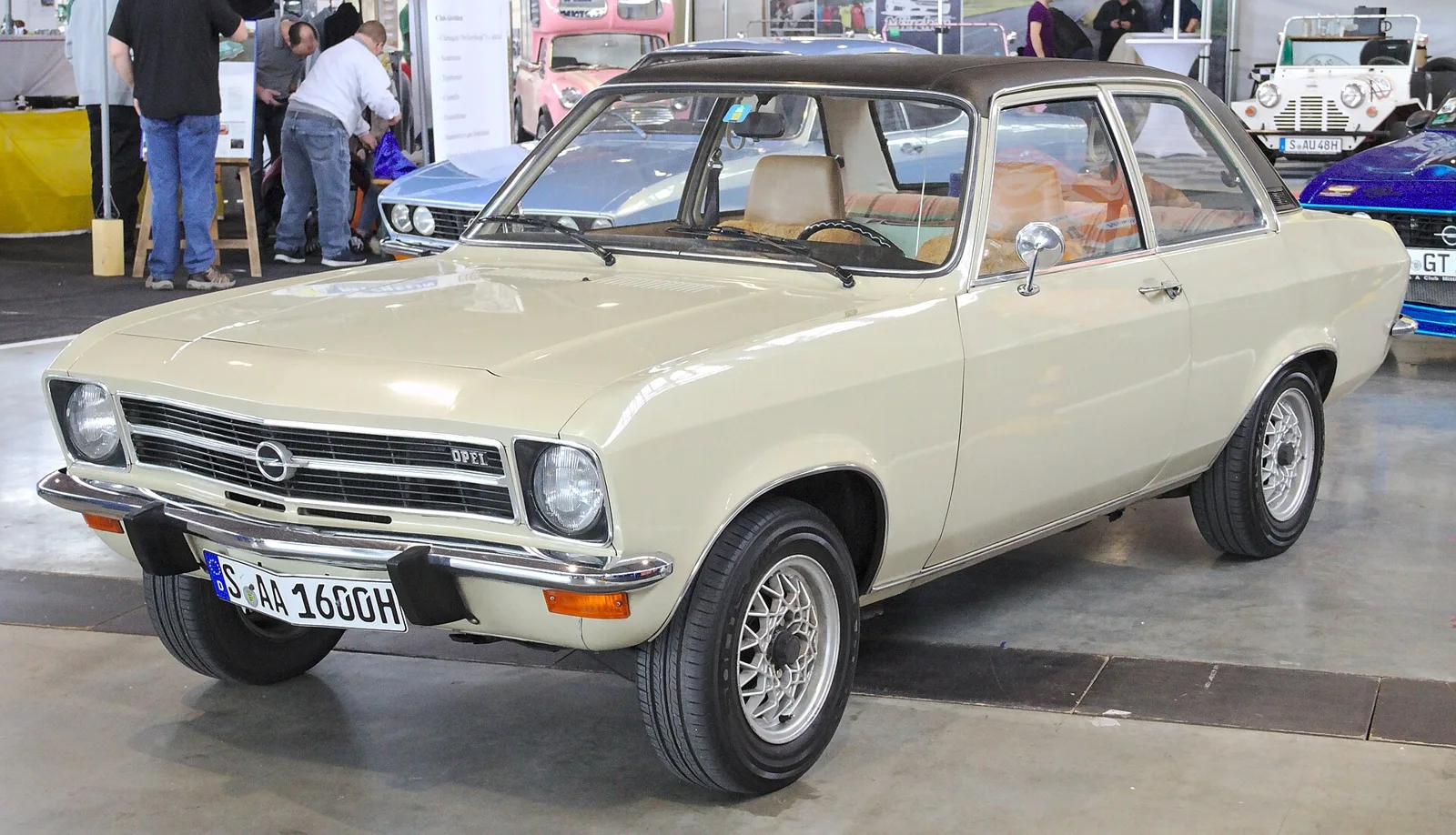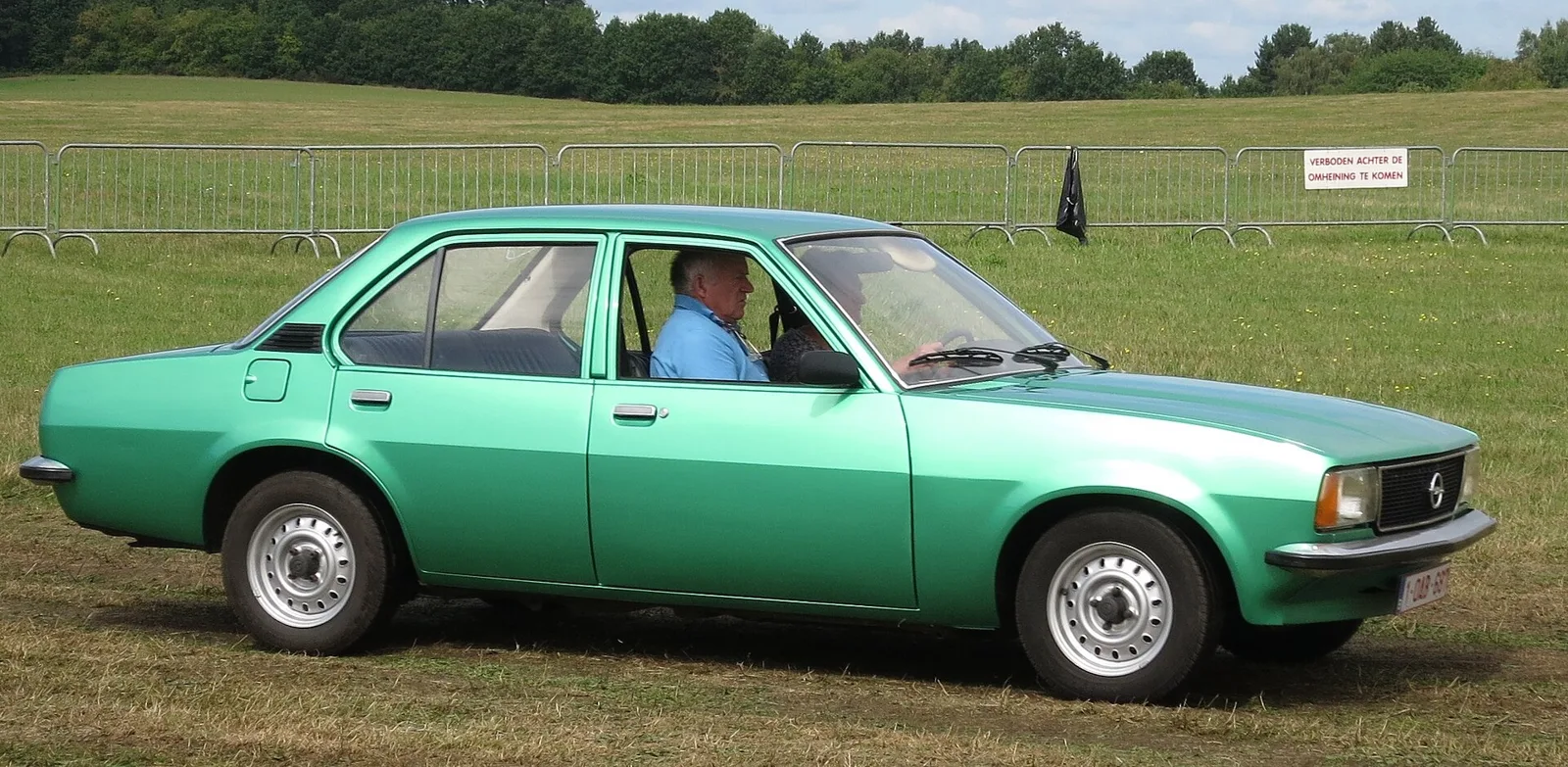
Rear-wheel drive to the very end, a line-up that kept changing from 1976 to 1981, and the Cosworth-headed Ascona 400 that carried a world rally title.
The Opel Ascona B was a mid-size saloon from Adam Opel AG, sold from 1975 to 1981 with rear-wheel drive. It had petrol engines from 1.2 to 2.0 litres and a diesel from 1978, and Opel built 1.5 million before it was succeeded by the front-drive Ascona C.
Launched in 1975 as the successor to the Ascona A, this mid-size saloon from Adam Opel AG kept rear-wheel drive and shared its mechanical layout with the Manta B coupe that arrived at the same time. Opel built 1.5 million vehicles before production ended in August 1981.
A sporty, homologated version called the Ascona 400 carried Walter Roehrl to the 1982 world championship, and the Ascona B was the last Ascona with rear-wheel drive.
Where did the Ascona B come from?
The Ascona B was the successor to the Ascona A, which had been built from November 1970. It sat on the GM-H platform and kept rear-wheel drive, making it the last Ascona built that way. Opel later moved the Ascona line to front-wheel drive with the Ascona C.
The Ascona A had started out as a planned replacement for the Kadett B. During development it turned into a new mid-size range in its own right, and the Ascona B carried that idea forward with a bigger, smoother body. Market launch came in August 1975, with the official unveiling in the autumn at the Frankfurt motor show.
Under the skin the car used the same mechanical package as the Manta B, which was presented at the same time. A longitudinally mounted front engine drove the rear wheels, and the body was a monocoque.
The last rear-drive Ascona, and the Ascona 400 variant that gave Walter Roehrl his 1982 world title.
How did the Ascona B look?
The Ascona B looked more modern than its predecessor, with a trapezoidal nose, larger headlights and a wider grille that ran out to the lights. A low beltline and bigger windows improved visibility and made the cabin feel roomier than before.
Dimensions grew noticeably. The wheelbase was stretched by 8.8 cm (3.5 in), and the body gained 20 cm (7.9 in) in length and 4 cm (1.6 in) in width. Height barely changed, falling by only 0.5 cm (0.2 in).
The styling followed the Opel design language of the 1970s, with smooth panels and large areas of glass, and it drew on the Rekord D and the Kadett C for its overall look. The Ascona B was offered only as a two-door or four-door saloon. The estate version the predecessor had offered was not carried over.
What engines did the Ascona B use at launch?
At launch the petrol range was four carburettor engines: the 1.2 S, 1.6 N, 1.6 S and 1.9 S. Their capacities ran from 1,196 cc (73.0 cu in) to 1,897 cc (115.8 cu in), and their output from 44 kW (60 PS; 59 hp) to 66 kW (90 PS; 89 hp).
Opel carried over the proven four-cylinder inline engines from the Ascona A. Tighter emissions rules meant that some of them produced a little less power than before. The 1.6 N and 1.6 S shared a capacity of 1,584 cc (96.7 cu in), but the N made 44 kW (60 PS; 59 hp) against the S's 55 kW (75 PS; 74 hp).
A sporty trim line, the Ascona SR, was offered with the 1.6, 1.9 or 2.0-litre engine, and the range also included the basic and L trims.
How was the Ascona B's chassis set up?
The chassis took over the proven arrangements of the predecessor. Wishbones were used at the front and a rigid rear axle located by a Panhard rod at the back. Disc brakes sat at the front and drums at the rear, with two hydraulic circuits and servo assistance.
Steering used a rack-and-pinion design with short track rods. Revised tuning and optimised chassis details raised active and passive safety. As standard the car had a four-speed manual gearbox, and a three-speed automatic could be ordered instead.
The fuel tank sat upright behind the rear seat bench, where it was placed to be crash-safe. That position let the boot grow larger than the one in the Ascona A.
The engine families were older Opel units. The 1.2 engine with its side camshaft was based on the unit from the Kadett A, shown in mid-1962, while the larger engines were based on the CIH engine of the Rekord B, shown in mid-1965.
How did the engine line-up change?
The engine range changed often between 1976 and 1981. Opel swapped older units for newer ones, added a 2.0 top version, brought in a diesel and finally dropped several of the older engines at the end of 1980 and in early 1981.
In July 1976 a new 1.9 engine with 55 kW (75 PS; 74 hp) replaced the 1.6 S. In August 1976 a basic 1.2 with 40 kW (55 PS; 54 hp) arrived, and in October the luxurious Berlina trim joined the range as a fourth variant. In 1977 a 2.0 with 74 kW (100 PS; 99 hp) became the top engine, and in March 1978 a 66 kW (90 PS; 89 hp) 2.0 took over from the 1.9 S.
The first diesel arrived in September 1978. It was a naturally aspirated 2.0-litre with 43 kW (58 PS) and indirect injection, a unit already used in the Rekord D in Italy. It was aimed mainly at the taxi trade and could also be had with an automatic gearbox. Like the Rekord E, it needed a distinctive bulge on the bonnet, because the engine stood a little taller.
In February 1979 two new 1.3 OHC engines, with 44 and 55 kW (60 and 75 PS), replaced the 1.2 units. They had light-alloy cross-flow heads and overhead camshafts, and they replaced an OHV design that dated from the late 1950s. From January 1980 the 2.0 E-CIH engine with L-Jetronic fuel injection from Bosch was also available, producing 81 kW (110 PS; 108 hp).
The final cuts came at the end of 1980. The 1.6 N and 1.9 N were dropped because they were unattractive next to the equally powerful 1.3 engines, and in January 1981 the 1.9 N and 2.0 N left the range as well.
What was the Ascona 400?
The Ascona 400 was a limited, sporty top version introduced in August 1979. It used a 2,410 cc (147.1 cu in) four-cylinder with a Cosworth-designed cylinder head, a five-speed Getrag gearbox and disc brakes, and it was built to qualify the car for rallying.
The engine began life as the 2.0-litre CIH unit. A different crankshaft with an 85 mm stroke instead of 69.8 mm raised the capacity, and the head was developed by Cosworth in England. It had four valves per cylinder, two overhead camshafts and a timing chain. Its valve cover was made in one piece with the intake manifold and air plenum.
The head changed the layout from the counterflow design of the CIH to a crossflow one, which kept the intake silencer, air ducting and throttle valve in their original positions. Long intake passages running through the valve cover gave more torque at low engine speeds, something that suited a road car. In road trim the engine produced 106 kW (144 PS) with L-Jetronic injection.
The rear central-link axle gave way to a rigid axle with four pairs of equal-length trailing arms and a Panhard rod. That arrangement was the one used in the Rekord E and the Commodore C. Cosworth built and pre-assembled the cylinder heads for both the Ascona 400 and the later Manta 400.
Who won the world title in an Ascona 400?
Walter Roehrl won the 1982 world rally championship in an Ascona 400, the second title of his career. It was the last time a driver of a car without four-wheel drive took the championship, and the last rear-wheel-drive rally world champion car.
The car was approved for rallying in Group 4 and Group B, two classes of the World Rally Championship. Racing engines were rated at 240 bhp (176 kW; 240 PS), and in later versions the output was raised to 275 bhp (199 kW; 270 PS).
The name came from the production run that Group 4 homologation required, which was written into the model name as 400. In the end 268 examples of the limited series were built, and they formed the basis for the rally car that Roehrl drove.
Which special editions were built?
Opel produced several special editions. The Winterfest of 1978 came only with the 2.0 S, the J of 1980 was offered with every engine, and the Sport, JS and Exklusiv models were each limited to a smaller group of engines.
The sporty i2000 was built from 1979 in cooperation with Irmscher Automobilbau. Buyers could add a twin-carburettor system at extra cost, which lifted the standard 74 kW (100 PS; 99 hp) engine to 88 kW (120 PS; 118 hp). The car rode on the 2.0 SR platform, carried ventilated front discs and left the factory only in yellow and white paint.
Opel dealers and tuners also produced their own versions that never appeared in the regular range. Irmscher's White Fleet cars wore spoilers and wheel-arch extensions in a white and silver colour scheme. The firm Graef in Berlin offered a technically revised car called the Ascona 'Berliner Baer', and Ostermann could convert an Ascona B into a convertible.
How did the Ascona B sell abroad?
Britain bought the Ascona B as the Vauxhall Cavalier, a right-hand-drive car with a front end similar to the Manta B. South Africa sold it as the Chevrolet Chevair, which looked like the Cavalier, and as the Chevrolet Ascona, which looked like the German car; both used different engines.
The Cavalier came off the line at the General Motors works in Antwerp, and later at Vauxhall's Luton plant in England. It was also sold in other countries, Sweden among them. From August 1977 it could be had with a 1,256 cc (76.6 cu in) engine developed by Vauxhall.
In South Africa the Chevair arrived in November 1976, looking like the Cavalier. The Chevrolet Ascona followed in July 1978, resembling the German car but fitted with the 1,256 cc (76.6 cu in) four-cylinder from the Vauxhall Viva.
Ascona B specifications at a glance
| Specification | Detail |
|---|---|
| Type | Mid-size saloon, rear-wheel drive |
| Introduced | 1975; market launch August 1975 |
| Built at | Bochum and Antwerp |
| Petrol engines | 1.2 to 2.0 litre, 44 to 81 kW (60 to 110 PS) |
| Diesel | 2.0 litre, 43 kW (58 PS), naturally aspirated, from September 1978 |
| Gearbox | Four-speed manual; three-speed automatic optional |
| Wheelbase | 8.8 cm (3.5 in) longer than the Ascona A |
| Length | 20 cm (7.9 in) longer than the Ascona A |
| Width | 4 cm (1.6 in) wider than the Ascona A |
| Weight | Just under 1,000 kg (2,205 lb) |
| Ascona 400 | 2,410 cc (147.1 cu in), 106 kW (144 PS), 268 built |
| Production | 1.5 million vehicles, ended August 1981 |
How did production end, and what came next?
Opel ended production of the Ascona B in August 1981, after building 1.5 million vehicles. Its successor, the Ascona C, moved to front-wheel drive, so the rear-drive Ascona line finished with the B.
The Ascona B was built at Bochum and Antwerp, sold in several trim levels with launch prices between 10,400 and 11,630 DM, and stayed in the range from 1975 until 1981.