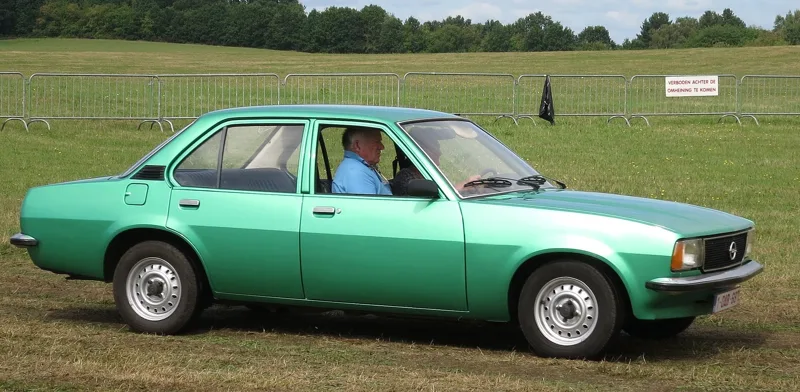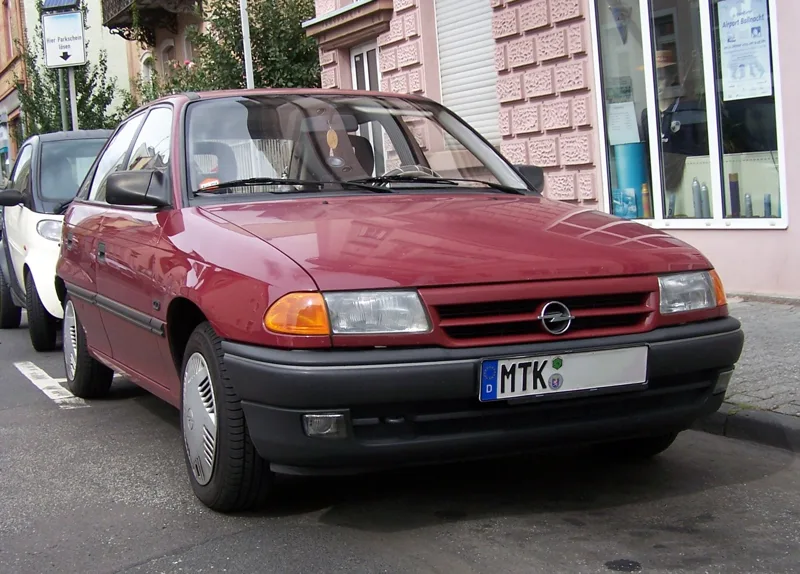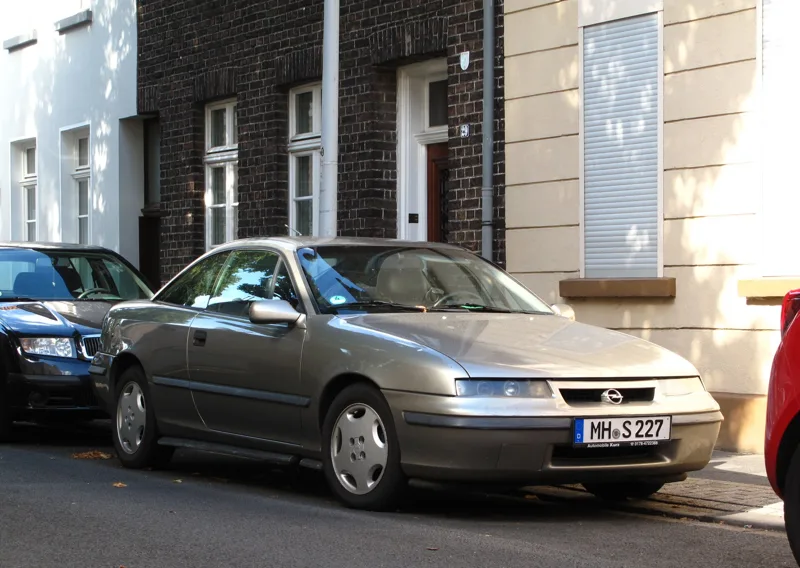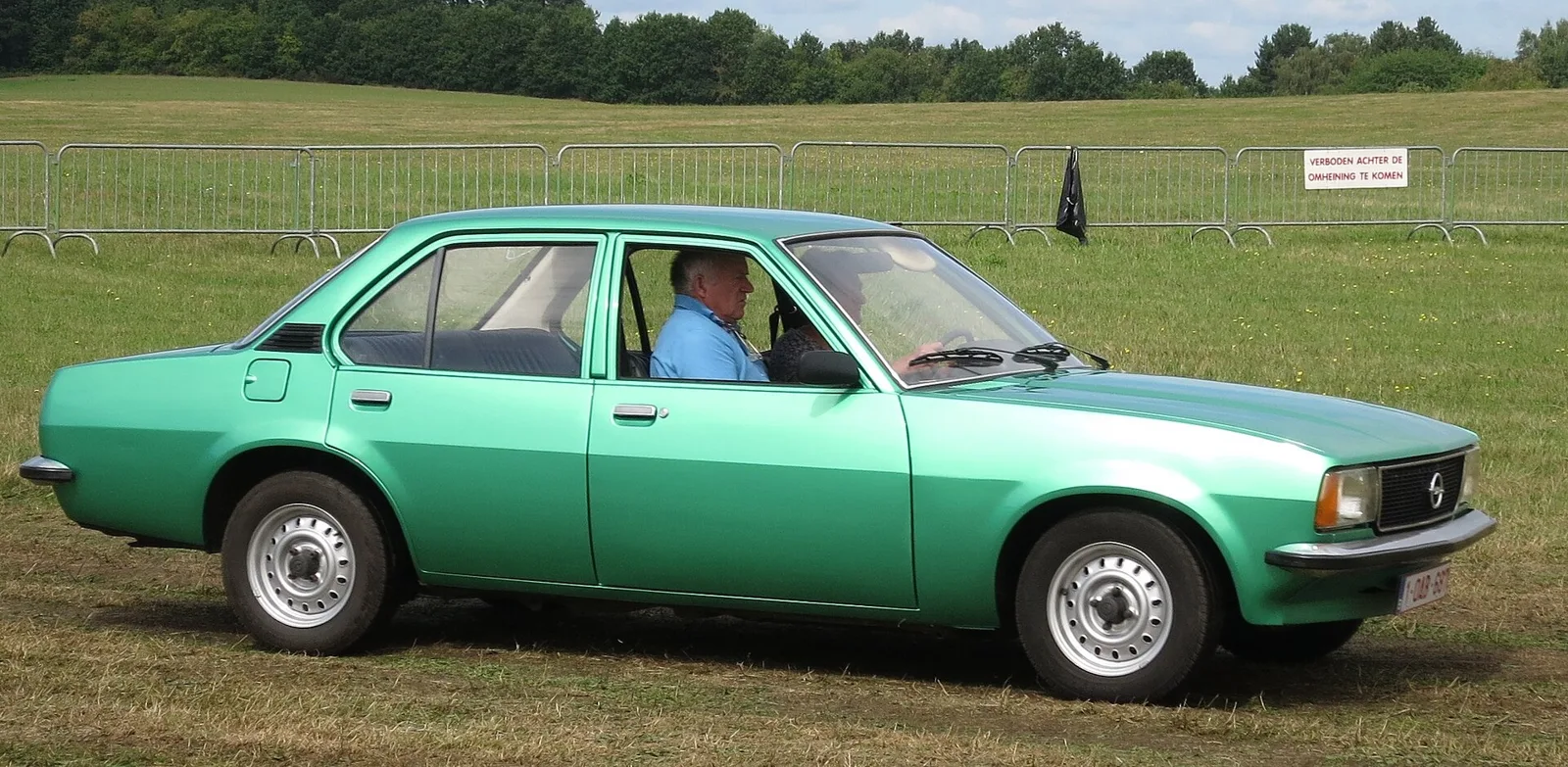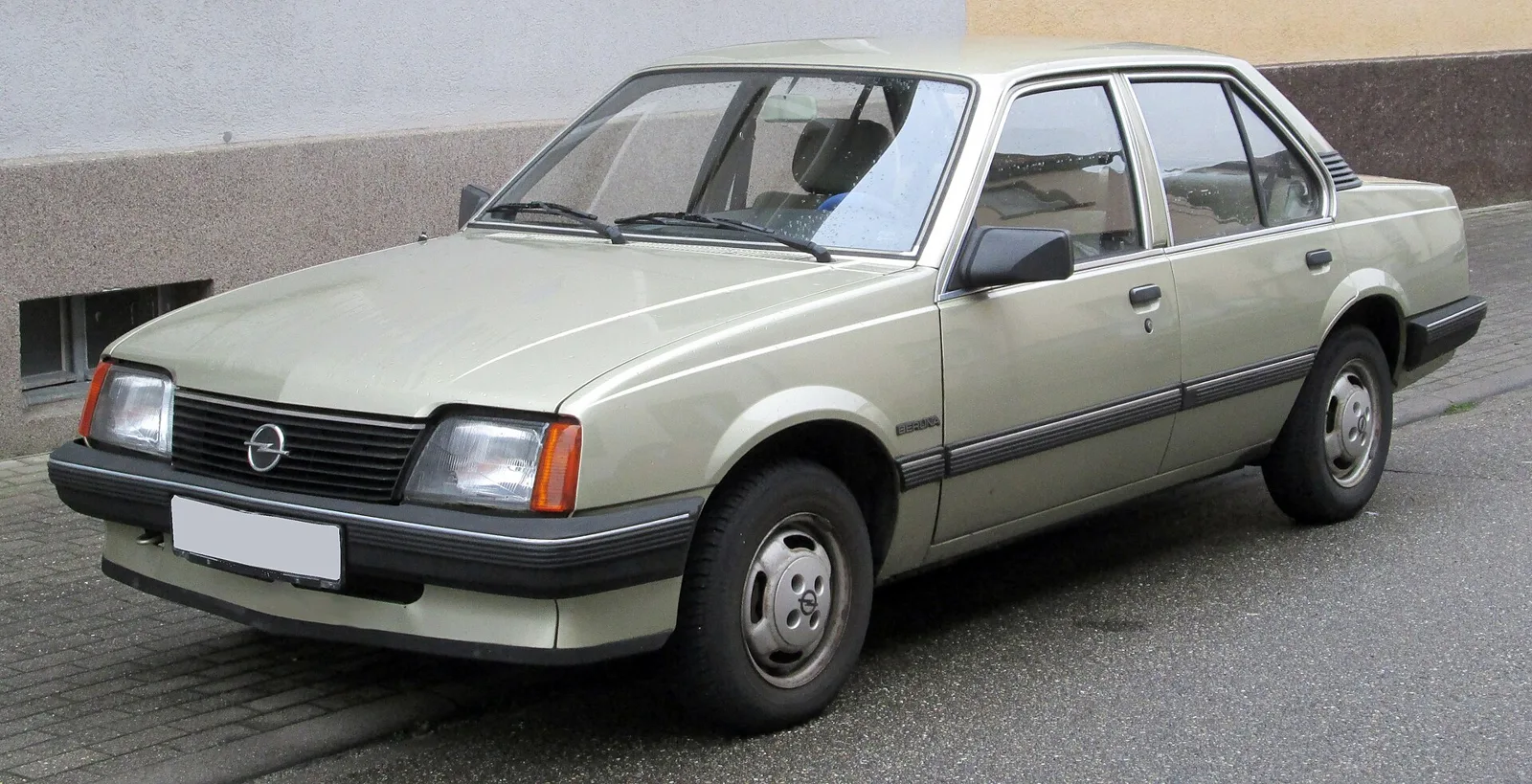
A General Motors J-Car built by Opel from 1981 to 1988, with a transverse engine, petrol and diesel units, convertibles and 1,721,647 cars made.
Built by Adam Opel AG between August 1981 and October 1988, the Ascona C was the company's version of General Motors' J-Car family. It was the first Opel in its class with a transverse engine driving the front wheels, and 1,721,647 were made before production ended.
Opel's Ascona C was the first Opel in its class to drive its front wheels from a transversely mounted engine. Adam Opel AG built it from August 1981 to October 1988 as Opel's version of the J-Car models from General Motors. By the time the Vectra A arrived in October 1988, 1,721,647 Ascona C had left the line.
Looking back, the car's life falls into three phases, and the first change between phases was the largest. The C1 ran until October 1984. The C2 followed through August 1986, and the C3 carried the model to the end of its run. The step from C1 to C2 involved extensive bodywork revisions, including reworked seat mountings in the sheet metal.
Where did the Ascona C come from?
The Ascona C was a clean-sheet design that carried over only its 1.3-litre engine from the car it replaced. Its underpinnings came from the Kadett D. Opel offered a notchback saloon with two or four doors, and a five-door hatchback with a generous tailgate. Several coachbuilders turned two-door notchbacks into open cars.
Compared with its predecessor, the Ascona B, the Ascona C was a complete redesign. Placing the engine sideways and running the front wheels from it opened up the cabin considerably, and the notchback boot held 510 litres. The car was one member of the J-Car family, which General Motors built in a host of countries under a range of badges.
Front-wheel drive with a transverse engine gave the Ascona C far more room inside.
Which engines did the Ascona C use?
At launch there were four cast-iron overhead-camshaft petrol engines. Two were 1.3-litre units that the Kadett D had offered since 1979, and the other two were 1.6-litre engines derived from them. Bigger petrol units, injection, a 1.6-litre diesel and 1.8 and 2.0-litre engines followed.
The petrol units used aluminium cylinder heads of the cross-flow type, with valves hanging vertically, and a toothed belt drove the camshafts, while the water pump had its own separate drive. Ignition differed by size. The 1.3-litre units kept a contact breaker, whereas the 1.6-litre engines came with transistor ignition from day one. Those 1.6-litre engines were forward-looking for their time: they were 8.4 cm shorter than the predecessor of equal capacity and weighed 18 percent less.
Compression ratios were 8.2 for the N version and 9.2 for the S, so one engine family was tuned to two outputs. Early cars used a multi-barrel carburettor, and larger engines with petrol injection came later, with Motronic engine management also offered on the Ascona.
The 1.6-litre swirl-chamber diesel appeared in spring 1982, a derivative of the petrol unit. Its 40 kW (54 PS; 54 hp) arrived only at 4,600 rpm, which made it fairly free-revving for a diesel. It was the first small-capacity diesel in the world to use hydraulic tappets. Buyers could choose a four-speed manual or an automatic gearbox.
Engine line-up
| Engine | Displacement | Output | Fuel system |
|---|---|---|---|
| 13 N | 1.3 litre (1,300 cc; 79.3 cu in) | 44 kW (60 PS; 59 hp) | Solex 35PDSI carburettor |
| 13 S | 1.3 litre (1,300 cc; 79.3 cu in) | 55 kW (75 PS; 74 hp) | GM Varajet II or Pierburg 2E3 carburettor |
| 16 N | 1.6 litre (1,600 cc; 97.6 cu in) | 55 kW (75 PS; 74 hp) | Pierburg 1B1 carburettor |
| 16 SV | 1.6 litre (1,600 cc; 97.6 cu in) | 60 kW (82 PS; 80 hp) | Pierburg 2E3 carburettor |
| 16 SH | 1.6 litre (1,600 cc; 97.6 cu in) | 66 kW (90 PS; 89 hp) | GM Varajet II carburettor |
| C 16 NZ | 1.6 litre (1,600 cc; 97.6 cu in) | 55 kW (75 PS; 74 hp) | Central injection with catalytic converter |
| E 18 NV | 1.8 litre (1,800 cc; 109.8 cu in) | 62 kW (84 PS; 83 hp) | Electronic carburettor |
| C 18 NE | 1.8 litre (1,800 cc; 109.8 cu in) | 74 kW (100 PS; 99 hp) | Electronic injection with catalytic converter |
| 18 E | 1.8 litre (1,800 cc; 109.8 cu in) | 85 kW (115 PS; 114 hp) | Electronic injection |
| 20 NE | 2.0 litre (2,000 cc; 122.0 cu in) | 85 kW (115 PS; 114 hp) | Electronic injection with engine management |
| 20SEH | 2.0 litre (2,000 cc; 122.0 cu in) | 96 kW (130 PS; 129 hp) | Electronic injection with engine management |
| 16 D / 16 DA | 1.6 litre diesel (1,600 cc; 97.6 cu in) | 40 kW (54 PS; 54 hp) | Swirl-chamber diesel |
From model year 1983 the 18E joined the C1 range, which otherwise used the 13N, 13S, 16N, 16SH and 16D. The CD trim was offered only with the 18E, the SR only with the 16SH, and the SR/E only with the 18E.
The larger petrol units took a different route. Among the 1.8-litre engines, the E 18 NV had an electronic carburettor, while the C 18 NE and the 18 E used injection, and only the C 18 NE carried a catalytic converter. The 2.0-litre engines all used injection with engine management. Two of them, the C 20 NEF and the C 20 NE, came with a catalytic converter, and the C 20 NEF was built as a version for official use.
How was the Ascona C engineered?
Mounting the engine across the car and driving the front wheels freed up interior room, and the notchback carried a 510-litre boot. The drag coefficient (Cw) was 0.39 for the notchback saloon and 0.38 for the estate. The chassis layout mirrored the Kadett D.
Up front sat MacPherson struts, each with its own damper cartridge, alongside wishbones and an anti-roll bar, and the steering roll radius came out negative. At the rear was a twist-beam axle with mini block springs that act progressively, plus separate shock absorbers. The dual-circuit brakes, boosted and fitted with a brake-force limiter, were split in an X layout, and the front discs were floating-caliper units.
Corrosion was tackled on several fronts. The front wings were fixed with bolts, the doors, sills and boot lid were partly zinc-coated, PVC linings went into the wheel arches, and the underside was treated with a wax coating. Halogen headlamps came as standard, and so did carpeting, front head restraints, four automatic belts and flank protection strips. The heating and ventilation system was a clear step forward from the predecessor.
What trim levels and special models did it have?
Names shifted across the three phases. The C1 used Base, Luxus, Berlina, CD and SR, the C2 renamed them LS, GL, GLS, CD and GT, and from the 1988 model year GL and GLS became Touring and GLS Exclusive. Special models ran from Touring, J and Sport on the C1 to Jubilee and the Irmscher Sprint on the C3.
The Berlina sat at the top of the C1 range, with velour seats, a tachometer and an econometer, plus a fog lamp built into the rear and windows at the back that swung open. The luxury version added adjustable head restraints, a quartz clock and mirrors that could be set from inside. The SR was the sporting choice, with a sports steering wheel, sports front seats and firmer springs and dampers. These equipment details describe the trims at the start of production.
The C2 update arrived in October 1984 with new front headlamps and indicators, the Ascona CD's grille on every model, rear lamps with black stripes and a trim strip between them. Inside, the seats, seat consoles, instruments and large interior lamp were in the Kadett E style, and the interior mirror was attached to the windscreen. Black bumpers and trim strips became grey, and on some models brown. Engines with the Varajet carburettor gained a manual choke.
The C2 also introduced the 18NE in 1985, the first engine in the Ascona to carry a catalytic converter (G-KAT). It was not offered on the two-door notchback. The C3, from August 1986, brought a new rear lamp arrangement, a new front spoiler for every model and higher-quality interior trim. Its front indicators were white, the radiator grille was painted in body colour, and the bumpers and trim strips turned blue-grey.
The Jubilee of model year 1987 came as four-door and five-door cars with C16NZ, C20NE and E18NV engines, with the E18NV reserved for it in 1987. The Irmscher Sprint, from the same model year, was a four-door notchback only, fitted with C20NE or 20SEH engines.
Two more C2 and C3 special models deserve a mention. For model year 1986 the GT/Sport arrived across all body styles, with the same engines as the GT, and a Touring took four-door or five-door bodies with the 16N, 16SH, 18NE, 18E or 16D. In the C3 range, LS was offered with every engine except the 2.0 SEH, and the GT/Sport from 1988 was listed with the 16SV (1987 only), the E18NV (1988 only), the C20NE and the 20SEH.
Did the Ascona C come as an estate or a convertible?
Both existed, though not everywhere. Besides the notchback saloon and the five-door hatchback, an estate existed, but it was the Vauxhall Cavalier Estate in Britain and was not offered in Germany. Convertibles were conversions of the two-door notchback and could be ordered through German Opel dealers.
Hammond & Thiede did most of the conversions at the Voll bodywork plant in Wuerzburg-Heidingsfeld. Between summer 1983 and autumn 1988 almost 2,900 were made. A separate run of 434 came from the Keinath C3 convertible programme.
In Germany the cabriolet was available through any Opel dealer, and in Britain it was marketed as the Vauxhall Cavalier Convertible. Earlier attempts at a convertible version by Michelotti, Tropic and Hy-Tech had come to nothing.
The hatchback sold in modest numbers, while the Kadett Caravan and the VW Passat Variant were strong performers. Those figures suggest that an estate would have lifted German Ascona volumes. Opel nevertheless kept the same approach for the Ascona's eight-year run and carried it on until the Vectra B.
Sister cars around the world
The British market received it as the Vauxhall Cavalier, complete with an estate body. In Australia, a version with body revisions was assembled as the Holden Camira, and Holden also manufactured the components for the Vauxhall Cavalier Estate. In Japan, Isuzu built the Aska, a separate J-Car variant with engines of its own.
North America had its own J-Car models: the Pontiac J2000 and the Cadillac Cimarron, plus the Chevrolet Cavalier, Buick Skyhawk and Oldsmobile Firenza. They came as saloons, estates and hatchback coupes. Brazil had the Chevrolet Monza, including a three-door fastback found nowhere else. In the mid-1990s the Daewoo Espero, built on the Ascona C, reached German showrooms.
Irmscher produced 1,399 Sprint cars, which came in four colour shades. Switzerland received the Sprint under the i200 label, and Irmscher built that version 879 times. Britain got roughly 500 right-hand-drive examples from Irmscher, sold as the Vauxhall Cavalier Calibre.
How many Ascona C were built, and what replaced it?
Production finished in October 1988, when the Opel Vectra A took over. In total 1,721,647 Ascona C were built during the eight-year run that began in August 1981, which covered all three phases of the model.
Key dates
- August 1981: Ascona C production starts
- Spring 1982: 1.6-litre diesel offered
- October 1984: C2 update with new trim names
- 1985: 18NE engine with catalytic converter
- August 1986: C3 update
- Model year 1987: Jubilee and Irmscher Sprint
- October 1988: Opel Vectra A replaces the Ascona C