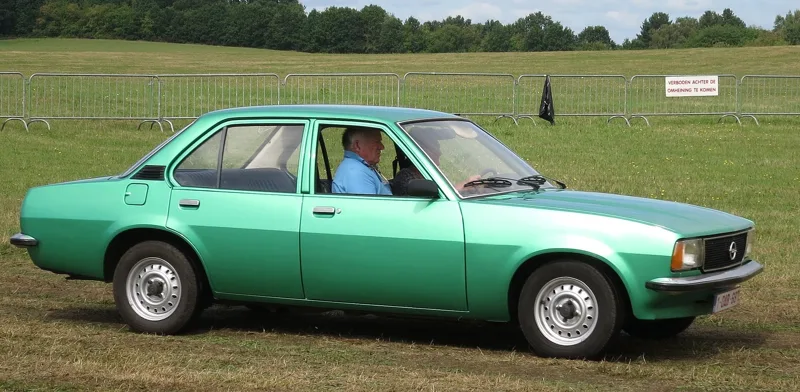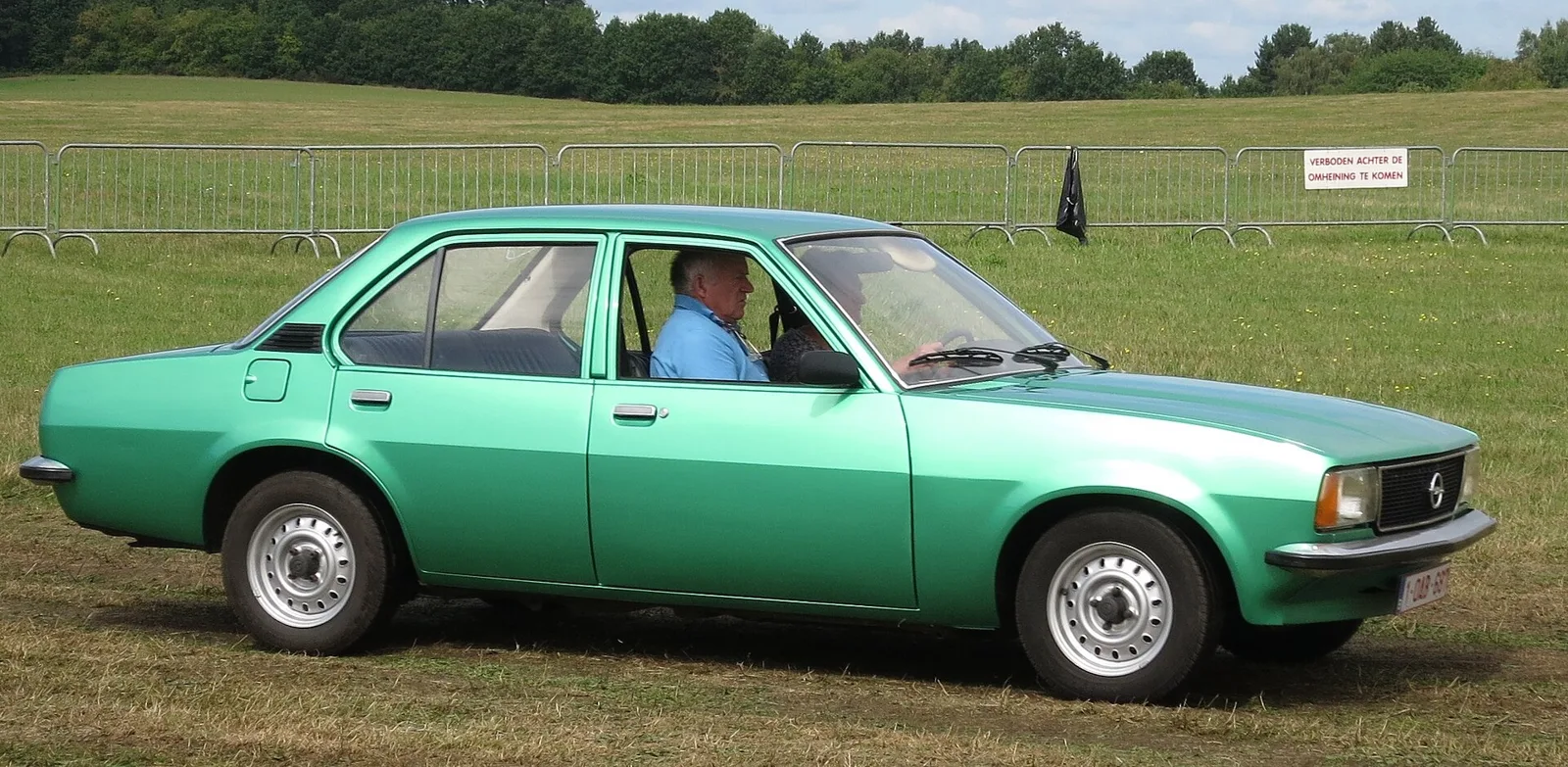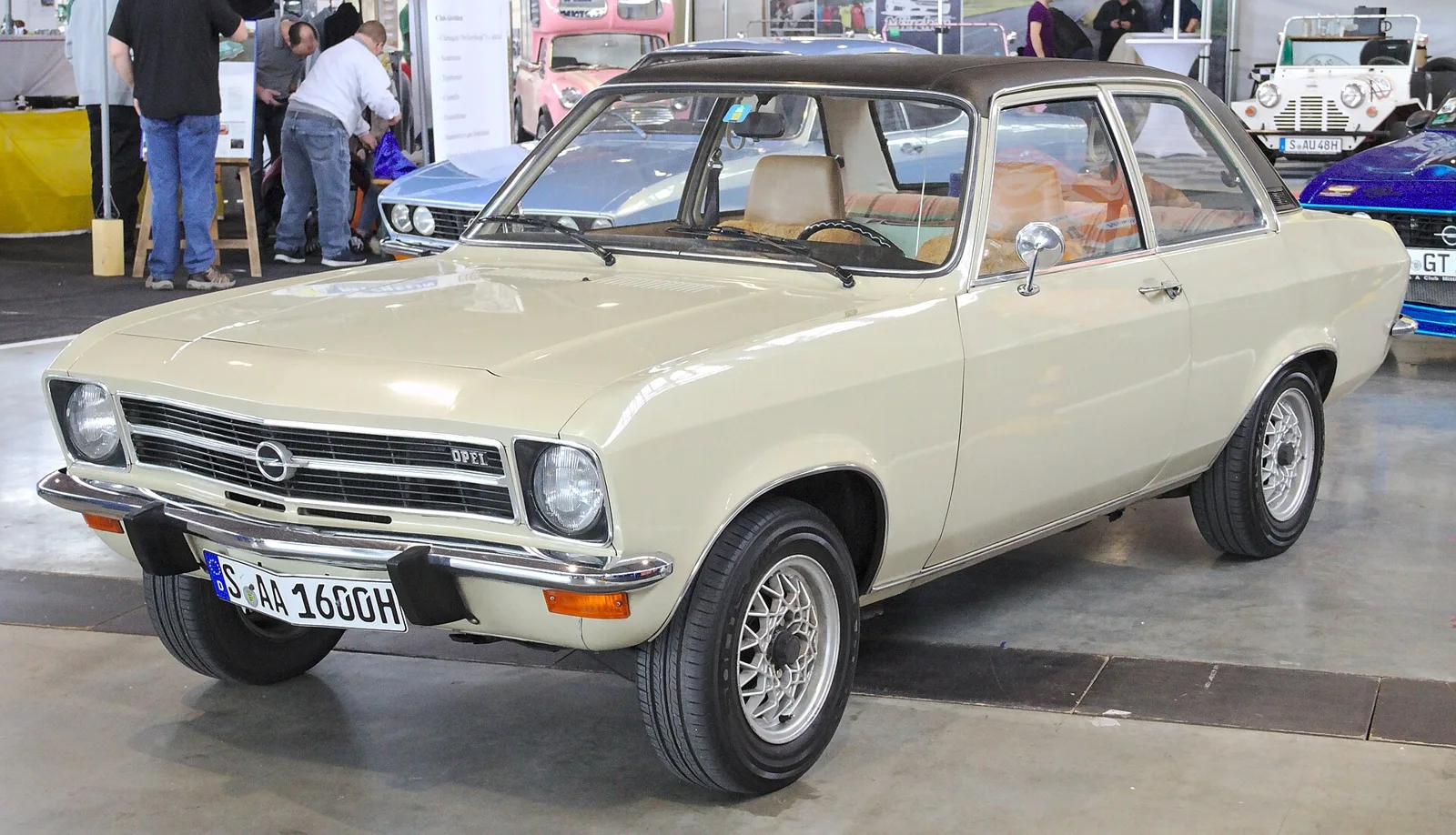
A rear-drive mid-size Opel that began as a Kadett successor, became a separate range with an estate called the Voyage, and reached 691,438 built before production ended in July 1975.
The Opel Ascona A was a rear-drive mid-size Opel, first conceived as a Kadett successor, and it came as a saloon, the Voyage estate and sporty SR trims. It was built to the tune of 691,438 units at Bochum and Antwerp before production gave way to the Ascona B in July 1975.
The Ascona A was the first generation of Opel's Ascona, a mid-size range with rear-wheel drive that also included the Manta A coupe. It was meant to succeed the Kadett, but Opel changed course during development and created a new vehicle size instead. The result was a family that built 691,438 cars before production ended in July 1975.
Why did Opel build the Ascona at all?
Opel planned the Ascona as a Kadett successor, but the response to the Capri changed the plan. When the Opel board saw the public's enthusiasm for the Capri, and could imagine a saloon on the same chassis, it decided in spring 1969 to counter with a newly created vehicle size. The Kadett B stayed in the range and was replaced only in 1973.
The Ascona replaced the Olympia, Kadett LS and Kadett 1700 S variants of the Kadett B, which left the range in July 1970. It was positioned between the Kadett and the Rekord, and it was aimed mainly at buyers stepping up from the Kadett. Its most important rival was the Ford Taunus.
The straightforward, unfussy design came from Opel's chief designer, Chuck Jordan. Its first advertising slogan read "Opel Ascona. The outsider." A later line promised that with every kilometre, the friendship grows.
A Kadett successor that became a separate range, with a woodgrain-look estate whose decor hardly anyone ordered but whose press photos are still remembered.
How did the Ascona A go on sale?
Production began in September 1970, and the car was shown in November at the Turin Motor Show. It remained in production until 9 July 1975, when production ended in favour of the Ascona B. Across that period 691,438 cars rolled off the lines at Bochum and Antwerp.
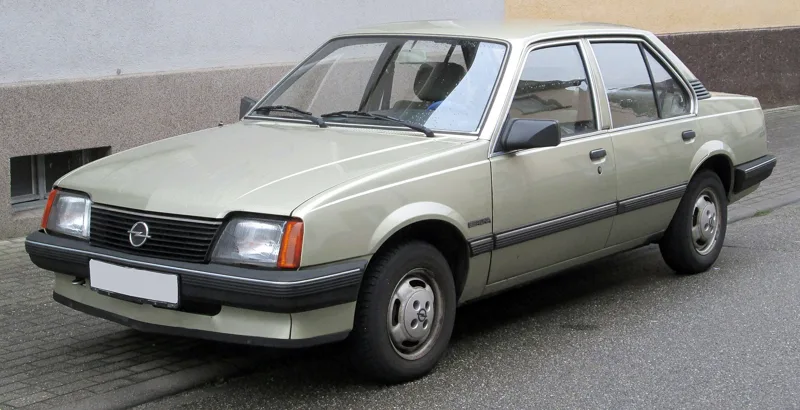
The Ascona B was shown together with the Manta B at the IAA 1975. It was distinguished mainly by a larger body. Drive unit and chassis stayed largely unchanged, so the older car's engineering carried into its successor.
Because the Ascona A was originally intended as a Kadett, it was inferior to the Ford Taunus in body size.
What did the saloon and luxury trims offer?
Buyers could choose a two-door or a four-door saloon, and both could be combined with every engine in standard or luxury trim. The entry model cost 7,365 DM. The four-door found few customers in Germany.
In the original luxury trim, the radiator grille and the square headlamp surrounds were polished bright aluminium. Standard cars were finished in black paint, though the grille kept a frame and centre bar in aluminium colour. The trend towards black grilles removed that difference in August 1971.
The Ascona was spartan compared with imported cars. A heated rear window, electric windscreen washers, a laminated windscreen and belted tyres all cost extra, even in luxury trim. For 600 DM more, the luxury trim brought fabric seats, a carpet, a clock and a cigar lighter, plus lamps for the engine bay, glovebox and boot, along with chrome strips.
Tinted glass all round was not on the menu. Opel instead tinted the front windscreen, or the front and rear ones, and a tinted front screen was laminated glass that could also be ordered clear. Seat belts were offered only with automatic retractors, while head restraints had to be ordered separately and could be retrofitted by cutting the backrest upholstery.
What was the Voyage estate?
The Voyage was a three-door estate in luxury trim, and Opel marketed it as a leisure vehicle. For about 500 DM it came with a stuck-on film that imitated fine wood, applied to the sides and tailgate and edged with chrome. Hardly anyone ordered the decor, yet the press photographs made it famous, and the car is still linked with those images today.
Opel offered the Voyage only with three doors, which it said made the car look sportier. It was aimed at owners who wanted room for inflatable boats and camping furniture, and its fixed roof rack had five chrome strips running across the roof.
The steel sliding roof, which opened with a crank rather than electrically, could not be combined with the fixed roof rack on the Voyage. Its wheels were also a special case: the 165 S 13 size was standard only on this model, which meant two speedometers for each axle ratio, one for the standard 155 S 13 size and one for the larger rolling circumference of the 165 tyres.
How were the engines and chassis set up?
At the outset the range had two petrol engines: the Ascona 16 made 68 PS (50 kW; 67 hp), and the 16 S stepped up to 80 PS (59 kW; 79 hp). Both used the CIH engine, which had a 69.8 mm stroke and an 85 mm bore. The Ascona 16 ran quietly at a low engine speed, though it was not keen to rev, and it shared its final-drive ratio with the 16 S.
Manual cars always had a four-speed gearbox that sent drive to the rear wheels through a propshaft. For the 16 S the Opel automatic could be had from the General Motors plant in Strasbourg, and the gear lever always sat on the transmission tunnel.
The rear axle was adopted from the Kadett, which had received coil springs in the major revision for model year 1968. The Ascona kept triangular links and a Panhard rod for location. Its front suspension was a new design with rack-and-pinion steering, which gave excellent straight-line stability, a point on which the Kadett B had fallen short.
Front disc brakes were standard, and a brake servo came with them. The dual-circuit system had already been introduced on the Kadett, and the rear drum brakes matched the standard fitment for the class.
What changed in the first model year?
The Ascona 19 arrived at the Geneva Motor Show in March 1971, with a 1.9-litre engine and 90 PS (66 kW; 89 hp) taken from the Rekord. It was also available with the Opel automatic. The plan did not meet expectations, because the Ascona 19 was the least in demand of the Ascona models, while BMW's customers chose the large displacement most often.
From March 1971 the SR package, costing about 200 DM, was offered on the 16 S or 19 in either trim. It was recognised by the red-outlined letters SR behind the tailgate lettering. Its contents included a sports suspension with firmer springs, double side stripes, a chrome exhaust tailpipe, steel sport wheels, the sports steering wheel, a rev counter and an instrument bracket with a clock, ammeter and oil pressure gauge.
The low price led to strong sales for the SR. There were 34,589 Ascona 19 SR against 41,041 ordinary Ascona 19, while the Ascona 16 SR found fewer buyers, at 8,835 against 137,206 ordinary Ascona 16 S. The SR package also came with the Voyage, which was an unusual combination for an estate.
How did the Ascona change between 1972 and 1975?
The Ascona 12 arrived in March 1972 with a 1.2-litre engine on premium petrol, giving 60 PS (44 kW; 59 hp), but only as a saloon. It ran more economically than the Ascona 16 and sold 180,700 units, second in the production figures. The Holiday special followed in May 1972, priced 500 DM below the list price of the car plus accessories.
Halogen H4 headlamps were offered from March 1972, and from August 1972 the decor for the Voyage was dropped for lack of demand. Low-profile 185/70 SR 13 tyres, long a Manta feature, became an option for model year 1973. Belted tyres became standard for model year 1974, because cross-ply tyres had lost their place as the state of the art.
The August 1973 revision was visible mainly in a black plastic grille with a large Opel badge and square exterior mirrors. The wiper switch moved to the indicator lever, and there were now two windscreen washer jets. Recaro sport seats and a headlamp wash and wipe system arrived in March 1974.
With a view to the coming unleaded petrol, Opel reduced the compression of the CIH engines in January 1975, which cut power. The Ascona 16 fell to 60 PS (44 kW; 59 hp), the 16 S to 75 PS (55 kW; 74 hp), and the Ascona 19 to 88 PS (65 kW; 87 hp). In June 1975 the 19 regained its power with a larger carburettor.
What happened to the Ascona A in the USA and in rallying?
In the USA the Ascona was built from September 1970 at the GM plant in Antwerp, then sold through Buick dealers as the Opel 1900. Its first engine had a compression ratio of 7.6:1 and 78 PS (56 kW; 77 hp), and the premiere took place on 11 December 1970. Critics praised the cars, but only the estate persuaded American buyers.
From January 1974 injection engines were offered: 84 PS (62 kW; 83 hp) for California and 102 PS (75 kW; 101 hp) elsewhere. The two-door saloon came back, and the estate was renamed the Sportwagon. Exports ended in July 1975 with 82,301 units, and remaining stock was sold as the Opel Special. Around 170,000 vehicles of the 1900 series, including the Manta A, went to the USA.
Walter Roehrl and his co-driver Jochen Berger took the 1974 European rally title in an Ascona A. For 1975 the cars went to Ari Vatanen and Anders Kullaeng, who could not match the title year. The sporting career ended at the 1975 Acropolis Rally with a win for Roehrl, and the Kadett C GT/E coupe took over the role.
Irmscher, the tuner, built the rally car to the Group II rules for special touring cars then in force. Its 95.3 mm bore gave 1,990 cc (121.5 cu in), with about 206 PS (151 kW; 203 hp). Opel Classic owns one of the cars now and runs it at classic car events.
Specifications at a glance
| Specification | Detail |
|---|---|
| Production | September 1970 to 9 July 1975 |
| Total built | 691,438 at Bochum and Antwerp |
| Ascona 16 | 68 PS (50 kW; 67 hp) CIH |
| Ascona 16 S | 80 PS (59 kW; 79 hp) CIH |
| Ascona 19 | 1.9-litre (116 cu in), 90 PS (66 kW; 89 hp) |
| Ascona 12 | 1.2 l (73.2 cu in), 60 PS (44 kW; 59 hp) |
| Transmission | Four-speed manual; Opel automatic optional on the 16 S |
| Entry saloon price | 7,365 DM |
| Voyage decor | About 500 DM extra |
| Rally car engine | 1,990 cc (121.5 cu in), about 206 PS (151 kW; 203 hp) |
| US Opel 1900 exports | 82,301 units, ending July 1975 |
Why did the Ascona family matter?
The Ascona A mattered because it gave Opel a mid-size range with its own identity, rather than a Kadett derivative. It sold strongly in its best-selling Ascona 16 form, and its Ascona 12 found a particular following in Italy, where small engines were in demand.
Its successors kept some of its ideas and dropped others. The Ascona B continued without an estate, because the leisure concept had not caught on. Opel returned to the large tailgate only in model year 1979, with the Manta CC hatchback coupe, and the Ascona C hatchback saloon followed in model year 1982.