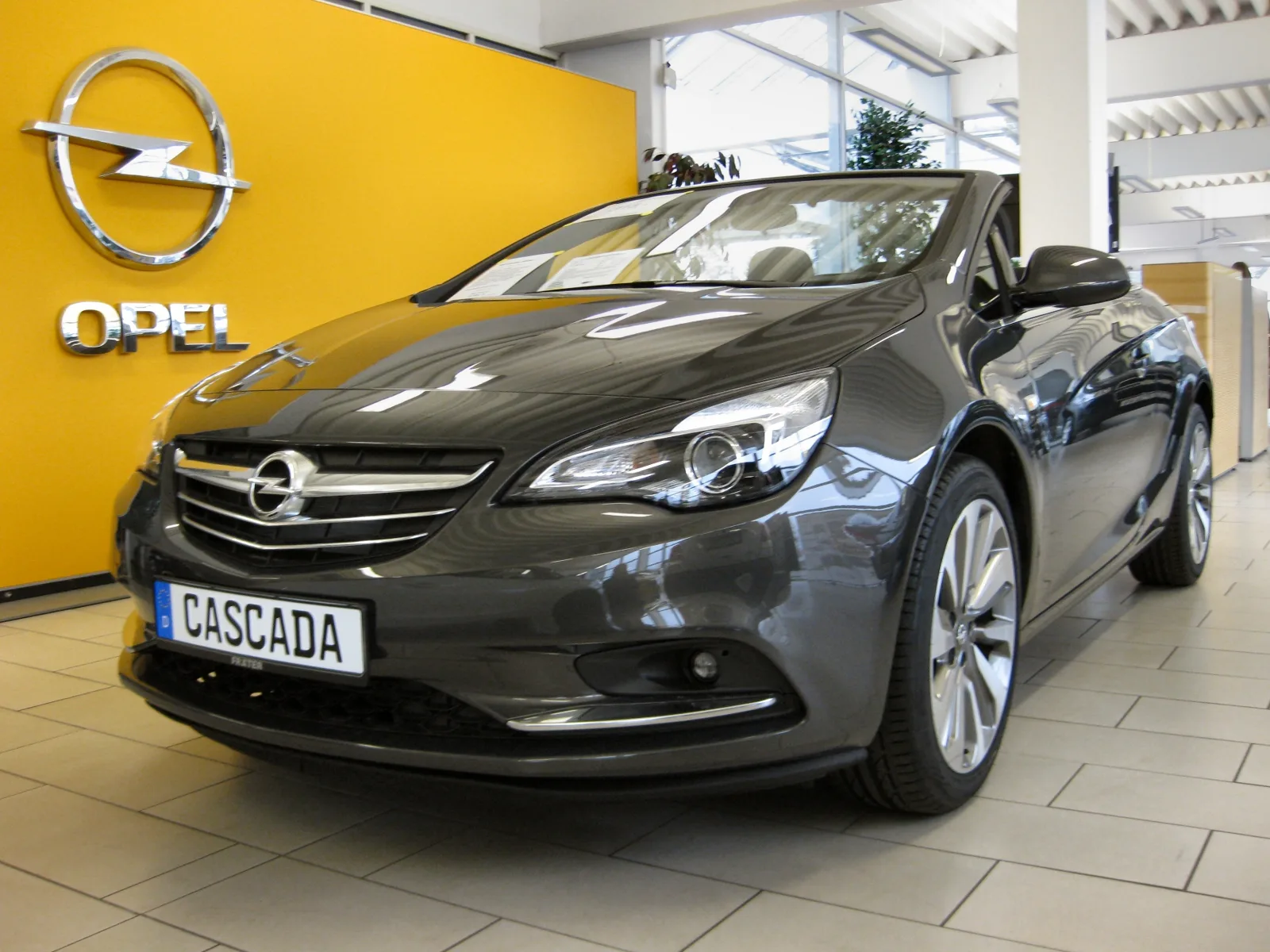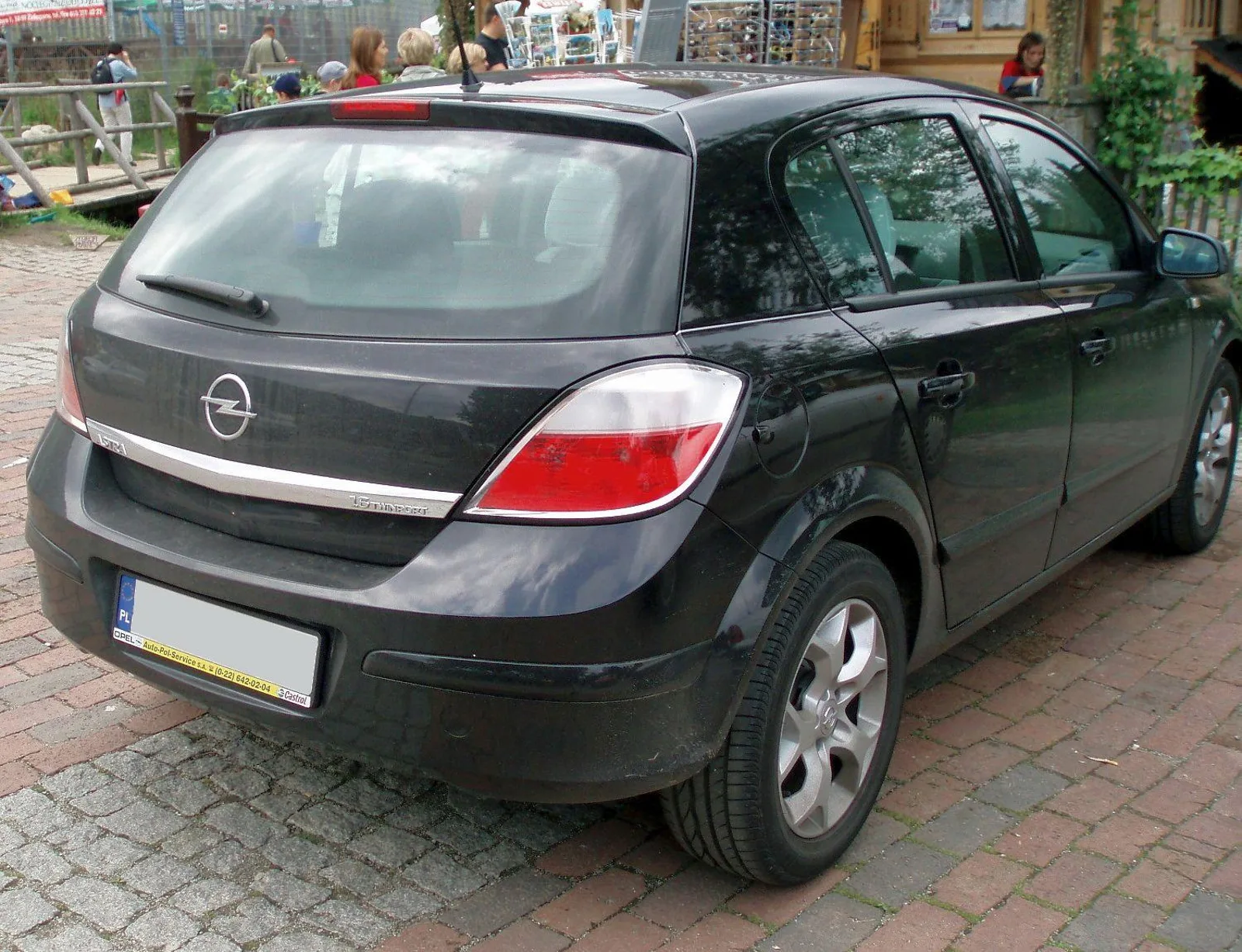
The compact family car Opel launched in 2004 on GM's T platform, which added a sporty GTC, a folding-roof TwinTop and a 240 PS OPC before it was replaced in 2009.
Launched in 2004 on a revised GM T architecture, the Opel Astra H was the Astra's third generation. It was sold as a hatchback, estate, GTC, TwinTop and OPC until 2009, and under other badges elsewhere.
The Opel Astra H was the third generation of Opel's compact family car, launched in March 2004 on a revised form of GM's T architecture. It was offered as a hatchback, an estate, a sporty GTC coupe-style hatch, a folding-roof TwinTop and a 240 PS OPC, and it was built until the end of 2009. It was also sold under several other badges in different markets.
Where did the Astra family come from?
The Astra was introduced by Opel in September 1991 as the direct replacement for the Kadett. Its name was already in use: Vauxhall had sold the Kadett D and Kadett E as the Vauxhall Astra from March 1980. When General Motors standardised model names across its European brands in the early 1990s, the Astra name was adopted everywhere.
Opel regards the Astra as the continuation of the Kadett, so its first generation became the Astra F rather than the Astra A. The Astra H is the third generation of that line in Opel's own lettering, with the Astra G before it and the Astra J after. Enthusiasts sometimes call the first two Vauxhall Astras the Astra D and Astra E, to show their link with the sister models.
A third-generation compact that carried the Astra name through hatchbacks, a folding-roof convertible and a 240 PS OPC.
What was the Opel Astra H?
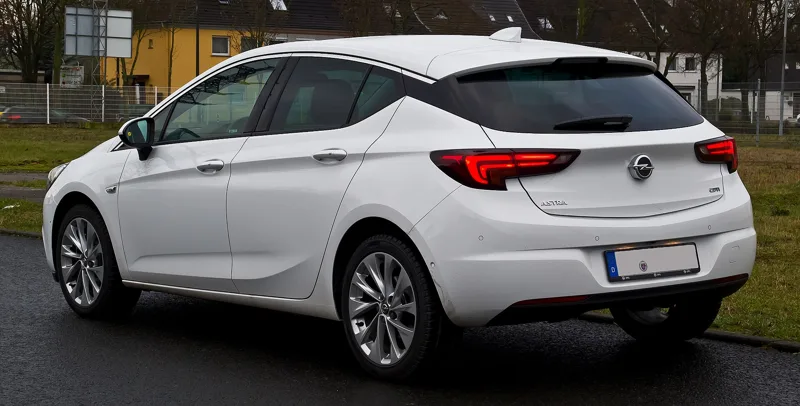
The Astra H was the third generation of the Astra, launched in March 2004 as a five-door hatchback. A five-door estate followed in late 2004, and a sporty three-door GTC was added in 2005. Its size increased compared with the Astra G, and it was based on an updated version of GM's T platform.
Production ran until the end of 2009. The TwinTop convertible was the exception, because it stayed in production until November 2010. The Astra H was sold as the Vauxhall Astra in the United Kingdom, and some European versions were manufactured at Opel's Gliwice plant in Poland.
How did the GTC differ from the hatchback?
The GTC stood for Gran Tourismo Compact in European markets, and it was sold as the Sport Hatch in the UK and as a Coupe in Australia. It arrived in 2005 as a sportier three-door alternative to the five-door hatchback. Its most distinctive feature was a panoramic windscreen that extended into the roof area, which was unusual for a production car of its time.
Within the range the GTC was the sporty choice, and buyers who wanted a practical family car stayed with the five-door body.
What was the OPC version of the Astra H?
In 2005 the GTC gained a performance OPC model, badged as the Astra VXR in the UK. Its engine was an updated version of the 2.0-litre turbo Family II engine, code Z20LEH, which produced 240 PS (177 kW; 237 bhp) and 320 N-m (236 lb-ft) of torque.
Equipment on the OPC included a sports bodykit, Recaro seats, a six-speed manual gearbox, xenon headlamps and 18-inch alloy wheels. In Australia and New Zealand the car was sold by Holden Special Vehicles as the HSV VXR until late 2009. The Astra OPC was also sold as the Chevrolet Astra OPC in Chile.
How did the TwinTop convertible work?
The Astra TwinTop arrived in 2006 as a convertible with a retractable hardtop. The name also applied to the smaller Tigra, and the mechanism was shared with the Pontiac G6. The Astra TwinTop had a three-part folding metal roof that stowed in the upper half of the boot, leaving a good amount of luggage space below it.
The TwinTop was marketed as a four-seater, but its rear seat was smaller than that of other Astra models. It came in three trim levels, with engines that included a 200 PS (147 kW; 197 hp) 2.0-litre turbo and a 150 PS (110 kW; 148 hp) 1.9 CDTI diesel. Australian TwinTops, launched in January 2007, used a 2.2-litre direct-injection engine unique to that market.
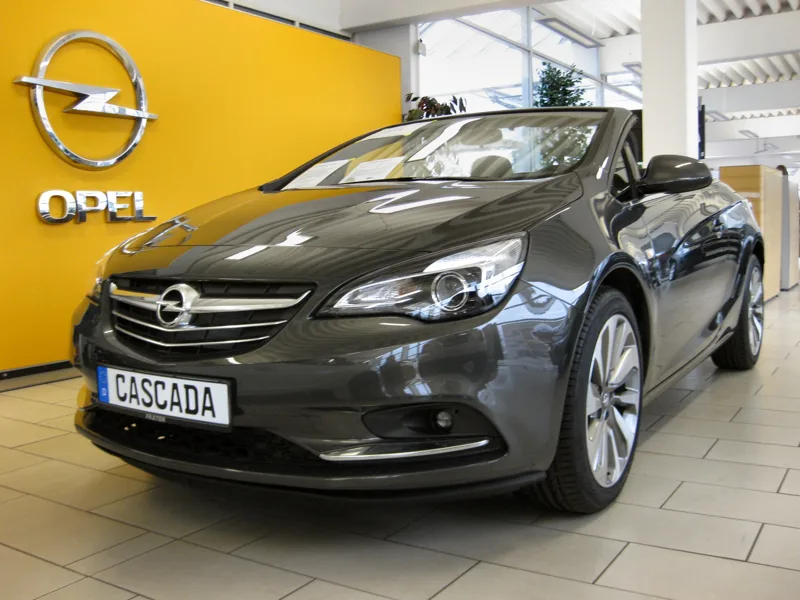
The folding roof was built by Magna Steyr's Car Top Systems subsidiary in Antwerp, Belgium, close to the plant where the TwinTop was assembled. The car was discontinued in November 2010 together with the three-door GTC, and both were replaced by the Opel Cascada soft-top.
Which engines did the Astra H offer?
At launch the petrol line-up ran from a 1.4-litre at 90 PS and a 1.6-litre at 105 PS to a 1.8-litre at 125 PS, with a 2.0-litre turbo available in 170 PS and 200 PS forms. The diesel range included a 1.3 CDTI at 90 PS, a 1.7 CDTI at 80 or 100 PS and a 1.9 CDTI in 120 and 150 PS forms.
Engines changed through the production run. A 1.3 CDTI at 90 PS was introduced in 2005 in place of the 80 PS 1.7, and the OPC took the 2.0-litre turbo to 240 PS. After the restyle at the end of 2006 and the start of 2007, a 1.6 turbo at 180 PS replaced the 170 PS 2.0 turbo, and a 1.7 CDTI at 125 PS arrived.
What changed when the Astra H was restyled?
The Astra H was revised in January 2007, with new colours for the rear light clusters and a new front end. The updates were small, reflecting a car that had already been on sale for nearly three years by then.
Some features were notable for the class. The Astra H was among the first in its segment to use electronically controlled chassis systems, known as IDS+, and Adaptive Forward Lighting, AFL. Digital radio was also offered on some versions, a first for a major European car at that time.
How did the Astra H sell in North America?
In North America the Astra H appeared as the Saturn Astra, after debuting at the 2007 Chicago Auto Show. It replaced the Ion and was a captive import built in Antwerp, Belgium. Sales began on 2 January 2008, with a single engine, a 1.8-litre U18XER inline four producing 138 hp (103 kW).
The Saturn Astra came as a three-door or five-door hatchback. Five-speed manual and four-speed automatic gearboxes were offered, and the XR trim brought 17-inch alloys, enhanced seat bolsters and a long equipment list. The sales figures were disappointing, however. General Motors had predicted 30,000 to 40,000 cars a year in the United States, but only 11,968 were sold in 2008 and 6,298 in 2009.
Sales were hit by a large glut of unsold Ions and by uncertainty about the Saturn brand's future. In Canada the Saturn Astra reached 11,605 sales between 2007 and 2010. GM announced in June 2009 that it would sell Saturn to Penske Automotive Group, but the deal never closed, and General Motors discontinued the brand in 2010.
How did the Astra H fare in crash tests?
In Insurance Institute for Highway Safety tests the Saturn Astra earned a Good overall score in frontal impacts and a Marginal overall rating in side impacts. Front and rear head curtain airbags and front seat-mounted torso airbags were standard on the car.
The car also had a Pedal Release System, which allowed the clutch or brake pedal to decouple in a frontal crash with significant cowl intrusion. The aim was to reduce the risk of lower-leg injury for the driver.
How was the Astra H used in Brazil and Latin America?
In Brazil the ageing Vectra B was replaced by a sedan version of the Astra H, sold as the Chevrolet Vectra. That car stayed in production until the Chevrolet Cruze replaced it in 2009, and the sedan remained on sale alongside the Cruze until 2011. In September 2007 a five-door Astra was also launched there as the Chevrolet Vectra GT, to differentiate it from the older Astra.
The Astra H was offered as an Opel in some Eurasian markets from 2006, following a debut at the Istanbul show in Turkey, and it reached Ireland in 2008. In Mexico the Chevrolet Astra was withdrawn in 2008 as Opel products left the brand there, and the Chevrolet Cruze sedan took over for the 2010 model year.
Which versions followed the Astra H?
The Astra H did not disappear at once when the Astra J arrived in 2009. The H was kept in production in Bochum alongside the new car and sold as the Opel Astra Classic III in some Eastern European markets, including Poland and Turkey. It came as a five-door hatchback, saloon and estate, and production of the Classic III ended in 2014.
The Astravan, a three-door van version of the estate, was launched in 2006. Opel replaced it at the end of 2012 with the new Combo D. GM Russia also began SKD assembly of the Astra at a temporary site near Saint Petersburg in February 2008, with a potential capacity of 25,000 vehicles a year.
What was the Astra H's place in the family?
The Astra H came after the Astra G, which was introduced in 1998, and before the Astra J, which debuted in 2009. Each generation carried forward the Astra's role as a compact family car for Europe, while the sporty derivatives and convertibles widened its appeal.
The H is notable for its variety of body styles, the GTC and OPC performance models and its unusual TwinTop roof. It also showed how one platform could be adapted for many markets, from European hatchbacks to North American Saturns and Brazilian Chevrolets.
Opel Astra H specifications
| Specification | Detail |
|---|---|
| Launch | March 2004, five-door hatchback |
| Platform | Updated version of GM's T platform |
| Body styles | Five-door hatchback, five-door estate, GTC three-door, TwinTop convertible |
| Production | To the end of 2009; TwinTop to November 2010 |
| Petrol engines | 1.4 at 90 PS; 1.6 at 105 PS; 1.8 at 125 PS; 2.0 turbo at 170 or 200 PS |
| Diesel engines | 1.3 CDTI at 90 PS; 1.7 CDTI at 80 or 100 PS; 1.9 CDTI at 120 or 150 PS |
| OPC engine | 2.0-litre turbo Z20LEH, 240 PS (177 kW; 237 bhp), 320 N-m (236 lb-ft) |
| TwinTop engines | 2.0 turbo at 200 PS (147 kW; 197 hp); 1.9 CDTI at 150 PS (110 kW; 148 hp) |
| TwinTop roof | Three-part folding metal roof |
| Saturn Astra engine | 1.8-litre U18XER, 138 hp (103 kW) |
| Saturn Astra assembly | Antwerp, Belgium |
| Successor | Astra J, launched 2009 |