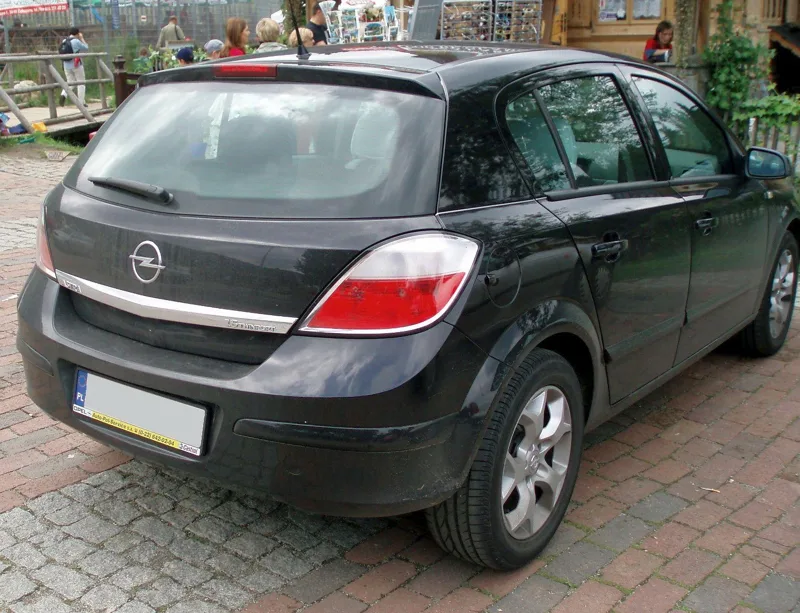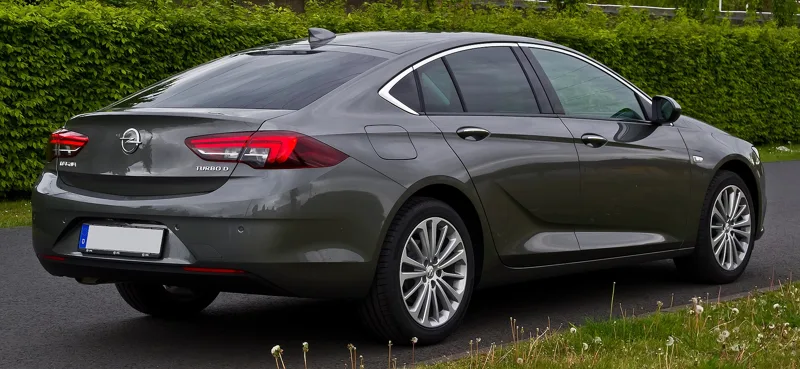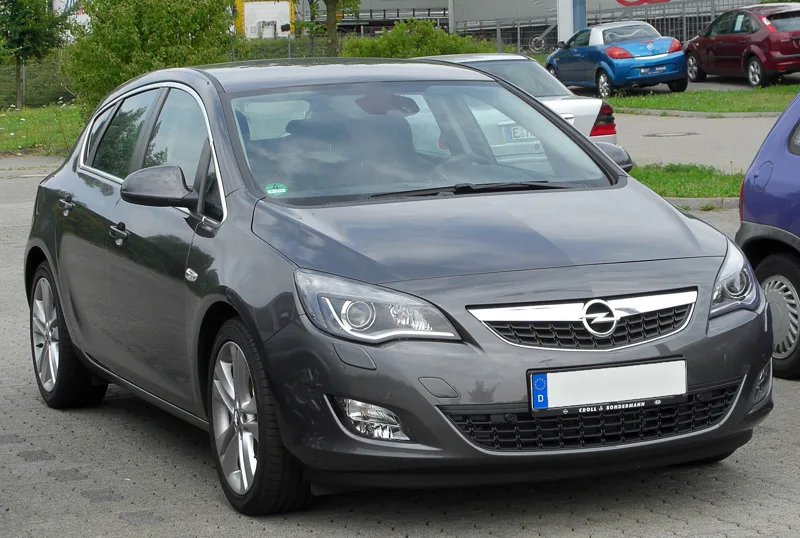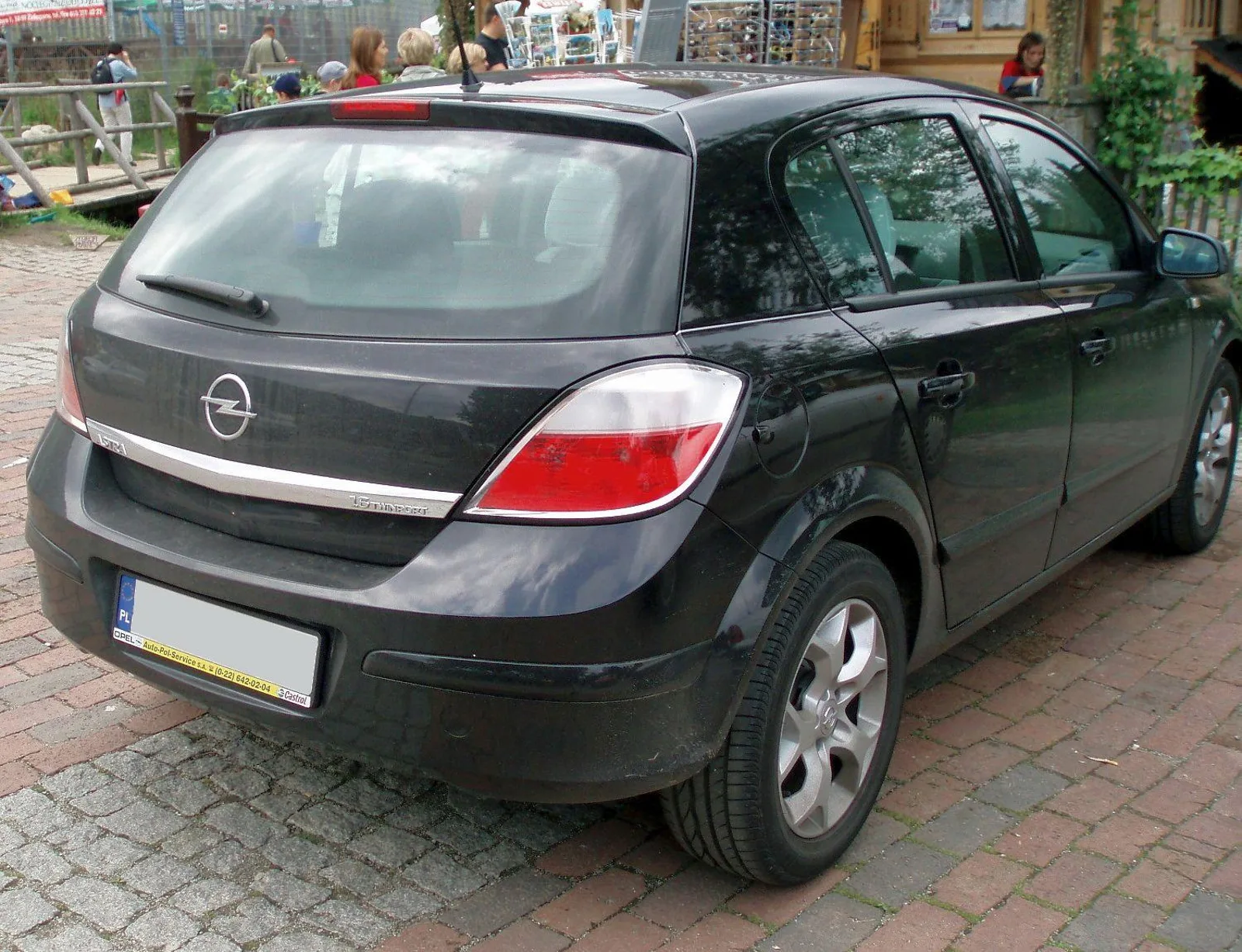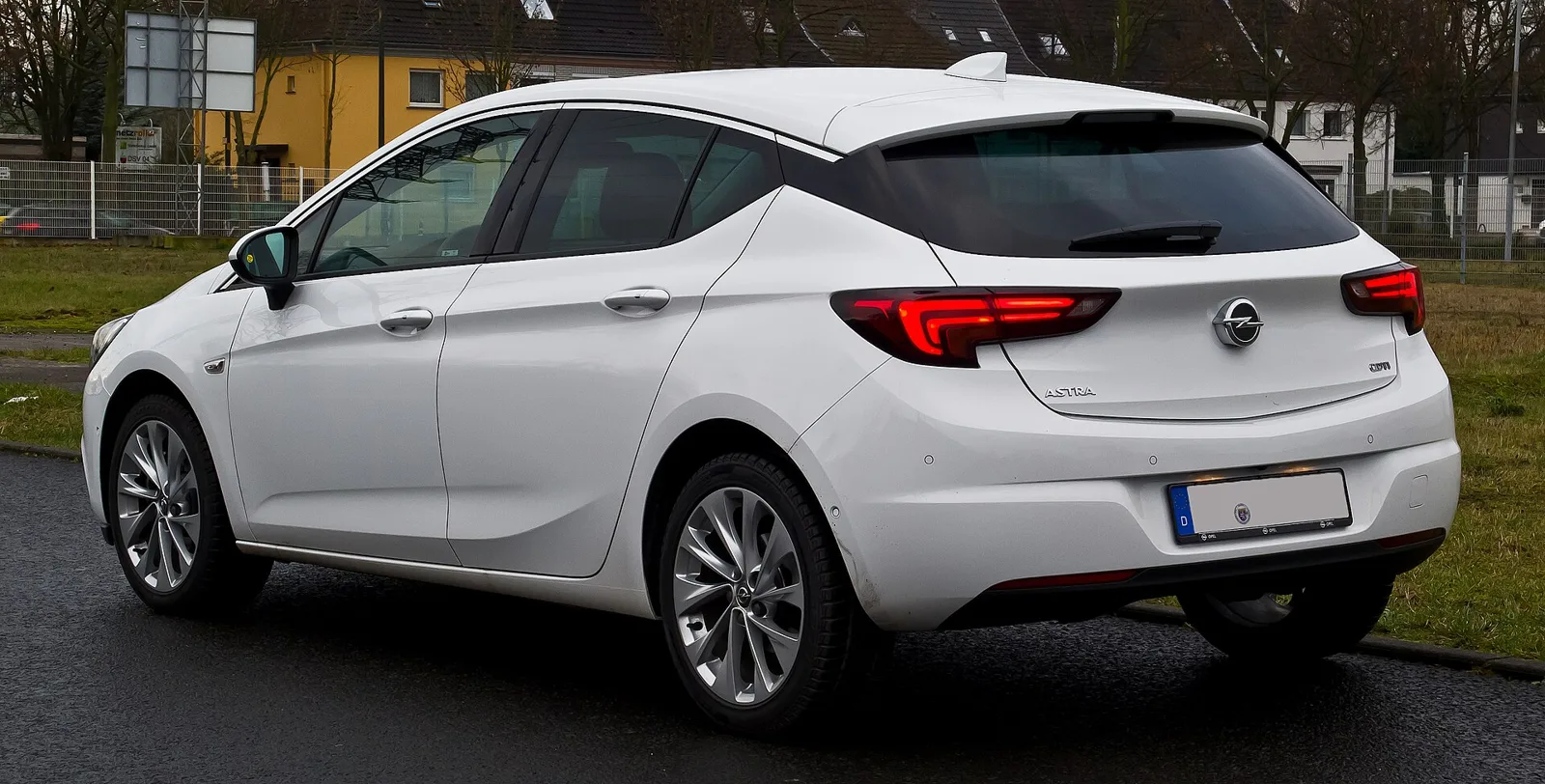
Angular styling, a lighter bodyshell and a touch-screen cabin for the fifth-generation Astra, built from 2015 to 2021.
Opel built the Astra K from 2015 to 2021 as a C-segment family car, in saloon and Sports Tourer estate forms. Elected Car of the Year 2016, it was the final Astra conceived under General Motors, and its launch engines ran from a 999 cc three-cylinder up to a 1,598 cc diesel.
Built by Opel from 2015, the Astra K was the fifth generation of the Astra family in the C segment. It was elected Car of the Year 2016 and was the last Astra designed under General Motors.
Where did the Astra K come from?
The Astra K was built at Gliwice in Poland from 2015 and reached showrooms straight after its Frankfurt debut in September 2015. Its first images appeared on 1 June 2015. Outside Europe the same car was sold as the Buick Verano in China and the Holden Astra in Australia.
Opel did not keep the car to one badge. In the United Kingdom it was sold as a Vauxhall and built at the historic Vauxhall plant at Ellesmere Port.
The car was designed while Opel still belonged to General Motors, and that ownership was about to end. The Astra K was therefore the last Astra shaped under the group before the change of hands.
An Astra that traded soft curves for sharp lines, and most of its buttons for one touch screen.
How did the Astra K look?
The Astra K kept the proportions of the outgoing car, but its surfaces were sharper. Its drag coefficient fell to 0.285 from 0.325, and the body was 5 cm shorter, a change that belonged to a wider package aimed at cutting weight and consumption.
The most visible change came at the front. The lamp units grew longer and sharper, reaching deeper into the wings and towards the centre, where they met a larger grille with a three-dimensional texture. LED daytime running lights were set into the redesigned front bumper.
The side profile followed the same logic. Ribs ran along the lower part of the doors and higher up, passing through the door handles. The centre pillar had a wave-shaped section, and that wave also shaped the lower edge of the rear window.
At the back, a partial extension of the rear glass met sheet metal integrated with the rear wing, and the roof sloped slightly backwards above it. A rib carried on across the tail, forming a dihedral between the rear window and the lower tailgate. The rear lamp units, the tailgate sill line and, to a lesser degree, the bumper all repeated the angular theme.
Inside, the Astra K moved decisively away from buttons. An 8-inch touch display dominated the centre console and handled many of the car's functions, including its multimedia system. Air conditioning and the hi-fi kept their own buttons, and the instruments stayed analogue and round, behind a new three-spoke steering wheel. A painted strip crossed the dashboard.
Space was a mixed picture. The wheelbase was 23 mm shorter than before, yet roominess stayed at a good level. The saloon boot offered 370 litres with the rear seat in place, rising to 1,210 litres when that seat was folded down. The boot was not below the competition average.
The Sports Tourer estate was presented alongside the saloon in Frankfurt, and it carried more luggage. Its boot ran from 540 litres in five-seat form to 1,630 litres with the rear seat folded.
How was the Astra K engineered?
The Astra K used the Delta platform in one of its final forms, coded D2XX, with a wheelbase of 2,662 mm (104.8 in). Engineers removed 77 kg (170 lb) from the bodyshell and a further 50 kg (110 lb) from the alloy wheels, so the overall saving over the previous car ran from 120 to 200 kg (265 to 441 lb) at the same engine.
This was the last Astra to use the Delta platform. Opel engineers designed much of it, and this Astra used it in one of its latest evolutions.
The weight work had a double purpose. A lighter body cut consumption and emissions, and the same work was combined with aerodynamic refinement to lift performance. The shell relied on high-strength steels, and the lighter wheels were part of the same effort.
Everything sat forward: a transversely mounted engine at the front drove the front wheels. The front suspension was MacPherson. At the rear, the less powerful models had interconnected wheels, while the more capable ones had independent wheels located by a Watt linkage. Disc brakes were fitted to all four wheels, with ventilated fronts, and the steering was rack-and-pinion with electromechanical assistance.
Which engines did the Astra K launch with?
At launch the Astra K offered three petrol engines and a single diesel. The 1.0 Turbo was a three-cylinder of 999 cc (61.0 cu in), and the 1.4 was the only naturally aspirated unit and the only one with indirect injection.
The 1.0 Turbo was also the only engine paired with a five-speed manual gearbox, while everything else came with six speeds. The 1.4 belonged to the same SGE family as the 1.0 Turbo, but it was a four-cylinder of 1,399 cc (85.4 cu in) producing 100 PS (99 hp).
The 1.4 Turbo came in two outputs: 125 PS (123 hp) from the B14XFL and 150 PS (148 hp) from the B14XFT. The only diesel was the 1.6 CDTI, a common-rail turbodiesel of 1,598 cc (97.5 cu in), offered at 95 PS (94 hp), 110 PS (108 hp) and 136 PS (134 hp) under the codes B16DTC, B16DTE/B16DTU and B16DTH.
Astra K specifications
| Specification | Detail |
|---|---|
| Production | 2015 to 2021 |
| Platform | Delta, code D2XX |
| Wheelbase | 2,662 mm (104.8 in) |
| Bodyshell weight saving | 77 kg (170 lb) against the previous Astra |
| Drag coefficient | 0.285 (0.325 previously); 0.25 Sports Tourer and 0.26 saloon after 2019 |
| Boot, saloon | 370 litres; 1,210 litres with the rear seat folded |
| Boot, Sports Tourer | 540 litres; 1,630 litres with the rear seat folded |
| 1.0 Turbo | 999 cc (61.0 cu in), three cylinders, 105 PS (104 hp) |
| 1.4 | 1,399 cc (85.4 cu in), naturally aspirated, 100 PS (99 hp) |
| 1.4 Turbo | 1,399 cc (85.4 cu in), 125 PS (123 hp) or 150 PS (148 hp) |
| 1.6 CDTI | 1,598 cc (97.5 cu in), diesel, 95 PS (94 hp) to 136 PS (134 hp) |
How did the range change after launch?
The range grew upwards in October 2015 with the 1.6 Turbo and 1.6 Biturbo CDTI, then changed mainly through emissions updates in 2018 and a restyle in July 2019. The 2019 cars dropped both one-litre engines in favour of a new 1.2 turbo and a 1.4 CVT.
The first additions came three months after production began. The 1.6 Turbo, at 200 PS (197 hp), and the 1.6 Biturbo CDTI, at 160 PS (158 hp), took the top of each range. Nothing followed for more than a year and a half.
In September 2017 a methane model appeared, with a 1.4 Turbo rated at 110 PS (108 hp) and cylinders holding 19 kg of methane. June 2018 brought a round of numerous updates. The base 1.0 Turbo was adjusted to meet anti-pollution rules and joined by a 90 PS (89 hp) variant. The naturally aspirated 1.4 left the price list, and so did the basic 95 PS (94 hp) 1.6 diesel. The 1.6 biturbo lost 10 PS (10 hp).
What did the July 2019 restyle change?
The restyle altered the face of the car. The chrome badge on the grille and the bumper trim changed, and the old round headlamps gave way to a pair of LED units called ecoLed, which sat beside the IntelliLux lamps.
The grille gained an active shutter. It stays closed when engine cooling is not needed, which improves aerodynamics, and it opens when the engine needs air. An engine cover panel was added as well, and Cx fell to 0.25 for the Sports Tourer and 0.26 for the saloon.
The restyle also made the speedometer digital and updated the safety and driver assistance equipment. The one-litre engines were removed, and a 1.2 turbo developed directly by Opel took the place of the more powerful of the two. Its 110 PS (108 hp) version was joined by 130 PS (128 hp) and 145 PS (143 hp) variants, all paired as standard with a six-speed manual.
A 1.4 litre turbo with 145 PS (143 hp) and a continuously variable transmission followed. The other petrol engines were dropped. On the diesel side every earlier unit went, leaving two 1.5 turbodiesels of 105 PS (104 hp) and 122 PS (120 hp). Production of the Astra K ended at the end of 2021.
Why did the Astra K matter?
The Astra K mattered as the bridge between two eras of the Astra. It was the last one designed under General Motors, and it took the Astra away from soft, rounded bodywork towards angular, sharper lines with a touch display in the cabin.
Its engineering was about weight and airflow as much as style. The lighter bodyshell and wheels and the aerodynamic refinements all served the same goal of lower consumption and emissions.