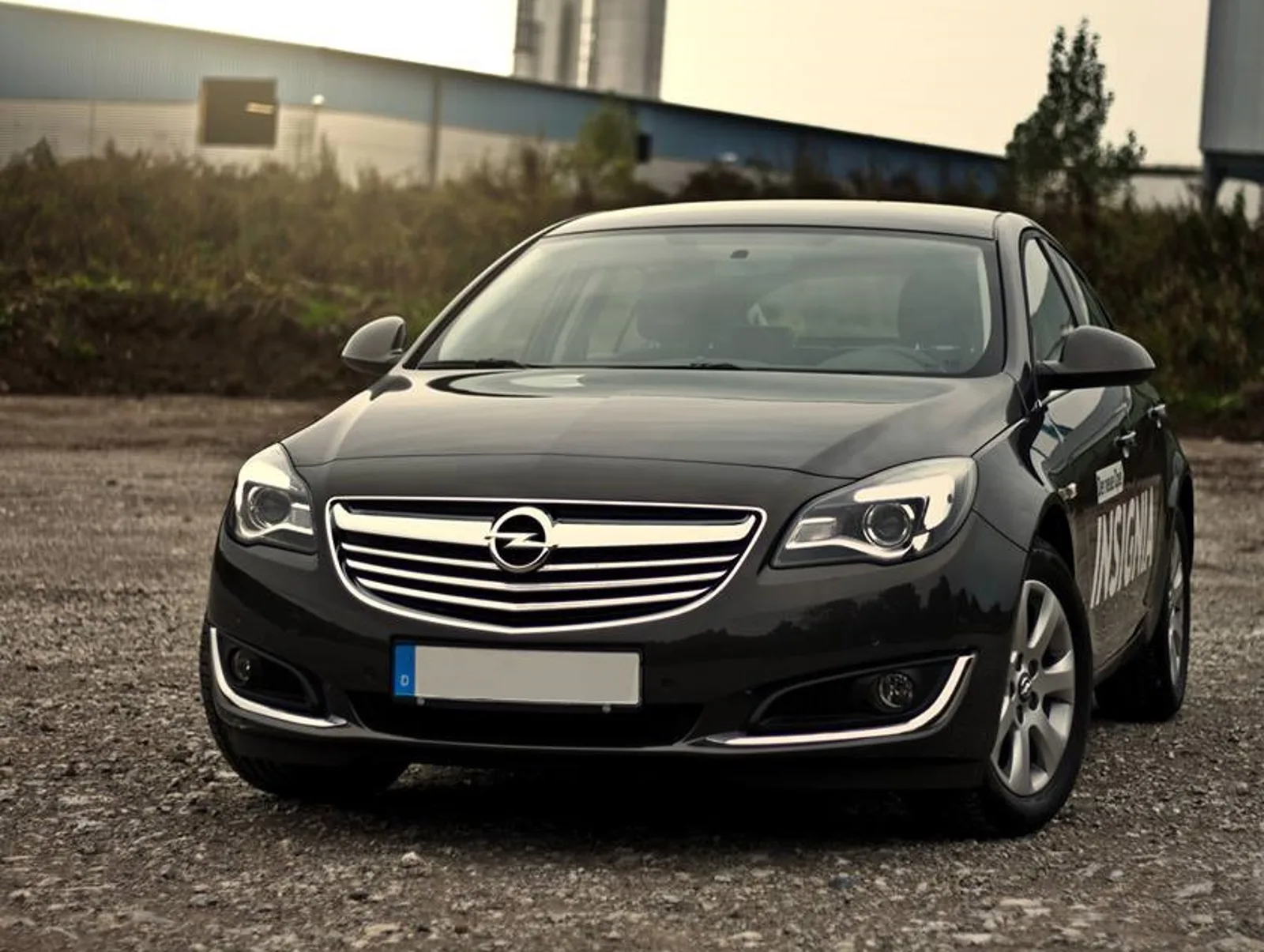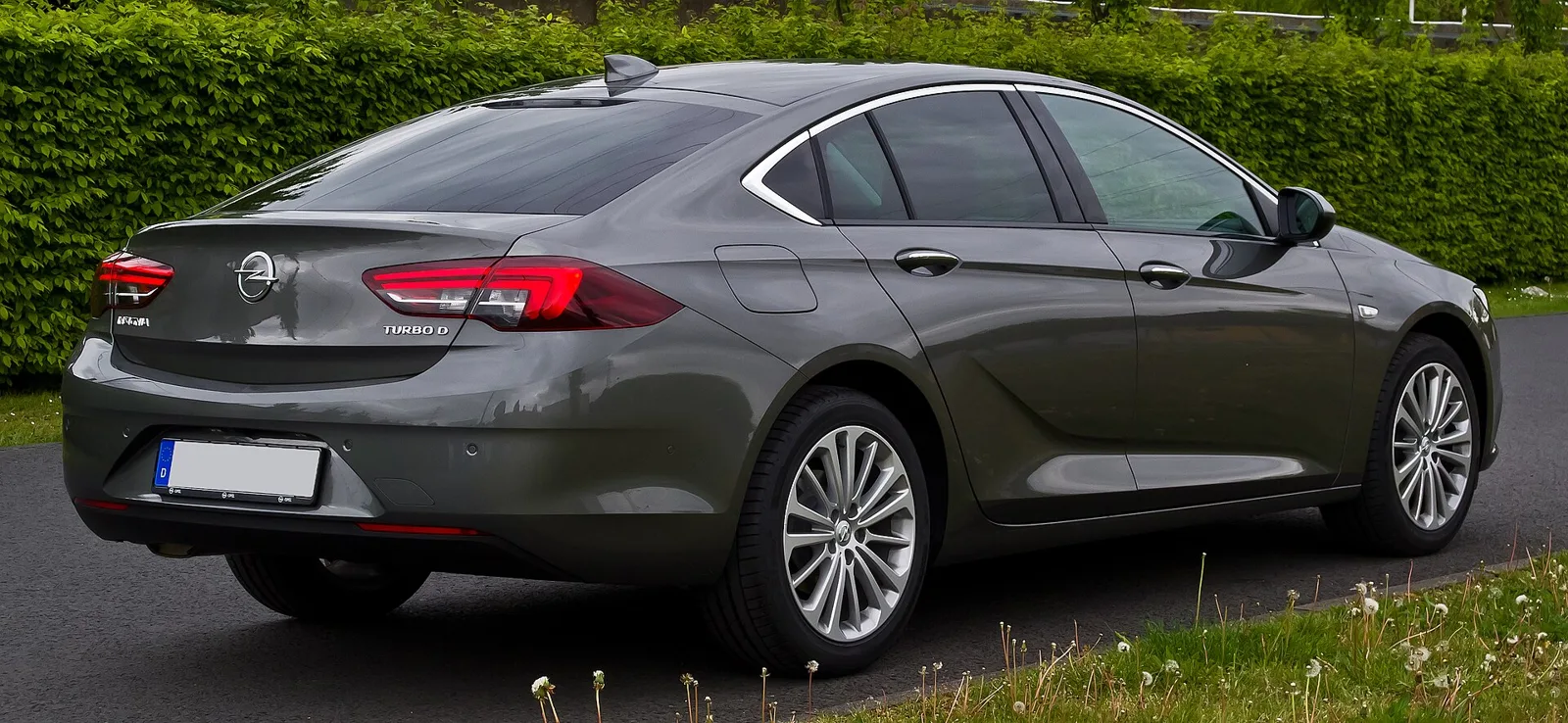
Opel's second Insignia, a fastback-led D-segment car sold as a Vauxhall, Buick and Holden, with an all-wheel-drive option and a 2019 facelift.
Built by Opel from 2017 until the end of March 2023, this D-segment car also wore Vauxhall, Buick Regal and Holden Commodore badges elsewhere. It came as a fastback saloon, an estate and a crossover-style Country Tourer, and the GSi was its sporting top model.
The Opel Insignia B was the second generation of the Insignia, an upper-medium car in the D-segment. Opel built it from 2017 until the end of March 2023, and it was sold under other badges as well: the Vauxhall in the United Kingdom, the Buick Regal in China and North America, and the Holden Commodore in Australia.
Why was the second Insignia developed on a global basis?
Development began in 2012 with a global outlook. As with the first Insignia, the new car was planned for sale in Europe under the Opel badge, in the United Kingdom as a Vauxhall, in North America and China as a Buick, and in Australia as a Holden. The first Insignia had been built in more than 900,000 units, so the designers kept what had worked and evolved it both in style and in mechanical design.
The platform was an entirely new, modular structure. Opel designed it to be shared with the other upper-medium models of the General Motors group.
A fastback saloon that Opel sold in Europe, a Buick in America and a Holden in Australia.
What was the Insignia B's launch like in Europe?
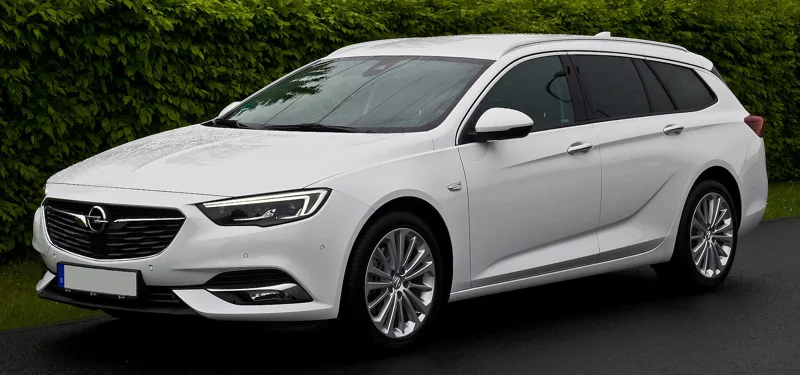
The car debuted at the Geneva Motor Show in March 2017. The big departure was dropping the traditional four-door saloon from the European range. In its place came a fastback saloon with five doors and a rear hatch, badged Insignia Grand Sport. The estate kept the name Sports Tourer, while the raised, crossover-style version was named Country Tourer.
Series output began in March 2017. Opel invested a total of 500 million euros in upgrading the Russelsheim plant.
How was the Insignia sold in America and China?
After the European launch, the American version was unveiled as the Buick Regal. Buick placed it in the mid-size segment, under its LaCrosse flagship. The crossover estate, called the Regal Tour X, was based on the Country Tourer and made its debut in America for the first time.
The Chinese model was shown at the 2018 Shanghai Motor Show. It was offered only as a saloon, built locally by the joint venture between General Motors and SAIC. The main difference from the European car was the four-door saloon body with a conventional hatch, which suited Chinese buyers better.
What happened to the Insignia in Australia?
In Australia General Motors sold the car through its Holden division under the name Commodore. This took over the name of a long-running Australian model, which had stopped production in 2017.
What was the Insignia GSi?
In September 2017 the Insignia GSi was presented at the Frankfurt Motor Show. The name stood for Grand Sport injection, and the car succeeded the earlier Insignia OPC as the sporting version. It was 160 kg (353 lb) lighter than the OPC, and it used two engines: a 2.0-litre turbocharged petrol unit producing 260 PS (256 hp), and a 2.0-litre Multijet turbodiesel with twin turbochargers producing 210 PS (207 hp).
The sportier look came from the GSi exterior pack, with specific wheels, spoilers and skirts, and from the interior details that followed.
How was the Insignia B's chassis engineered?
The base was the new General Motors E2XX modular platform. It could take a front-wheel-drive layout or an all-wheel-drive one, and in both cases the engine sat transversely at the front. The wheelbase was stretched by 92 mm (3.6 in) to 2.83 m (9.3 ft). The front suspension used MacPherson struts, while only front-drive models on 20-inch alloy wheels used the HiPerStrut variant. The rear used a new five-link independent multi-link arrangement.
The top models could be fitted with FlexRide electronically controlled suspension, offering three set-ups and adjustable parameters. The all-wheel-drive system was called Twinster. Developed by GKN, it used torque vectoring and a double clutch in front of the driveshafts, which replaced a conventional rear differential. It was paired with an Aisin AF50-8 eight-speed automatic.
How much lighter was the new body?
The steel body structure used high-strength steels, and aluminium was added to many areas of the bodywork. As a result the body was 60 kg (132 lb) lighter than the outgoing Insignia A. Depending on the version, the complete structure, including the chassis, was between 175 kg (386 lb) and 200 kg (441 lb) lighter than before.
Which driver-assistance systems did it offer?
The new Insignia brought several driver-assistance systems. A radar could recognise pedestrians and obstacles and apply the brakes. The list also covered lane keeping, safe-distance monitoring, traffic sign reading, overtaking and blind-spot sensors, and an active bonnet. The car was tested by Euro NCAP in 2017 and received five stars.
What did the Insignia B look like?
The styling built on the first series and recalled the Opel Monza prototype shown in 2016 in many details. Designed by Mark Adams, the car had tauter, more flowing lines and a fastback profile. The roof was 3 cm lower than before and sloped down toward the tail, with a hint of a third box at the rear.
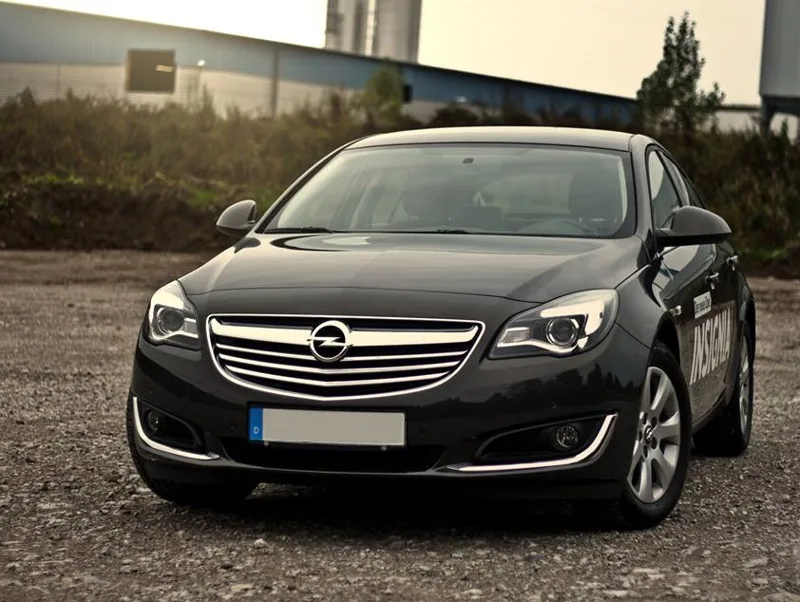
The fully opening rear hatch was a deliberate choice, aimed at customers in Northern Europe, where it was preferred to the traditional four-door saloon and the estate. At the front the Opel badge sat in a classic grille between two chrome strips, and the lights had an LED arrow-shaped signature. At the back the boot was shaped into a spoiler, and the lights were stacked across two levels. The estate had a long chrome trim running along the window line and into the rear screen.
What was inside the Insignia?
Stefan Arndt designed the interior, which was more rounded than the exterior and had a horizontally developed dashboard. In the centre sat a 7- or 8-inch touchscreen, the IntelliLink Navi 900. It offered navigation, an internet connection, Wi-Fi, Bluetooth, Android Auto, Apple CarPlay and GM OnStar 4G.
In November 2018 the Multimedia and Multimedia Navi Pro systems appeared, with a graphic style modelled on smartphones. DAB radio and a head-up display became optional. OnStar was discontinued once General Motors had sold Opel to the PSA group.
Which trim levels did the Insignia use?
The Insignia came in four trim levels.
The Advance was the entry trim. It had 17-inch alloy wheels, fabric upholstery, black grille surrounds, the IntelliLink R4.0 system with a 7-inch colour touchscreen, keyless entry and start, a trip computer with a 3.5-inch display, and LED rear and daytime lights. Its safety kit was the Opel Eye package, which combined emergency braking with pedestrian recognition, lane keeping assist, forward distance and collision alerts, and cruise control with a speed limiter.
The Business moved up a step with 18-inch alloy wheels, an 8-inch colour Navi 900 screen, an 8-inch instrument display, a hands-free tailgate, dual-zone climate control and perforated leather seats. Its driver's seat carried AGR certification and could be adjusted electronically. A Sight and Light pack added automatic headlights and rain-sensing wipers, and a rear camera came with front and rear parking sensors.
The Innovation added the Navi Multimedia Pro with voice commands and European maps, along with Apple CarPlay and Android Auto compatibility. Its interior used a premium leather-effect material called Morrocana. The GSi was the top trim. It added an exterior pack with 18-inch five double-spoke chrome wheels, front and rear spoilers and side skirts, plus black Morrocana sports front seats, an OPC Line steering wheel with paddles and aluminium pedals.
What did the 2019 restyle change?
The updated Insignia was introduced on the European social-media pages of the Opel brand, and then shown at the Brussels Motor Show at the end of 2019. The front end was the main change. The daytime lights moved from the outside of the headlight to the inside, creating the stepped look that Opel first used on the Corsa E and later the Corsa F. The headlights kept their Matrix LED technology.
The grille became active, in the same way as on the Astra, with a shutter that closed when cooling was not needed and at high speed, reducing drag. The grille gained single-frame sections with two chrome strips, the bumper was reshaped to look sharper and sportier, and the side air intakes were changed to resemble those of the smaller Corsa F. The GSi had the same grille as the standard car but without the chrome single frames, and its front bumper was redesigned for a sportier look.
Which engines were fitted after the restyle?
The three-cylinder 1.5 CDTi diesel, the only diesel in the line-up, produced 122 PS (120 hp). The 1.4 Turbo petrol produced 145 PS (143 hp). The four-cylinder engines were the 2.0 turbo at 200 PS (197 hp) and the 2.0 turbo at 230 PS (227 hp), the latter for the GSi.
The three-cylinder engines all used a six-speed manual gearbox. The 200 and 230 PS four-cylinder petrol engines came with a nine-speed automatic as standard.
When did Insignia B production end?
The Insignia went out of production at the end of March 2023. It was not replaced by any model in the same category.
Across Europe, the United Kingdom, North America, China and Australia the car was sold under four different badges: Opel, Vauxhall, Buick and Holden.