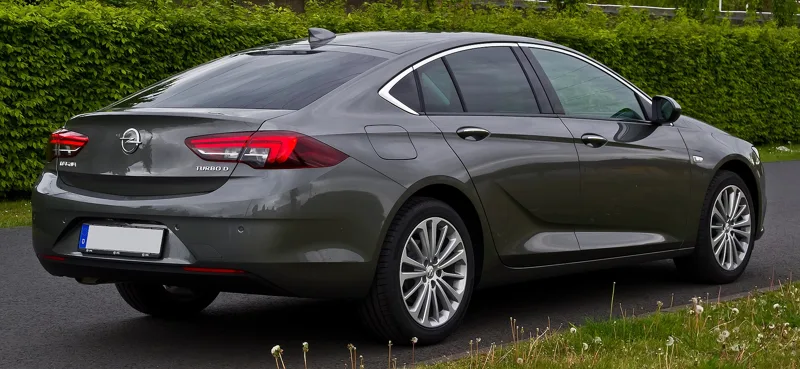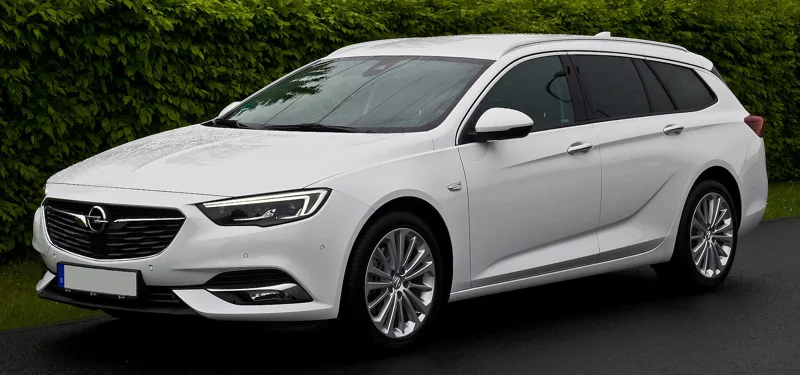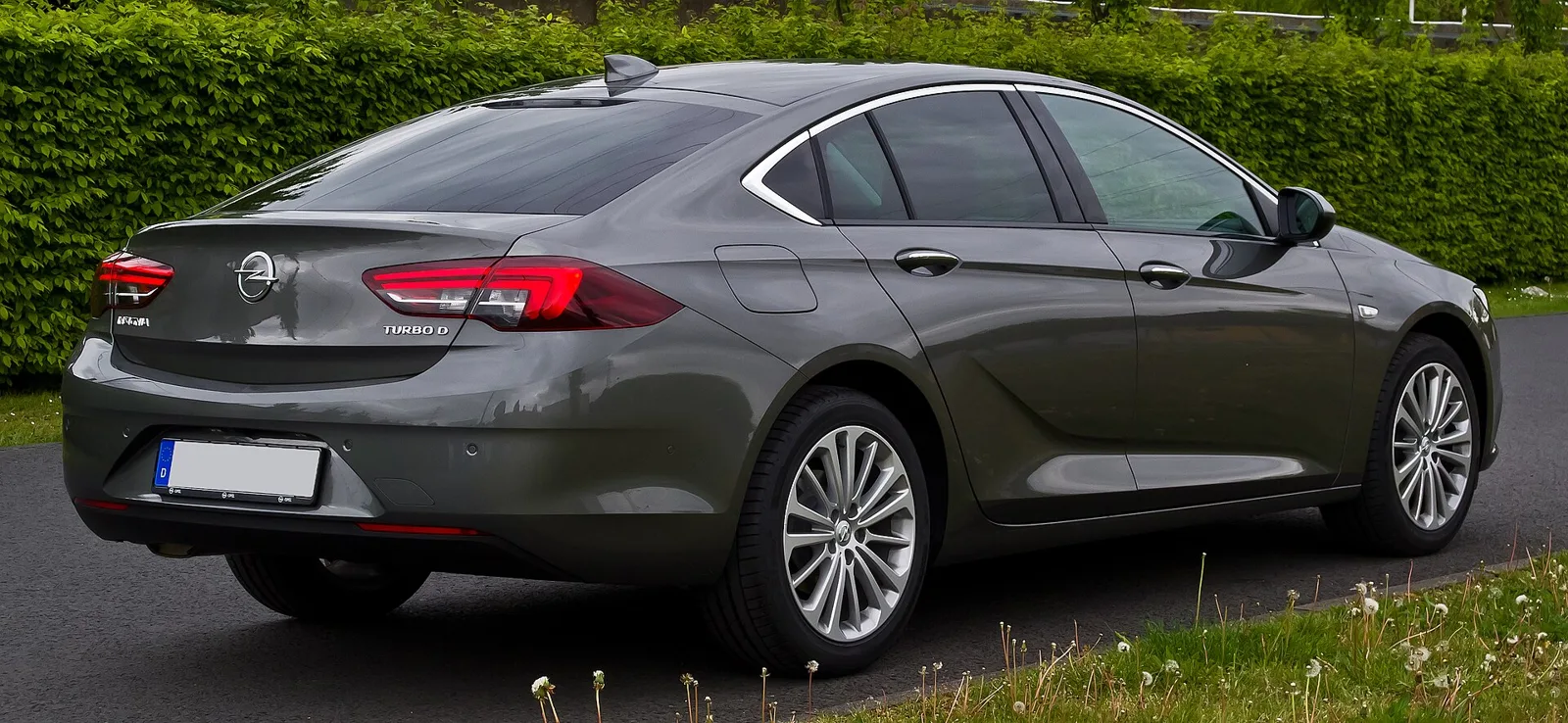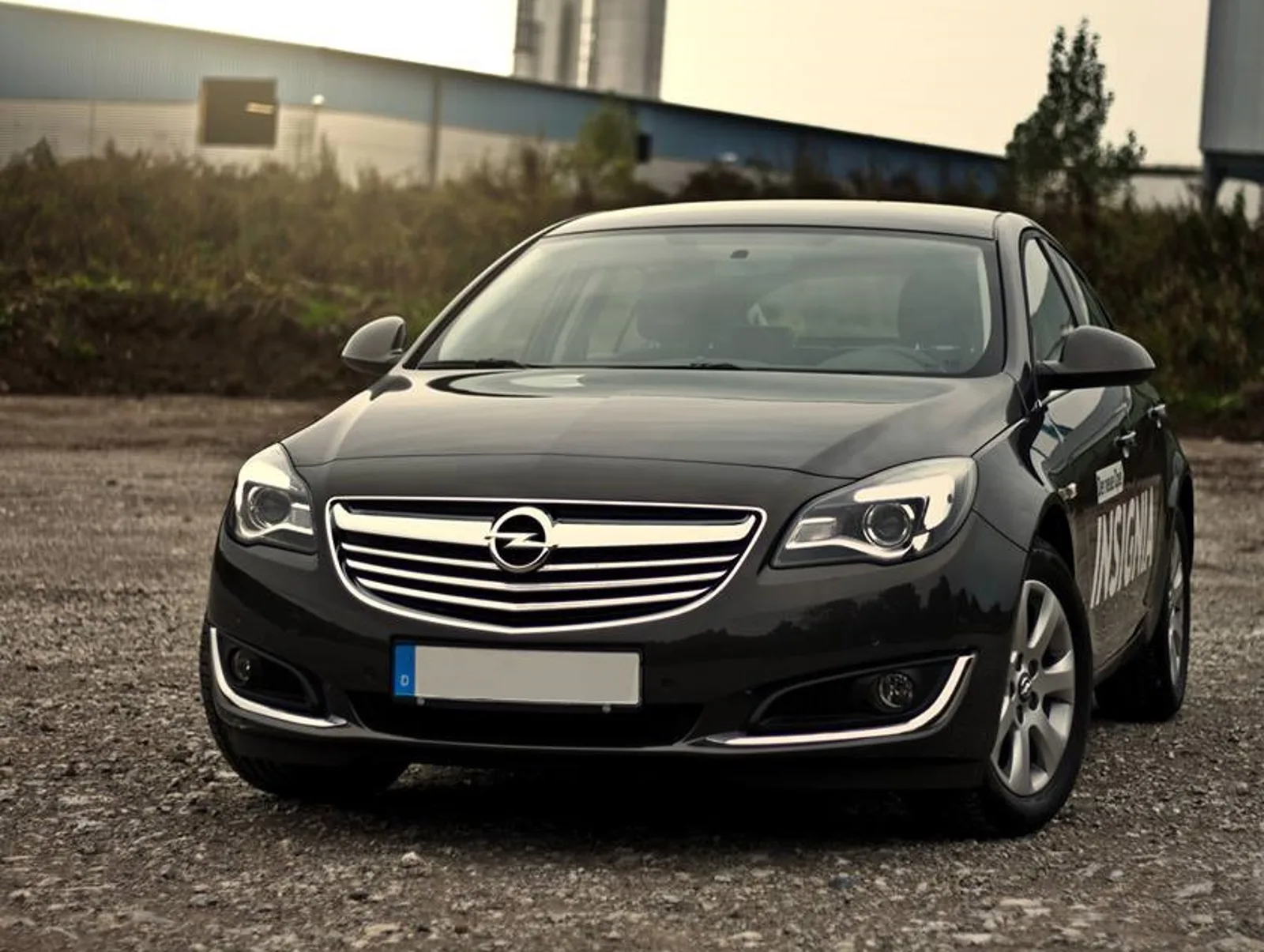
The mid-size Opel that replaced the Vectra, shared the GM Epsilon 2 platform and won Car of the Year 2009.
Opel's Insignia A, on sale from autumn 2008, succeeded the Vectra as the brand's mid-size car. Buyers could choose a saloon, hatchback or Sports Tourer estate, and the 2013 update brought a refreshed interior and new engines. Orders closed in January 2017, and Opel built 944,670 examples of the first generation in total.
The Opel Insignia A was a mid-size car that Opel sold from autumn 2008 to replace the Vectra. It came as a four-door notchback, a five-door hatchback and, from March 2009, a Sports Tourer estate. Orders were taken until 18 January 2017, and the final car came off the line in April 2017.
Where did the Insignia come from?
The Insignia succeeded the Vectra, which Opel stopped building in summer 2008, and it ended the Signum, a Vectra-derived model, in the same season. The new car was first shown at the British International Motor Show in July 2008, and sales began in November of that year.
In the United Kingdom the car was sold as a Vauxhall. The Buick Regal, which arrived in autumn 2009, was identical in construction to the Insignia. Its Epsilon 2 platform was also used by the Chevrolet Malibu and Saab 9-5 II, while a longer-wheelbase version of the platform carried the larger second-generation Buick LaCrosse, South Korea's Alpheon, the Chevrolet Impala and the Cadillac XTS.
Opel's marketing chief, Alain Visser, said the design drew heavily on the GTC study. The estate's C-pillar carries the so-called Hofmeister kink, a styling cue that sets the car apart within the Opel range.
The saloons looked almost identical. The difference lay in the tailgate hinge: on the hatchback it sits at the roof, while on the notchback it sits below the rear window. The hatchback also had a rear window wiper, although it was not standard.
A mid-size Opel that replaced the Vectra and shared its platform with several GM cars.
How did the 2013 update change the Insignia?
The June 2013 update reworked the headlamps, bumpers and rear lamps, and it changed the engine line-up and the interior. Opel replaced the control system that specialist critics had often attacked. Sales of the updated car opened in late September 2013, following its showing at the IAA.
LED strips were added to the headlamps, and LED rear and brake lights became standard. A wide chrome bar across the back, styled like the one on the Cascada convertible, ran into the tail lamps.
The control system gained a sharper, bigger screen, and it had far fewer buttons to press. A new climate control unit and steering wheel arrived too. An optional semi-digital instrument cluster could show chosen information on its central display, a first for the mid-size class at that time.
Late in 2013 Opel added the Country Tourer, a raised estate that completed the estate range. It sat higher, wore off-road cladding around the body, carried underrun protection at each end and had wider wheel arches, plus an aluminium shield under the engine bay.
What engines did the Insignia offer?
At the sales launch Opel offered seven engines, four petrol and three diesel, and all of them met Euro 5 as standard equipment. Most cars were front-wheel drive, but the 2.8-litre turbo petrols and the 2.0-litre turbo sold from 2011 came with all-wheel drive as standard.
| Engine | Output | Other figures |
|---|---|---|
| 1.6-litre turbo petrol (2013) | 125 kW (170 PS) | Direct injection |
| 2.0 SIDI turbo petrol (2013) | 184 kW (250 PS) | Direct injection |
| 2.8-litre V6 turbo petrol (OPC) | 239 kW (325 PS; 320 hp) | 435 Nm (321 lb ft) |
| 2.0 CDTI ecoFLEX (2009) | 118 kW (160 PS) | Under 140 g/km CO2; about 5.0 l per 100 km |
| 2.0 CDTI biturbo diesel (spring 2012) | 143 kW (195 PS) | 400 Nm (295 lb ft); 4.9 l per 100 km |
| 2.0 whisper diesel (from spring 2015) | 125 kW (170 PS) | 400 Nm (295 lb ft); Euro 6 |
The OPC version had a 2.8-litre V6 turbo that produced 239 kW (325 PS; 320 hp), and Opel showed it in Barcelona in May 2009, timed to the tenth anniversary of its Opel Performance Center. The front axle was a newly developed HiPerStrut (High Performance Strut) design.
Opel had planned a 2.9-litre V6 CDTI diesel, rated at 191 kW (260 PS) and 550 Nm (406 lb ft). Opel's managers postponed its start indefinitely in March 2009, when they presented the 2.0-litre biturbo diesel. That biturbo did not arrive as scheduled in summer 2009, reaching showrooms only from December 2011, and the 2-litre engine was developed with Fiat.
From April 2011 Opel sold the Unlimited, which had no top speed limit. Built as a notchback with a manual gearbox, it could top 270 km/h (168 mph).
The ecoFLEX version of the 2.0-litre diesel arrived in 2009 with altered aerodynamics and engine control, which brought CO2 emissions below 140 g/km. Spring 2012 brought a 2.0-litre biturbo diesel producing 143 kW (195 PS) and 400 Nm (295 lb ft). It was offered in every model variant, and buyers could also specify all-wheel drive and an automatic gearbox with it.
The whisper diesel, unveiled at the Paris show in October 2014, built on the new 1.6-litre diesels from the Astra J, which were meant to have much lower noise and vibration, more power and lower consumption. It had 2.0 litres and 125 kW (170 PS), with 400 Nm (295 lb ft) of torque, and it met Euro 6. It took over from the 120 kW (163 PS) diesel in spring 2015.
What equipment set the Insignia apart?
The Insignia brought the AFL+ headlamp system, the first of its kind in the Opel range, and an optional front camera called Opel Eye. It was also the first Opel with side airbags for the rear seats, and ventilated front seats were available.
AFL+ replaced the Vectra's AFL, which used bi-xenon lamps with dynamic cornering light, a static turn light and motorway light. The new system added separate settings for specific driving conditions, such as a bad-weather setting that avoided self-dazzling, a residential-street setting for low speeds and an automatic high beam with an assistant. The units also carried LED daytime running lights.
The optional front camera was developed by Opel together with Hella. It combined a lane-keeping assistant with traffic sign recognition. The lane-keeping function warns when the car leaves its lane unintentionally, while the sign recognition shows speed limits and prohibition signs on the display.
The adaptive all-wheel drive used a Haldex clutch. It was active automatically from the moment the car started, and whenever the rear axle needed no traction, it sent 90% of the torque to the front. The Flex Ride Premium chassis offered Normal, Tour and Sport settings, and the instrument lighting turned from white to red in Sport.
How did the Insignia sell in Germany?
Germany registered 36,347 new Insignia in 2009, the first full sales year, which gave the model a 7.6% share of the mid-size class. Registrations then slid to about 28,200 in 2010 and around 26,700 in 2011, before falling to 16,979 in 2013.
The Insignia was meant to revive Opel's sales. Its predecessor, the Vectra C, had sold poorly, at times holding a 3.6% share and dropping to sixth place in its class. Speculation grew that the Vectra might be dropped without a successor, so the Insignia was seen as Opel's great hope for a recovery.
The 2009, 2010 and 2011 figures were each about 8,000 below those of the first two years of the Vectra C. Its 2010 share in the class was about 7%, below the brand's overall share of just under 8%. It did, however, outsell the Ford Mondeo and Skoda Superb between 2009 and 2015.
The pattern changed in 2016, when the Skoda Superb outsold the Insignia in Germany for the first time. Registrations were 24,145 for the Superb, 19,658 for the Insignia and 17,861 for the Mondeo.
The 500,000th car was completed on 26 April 2012. Up to that point, 40% of the cars built were Sports Tourers, another 40% liftbacks and about 20% notchback saloons. In Germany most registrations were diesels, and many went to commercial keepers.
Which awards did the Insignia win?
On 17 February 2009 the Insignia took Car of the Year 2009, an award decided by a jury of motoring specialists. It also placed first in the saloon class at the ADAC's Gelber Engel 2009 awards and earned a Red Dot Design Award for its design.
The public chose the Gelber Engel and Auto der Vernunft winners. The Auto der Vernunft 2009, or Car of Reason 2009, went to the Insignia, and it also received the Internet Auto Award 2009 from AutoScout24, an online public award for cars in Europe.
The Insignia received the Auto Bild Design Award 2009 in the saloon and estate category. The OPC Sports Tourer also won an estate class prize from Auto Bild sportscars for a second straight year.
Prices at launch and after the 2013 update
List prices at market launch in November 2008 ranged from 22,700 euros for the 1.6 to 41,575 euros for the 2.8 V6 Turbo Automatic 4x4 Cosmo, in basic equipment. A fully equipped Sports Tourer cost 55,075 euros.
Starting prices after the update stood at 24,325 euros, a figure dated 10 June 2013.
What replaced the Insignia A?
The Insignia B succeeded the first-generation car and was introduced on 26 June 2017. The takeover of Opel by PSA/Stellantis came the same year, so the new car arrived as the brand changed hands.
Opel built 944,670 first-generation Insignia as part of the GM group.