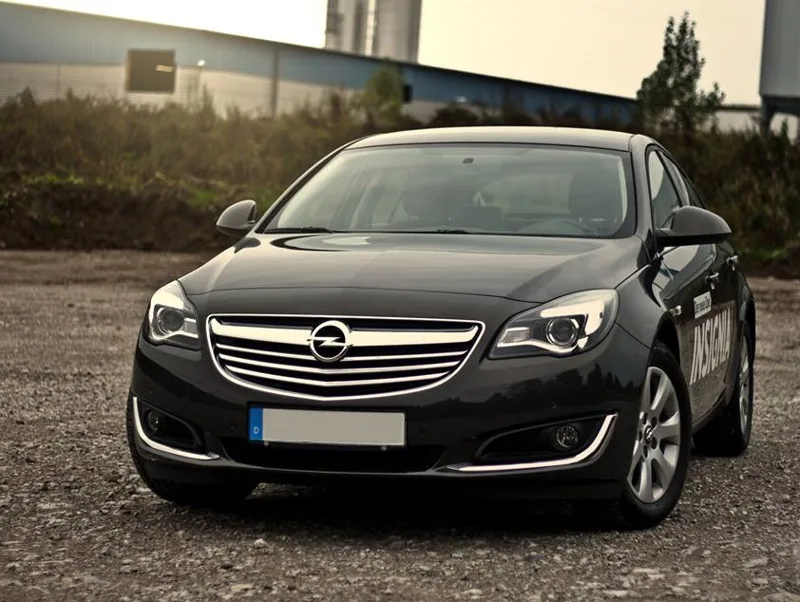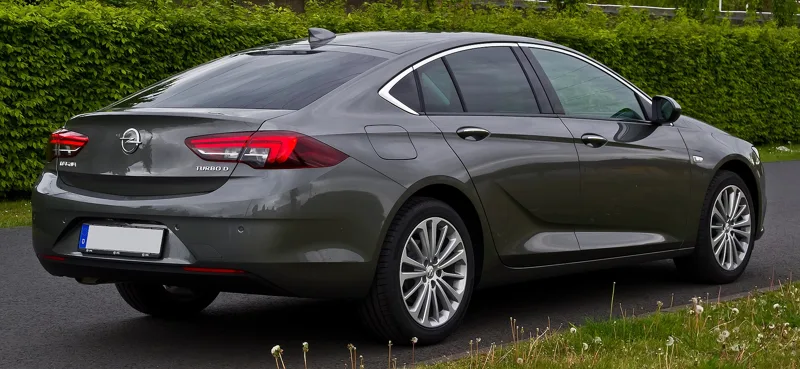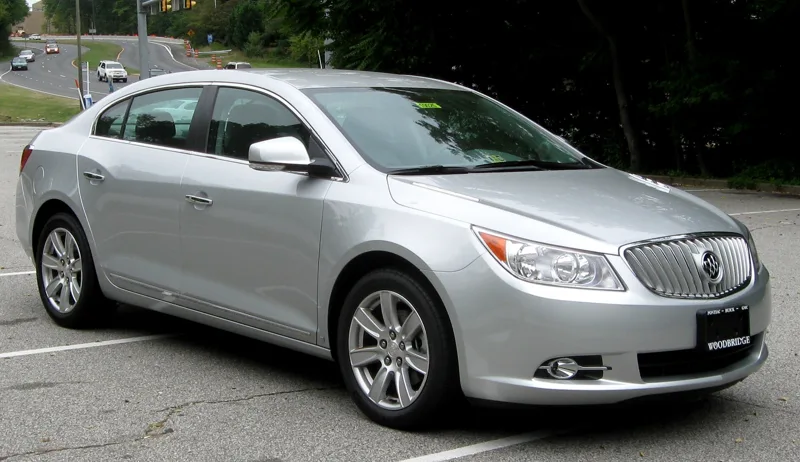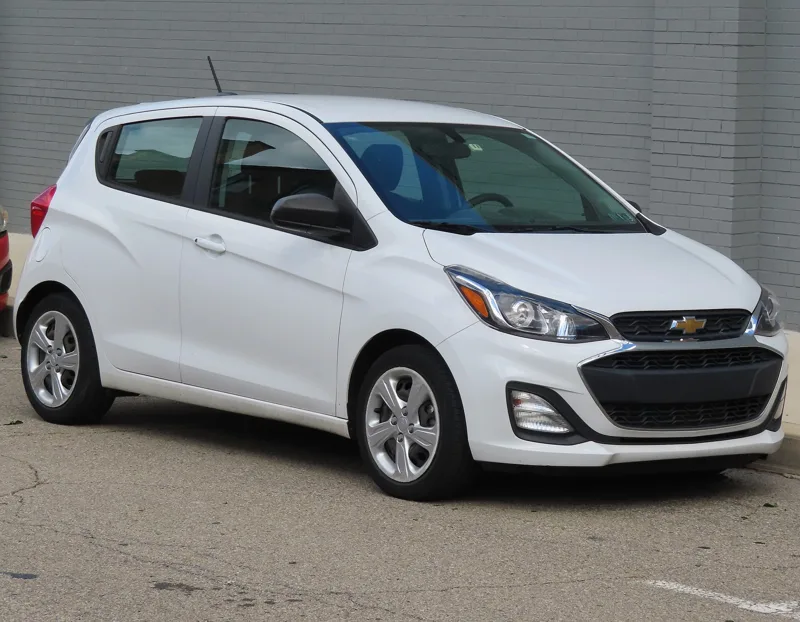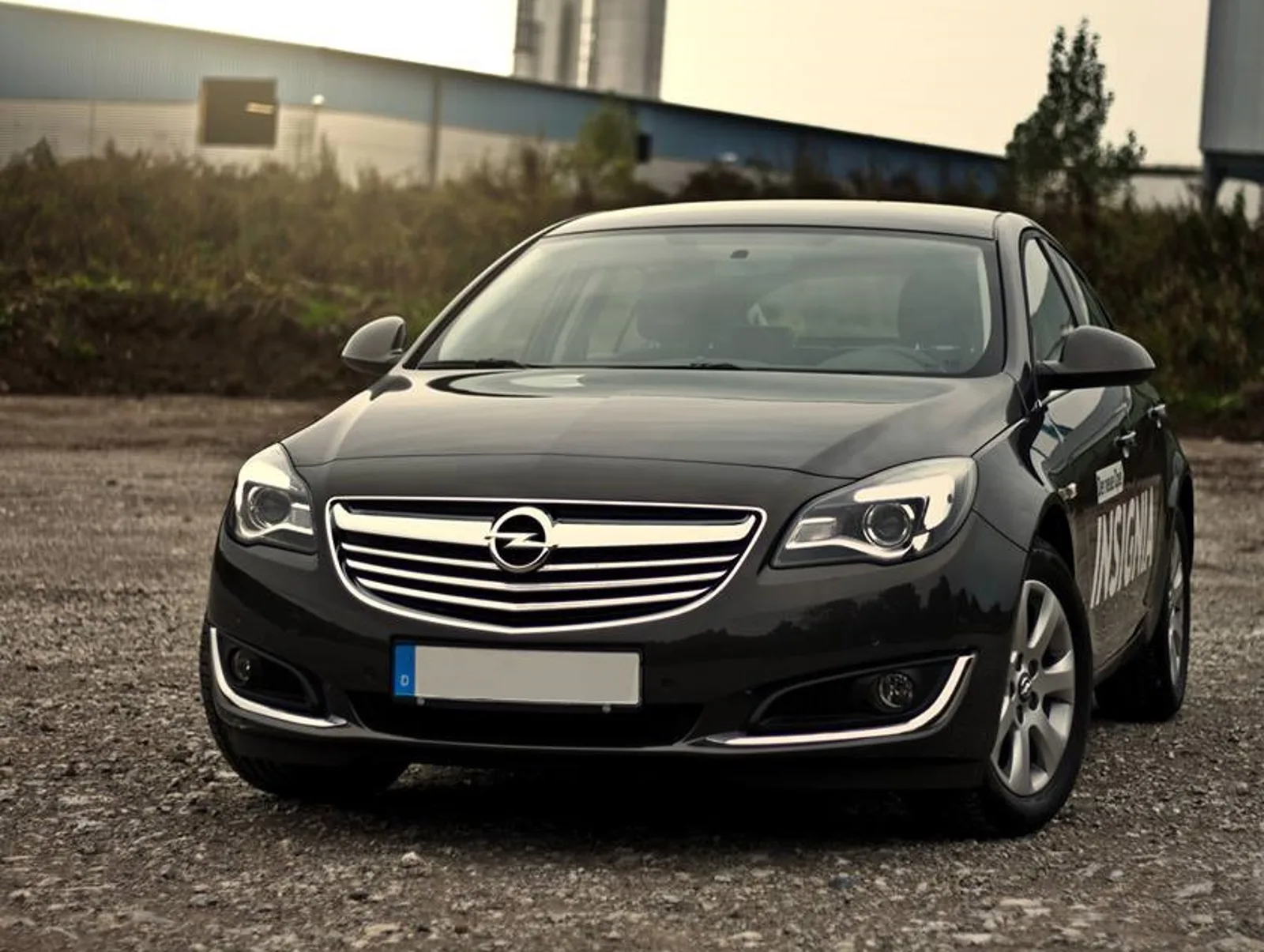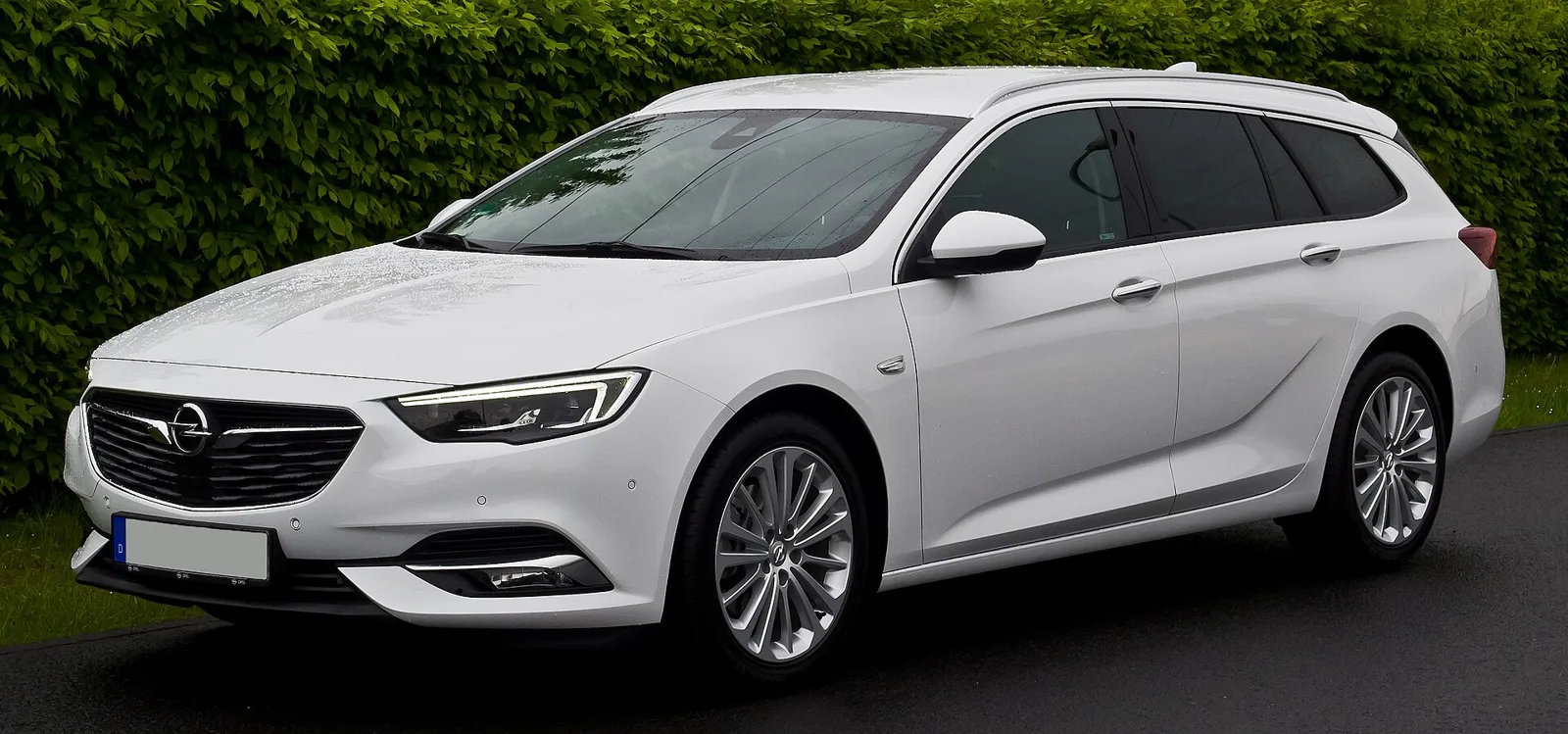
A flagship saloon sold under four badges, a mini MPV with sliding seats and doors that opened backwards, and a small crossover that became an electric hot hatch.
The Opel Insignia was a large family car built from 2008 to 2022, sold as the Vauxhall Insignia, Buick Regal and Holden Commodore. The Meriva was a mini MPV from 2003 to 2017, and the Mokka is a small crossover SUV launched in 2012 that now includes an electric Mokka-e and a GSE.
The last Holden Commodore was a re-engineered Opel Insignia. After the final locally built VF Commodore left the line in Australia on 20 October 2017, the name moved to a re-engineered Opel Insignia, and it disappeared along with the Holden brand at the end of 2020.
The Insignia is the best-travelled of three Opel names that fill very different spots in the range. The Meriva was a mini MPV on the Corsa platform, and the Mokka is a small crossover. Together they trace how Opel moved from saloons and people carriers towards SUVs.
Opel Insignia history, from Vectra successor to the end in 2022
In December 2006 Vauxhall said it would retire the Vectra name, and General Motors Europe's president, Carl-Peter Forster, called the replacement "a radical departure". The name Insignia was confirmed in late 2007, taken from a 2003 concept car. Opel wanted to win back the market share that the executive Omega once held. The new car replaced both the Vectra and the Signum under one nameplate as a large D-segment family car.
The Insignia debuted as the Vauxhall Insignia at the London motor show on 23 July 2008 and went on sale in Europe that October. It was the first production car on the Epsilon II platform, later shared with the 2010 Saab 9-5 and the Chevrolet Malibu. The estate was called Sports Tourer, a break with Opel's traditional "Caravan" label. Saloon and liftback versions were 4.83 m (190.2 in) long, the estate 4.91 m (193.3 in), all on a 2.73 m (107.5 in) wheelbase, and knee room was 30 mm (1.2 in) more than in the Vectra. For Vauxhall, it was the first model without the "V" grille that had marked its cars since 1994.
The car also pioneered safety technology for Opel. Its Opel Eye camera, mounted at the top of the windscreen, reads road markings and gives a lane departure warning above 60 km/h (37 mph), and it recognises traffic signs. The Insignia was the first production car with a dual-function frontal camera of that kind.
At launch it offered four petrol engines, from a 1.6 L with 115 PS (85 kW; 113 hp) to a 2.8 L V6 with 260 PS (191 kW; 256 hp), and three 2.0 L diesels. A 1.6 Turbo and ecoFLEX diesels arrived in 2009. The ecoFLEX versions of the 130 PS and 160 PS diesels emitted only 114 g/km of CO2. A twin-turbo 2.0 CDTI with 195 PS (143 kW; 192 hp), planned with Saab's help, was delayed until 2012 by the sale of Saab. In 2011 a 1.4 Turbo with 140 PS replaced the 1.8, and the four-wheel-drive 2.0 Turbo was upgraded to 250 PS (184 kW; 247 hp).
At the top sat the Insignia OPC, revealed in early 2009 with a 2.8 litre single-turbo V6 making 239 kW (325 PS; 321 hp) and 435 N-m (321 lb-ft), of which 400 N-m (295 lb-ft) was available from 2,000 rpm. It had Haldex all-wheel drive, a HiPerStrut front suspension to reduce torque steer and FlexRide adaptive dampers, and in April 2011 an OPC Unlimited arrived without a speed limiter. Erich Bitter modified 17 of them into the luxurious "Bitter Insignia".
The first Insignia was a hit with judges and buyers. It won the 2009 European Car of the Year title and scored five stars in Euro NCAP, among more than fifty awards. It was Britain's ninth best-selling car in 2009, outselling the Ford Mondeo but just behind the BMW 3 Series. By August 2011 over 400,000 had been sold, and the 500,000th was built on 26 April 2012. A major facelift in June 2013, premiered at Frankfurt that September, brought two eight-inch colour displays, a touchpad in the centre console, adaptive cruise control and blind spot alert, along with a crossover-styled Country Tourer wagon. The last first-generation car was built in April 2017.
The last Holden Commodore was a re-engineered Opel Insignia.
Opel Insignia generations and badges
| Market | Name used |
|---|---|
| Opel's own markets | Opel Insignia |
| United Kingdom | Vauxhall Insignia |
| North America and China | Buick Regal, in both generations |
| Australia and New Zealand | Holden Commodore (ZB), second generation only |
| South America | Opel Insignia, although the Chevrolet Vectra name was planned |
The second generation, the Z18, leaked in December 2016, debuted at the Geneva show in March 2017 and was officially revealed on 26 June 2017. It took cues from the 2013 Opel Monza Concept, and the traditional four-door notchback saloon was dropped. It sat on a moderately updated Epsilon II platform, developed wholly by General Motors, and continued to be produced under licence after Opel passed to PSA and later Stellantis. Opel dropped the OPC name for the older GSi badge, which also replaced VXR at Vauxhall.
The Holden Commodore (ZB) was revealed in December 2016 and released in 2018, as a liftback or a wagon with a four-cylinder front-drive engine or a V6 with all-wheel drive. In the Americas and Asia the car was the sixth-generation Buick Regal. A 2020 facelift left only a 2-liter petrol engine in Europe, with a new 1.5-liter three-cylinder and a 2.0-liter diesel.
Poor sales ended it. In February 2022 Opel confirmed that the Insignia would stop at the end of the year with no successor planned, as the company concentrated on the Astra, Corsa and SUVs such as the new Frontera. Vauxhall dropped it too, as the brand moved towards an electric line-up and the D-segment shrank across Europe. PSA later said the nameplate would return as a crossover in 2024, but that never happened, and the Citroen C5 X and DS 9 now cover that part of the market.
Opel Meriva, the mini MPV
The Meriva was a mini MPV built by Opel from May 2003 until June 2017 in two generations, on its Corsa platform. It was sold as the Vauxhall Meriva in Britain, and in Latin America the first generation was the Chevrolet Meriva.
The first car, the Meriva A, was based on the third-generation Corsa and went on sale in May 2003. Its big idea was "FlexSpace". The cabin had five seats in two rows, but the rear row could slide forward or back, or be flattened into the floor for a level load platform. It could carry two or three passengers, and in two-passenger mode the seats were separated from the doors and from each other much like the front seats. Engines at launch were three petrols and one diesel, and in 2005 a 1.4 Twinport with 90 PS (66 kW; 89 hp) replaced the 1.6 8v. A facelift in February 2006 revised the nose and tail and added an OPC and VXR model with a 180 PS (132 kW; 178 hp) 1.6 turbo.
The car was built in Brazil too. From 2003 to 2012 it was sold in South America as the Chevrolet Meriva, co-developed by Opel and General Motors do Brasil, built in Sao Jose dos Campos and replaced by the Chevrolet Spin. The standard European version earned four stars for adult occupants from Euro NCAP in 2003, while the most basic Latin American car, with one airbag, earned three stars from Latin NCAP in 2010.
The Meriva B appeared in November 2009 and had its market launch on 12 June 2010, after a debut at the Geneva show. It was bigger, at 4,288 mm (168.8 in) long against 4,052 mm (159.5 in) for the old car, and its floorpan came from the seven-seat Zafira Tourer. Front seats borrowed technology from the Insignia and Astra, with a seat adjustment range of 240 mm (9.4 in). The biggest talking point was rear-hinged rear doors, marketed as "FlexDoors", with a panoramic sunroof on top versions. It earned five stars in Euro NCAP in 2010. A facelift followed in January 2014 along with new 1.6 CDTI engines, and production ended in June 2017. The Crossland X replaced it, a move from MPV to SUV design.
Opel Mokka, the small SUV
The Mokka is a subcompact crossover that Opel has built since 2012, with sales starting at the end of that year. The first generation was developed by GM Korea together with the Buick Encore, and the Chevrolet Trax was derived from the same car. It was positioned below the Antara and Zafira Tourer, on GM's Gamma II platform, and its name comes from the small, round beans of Coffea Arabica.
Buyers could choose front or four-wheel drive. The all-wheel-drive system keeps all the drive at the front until it detects slip or hard cornering, then sends up to 50% of torque to the rear. Demand was strong: Opel had over 80,000 orders by February 2013 and 100,000 after two months, over 300,000 in Europe by October 2014 and 500,000 firm orders by January 2016. A facelift in April 2016 turned it into the Mokka X, with new headlights, LED tail lights and a new dashboard, and Bitter began a luxury version. Opel stopped building the first generation in 2019, although GM Korea continued to make the Buick Encore until 2022.
The first engines were a 115 PS 1.6-litre petrol, a 140 PS (103 kW; 138 bhp) 1.4-litre turbo and a 130 PS 1.7-litre diesel. A 152 PS (112 kW; 150 hp) direct-injection turbo came for 2016, and a 1.6-litre "whisper diesel" replaced the 1.7 in October 2014. In Russia the car was assembled by Avtotor in Kaliningrad and then Unison in Minsk.
The second generation, the Mokka B, was announced in August 2018 by the Opel GT X Experimental show car and unveiled on 24 June 2020. It uses the Common Modular Platform that came with the PSA takeover, and sales began on 23 December 2020. Petrol engines are a 1.2-litre three-cylinder turbo with 100 PS (74 kW; 99 bhp) or 130 PS (96 kW; 128 bhp), and a 1.5-litre diesel with 110 PS (81 kW; 108 bhp) was offered only with a manual gearbox until it was removed in August 2022.
The electric Mokka-e has a 50 kWh battery and a WLTP range of 322 km (200 mi). It won the Erin Baker Award at Auto Trader UK's New Car Awards in June 2022, where the publication gave it four stars out of five in its review. A facelift unveiled on 23 October 2024 brought a new logo, black exterior accents in place of chrome and recycled fabrics.
The sporty version, the Mokka GSE, was revealed on 23 July 2025. Its 207 kilowatt (281 PS; 278 hp) motor and 345 newton-metres (254 lb-ft) of torque take it from 0-100 km/h in 5.9 seconds to a top speed of 200 km/h (124 mph), which made it the fastest all-electric Opel at the time. The GSE has 20-inch alloy wheels, a ride height 10mm lower, a limited slip differential and a quicker steering rack with a ratio of 14.5 against 16.2 in the standard car. The turning circle is 10.41 metres (34.2 ft).
The Insignia has no successor while the Mokka adds a GSE
For the Insignia nothing is confirmed. Opel said in February 2022 that no successor was planned, and the promised crossover revival for 2024 never came to fruition. The Mokka carries on with the GSE as the first model of a new sub-brand, teased on 14 May 2025.