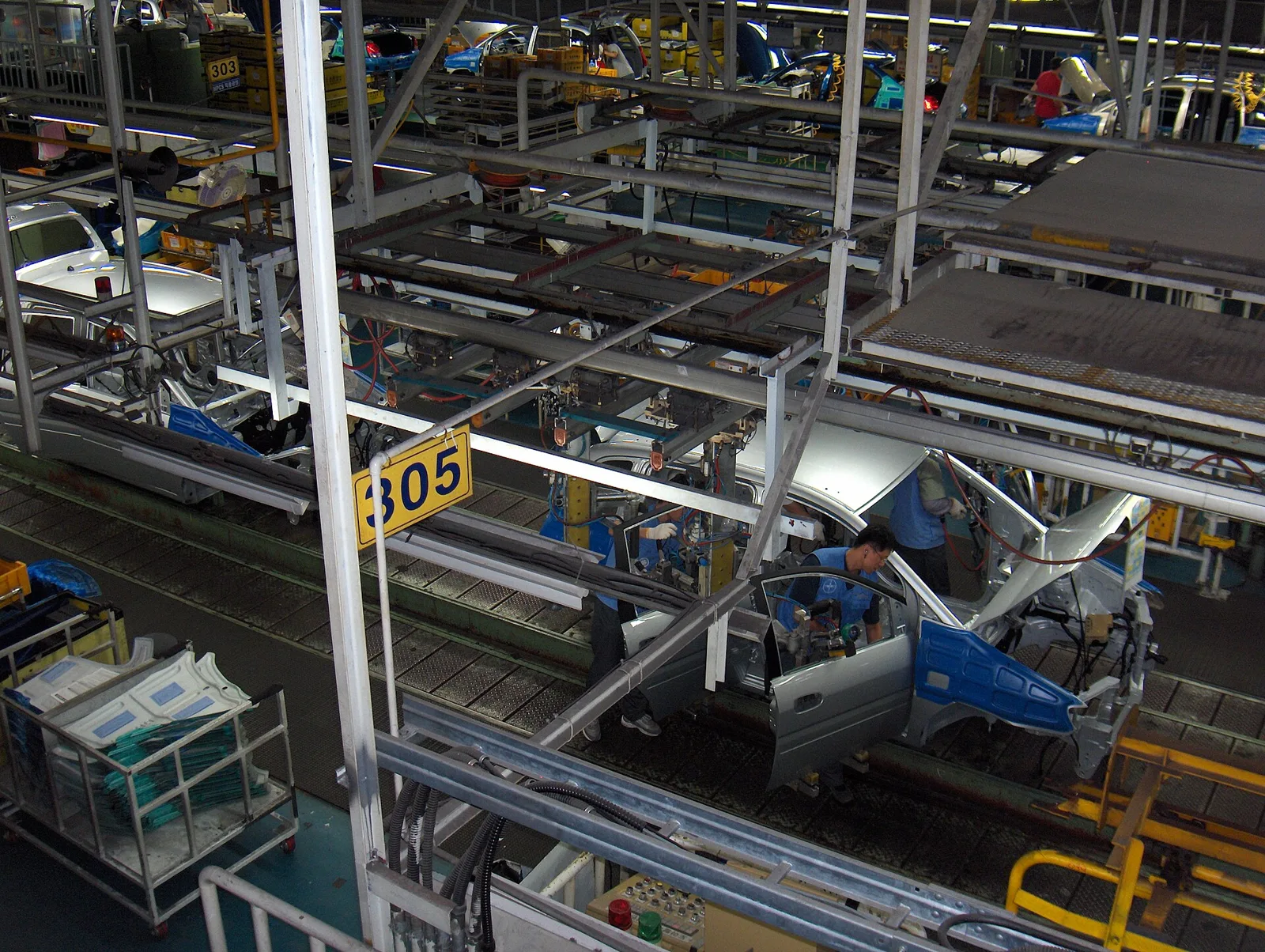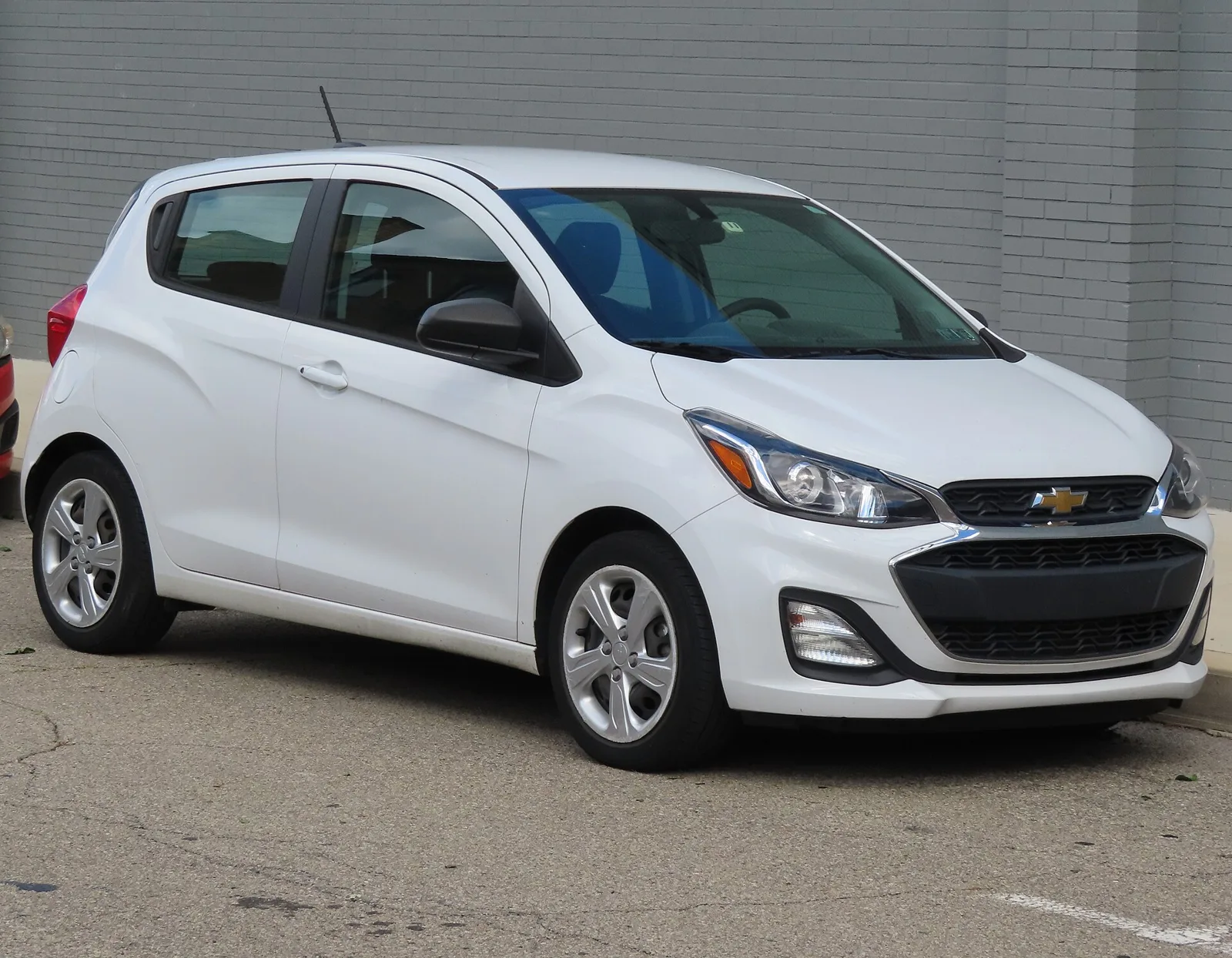
A Nissan in Holden clothes, a Daewoo city car and a Korean crossover: the Camira, Astra, Barina Spark and Trax show how Holden built its range from other people's cars.
Holden built its Camira, Astra, Barina Spark and Trax largely from other makers' cars. The Camira came from GM's J-body and Opel, early Astras were Nissan Pulsars, the Barina Spark was a Chevrolet Spark born as the Daewoo Matiz, and the Trax was a Korean-built Chevrolet.
The first Holden Astra was a Nissan. When it appeared in August 1984, it was a badge-engineered Pulsar with a Holden grille bolted on, and that single fact tells you most of what you need to know about Holden's habit of building its range from other people's cars. Over four decades the Australian brand drew on Opel, Nissan, Toyota, Isuzu, Daewoo and Chevrolet, and four of its nameplates, the Camira, the Astra, the Barina Spark and the Trax, show what each of those partnerships looked like at street level.
Holden Camira: the J-car that won an award and lost its reputation
The Camira was Holden's version of GM's J-body, the company's third global car platform, and it leaned heavily on the European Opel Ascona C. The name comes from an Aboriginal word for wind. It ran from 1982 to 1989, and 151,807 were built: 85,725 JBs, 36,953 JDs and 29,129 JEs.
The first series, the JB, arrived in August 1982 with a big trans-Tasman marketing campaign. It replaced the Sunbird and Torana, with an interim four-cylinder Commodore filling the two-year gap. A wagon followed in March 1983, and Vauxhall in Britain took its bodywork for the Cavalier estate. A five-door hatchback was proposed but never built, because Holden was losing money at the time.
Under the bonnet sat a single engine, a carburetted 1.6-litre four-cylinder with 64 kW (86 hp), and it was the cause of much of the argument. Wheels magazine named the Camira its Car of the Year for 1982, and the ride and handling beat most rivals. Yet much of the motoring media called the engine, marketed as Camtech, underpowered. Its output matched many competitors, but traditional Australian engines had a reserve of low-down torque, and the Camira's needed revving to give of its best.
Early cars also suffered from quality problems: smoking engines, poor paint, doors without enough drainage holes, and overheating when air conditioning was fitted. The damage was enough for the car to be pulled from New Zealand, where Holden sold a rebadged Isuzu Aska known as the JJ Camira instead. Its sedan used the Isuzu body, with 1.8-litre and 2.0-litre petrol engines, while the wagon kept coming from Australia.
The JD of November 1984 got a more aerodynamic nose with no conventional grille, and a multi-point injected 1.8-litre that delivered 83 kW (111 hp) at 6200 rpm. Then came the unleaded-petrol rule in mid-1986. Holden dropped the 1.6, reworked the 1.8 with single-point injection and a catalytic converter, and lost 20 kW (27 hp), leaving 63 kW (84 hp). The same basic engine went into the LD Astra and the Nissan Pulsar. The final JE of April 1987 used a multi-point injected 2.0-litre of 85 kW (114 hp) and 176 Nm (130 lb ft), and by then many early faults had been sorted. Production ended in August 1989. Holden replaced it with the Apollo, a rebadged Toyota Camry, while New Zealand got the European Opel Vectra.
The Camira's list of common faults is long enough that it explains the modest sales: rust under the rear screen, a cracking firewall on manual cars, a torque converter switch that failed, an engine computer whose circuit board cracked, broken engine mounts, warping cylinder heads and a water manifold that split. A 2008 Monash University study rated 1982-1989 Camiras significantly worse than average for occupant safety.
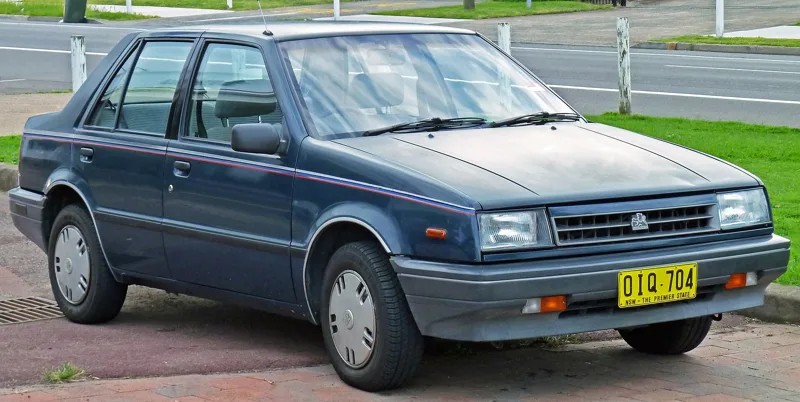
The first Holden Astra was a Nissan Pulsar with a Holden grille.
Holden Astra: from Nissan Pulsar to Vauxhall hatchback
The Astra name has had a long list of parents. The first two generations were made only for Australia, as derivatives of the locally produced Nissan Pulsar. The Pulsar was assembled in Clayton, Victoria, and the Astra's body panels were pressed at Holden's Elizabeth plant in South Australia. The LB series offered only a five-door hatchback, because Holden feared that three-door and four-door bodies would overlap with Nissan's own range. It used a Nissan-designed 1.5-litre engine of 52 kW (70 hp) and 115 Nm (85 lb ft), with a five-speed manual or three-speed automatic. Australian stylist Paul Beranger designed the distinctive grille with the Holden lion at its centre.
An LC update in April 1986 brought a 1.6-litre engine with 60 kW (80 hp), so that the car could run on unleaded petrol, plus a new SL grade below the SL/X and SL/E. The LD of July 1987 was a proper joint venture: Nissan supplied the body of the N13 Pulsar and Holden supplied the powertrains, either a 1.6-litre of 55 kW (74 hp) or a 1.8-litre of 79 kW (106 hp), both with fuel injection. Holden Special Vehicles built 65 HSV Astra SV1800 cars in September 1988, plus about 150 of a milder Aero. In July 1989 the Nissan link was cut and a new agreement with Toyota took its place, under the name United Australian Automobile Industries. Between 1989 and 1996, the Astra's job was done by the Nova, Holden's version of the Corolla.
The Astra name returned in 1995, first in New Zealand, on a rebadged Opel Astra F imported from Vauxhall's plant at Ellesmere Port in England. New Zealand had never had the Button plan, so the Nissan-based cars were never sold there, and GM New Zealand relied on Opel alongside Holden and Isuzu. Australia did not receive the Opel-based TR until September 1996, after the dissolution of the Button plan and the collapse of the Holden-Toyota alliance.
It became a success. The TS of September 1998 was Opel-engineered and built in Belgium, with a 1.8-litre engine of 90 kW (120 hp) or a 2.2-litre, and came close to being Australia's best-selling small car. The range included City, CD, CDX, SXi and SRi grades, a convertible from December 2001, and a 147 kW (197 hp) 2.0-litre turbo in 2003. The TS also gave Holden an Olympic Edition in July 2000, with Sydney 2000 badging. A Bertone-designed coupe was not offered with a Holden badge. The AH of November 2004 was a five-door hatchback only, and the old TS lingered as the Astra Classic until Holden replaced it in late 2005 with the Viva, a rebadged Daewoo Lacetti. Holden had earlier sold the Lacetti under the Daewoo name in 2003 and 2004, then withdrew that brand because of poor sales and quality worries.
Holden then discontinued its Opel-sourced range and put the GM Daewoo Cruze in the Astra's place. But the name came back. On 1 May 2014 Holden announced it would import the Opel Astra J GTC and OPC with Holden badges, and the following generation officially replaced the Cruze in 2017. A new Holden Astra range arrived in late 2016, made up of rebadged European Vauxhall and Opel hatchbacks under the BK code. In 2017 it was followed by rebadged Chevrolet Cruze sedans, the BL, and rebadged Vauxhall Astra wagons.
Holden Barina Spark: a Daewoo city car in disguise
The Barina Spark began as the Daewoo Matiz, introduced in 1998 by the South Korean maker. The shape came from the Italdesign Lucciola concept of 1993, itself developed from a 1992 Cinquecento concept by Fabrizio Giugiaro that Fiat had rejected. Underneath, it borrowed from the Daewoo Tico, a licence-built Suzuki Alto, which explains the narrow body: it was designed around Japan's kei-car tax category. Daewoo's Worthing Technical Centre in England did the engineering. For the next four years it was the Daewoo that sold best in both Europe and India.
The first Matiz had a 0.8-litre three-cylinder engine derived from the Suzuki F8B. It made 51 hp (38 kW) and 68.5 Nm (51 lb ft), used 6.4 L/100 km (44 mpg-imp) and took 17 seconds to reach 100 km/h from rest, with a top speed of 144 km/h (89 mph). Tickford, a company in Milton Keynes, worked on the engine, and UK brochures said so. The M150 facelift of 2000 was designed at Worthing, and General Motors bought Daewoo in 2002, which led to a 1.0-litre S-Tec engine. In China, the same car was the Chevrolet Lechi, which stayed in production until 2012, when an updated version took the Baojun Lechi name. GM also argued that the Chery QQ was a copy and pointed out that the doors of the two cars were interchangeable.
The second generation, the M200 of 2005, was previewed by the Chevrolet M3X concept at the 2004 Paris Motor Show. Italdesign Giugiaro again revised the upper body, and the interior gained a centre-mounted instrument cluster. In 2008 the 800 cc engine was revised to emit less than 120 g/km, which qualified it for the UK's 35 pound road tax band and exempted it from the London congestion charge. Production reached 2.3 million worldwide in the first ten years.
The third generation, the M300 of 2009, is where Holden comes in. It was based on the 2007 Chevrolet Beat concept, which GM showed in New York alongside two other concepts, the Trax and the Groove. A poll on a Chevrolet website gave the Beat nearly 50 percent of the vote, and that decided which one reached production. The production car was unveiled at the 2009 Geneva Motor Show, reached Europe in early 2010, and moved from the old Suzuki platform to GM's Global Small Vehicles platform. In India it kept the name Beat. In Australia and New Zealand it was the Holden Barina Spark, and a facelift unveiled at the 2012 Paris Motor Show reached Holden with its existing front bumper and a redesigned grille.
From 2015, the fourth generation was simply the Holden Spark. It also formed the basis for the Opel Karl in Europe, the Vauxhall Viva in the United Kingdom and the VinFast Fadil in Vietnam, the last built under licence. The Spark ended at GM Korea's Changwon plant in 2022, and that plant now builds the Trax. Elsewhere the Spark EV, released in California and Oregon in June 2013, was the first all-electric GM passenger car since the EV1 ended in 1999. In America the 2013 Spark was the fastest-selling car in July 2012, taking just six days to sell after reaching dealers, and Roush built a Domino's version that could carry 80 pizzas.
Holden Trax: a Korean-built crossover with a Holden badge
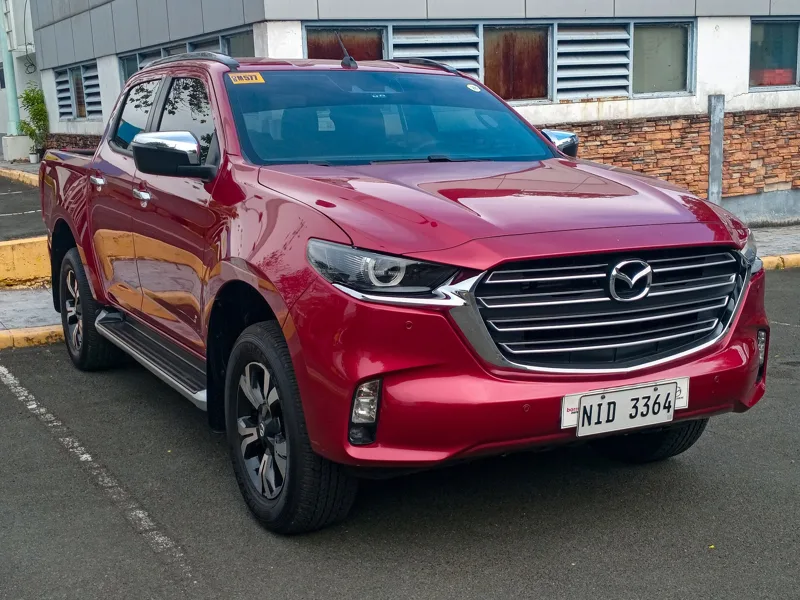
The Trax is a subcompact crossover that Chevrolet has sold since 2013, built mainly in South Korea by GM Korea. The first generation, the U200, had its roots in a 2012 Paris concept and a final version shown at the 2013 North American International Auto Show. Its development had begun in 2008. It uses the Gamma II platform, which it shares with the Chevrolet Aveo and Sonic and with the Opel Mokka and Buick Encore, and in Australia and New Zealand it carried a Holden badge from 2013 until Holden was discontinued in 2020.
Different markets got different engines. Latin America had only a 1.8-litre petrol. Canada and the United States got only the 1.4-litre turbo, which in the US made 138 bhp (103 kW; 140 PS) at 4,900 rpm and 148 lb ft (201 Nm), with a six-speed automatic and LS, LT and LTZ trims. Mexico and Australia, from 2015, had both. Europe could choose a 1.4-litre turbo, a 1.6-litre petrol or a 1.7L diesel. Elsewhere the car was a Chevrolet Tracker in Russia and South America, a name once used on a Suzuki Sidekick. South Korea added a 1.6-litre diesel in 2015, and the Trax was that country's most exported car between 2016 and 2018.
The 2017 refresh, shown in Chicago on 12 February 2016, took design cues from the Malibu and Volt. In 2019 a cheaper Tracker on the GEM platform replaced the Trax in China and South America, and GM ended the first-generation Trax and the related Buick Encore in North America after the 2022 model year.
The second generation debuted in China in July 2022 as the Chevrolet Seeker. The North American car was unveiled in October 2022 and went on sale in the second quarter of 2023 as a 2024 model. It is larger and lower than its predecessor, and sits above the Trailblazer in size but below it in price, with an average transaction price that reports put about $5,000 lower. Chevrolet considered a new nameplate but kept Trax for its wider recognition. All North American cars have a 1.2-litre three-cylinder turbo petrol or flex-fuel engine of 137 horsepower (102 kW; 139 PS) and 162 lb ft (220 Nm), a six-speed automatic and front-wheel drive only. Boot space is 25.6 cubic feet (725 litres), or 54.1 cubic feet (1532 litres) with the rear seats folded. China gets a 1.5-litre turbo and a CVT.
Holden rebadged cars: what each one was underneath
| Holden model | Years | What it was underneath |
|---|---|---|
| Camira | 1982 to 1989 | GM J-body, based on the Opel Ascona C |
| Astra LB and LC | 1984 to 1987 | Nissan Pulsar N12 |
| Astra LD | 1987 to 1989 | Nissan Pulsar N13 with Holden engines |
| Nova | 1989 to 1996 | Toyota Corolla |
| Astra TR and TS | 1996 onward in Australia | Opel Astra F and G |
| Barina Spark | Third generation | Chevrolet Spark, from the Daewoo Matiz |
| Trax | 2013 to 2020 | Chevrolet Trax on the Gamma II platform |
What these Holden models mean for used buyers
Used buyers can take a few clear pointers from this history. A Camira from the 1980s should be checked for rust under the rear screen, a cracked firewall on manual cars and a failing engine computer. LB and LC Astras were rated significantly worse than average for occupant protection by the Monash study, and LD cars worse than average, while the TR was average and the TS better than average. The Trax has no Holden successor, since the brand was discontinued in 2020.
The 2026 Trax facelift and the end of the Spark
The second-generation Trax received a facelift, unveiled on 9 October 2026, with a new grille and front end, broader LED taillights, and fresh colour and wheel choices. Inside are an 11.3-inch central screen and an 11-inch instrument panel, both running on Google. The facelifted car adds a power tailgate and 20 new standard driver assistance features on an updated electronic architecture. The Spark, by contrast, ended production at Changwon in 2022, and the plant now builds the Trax.