Two nameplates, 1975 to 2018, and not one original design: Holden's small-car story told through Wheels awards, crash-test scores and a cartoon Road Runner.
Holden built the Gemini from 1975 to 1987 on Isuzu's version of the GM T-car platform, then sold the Barina from 1985 to 2018 as a badge-engineered Suzuki, Opel or Daewoo. Both won Wheels Car of the Year, and neither was an original Australian design.
The name Barina comes from an Aboriginal Australian word for summit. For a nameplate that lasted from 1985 to 2018, though, every one of its six generations was a badge-engineered General Motors product designed somewhere else. The Gemini that came before it followed the same recipe with an Isuzu at its core.
What was the Holden Gemini?
The Gemini was a compact car that Holden sold in Australia between 1975 and 1987. Its basis was Isuzu's Gemini from Japan, a member of the large family of cars built on General Motors' T-car platform. The original TX series arrived in February 1975, as an S or SL four-door sedan plus a two-door SL coupe.
Holden built the TX at its Acacia Ridge plant with a high percentage of Australian content. Every TX used the same 1.6-litre single-overhead-cam Isuzu engine, coded G161Z, which had a chain-driven camshaft, a cross-flow layout and an alloy head. A two-barrel Stromberg carburettor was fitted to Australian cars. The rear brakes were duo-servo units, similar to those on the six-cylinder Torana.
The car landed well. Wheels magazine voted the TX SL sedan its 1975 Car of the Year, and it became the best seller among four-cylinder cars in the country.
Every one of the six Barina generations was a badge-engineered General Motors vehicle.
How did the Gemini change from TX to TG?
TC and TD (1977 to 1979)
The TC, on sale from March 1977 to April 1978, was a minor facelift with a bolder vertical grille and a silver rear garnish panel in place of black. Holden added door side-impact beams, a Fashion Pack interior and a heated rear screen for SL coupes. In April 1977 a limited-edition Sandpiper arrived, with a black grille, gold pin stripes, chequered cloth, wood-grain dash sections and a radio/cassette player. TC production totalled 17,257.
The TD of April 1978 brought "radial tuned suspension" and a five-speed manual option. It also widened the range: a panel van and three-door wagon appeared, using bodywork pressings from the British Vauxhall Chevette and Bedford Chevanne. A luxury SL/E version arrived, replaced in early 1979 by the cheaper SL/X, and a limited-edition Gypsy package became optional on panel vans.
TE: the big seller (1979 to 1982)
Introduced in October 1979, the TE brought new front and rear styling that sat comfortably with the Isuzu Gemini and the Holden Commodore of its day. Over 70,000 were sold, making it the most popular Gemini of all. By then Opel's Kadett had moved to front-wheel drive, so it looked nothing like the original Kadett C.
The coupe vanished in February 1980. A Gypsy van with a tachometer and console gauges also arrived that month, and is now a highly collectible model. In early 1981 Holden added a 1.8-litre Isuzu diesel with a five-speed gearbox. It sold strongly in Indonesia, where it served mostly as a taxi, while in Australia it came only as an SL/X five-speed manual. The TE also went to New Zealand in 1981, replacing the British-sourced Vauxhall Chevette.
TF and TG (1982 to 1984)
The facelifted TF of March 1982 came as a sedan with four doors, a wagon with three and a van with two, with a new dashboard and a steering column moved to sit in line with the driver. Its styling is often compared with the VH Commodore, but it had actually been introduced on the Isuzu Gemini in 1981.
The TG followed in March 1983. SL and SL/X versions looked exactly like the TF SL/X, though the base TG kept the TF theme, which leaves many examples mistaken for TFs. Power came from the 66 PS (49 kW) 1.6-litre engine, or the optional 54 PS (40 kW) 1.8 diesel. The 1983 ZZ/Z, always silver and fitted with a body kit, alloy wheels and decals, looks like a performance car, and it is often believed to have the twin-cam engine of the Isuzu Gemini ZZ/R. In fact it was purely cosmetic, with standard running gear and a five-speed manual.
Acacia Ridge closed in October 1984 after all Gemini production stopped. Wagon and panel van output had ended earlier that year because Vauxhall quit making the roof and tailgate those bodies needed. General Motors' Brazilian operation was considered as a parts source, but the job was too complicated for the little time left. Sedan sales carried on into early 1985.
What was the RB Gemini?
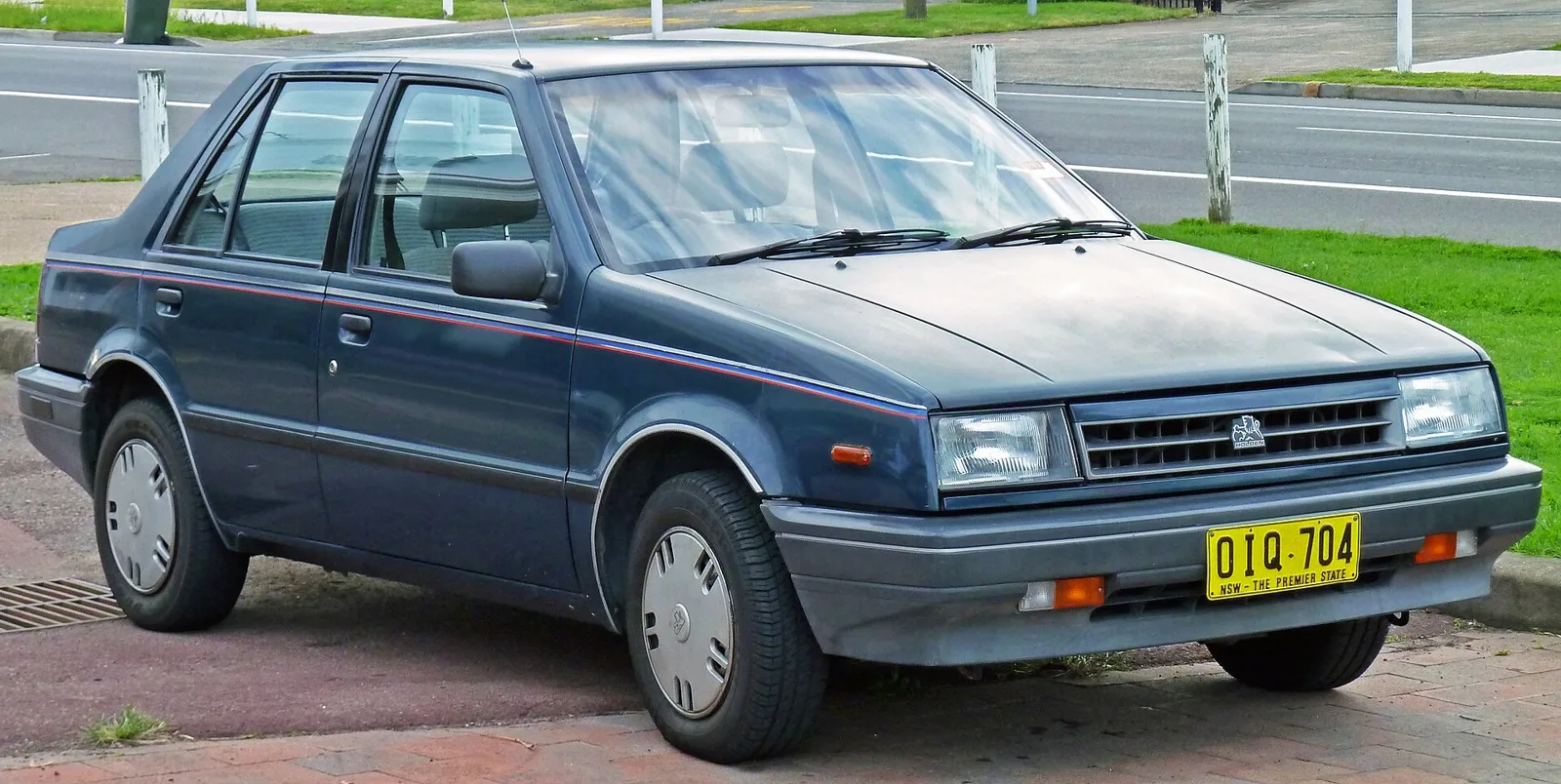
The second generation arrived in May 1985 on GM's R platform, which was front-wheel drive, and it sold worse than the rear-drive cars before it, with production totalling just 16,263. It came only as a four-door sedan in SL/X and SL/E trim, plus a fleet-only SL with a 1.6-litre engine. With Acacia Ridge shut, the RB was built at Holden's Elizabeth plant.
Poor sales ended it in 1987, although production had stopped sometime in 1986. The first-generation Astra, a rebadged Nissan Pulsar introduced in 1984, had run alongside it, and when the second-generation Astra arrived in 1987 it effectively took over the Gemini's job. The RB's best-known stunt was an 80-day, 200,000-kilometre (124,000 mi) endurance run for a 1985 commercial, tested by a group of racers that included Peter Brock.
Did the Gemini race?
From 1977 to 1982 Geminis ran in the Australian Touring Car Championship, the Bathurst 1000 and related endurance races. The factory Holden Dealer Team occasionally switched effort from its Torana and Commodore programmes to race a Gemini, notably in 1982, but mostly the cars were run by privately funded teams. They fared poorly in a 2000cc class until a 1600cc class was brought back in 1978, which increased their popularity. A few cars kept racing until 1986, even after Group C gave way to Group A in 1985.
The Gemini Racing Series began in Queensland in 1980 and continues today. It has run longer than any other one-make series in Australia, and only the British Mini series is older worldwide.
How did Holden turn Suzuki, Opel and Daewoo designs into the Barina?
The Barina is a subcompact that Holden sold in Oceania from 1985 to 2018. Across its six generations it was a badge-engineered General Motors vehicle: first the Suzuki Cultus, then the Opel Corsa, and later the Daewoo Kalos.
First generation (MB, ML; 1985 to 1988)
The MB launched on 12 February 1985 as a five-door hatchback, a badge-engineered Suzuki Cultus. In its first year a Roadrunner Pack offered decals of the Warner Bros. cartoon character, and a high-profile campaign built the slogan "Beep beep Barina", still lodged in the memory of many Australians. The ML facelift of September 1986 replaced the MB's leaf-sprung rear end with coils and revised the dashboard and lights.
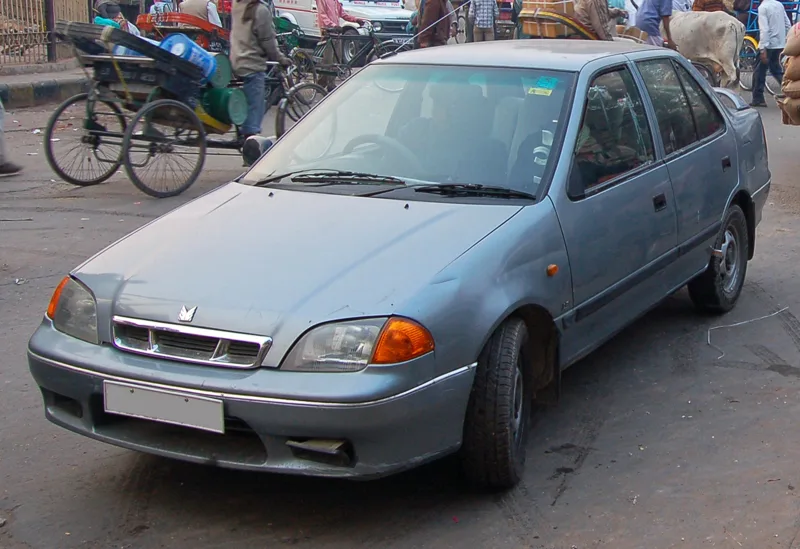
In New Zealand, GMNZ assembled the car from 1985 to 1989, and from 1986 to 1989 a Barina GTi was sold there, a rebadged Suzuki Swift GTi. In the United States the same car was a Chevrolet Sprint.
Second generation (MF, MH; 1989 to 1994)
The second-generation Cultus, co-developed with GM on the M platform, was sold under nearly a dozen nameplates, including the Suzuki Swift, the Pontiac Firefly in Canada and the Geo Metro in the United States. The five-door Barina arrived in January 1989 and a three-door GS followed in September 1990. The MH update of September 1991 brought a better interior, upgraded suspension and new bumpers.
In New Zealand it was sold chiefly on price, often as a second car, with lower equipment than the equivalent Suzuki. An ordering mix-up left New Zealand cars with red North American tail-lamp indicators rather than amber, which was legal there, so the red lenses stayed throughout the MH run.
Third generation (SB; 1994 to 2000)
The SB took its design from the Opel Corsa B and arrived from Spain, going on sale in April 1994 as a three- or five-door hatchback. Engines were 1.2 and 1.4-litre fours, with a 1.6-litre in the sporty GSi. An August 1997 update added multipoint fuel injection across the range plus suspension changes aimed at ride and handling.
Holden built two special versions. The 1997 Lambada was limited to 500 cars and gave the City power steering, a sunroof, body-coloured bumpers and 14-inch alloys. The Cabrio soft-top ran from November 1997 to late 2000, with only 581 sold. It was based on the City three-door and built in Spain, then converted to a cabriolet at Clayton, Victoria, by Holden Special Vehicles. In Europe Opel sold the same idea from 1995 as the Corsa Twister, with R&R Kupfer of Dordrecht doing the conversion, and a small number went to the United Kingdom in 1998 and 1999 as Vauxhall Corsas.
Fourth generation (XC; 2001 to 2005)
The XC of April 2001 used the Opel Corsa C platform and came in three- and five-door form with a 1.4-litre 16-valve engine. An SRi with a 1.8-litre unit and a three-door 1.4-litre SXi joined in September. It was awarded Wheels Car of the Year for 2001, and Equipe models followed in April 2002.
Slower sales prompted Holden to drop the SXi and CD names from mid-2004 and return to plain base-model names, despite a January 2004 facelift with a new nose, steering and suspension changes, and a much-revised 1.4-litre engine for the manual-only base cars.
Fifth generation (TK; 2005 to 2011)
Holden ended the Opel-sourced Barina in December 2005 and replaced it with a rebadged Daewoo Kalos hatchback, the TK. A four-door sedan, the first on the nameplate, followed in February 2006, and the car had a 1.6-litre twin-cam 16-valve engine. The decision was made to keep Holden in the hunt in Australia's quickly expanding small-car segment against South Korean rivals such as the Hyundai Getz. The Opel version had been sold at a large loss to build a presence in entry-level new cars. The TK started at A$12,990 for the three-door, later A$13,490.
It scored two out of five stars from ANCAP, lower than its European-built predecessor, and the sedan's results were among the worst on record. Holden's managing director, Denny Mooney, had to defend the car in public. The August 2008 facelift added side-impact airbags and a reinforced B-pillar, lifting the ANCAP rating to four stars. Known faults included a plastic thermostat housing that could split, ABS electrical problems, high early front-tyre wear from camber settings revised by 2008, and a recall over automatic transmissions that would not shift above third.
Sixth generation (TM; 2011 to 2018)
The TM debuted at the 2011 Australian International Motor Show in Melbourne, with the five-door on sale in November 2011 and the sedan in February 2012. It used a 1.6-litre petrol engine with five- or six-speed manuals or a six-speed automatic, and it was based on the second-generation Chevrolet Aveo. A limited run of 700 Barina X models came in 2015. The November 2016 facelift dropped the RS and the sedan, and on 14 September 2018 Holden announced the Barina would be dropped altogether.
How did the Barinas rate for safety?
| Generation | Years | Based on | Safety assessment |
|---|---|---|---|
| MB, ML | 1985 to 1988 | Suzuki Cultus | Significantly worse than average (2008) |
| MF, MH | 1989 to 1994 | Suzuki Cultus, second generation | Worse than average (2008) |
| SB | 1994 to 2000 | Opel Corsa B | Average (2008) |
| XC | 2001 to 2005 | Opel Corsa C | Better than average (2008); ANCAP four stars |
| TK | 2005 to 2011 | Daewoo Kalos | ANCAP two stars, four after the 2008 facelift |
The Used Car Safety Ratings, compiled by the Monash University Accident Research Centre, also rated the 1982 to 1984 Gemini as significantly worse than average for occupant protection.
What does the Gemini and Barina story say about Holden's small-car strategy?
Holden drew its small cars from Isuzu, Suzuki, Opel and Daewoo, and the dependence sometimes showed. The wagon and panel van died in 1984 because Vauxhall stopped making the roof and tailgate. The Opel-based Barina was sold at a large loss to build market presence, and the switch to the Daewoo Kalos was made to stay competitive with South Korean rivals.
Local content varied. The TX had a high percentage of Australian content, while the SB Barina was built in Spain and shipped in, and its Cabrio version was converted in Clayton, Victoria, by Holden Special Vehicles.
What came after?
The Gemini was replaced in effect by the Astra, a rebadged Nissan Pulsar, which took over fully in 1987. The Barina outlasted it by three decades, then was dropped from the line-up in an announcement on 14 September 2018.