From an Adelaide saddlery to 7.7 million cars, a Bathurst-winning Monaro and a Commodore built for Australian roads, then a closure in 2020.
Holden began as an Adelaide saddlery in 1856 and became General Motors' Australian arm in 1931. Local manufacturing ended in 2017 after nearly 7.7 million vehicles, and General Motors retired the Holden marque in 2020, citing a costly home market. Rare Monaros and HSV models are the cars collectors chase.
A company that began in 1856 as a saddlery in Adelaide ended its life as an importer of American pick-ups. That single fact holds the whole Holden story: a long climb from leather work to national symbol, and a fall that left Australia without a car brand of its own.
Holden history from saddlery to Australia's Own Car
James Alexander Holden left Walsall in Staffordshire for South Australia in 1852 and four years later opened a saddler's business at the junction of King William and Rundle streets. Motoring arrived with his grandson Edward, who joined the firm in 1905 with a keen interest in automobiles, and by 1908 the business was repairing car upholstery. From 1914 it fitted new bodies to older chassis.
The decisive step was Holden's Motor Body Builders, registered on 25 February 1919. By 1923 it was turning out 12,000 units a year, and from 1924 it was General Motors' only supplier of car bodies in Australia. The Great Depression nearly ended it: annual output dropped from 34,000 in 1930 to 1,651 the following year. In 1931 General Motors bought the company and merged it with its local arm, creating General Motors-Holden's Ltd. The takeover brought the American giant an Australian identity, which it worked hard to turn into popular appeal through public relations.
Postwar planning produced a contest between two proposals for an Australian-designed car. Ford's was the government's first choice but needed substantial financial help. General Motors' study won because it asked for far less intervention. Holden's managing director, Laurence Hartnett, wanted a local design, while the American parent preferred one of its own, and the car that emerged grew from a postwar Chevrolet proposal that had been turned down earlier.
It went on sale in 1948 and the waiting lists ran through 1949 and beyond. The name honoured Sir Edward Holden, the company's first chairman. Boomerang, Emu and Melba were among the alternatives that lost out. Officially the car was the 48-215, but showrooms simply called it the Holden.
A company that began as a saddlery in 1856 ended as an importer of American pick-ups.
How Holden came to dominate
The 1950s belonged to the company. In 1951 a coupe utility joined the sedan, and the "ute" quickly became the workhorse of rural Australia. The FJ of 1953 added a panel van, and it stuck in the national memory so firmly that Holden paid tribute to it with the Efijy concept, shown in Sydney in 2005.
The numbers explain why. A revised FC pushed market share above 50% in 1958. The Dandenong plant opened in 1956, and by 1959 Holden employed 19,000 people. Exports reached 17 countries in 1957, from Indonesia and Hong Kong to Fiji and South Africa.
Ford's Falcon arrived in 1960 and promptly exposed a weakness, since its front suspension was not durable enough for Australian conditions. Holden answered with facelifts and, in 1966, the HR, which carried front seat belts as standard across the range and made Holden the first Australian maker to do so. The Torana grew out of the Vauxhall Viva in 1967. A year later the link with Chevrolets and Pontiacs came to an end.
Why did Holden close?
Falling demand for large sedans pushed the company to chase overseas sales, and the cost of staying at home rose. In 2013 Holden disclosed that it had taken A$2.17 billion of federal government money over the previous 12 years, far more than anyone had estimated. The company blamed a strong Australian dollar, high manufacturing costs and a small home market.
Buyers told a different story. Many Australians pointed to General Motors' repeated rebadging of the line-up, which in their view eroded the sense that Holden was Australian and set the company's own products against each other. Two explanations, one outcome: on 11 December 2013 Holden announced that it would stop making vehicles and engines by the end of 2017.
- 29 November 2016: engine production at Fishermans Bend ended.
- 20 October 2017: the last Australian-built Commodore left the line and the Elizabeth plant closed, after nearly 7.7 million Holdens had been made.
- 10 December 2019: Holden said the Commodore name would be dropped in 2020.
- 17 February 2020: General Motors said it would retire the Holden marque by 2021.
- 18 August 2020: General Motors confirmed the closure of Holden Special Vehicles.
- 30 October 2020: the design studio at Fishermans Bend shut.
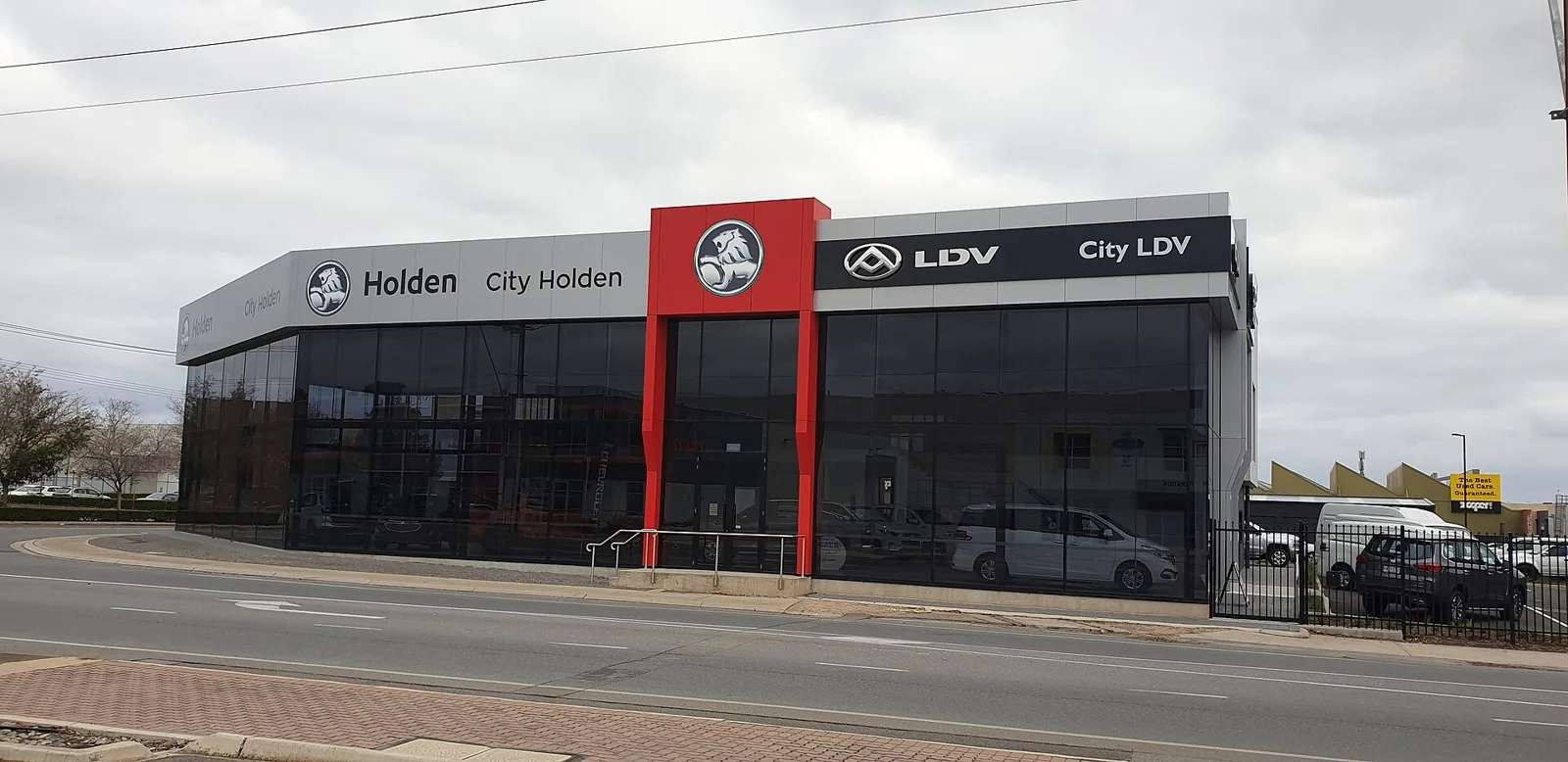
Holden, 164 years old, stopped trading at the end of 2020 after spending its last three years importing every car it sold. Its showrooms had long carried badge-engineered cars from Nissan, Suzuki, Toyota and Isuzu, and later from Opel, Vauxhall and Chevrolet, with models drawn from GM operations in Korea, Thailand and North America.
The Commodore's end came with a reason attached. Kristian Aquilina, Holden's interim chairman and managing director, described the decision as action to focus on the biggest and most buoyant segments. SUVs and utes already made up over 76% of the 2019 range, and the nameplate had lasted 41 years.
The Commodore, a German design rebuilt for Australian roads
The Commodore of October 1978 was a response to the 1973 oil crisis. Holden wanted something smaller and thriftier than the Kingswood it replaced, and it found the basis in Europe. The VB took the body of Opel's Rekord E, grafted on the nose of the Senator A, and borrowed the Commodore name that Opel had used since 1967.
Then came the shock. Driven hard over Australian roads, the Rekord shell effectively broke apart at the firewall. Holden had to re-engineer it so thoroughly that only 35 percent of the car was shared with its German relative. The MacPherson strut front end was modified, and rack and pinion steering replaced the recirculating ball type. Development costs ballooned to a reported A$110 million, close to what an all-new model would have cost. There was too little money left for a wagon, so the wagon of July 1979 used sheet metal shipped from Germany.
Early cars had trouble with trim, panel fit, water pumps and steering rack rattle, yet reviewers loved the steering, handling, braking and ride, and Wheels named it Car of the Year for 1978. Timing helped too. When oil prices rose by 140 percent after the 1979 energy crisis, Holden had already downsized.
The Commodore did not have an easy run. The VC of 1980 brought Blue engines and a 1.9-litre four-cylinder Starfire with 58 kW (78 hp), which drank about as much as the six it was meant to beat. A VH SS followed in September 1982, with a choice of 4.2-litre or 5.0-litre V8 power, and Peter Brock's Holden Dealer Team offered three upgraded versions. Even so, the Falcon became Australia's bestselling car in 1982 for the first time. The VK of 1984 added a six-window glasshouse to make the car look larger, and sales reached 135,000 in two years.
The line stretched far beyond the sedan. Over the years it spawned the Calais in 1984, the Utility in 1990, a new Ute in 2000, the reborn Monaro in 2001 and the Crewman and Adventra in 2003. The first three generations rode on the Opel V-body platform. The VE and VF, built from 2006 to 2017, were designed in-house on Holden's own Zeta platform. The final ZB of 2018 to 2020 was an Opel Insignia reworked by Holden's engineers.
Exports became a real business from 1997. The Commodore wore a Chevrolet badge in the Middle East and South Africa, and high-performance versions went to North America as Pontiacs and later Chevrolets.
Holden Monaro, the coupe that won Bathurst
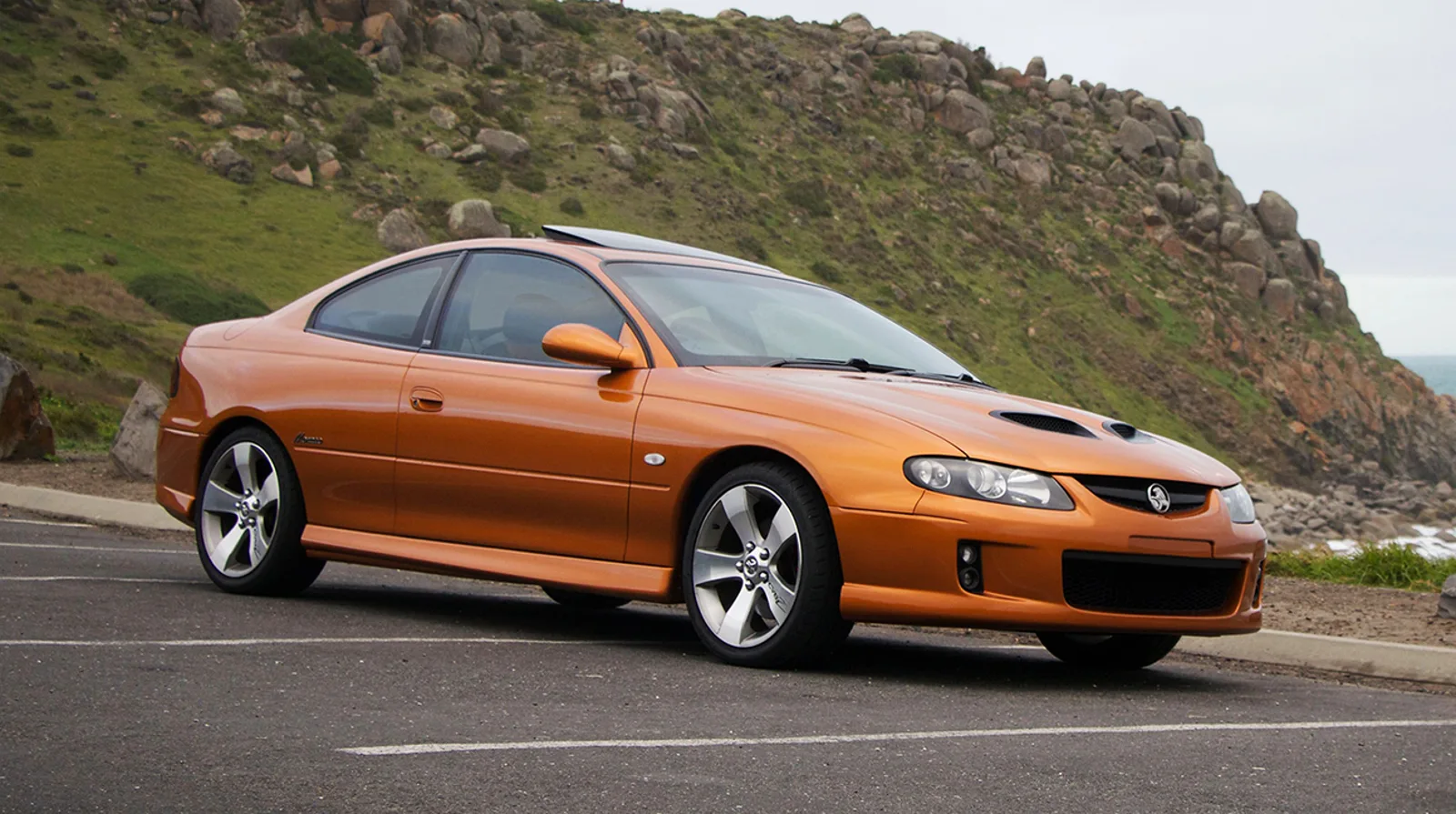
The Holden Monaro was introduced in July 1968 as a pillarless two-door coupe. It borrowed the Camaro's "coke bottle" shaping and took its name from the Monaro region of New South Wales, though locals say it differently. The range started with a base car, the GTS, and the top GTS 327 with a 327 cubic inch (5,360 cc) Chevrolet V8 rated at 250 hp (186 kW), mated only to a four-speed manual.
One story from its development sums up the era. Holden's engineers first said the engine bay was too small for the Chevrolet V8, and rushed to finish the company's first home-built V8. That project fell behind. When they measured the bay again, they found the original sums were wrong and the American engine fitted after all.
The first-generation Monaro won on the track at once. In 1968 Bruce McPhee and Barry Mulholland took a GTS 327 to Holden's first victory in the Hardie-Ferodo 500. McPhee drove all but one of the 130 laps and also set pole position and fastest lap. The HK range was named Wheels Car of the Year for 1968, and 8,945 were built.
The HT of June 1969 replaced the 327 with a 350 cubic inch (5.7 litre) V8, giving the GTS 350 300 hp (224 kW). It was a direct answer to Ford's XW Falcon GTHO Phase I. Harry Firth formed the Holden Dealer Team that year, and Colin Bond and Tony Roberts won the 1969 Hardie-Ferodo 500 in one of its Monaros. Peter Brock, then a Bathurst rookie, finished third in another. Norm Beechey went further: his GTS 350, bored out from 5.7 to 6.0 litres and producing 550 bhp (410 kW), gave Holden its first Australian Touring Car Championship, in 1970. A total of 14,437 HT Monaros were built.
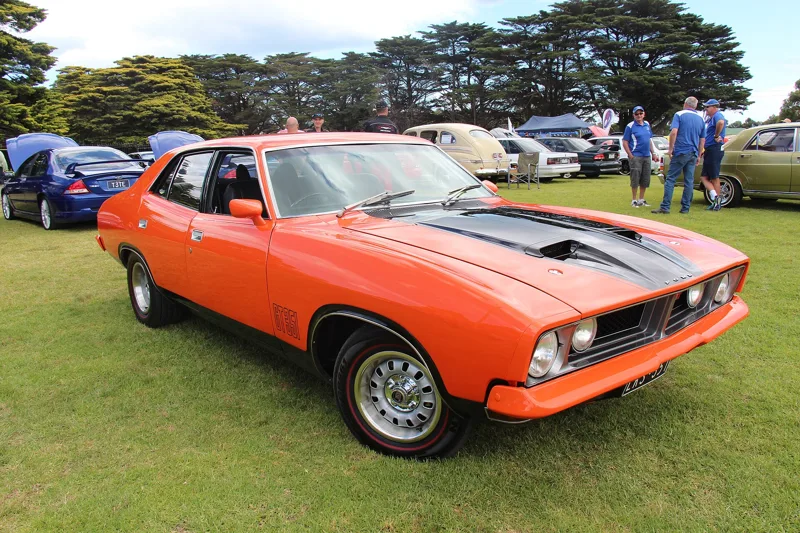
Then racing rules moved on. The Supercar scare ended the Improved Production class at the end of 1972, and the Monaro could not enter the Group C class that replaced it. The HQ of July 1971 had already given the model a new body, one now seen as among the best-looking from any Australian manufacturer. Its GTS350 lost some of its cachet as the same 5.7-litre engine appeared in Holden's big luxury sedan, and the Torana GTR XU-1 took over as Holden's touring car. A 1972 base-model two-door appeared in Mad Max, driven by the Nightrider as the MFP Pursuit Special.
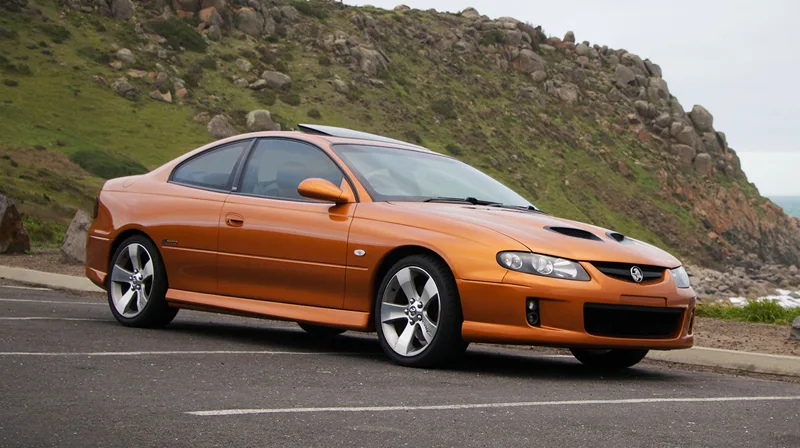
The coupe name returned for 2001 to 2006. Those cars were exported as the Chevrolet Lumina Coupe in the Middle East, the Vauxhall Monaro in the UK and the Pontiac GTO in the United States.
Holden Special Vehicles, the performance arm
Holden Special Vehicles began in 1987, a venture shared by Holden and Tom Walkinshaw Racing. It replaced the Holden Dealer Team after Holden cut ties with Peter Brock over the controversy surrounding the Energy Polarizer. Its first car was the 1988 VL Commodore SS Group A SV, with 180 kW (241 hp), sold under a Holden badge for racing homologation. It won the 1990 Bathurst 1000.
The first car with an HSV badge was the SV88. From 1990 came the Maloo, a performance ute whose name means thunder. In June 2006 a Z Series Maloo R8 set a record for the world's fastest production pick-up, at 271 km/h (168 mph), 22 km/h faster than a Dodge Ram SRT-10.
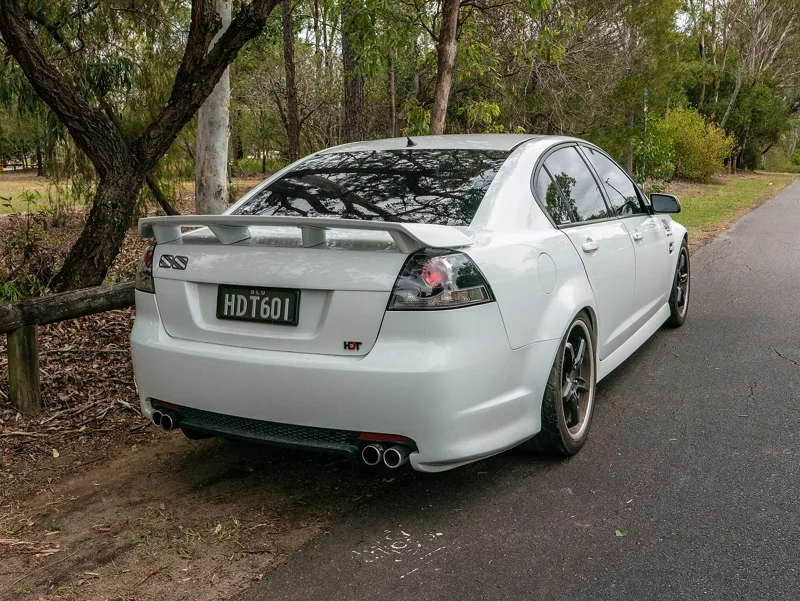
The W427 of 2008 marked the company's 20th anniversary. Its 7.0-litre LS7 V8 made 375 kW (510 PS; 503 bhp) and 640 N m of torque, and it was built partly to make amends for the cancelled HRT 427 project. Powerful as it was, it was overtaken in November 2014 by the Gen-F GTS Maloo with 430 kW. That ute was first limited to 165 units, then raised to 250 plus 10 for New Zealand. Overseas, HSV cars wore Vauxhall VXR8 badges in the UK and Chevrolet Special Vehicles CR8 badges in the Middle East.
Which Holdens are rare enough to collect?
Production figures are the clearest guide to scarcity, and several Holden models sit at the thin end of them.
| Model | Units | Detail |
|---|---|---|
| HK Monaro (all versions) | 8,945 | 1968-1971, gave Holden its first Hardie-Ferodo 500 win |
| HT Monaro (all versions) | 14,437 | Includes the GTS 350 |
| HJ Monaro LS coupe | 337 | Close to the rarest regular production car made in Australia |
| HJ Monaro GTS coupe | 606 | Dropped in 1976 as demand fell |
| VN Commodore SS Group A SV | 302 | Of 500 originally planned |
| HSV SV F20 | 2 | Against 20 planned |
| HSV Gen-F GTS Maloo | 250 | Plus 10 for New Zealand; 430 kW |
Not every low number means a great car, but the pattern is plain. The Monaro coupe was an Australian-built sports car with racing success on its record, and the HJ versions came out in tiny numbers. The HSV models at the end of the line were deliberately limited too.
What the Holden brand ended left behind
In its heyday the Holden became shorthand for the Australian way of life, a symbol of postwar stability. When GM announced on 18 August 2020 that Holden Special Vehicles would close, it named General Motors Specialty Vehicles as the replacement, and the new company began importing the Chevrolet Silverado into Australasia in November 2020.
There was a bridge between the two eras. From mid-2018 HSV converted the Chevrolet Camaro 2SS and the Silverado 2500HD pick-up from left-hand to right-hand drive to General Motors' factory standards. The cars were sold with a factory warranty through the HSV-Holden dealer network, and staff numbers rose from 130 to 150 to cope with production.