How a Kidlington touring car operation became the engineering partner behind Jaguar's sports prototypes, a run of Le Mans wins and an Arrows Formula One venture that ended in 2002.
Tom Walkinshaw Racing was a British touring car and sports car team founded in 1976 near Oxford. It built Jaguar's XJR sports prototypes, won at Le Mans in 1988, 1990, 1996 and 1997, and ran an Arrows Formula One venture before closing in 2002.
Tom Walkinshaw Racing, known as TWR, began in 1976 as a touring car preparation business and grew into one of the most successful sports car operations of its era. Its strongest link was with Jaguar, and its cars took the Le Mans crown in 1988, 1990, 1996 and 1997. The company closed in 2002, after its Formula One venture with Arrows had run up heavy costs.
Who founded Tom Walkinshaw Racing and what did it do first?
Tom Walkinshaw, a touring car racer, founded the company in 1976 at Kidlington, near Oxford. It began with privateer preparation work before taking on factory programmes for manufacturers such as Mazda and Rover, and its association with Jaguar, which started in 1982, shaped the rest of its history.
The early cars were practical rather than glamorous. The team's first project was reworking BMW 3.0 CSLs, and its engineers soon earned a reputation for turning standard touring cars into winners. When Mazda asked the team to run its works effort in the British Touring Car Championship, the RX-7 driven by Win Percy took the title in 1980 and again in 1981.
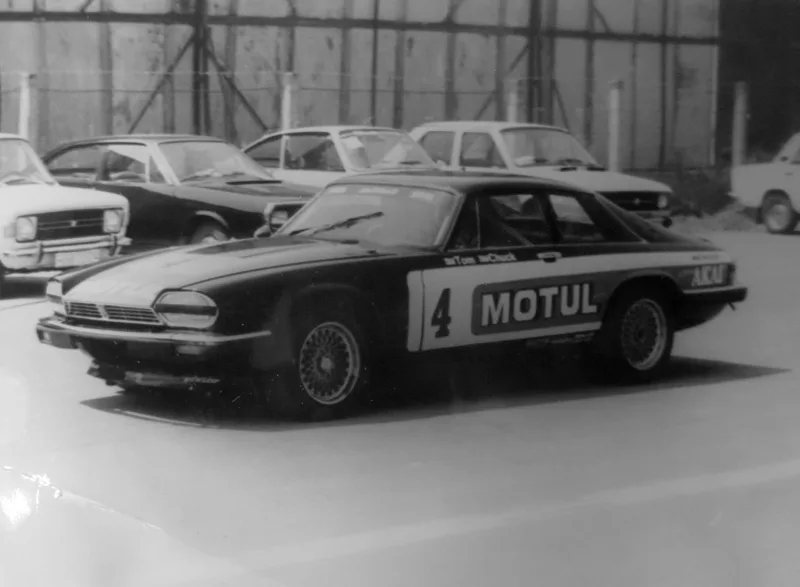
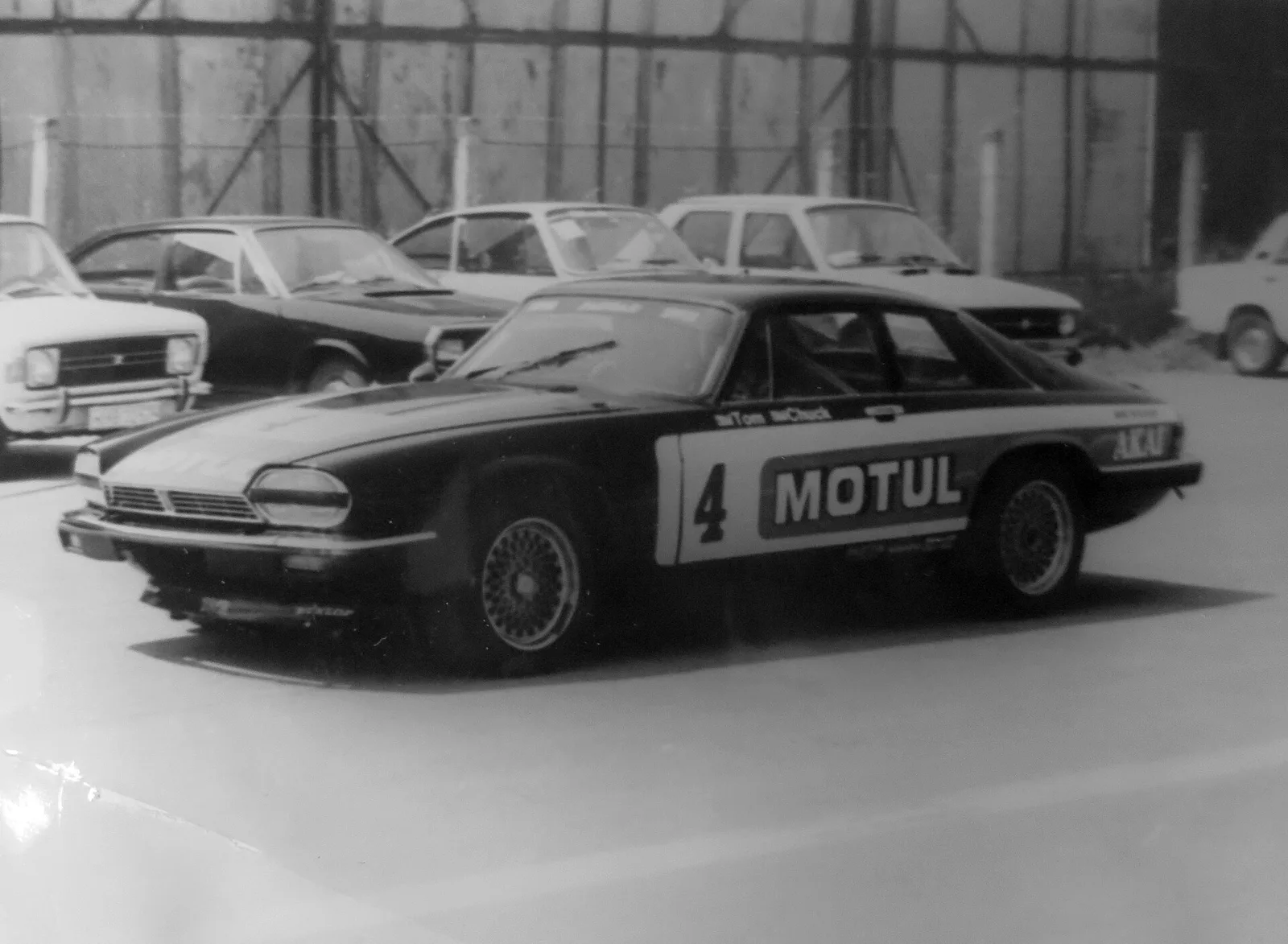
Walkinshaw was a driver as well as a manager. He took a win at the Spa 24 Hours, which showed the founder's own competitive streak. The company's preparation of the Dakar-winning Range Rover for Rene Metge in 1982 showed how broad the work had become, and the same year the Jaguar XJS and Rover 3500 Vitesse began a long run in touring car racing.
A touring car operation that became Jaguar's sports car engineer, won at Le Mans and ended with a costly Formula One gamble.
How did Jaguar and TWR win at Le Mans?
Jaguar and TWR won the 24 Hours of Le Mans in 1988 with the V12-powered XJR-9 and again in 1990 with the XJR-12. The partnership had grown out of Jaguar's return to international sports car racing from 1985, when the team's prototypes went on to win the World Sportscar Championship several times.
The formal start of the partnership came with the XJS in the European Touring Car Championship, where success on both sides of the Channel encouraged a move into prototypes. Jaguar wanted to restore its reputation in overseas markets after privatisation, and international sports car racing gave it a visible platform to do so.
The XJR line of sports prototypes
The first prototype, the XJR-6, was designed by Tony Southgate and used a carbon-fibre chassis with a highly tuned Jaguar V12. Its successor, the XJR-8, took the World Sportscar Championship team title in 1987. The XJR-9 repeated that team success in 1988 and scored the Le Mans victory in the same season. Raul Boesel, Martin Brundle and Teo Fabi each took a world drivers' title in the years from 1987 to 1991, all of them driving for the TWR-Jaguar team.
A turbo V6 and a return to the V12
Development then moved to an in-house engine. TWR built a 3.5-litre twin-turbocharged V6 for the XJR-10 and XJR-11 of 1989 and 1990. The V6 could make more power than the V12, but it was less suited to 24-hour races, which is why the V12 XJR-12 returned for Le Mans and the Daytona 24 Hours.
Rule changes made the turbocharged cars obsolete after a single season in the World Sportscar Championship. TWR's answer was the XJR-14, the first complete car designed by Ross Brawn, which helped Jaguar win the championship outright in 1991. Jaguar then left sports car racing, judging that the rule changes had been unfair, and the 1992 IMSA season was its last.
Wins for other manufacturers
TWR did not depend on Jaguar alone. It modified its XJR-14 thinking into a Porsche-powered WSC-95, which Joest Racing entered at Le Mans in 1996 and won. The same car, in its turn, took the 1997 race as well, giving TWR a second pair of Le Mans victories after Jaguar's.
In 1997 Nissan turned to TWR to help develop the R390 GT1, a re-bodied XJR-15. The four Nissans that started at Le Mans in 1998 all finished, placing 3rd, 5th, 6th and 10th overall, which showed how much the engineering partnership had improved the cars.
What road cars did TWR build?
TWR's road cars began with the XJR-S, modified Jaguar XJ-S coupes from 1984, and included the XJ220 supercar built at Bloxham with Jaguar Sport. The limited-edition XJR-15 followed in 1991 and was road legal, and the company also engineered the Aston Martin DB7 and the Volvo C70 Coupe.
TWR Sport was formed in 1984 to turn the Jaguar XJ-S into a more capable machine. Better aerodynamics, uprated suspension and brakes, a tuned engine and detail changes made the XJR-S a serious road car. The success of that programme led to a 50/50 joint venture with Jaguar in 1988, called Jaguar Sport, which focused first on tuned road versions of Jaguar's cars.
Demand for the XJ220 led to a new facility at Bloxham in Oxfordshire, where production began in 1990 and continued until 1993. The later XJ220S, built from 1996 to 1997, was a lighter and more focused version. It used carbon-fibre bodywork and a tuned V6 delivering 680 PS (500 kW; 671 hp), which made it a rare limited-edition racing road car.
The XJR-15 came about when wealthy enthusiasts asked Tom Walkinshaw for a road-legal XJR-9. He adapted the Le Mans winner for the street, and it was built at Bloxham in 1991 alongside the XJ220. The price was 500,000 pounds sterling, and Peter Stevens, a director of TWR Design, shaped its bodywork.
Later road car work included the Aston Martin DB7, which Ian Callum designed and which was assembled at the Bloxham site once used by Jaguar Sport, and the Volvo C70 Coupe of 1996, which TWR designed, engineered and built around the 2.3 T5 engine used by its touring cars. TWR also tackled MG Rover's attempt to find a smaller replacement for the MG ZT, known as RD/X60, but the project never reached production.
What happened in Formula One?
TWR took part in Formula One between 1992 and 2002. Its engineers helped develop the Benetton that gave Michael Schumacher the 1994 world title, and in 1996 Walkinshaw bought a majority stake in Arrows. The venture never found the sponsorship it needed, and the team closed in 2002.
Walkinshaw started as Benetton's engineering director, and his work on the car that took Schumacher to his first championship was a major achievement. A falling out with Benetton's boss, Flavio Briatore, moved him to Ligier as team manager. After a failed attempt to buy Ligier outright, he chose the Arrows route instead.
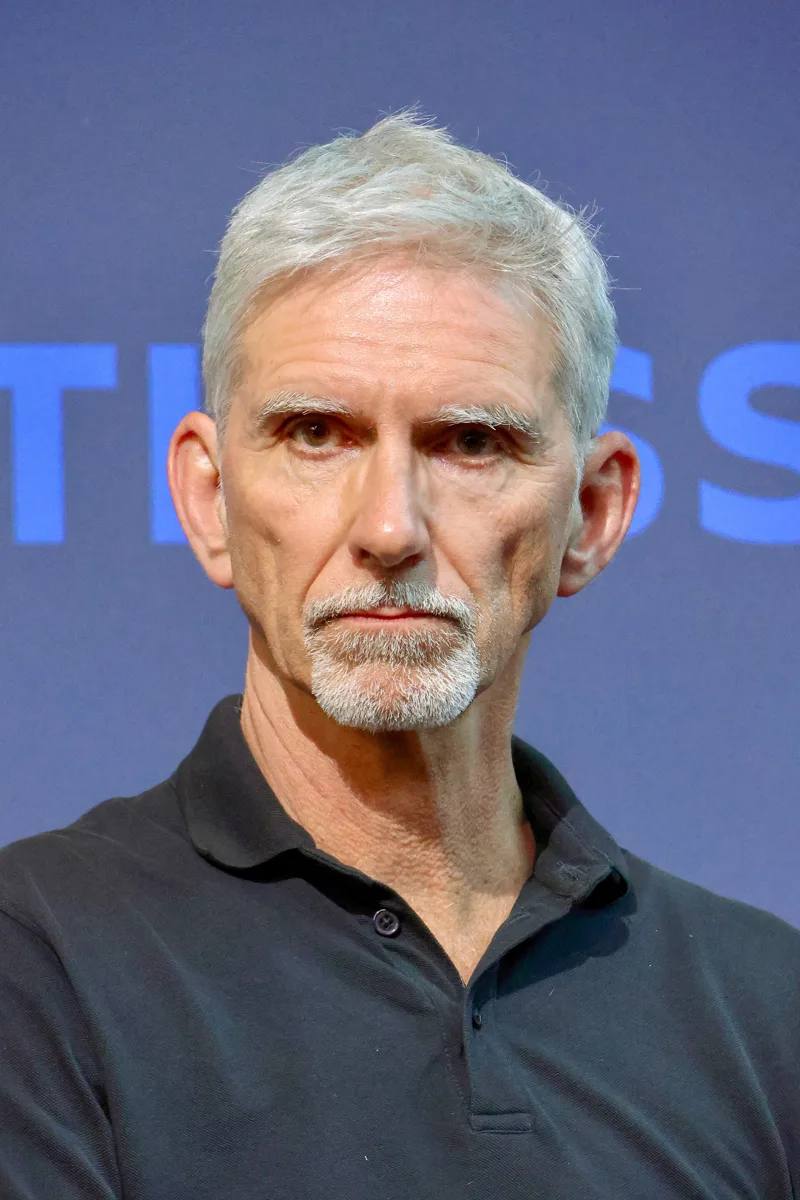
Arrows made a bold start in 1997 by signing World Champion Damon Hill, and the squad came close to winning the 1997 Hungarian Grand Prix. Sponsorship remained scarce, though. When Arrows was liquidated, TWR as the major shareholder followed it into closure. The Leafield technical centre was sold and later housed Super Aguri and Caterham F1, while the Australian arm of the business went to Holden.
Touring cars, Volvo and Australia
TWR's touring car work ran alongside its sports car success. In Australia, the Walkinshaw operation raced in the Australian Touring Car Championship, sometimes as Holden Racing Team or HSV Dealer Team. Its partnership with General Motors' Holden division began in 1987 and produced Holden Special Vehicles.
The Bathurst 1000 provided two of the team's most notable results. TWR won the Group A class at the 1984 race with a Rover Vitesse, and in 1985 it took the outright win with a Jaguar XJS. Armin Hahne drove in both results, with John Goss joining him for the 1985 victory.
In Britain, TWR returned to the British Touring Car Championship in 1994 in partnership with Volvo. Its 850 Estate was made uncompetitive when aerodynamic aids were permitted in 1995, but the works 850 Saloon won six races that year and five in 1996. The result was a championship for the team in 1998, when Rickard Rydell drove the S40 to the title.
Key cars and specifications
| Car | Year | Role | Key detail |
|---|---|---|---|
| XJR-9 | 1988 | Le Mans winner | Won the World Sportscar Championship team title |
| XJR-12 | 1990 | Le Mans winner | V12 car that won Le Mans again |
| XJR-14 | 1991 | World Sportscar Championship car | First full car designed by Ross Brawn |
| XJR-15 | 1991 | Road-legal car | 500,000 pounds sterling, based on the XJR-9 |
| WSC-95 | 1996 | Porsche-powered Le Mans winner | Won Le Mans in 1996 and 1997 |
| XJ220S | 1996-1997 | Limited-edition road car | 680 PS (500 kW; 671 hp) tuned V6 |
| Nissan R390 GT1 | 1998 | Sports prototype | Finished 3rd, 5th, 6th and 10th at Le Mans |
What is the legacy of Tom Walkinshaw Racing?
Tom Walkinshaw Racing left its mark on engineering as well as racing. Its Le Mans wins and its work on the XJ220 and XJR-15 made it the defining partner of Jaguar's sports car years, and several of its engineers went on to shape the wider motorsport industry.
Ross Brawn, Tony Southgate and Ian Callum all held senior roles at the company at different stages, and Roger Silman ran its operations. Ian Callum held the design director post between 1991 and 1999. Their work carried into later teams and car programmes, which is why the TWR name still appears in conversations about British engineering.
The motorcycle experiment with Kenny Roberts was one of the company's more unusual projects. In 1997 the former motorcycle world champion formed his own team in England and brought TWR in to assist with a three-cylinder two-stroke unit. The bike never won a Grand Prix, but Jeremy McWilliams took pole position at the 2002 Australian Grand Prix, a rare high point.
The modern Walkinshaw name in Australia is a separate story. Ryan Walkinshaw, the eldest son of Tom, runs a Melbourne-based business that grew out of Holden Special Vehicles. That company now employs 1500 people and builds specialist vehicles for five global manufacturers, but it has no connection with the TWR business that closed in 2002.