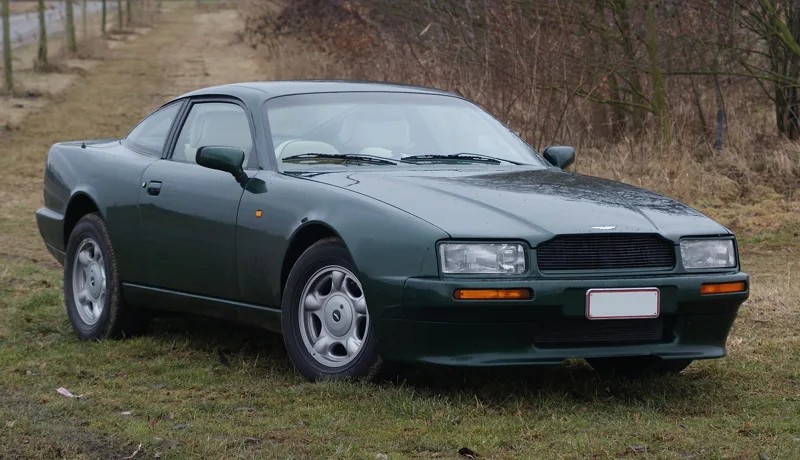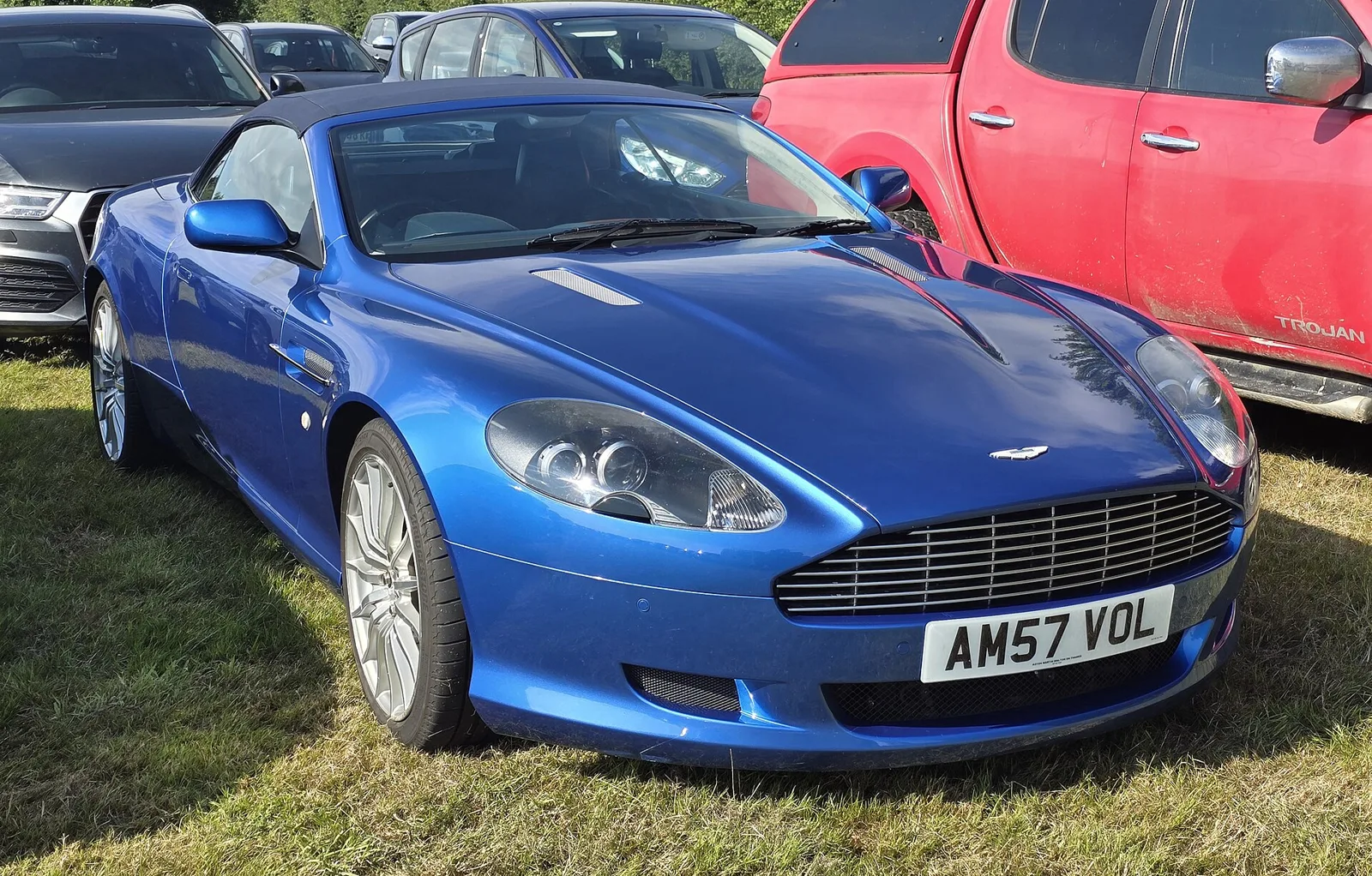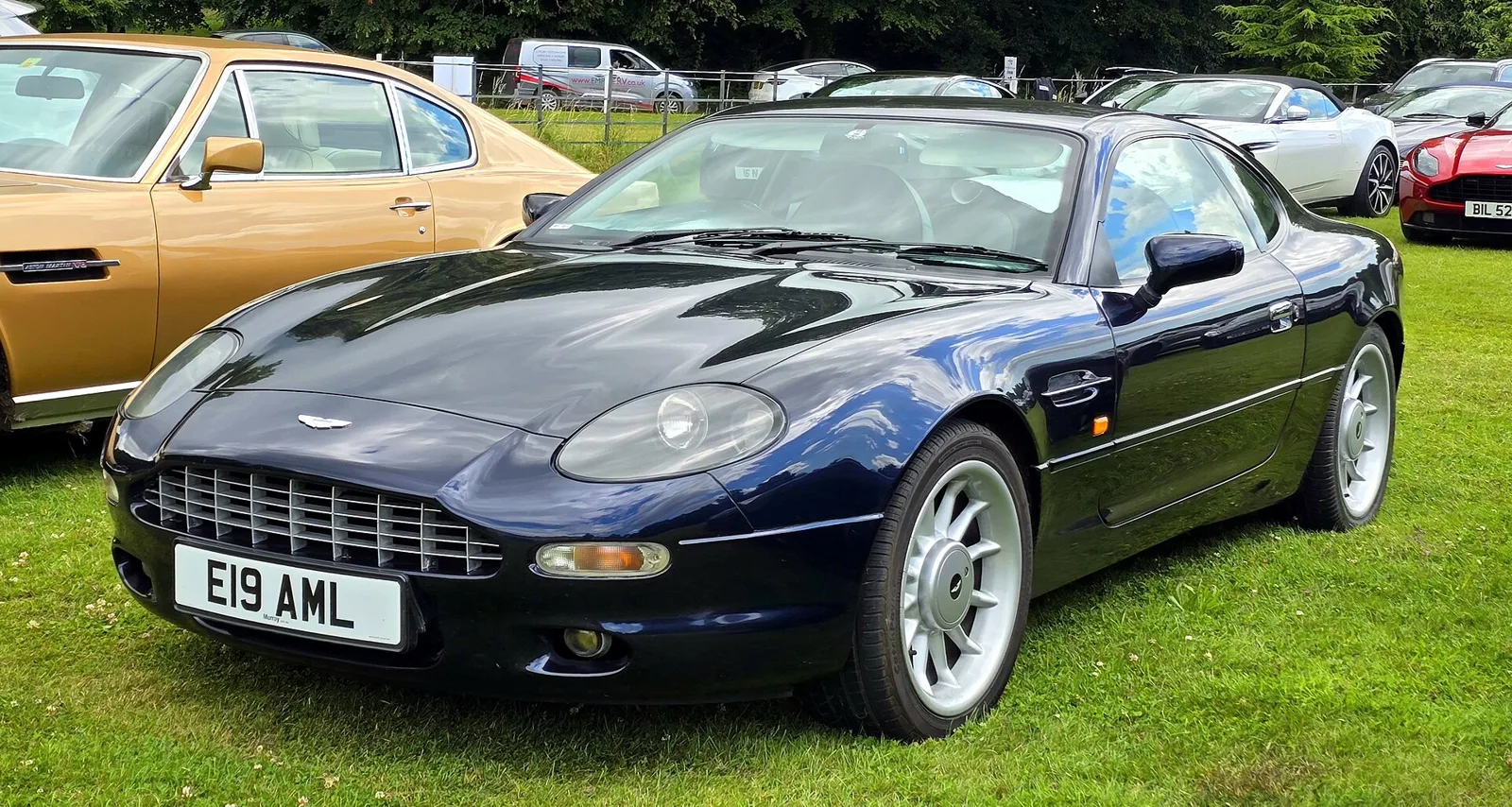
Ian Callum styled a grand tourer that started life as a Jaguar XJS successor, sold as a coupe and convertible and built in more than 7,000 examples.
The Aston Martin DB7 was a grand tourer built from September 1994 to December 2004, styled by Ian Callum and based on Jaguar XJS components. It came as a coupe and convertible, with straight-six and V12 engines, and more than 7,000 were built before the DB9 replaced it.
The DB7 was the most-produced Aston Martin of its time, and the story behind it mixes a Jaguar foundation, a Ford-era programme and a run of special editions. Its platform evolved from the Jaguar XJS, and Ian Callum and Keith Helfet shaped the body as a grand tourer. The car debuted at the Geneva Motor Show in March 1993, after its prototype was complete in November 1992.
Where did the DB7 come from?
The DB7 began as a successor concept to the Jaguar XJS, envisioned by Tom Walkinshaw of TWR. During development the car carried the internal project name XX, and it was planned from the outset in coupe and convertible bodystyles. When Peter Stevens declined the work, Walkinshaw engaged Ian Callum, and the car moved from idea to prototype in a matter of years.
The roots of the project run back to a cancelled Ford programme. Ford cancelled the Jaguar XJ41 and XJ42 project in 1990. The XJ41 coupe and XJ42 convertible were to have been called F-Type, and Callum later redesigned the XJ41 with proportions inspired by the Nissan 300ZX.
Walkinshaw had raced the XJS in the European Touring Car Championship, which gave him a direct link to the model. Ford owned Aston Martin from 1988 to 2007, and Aston Martin's chief executive, Walter Hayes, approached Walkinshaw about the new car. The project cost US$30 million, and Jac Nasser became chairman of Ford Europe on 1 January 1993, the same year the car debuted in Geneva.
A grand tourer built on Jaguar foundations that became the most-produced Aston Martin of its era.
Why did the DB7 share parts with other cars?
Many components came from other manufacturers' models. The tail lights came from the Mazda 323 F, the door handles from the Mazda 323 Estate, and the side reflectors and interior door handles from the Mazda MX-5. Wing mirrors were shared with the Citroen CX, and the mirror switches came from the Ford Scorpio.
The front indicator lenses came from the Mazda MX-3. The lock used a Tibbe disc tumbler with 8 discs rather than the more common 6, a small detail that stood out among the borrowed parts.
The steel unit construction was inherited from Jaguar, so the platform stayed close to the XJS even though the body was new. Aston Martin later used aluminium for its other models after the DB7 had gone into production.
How did the DB7 platform differ from the XJS?
The DB7 kept the broad outline of the Jaguar XJS platform, but many details were changed along the way. Steel unit construction was inherited from Jaguar, and the Bloxham factory later took on production of the DB7 and its variants.
A 1991 alternative would have paired a six-cylinder engine with the Escort RS Cosworth 4x4 system. That route was not the one the team took, and the final car used the Jaguar-derived straight-six instead.
Aston Martin later unveiled the Volante at Detroit in 1996, which brought an open-top version of the car to the public.
What engines did the DB7 use?
The DB7 started with a supercharged straight-six based on the Jaguar AJ6 engine, rated at 340 PS (250 kW; 335 hp), with peak torque of 489 N m (361 lb ft). The V12 Vantage followed with a 5.9-litre, 48-valve V12 rated at 426 PS (313 kW; 420 hp).
Production of the six-cylinder cars ended in mid-1999, leaving the V12 cars at the top of the range. The change marked the end of the entry-level engine for the grand tourer.
The V12 Vantage produced 542 N m (400 lb ft) at its peak, from a compression ratio of 10.3:1. It ran 0-97 km/h (0-60 mph) in 4.9 seconds, and its top speed was 299 km/h (186 mph) with the manual gearbox and 266 km/h (165 mph) with the automatic.
The V12 GT was the more powerful sibling, with 441 PS (324 kW; 435 hp) and a peak of 556 N m (410 lb ft). Its final drive ratio was 4.09 against 3.77 on the Vantage, and it carried 355 mm front and 330 mm rear Brembo discs.
A TWR V12 prototype from 1996 used a 6.4-litre engine rated at 482 PS (355 kW; 475 hp), with 637 N m (470 lb ft) at its peak. That engine sat well beyond the production 5.9-litre unit and showed how far the V12 could be pushed.
How big was the V12 Vantage?
The V12 Vantage measured 4,692 mm long and 1,830 mm wide, and it weighed 1,800 kg (3,968.3 lb). Buyers could choose a TREMEC T-56 six-speed manual or a ZF five-speed automatic.
Top Gear recorded 217 km/h (135 mph) in fourth gear in 2003. The figure came from a fourth-gear run, which is the gear that most road tests used to judge a car's midrange.
What special editions did Aston Martin build?
Aston Martin built a run of special editions, including the 1998 Alfred Dunhill Edition with a built-in humidor, the 1998 Neiman-Marcus Edition and the 2003 Jubilee Limited Edition. Several were built in numbers as small as 10 cars.
Special editions gave the brand a way to offer collectable cars without changing the core model. Each one carried its own finish, trim or feature, from the Dunhill humidor to the Bowland Black paint on the Stratstone cars.
The Dunhill Edition had 78 of an announced 150 cars built. The Neiman-Marcus Edition offered 10 Jet Black cars, and the Neiman-Marcus cars were promoted through the store's Christmas catalogue.
The 1999 Stratstone Edition offered Bowland Black finish, and 19 cars were made. The Keswick Limited Edition of 2002 had 10 cars, while the Jubilee Edition marked the Golden Jubilee of Queen Elizabeth II in 2003 with 24 cars for Europe and 26 for North America. The Anniversary Edition had 55 of an announced 100 cars.
Was there a Zagato-bodied DB7?
Yes. The DB7 Zagato was introduced at Pebble Beach in August 2002, with a double-bubble roofline and a 6.0 L V12 rated at 441 PS (324 kW; 435 hp). Zagato built 99 cars plus one for the museum, and they were sold only in the UK, Europe and Southeast Asia.
Unlike the DB AR1, the Zagato was not sold in the United States. The Zagato coupe matched the output of the V12 GT, and the car was designed with Henrik Fisker. Its chassis had a wheelbase 60 mm shorter than the standard car, and it was 211 mm shorter overall, which gave the coupe a more compact stance.
The DB7 Zagato was offered for the 2003 model year. Its double-bubble styling was the feature that set it apart from the standard coupe.
What was the DB AR1?
The DB AR1 was introduced at the Los Angeles Auto Show in January 2003 and offered only for the US market. It produced 435 bhp (324 kW; 441 PS) and reached 185 mph (298 km/h), with 99 examples for sale plus one for the factory collection.
Its single-market status meant buyers outside the United States could not order one, while Zagato coupes were sold in the UK, Europe and Southeast Asia.
Robert Stockman commissioned a folding top for his DB AR1, which showed how owners could adapt the car.
Both projects show that the DB7 platform attracted outside design houses, with Italian studios supplying styling input for the concept and the Zagato body. Separately, the Twenty Twenty concept was shown at Geneva in 2001. It was designed by Giorgetto and Fabrizio Giugiaro, and it previewed a different direction for the brand rather than a production model.
How many DB7s were built?
More than 7,000 DB7s were built before the DB9 replaced it in 2004, making it the most-produced Aston Martin of its era. Production moved to Bloxham for the DB7 and its variants.
The Bloxham factory had previously built the XJ220, and the DB7 moved in alongside the later variants made there.
A total above 7,000 cars made the model a volume seller for the brand, a position it held until the DB9 arrived. Over the decade of production, the coupe and convertible shared most of their engineering.
How did the DB7 perform in motorsport and special builds?
The DB7 found a place in motorsport and special-build circles. Prodrive raced a DB7 i6 GT prototype with a red noseband, and Works Service built a V8 DB7 with a 6.3-litre Virage engine in 1998.
The racing versions kept the basic shape of the road car, with the noseband colour one of the visible changes. The race and special-build programmes covered both ends of the engine range, with the Works Service V8 at one end and the Prodrive i6 GT prototype at the other.
The racing DB7s were prepared in two separate programmes, one by Prodrive and one by Works Service. Both programmes produced cars with distinctive noseband colours.
A second DB7 race car from Works Service carried a yellow noseband. Italdesign showed its own concept at Geneva in 2001, the same year the Twenty Twenty appeared there. The Works Service Driving Dynamics package was offered as an option on the car.
What are the Aston Martin DB7 specifications?
The DB7 was built from September 1994 to December 2004, with a straight-six rated at 340 PS (250 kW; 335 hp) and a V12 Vantage at 426 PS (313 kW; 420 hp) from 5.9 litres. Total production exceeded 7,000 cars.
| Specification | Detail |
|---|---|
| Production span | September 1994 to December 2004 |
| Prototype | Complete by November 1992 |
| Geneva debut | March 1993 |
| Straight-six | 340 PS (250 kW; 335 hp), 489 N m (361 lb ft) |
| V12 Vantage | 426 PS (313 kW; 420 hp), 5.9 L, 542 N m (400 lb ft) |
| V12 GT | 441 PS (324 kW; 435 hp), 556 N m (410 lb ft) |
| V12 Vantage length | 4,692 mm |
| V12 Vantage width | 1,830 mm |
| V12 Vantage weight | 1,800 kg (3,968.3 lb) |
| Total built | More than 7,000 |