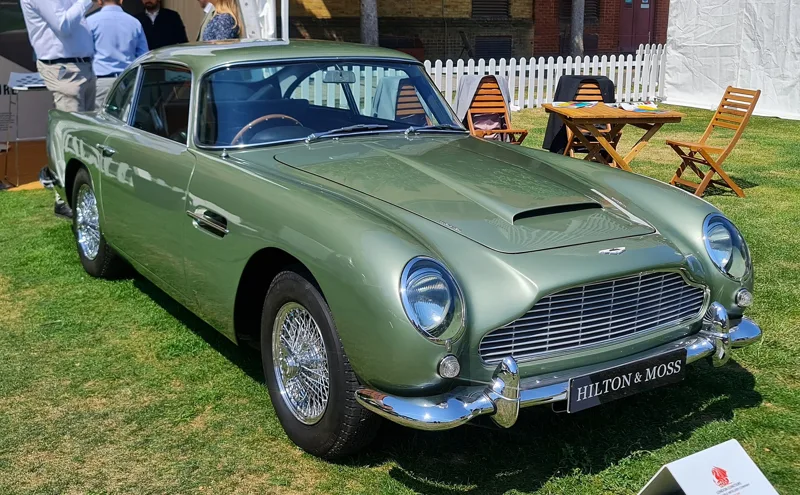
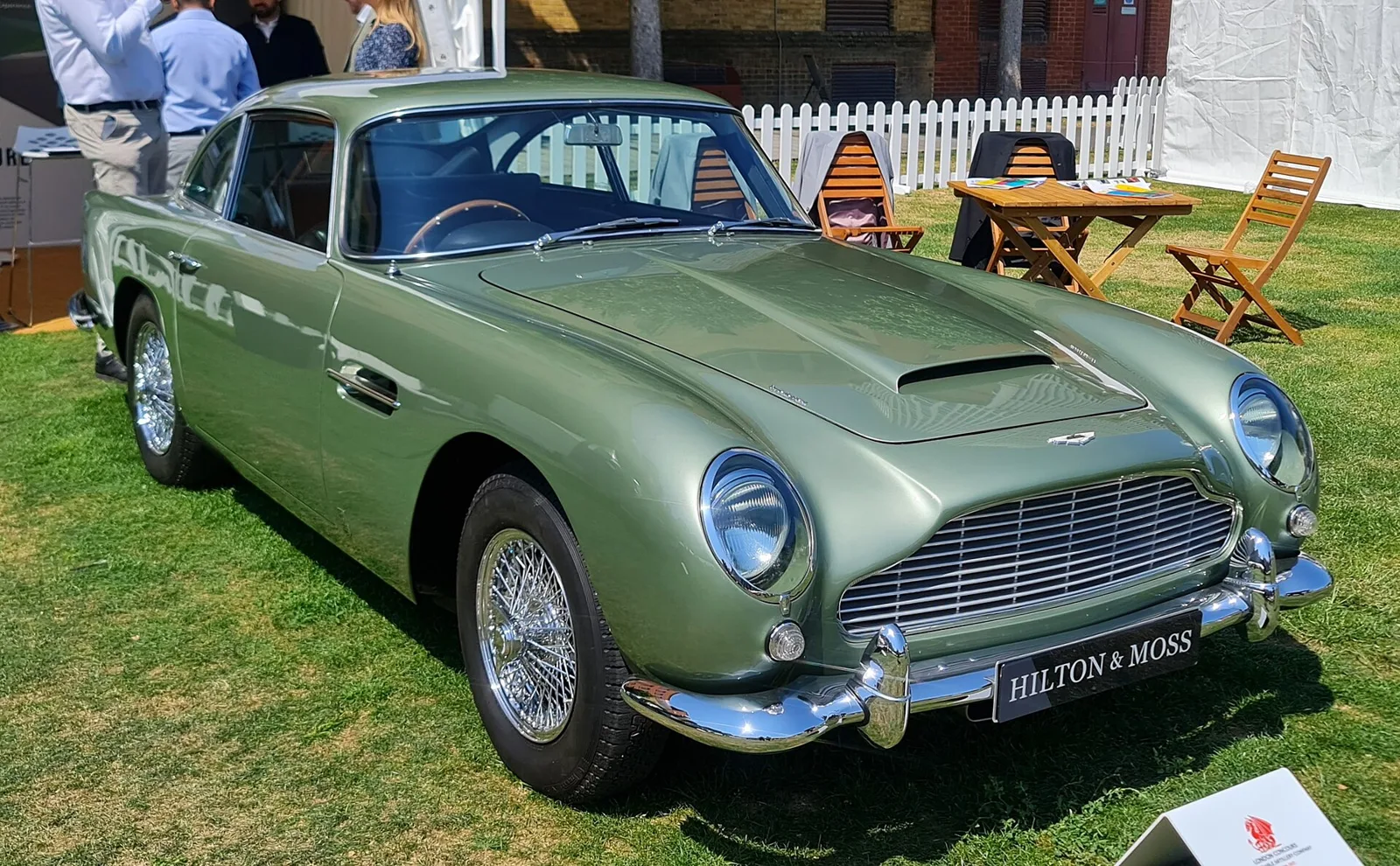
From the 2003 Frankfurt debut to the 2016 finale, the DB9 gave Aston Martin a coupe and Volante on aluminium architecture, a race-winning sibling and three facelifts.
Built at Gaydon, the DB9 started life as a coupe in 2004 and became the Volante convertible in 2005. It used the aluminium VH platform and a V12 engine, and production ended in 2016 after about 16,500 cars.
The Aston Martin DB9 was a two-door grand tourer that the British maker built at Gaydon in Warwickshire. It came first as a coupe from 2004, then as the Volante convertible from 2005, and both were discontinued in 2016. Its aluminium-rich body and 5.9-litre V12 made it the heart of Aston Martin's range for more than a decade.
When did the Aston Martin DB9 go on sale?
The DB9 debuted at the Frankfurt Motor Show in September 2003. Series manufacture of the coupe began in January 2004 at Gaydon, and the DB9 was the first model built at that facility. The Volante debuted at the Detroit Auto Show in January 2004, and its manufacture started in February 2005.
At launch Aston Martin planned to build between 1,400 and 1,500 cars a year. Chief executive Ulrich Bez said in a 2007 interview that the company needed to be more visible and build more cars, even though it had traditionally made exclusive machines.
A V12 grand tourer on an aluminium platform that carried the DB name through 16,500 cars and a race-winning sibling before 2016.
Why is it called the DB9?
The letters DB are the initials of David Brown, who owned Aston Martin between 1947 and 1972. Although the DB9 succeeded the DB7, the company did not call it the DB8. Aston Martin feared that a DB8 name would suggest a V8 engine, whereas the DB9 has a V12.
Reports indicated that the company also thought a DB8 name would imply a progressive evolution. The DB9 was in fact an entirely new vehicle, so the number was chosen to signal that break.
What did the DB9 replace?
The DB9 succeeded the DB7, which Aston Martin produced from 1994 until 2004. The DB7 was the entry-level model in the range, and it had a steel monocoque designed by Jaguar, a company that Ford also owned at the time. Ian Callum designed the DB7, which came as a coupe and a convertible called the Volante.
The DB7 Vantage added a V12 developed by Ford in 1999 and quickly took sales from the six-cylinder model. About 7,000 DB7s were produced, and at the time it was the best-selling Aston Martin, a record the DB9 later passed.
Who designed the DB9?
The DB9 was designed by Ian Callum and Henrik Fisker. Callum was appointed lead designer for the AM802 project, a 2+2 grand tourer that became the DB9. He had to split his time between Jaguar and Aston Martin after the death of the designer Geoff Lawson in 1999, and the appointment of Fisker as lead designer in 2001 let Callum concentrate on Jaguar.
Ulrich Bez became chief executive and chairman in July 2000, when Ford appointed him. A third project, AM305, was a smaller two-seater meant to rival the Porsche 911 and Ferrari 360, and it became the Vantage in 2005.
How was the DB9 tested?
Numerous pre-production prototypes covered over 1,000,000 miles (1,600,000 km) between them. Testing took place at Lommel in Belgium, the Nardo Ring in Italy, the Nurburgring, the MIRA test track and the Millbrook Proving Ground in the United Kingdom.
Hot-weather trials ran in Death Valley, and cold-weather evaluations took place inside Sweden's Arctic Circle. Further tests in New Zealand covered summer and winter conditions. Aston Martin destroyed most of the test cars but kept three, which appeared in the film Casino Royale in 2006.
How was the DB9 built?
The DB9 moved away from the steel monocoque of its predecessor and used the vertical/horizontal platform with extensive aluminium. The body structure combined aluminium and composite materials, joined by mechanically fixed self-piercing rivets and robotic-assisted adhesive bonding. The bonded structure had more than double the torsional rigidity of the DB7 while weighing 25 per cent less.
The DB9 used double wishbone suspension with coil springs, plus anti-roll bars. The rear suspension had anti-squat and anti-lift technology to control heavy acceleration or braking. The front bumpers and bonnet were made of composite materials, and the platform later underpinned the Rapide, DBS, Vantage, Virage, the 2012 Vanquish and the Lagonda Taraf.
Aston Martin DB9 specifications at a glance
The table below sets out the main figures for the launch car, the 2012 facelift, the Volante and the final DB9 GT, along with the racing versions. Each row names the version it covers, so the production and competition figures are not mixed up.
| Specification | Detail |
|---|---|
| Production years | Coupe 2004 to 2016; Volante 2005 to 2016 |
| Launch engine | 5.9-litre V12, 456 PS (335 kW; 450 hp) at 6,000 rpm |
| Launch torque | 570 N m (420 lb ft) at 5,000 rpm |
| Launch 0-97 km/h (60 mph) | 4.7 seconds; automatic 4.9 seconds |
| Launch top speed | 299 km/h (186 mph) |
| 2008 top speed | 306 km/h (190 mph); 0-97 km/h in 4.6 seconds |
| 2012 facelift output | 517 PS (380 kW; 510 hp); 620 N m (457 lb ft) |
| 2012 facelift sprint | 0-97 km/h in 4.5 seconds; 295 km/h (183 mph) |
| Volante 2008 output | 477 PS (351 kW; 470 hp); 600 N m (443 lb ft) |
| Volante 2012 weight | 1,815 kg (4,001 lb) |
| DB9 GT output (2015) | 547 PS (402 kW; 540 hp) at 6,750 rpm |
| DB9 GT 0-161 km/h (100 mph) | 10.2 seconds |
| DBR9 racing output | 634 PS (466 kW; 625 hp) |
| DBRS9 racing output | 558 PS (410 kW; 550 hp); top speed 314 km/h (195 mph) |
| Boot capacity | 187 L (6.6 cu ft) coupe; 136 L (4.8 cu ft) Volante |
How did the V12 perform?
The launch car made 456 PS (335 kW; 450 hp) at 6,000 rpm, with 570 N m (420 lb ft) of torque arriving at 5,000 rpm. It reached 97 km/h (60 mph) from rest in 4.7 seconds, and its top speed was 299 km/h (186 mph). The layout was rear-wheel drive with a front mid-engine design, which improved weight distribution.
Buyers could choose a six-speed manual from Graziano Trasmissioni or a six-speed ZF Touchtronic automatic with paddle-operated semi-automatic mode. The automatic raised the 0-97 km/h time to 4.9 seconds, but the top speed stayed the same. The gearbox sat at the rear and was driven by a carbon-fibre tail shaft inside a cast aluminium torque tube.
What changed in the 2008 facelift?
The 2008 facelift kept the car largely unchanged but added stylistic tweaks, including door mirrors resembling those of the DBS, revised wheels and a grille with new elements. The 5.9-litre V12 gained 20 hp (15 kW) and 31 N m (23 lb ft), achieved through higher compression and a deeper sump.
The maximum speed rose to 306 km/h (190 mph) and the 0-97 km/h time fell to 4.6 seconds. A revised Touchtronic 2 gearbox with shift-by-wire control arrived, and Bilstein dampers replaced the earlier Dynamics units, which improved low-speed ride quality.
How did the 2010 and 2012 facelifts change the car?
The June 2010 facelift was adjusted by Marek Reichman. It brought a refreshed front bumper, clear tail-lights and more defined front wings, along with a Double Apex aluminium trim finish and a tyre-pressure monitoring system. A Bang and Olufsen stereo became available.
In October 2012 Aston Martin unveiled the DB9's most substantial facelift, which succeeded the short-production second-generation Virage. Its headlight clusters were enlarged with bi-xenon lights and LED daytime running strips, and it gained a five-bar grille and a rear spoiler built into the boot lid. The V12 rose to 517 PS (380 kW; 510 hp), and three driving modes were introduced: normal, sport and track.
What was the Volante like?
The Volante was the convertible version of the DB9, shown at the Detroit Auto Show and built from February 2005. It had reinforced windscreen pillars and two deployable hoops behind the rear seats, which stayed active at all times and would shatter the rear window if triggered. Its folding fabric top opened in seventeen seconds.
Aston Martin softened the Volante's springs and reduced the anti-roll bar weight for smoother cruising. The Volante weighed 1,882 kg (4,150 lb) at launch, slightly more than the coupe. Its speed had initially been limited to 266 km/h (165 mph) to protect the roof, but that limit was removed from the 2007 model.
Which special editions did the DB9 get?
The DB9 LM celebrated Aston Martin's GT1 win at the 2007 24 Hours of Le Mans and launched in early 2008. It included the sports pack as standard, came only as a coupe with an automatic gearbox, and was offered in Sarthe Silver. Aston Martin planned 124 units, but some dealers declined their allocations, and 69 were built.
In 2013, for the company's centenary, Zagato unveiled a one-off model based on the Volante called the Zagato Spyder Centennial. It was sold for US$693,000 at RM Sotheby's Monterey auction in 2015, including the buyer's fee.
The final iteration, the DB9 GT, arrived in 2015. Its 547 PS (402 kW; 540 hp) engine reached 0-97 km/h in 4.4 seconds and 0-161 km/h in 10.2 seconds, and it covered the quarter-mile in 12.8 seconds. Its top speed stayed at 295 km/h (183 mph).
How did the DB9 perform in racing?
Aston Martin Racing, a collaboration between Aston Martin and Prodrive, adapted the DB9 for sports car racing. The DBR9, built to FIA GT1 rules, debuted in 2005 with carbon fibre panels in place of most aluminium body panels, plus a front splitter and rear wing. Its engine produced 634 PS (466 kW; 625 hp).
The DBR9 reached 97 km/h (60 mph) in 3.4 seconds and won on its debut at the 2005 12 Hours of Sebring. It later secured victories in other events, including the 24 Hours of Le Mans. The GT3 DBRS9 shared the DBR9's bodywork and chassis, but its engine was detuned to 558 PS (410 kW; 550 hp).
Why did production of the DB9 end?
In 2015 Aston Martin announced that the DB9's successor would be the DB11. The new range was to introduce a refreshed design approach directed by Reichman, and it aimed to give each model a more distinct identity. On 22 July 2016 Aston Martin posted a picture of the final nine DB9s, dubbed the Last of 9, all painted dark grey.
Those last cars passed their final inspection on 27 July 2016 and rolled off the production line that day. The end came after a twelve-year run in which about 16,500 units were built.
How did critics rate the DB9?
Critics generally praised the coupe and Volante for their opulent interior and exterior design. Top Gear gave the DB9 a special mention in its Cool Wall segment, and it created a category called the DB9 Fridge for the car. Richard Hammond called the interior one of the best known to man, but he found the Volante less rigid than the coupe.
Edmunds and Road and Track criticised the DB9's handling and said it was not firm enough. Edmunds nonetheless said that the Mercedes-Benz SL600 and SL55 AMG were better cars, although the DB9 was the more desirable one. Autoweek observed that the stiffness issues were largely fixed in later iterations.
What was the DB9 interior like?
Reviewers called the interior dazzling, and the rear seats drew complaints. Forbes described them as more of a padded parcel shelf, and cargo space was also limited. The satellite navigation was criticised by Automobile as an Achilles heel, until newer models adopted a revised system from Garmin.
Seats could be ordered in a lighter package with Kevlar and carbon fibre, which saved 17 kg (37 lb). The interior was trimmed in leather and walnut, and the starter button was a clear glass unit engraved with the brand's name.
Frequently asked questions
When did the DB9 end production?
Both the coupe and the Volante were discontinued in 2016. The last nine cars, all dark grey, passed their final inspection on 27 July 2016.
How much power did the final DB9 make?
The DB9 GT was rated at 547 PS (402 kW; 540 hp), and its peak torque was 620 N m (457 lb ft) at 5,500 rpm. Its 0-97 km/h time was 4.4 seconds.
Was there a DB9 convertible?
Yes. The Volante convertible was built from February 2005. It had a folding fabric roof that opened in seventeen seconds and weighed 1,882 kg (4,150 lb) at launch.
What replaced the DB9?
Aston Martin announced the DB11 in 2015 as the DB9's successor. The DB11 was part of a range that aimed to differentiate its models more clearly.