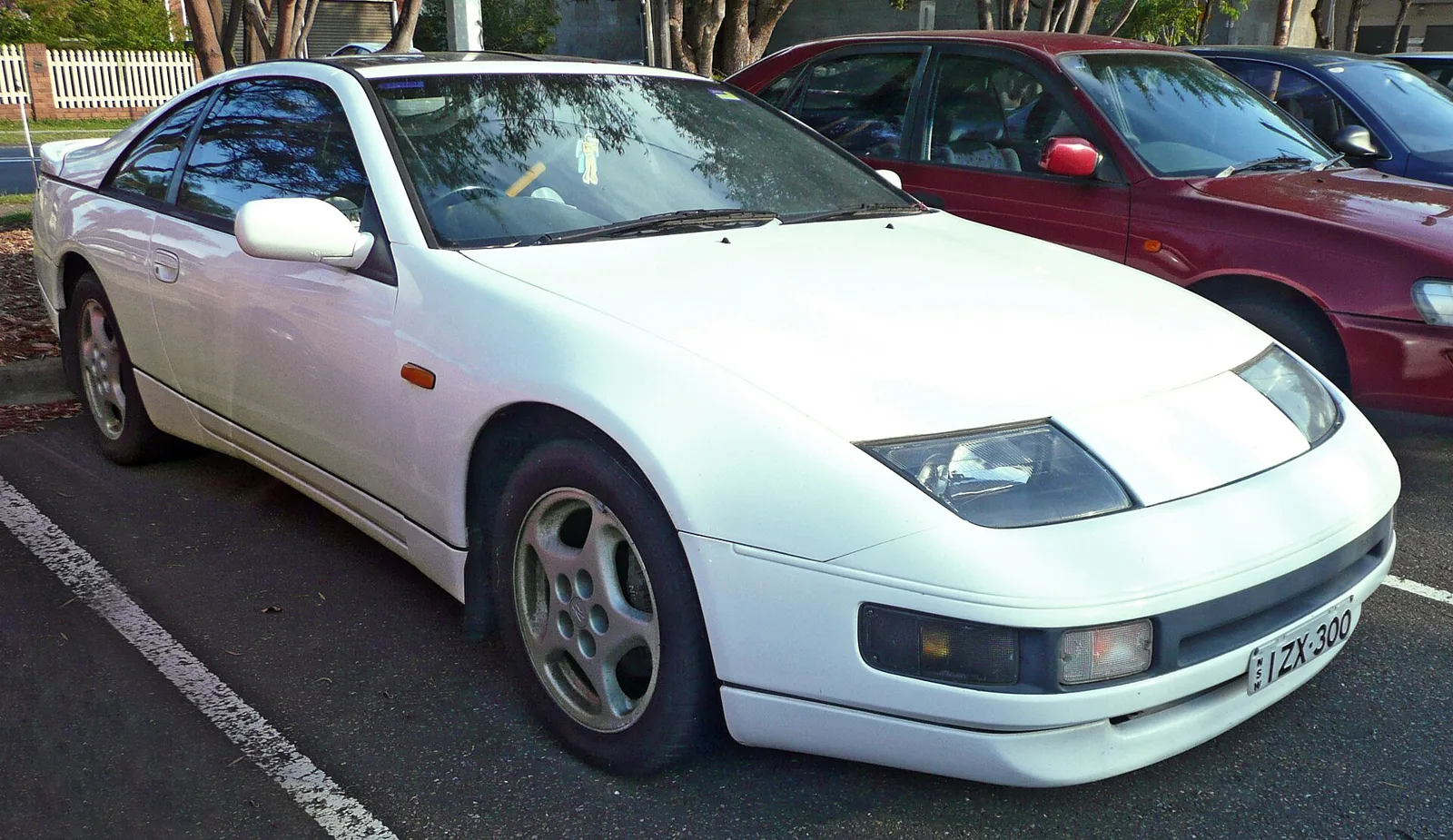
From the 1983 Z31 with Japan's first mass-produced V6 to the twin-turbo Z32, the 300ZX ran in Japan until 2000 and in the United States until 1996.
The Z-car named 300ZX came in two generations, the Z31 and Z32. Japan sold it until 2000 and the United States until 1996, and the 350Z replaced it in 2003.
The Nissan 300ZX was a sports car built across two generations, the Z31 and the Z32. Japanese sales ran from 1983 to 2000, while the United States received the car from 1984 to 1996. At home it carried the Fairlady Z name. The Z31 brought Japan's first mass-produced V6 to the range, while the Z32 moved the car up-market with twin turbochargers.
What is the Nissan 300ZX?
The Nissan 300ZX is a sports car that was produced across two generations. It was sold in Japan under the Fairlady Z name, as all Z-cars were there. The first generation, the Z31, was produced from 1983 to 1989, and the second generation, the Z32, followed it.
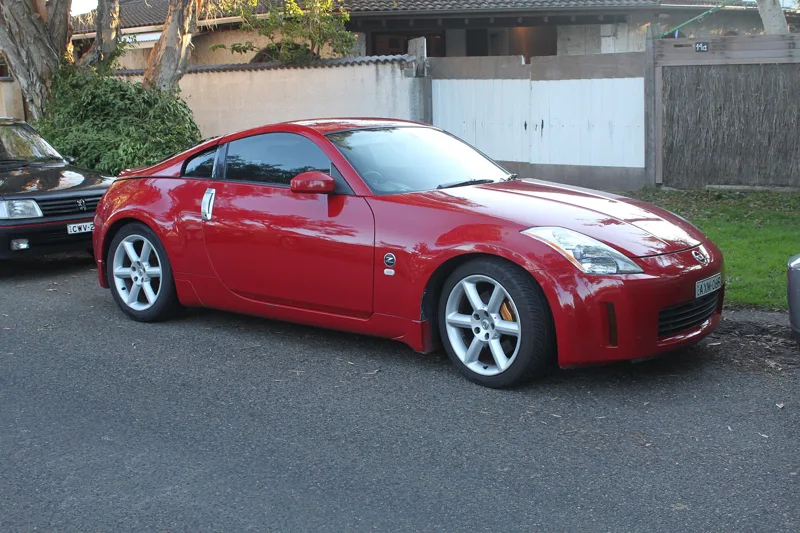
The 300ZX sat in the Z line between the 280ZX and the later 350Z. The Z33 generation succeeded it in 2003, carrying the Z-car name into a new era.
Two generations of Z-car, from a 1983 V6 to a twin-turbo that won at Daytona and Le Mans.
Why was it called the 300ZX?
The name followed the numerical convention started with the original Z car. The X in the name signalled more luxury and comfort features, and it was carried over from the 280ZX that came before it.
The name therefore told buyers two things. It placed the car in the Z line, and it marked the model as a more comfortable car than the sportier members of the family.
How did the Z31 generation begin?
The Z31 arrived in Japan on 16 September 1983 under the Fairlady Z name. It was designed by Kazumasu Takagi and his team, and it improved on the 280ZX in aerodynamics and power.
The Z31's drag coefficient was 0.30. Many cars used the V6 that was Japan's first mass-produced engine of its type. That engine replaced the inline-sixes of the earlier Z-cars, and Nissan said it kept the sporty six-cylinder spirit in a more compact package.
The Z31 chassis was based on the 280ZX and kept the same wheelbase. Its body was built around the same basic layout, so the change lay mainly in the engines and the aerodynamics.
What engines did the Z31 offer?
The Z31 offered five engine options in total, from a 2.0 L straight-six to a 3.0 L V6. Buyers could choose a five-speed manual or an optional four-speed automatic.
The 200ZR used a turbocharged RB20DET 2.0 L straight-six rated 180 PS (132 kW), and it was 170 kg (375 lb) lighter than the VG30ET cars. Naturally aspirated 300ZX models produced 160 hp (119 kW), while the turbo version reached 200 hp (149 kW).
The October 1986 facelift changed the rating basis. Turbo output dropped to 195 PS (143 kW) as Nissan moved to net figures, and the 300ZR added a DOHC naturally aspirated V6 rated at 190 PS (140 kW).
What was the 200ZR?
The 200ZR was a turbocharged Z31 built around the RB20DET straight-six. Roughly 8283 examples were built between 1985 and 1988, and the model came in two trims, the 200ZR-I and the 200ZR-II.
Its 170 kg (375 lb) weight saving over the VG30ET cars gave the 200ZR a different character. The lighter car was an attempt to recover some of the sporty feel of the original Fairlady Z.
How well did the Z31 sell?
Over 70,000 units were sold in North America in 1985, a strong figure for a sports car of the period. The Z31 kept selling until 1989, which was longer than any other Z-car at the time.
That long production run gave the generation a wide base of owners before the Z32 arrived. The Z31 also carried Nissan's Voice Warning System, which spoke alerts for open doors, lights left on and low fuel until it was dropped for the 1987 model year.
What special editions did the Z31 get?
The 1984 50th Anniversary Edition marked the company's half-century, and 5,148 units went to the US and 300 to Canada. It had a digital dash, Bodysonic speakers in the seats and embroidered leather seats.
The Shiro Special arrived in 1988 with pearl white paint, stiffer springs and a viscous limited-slip differential. Motor Trend tested it at 153 mph (246 km/h) with the electronic speed limiter disabled, and 1,002 units went to the US between January and March 1988.
How did the Z32 move up-market?
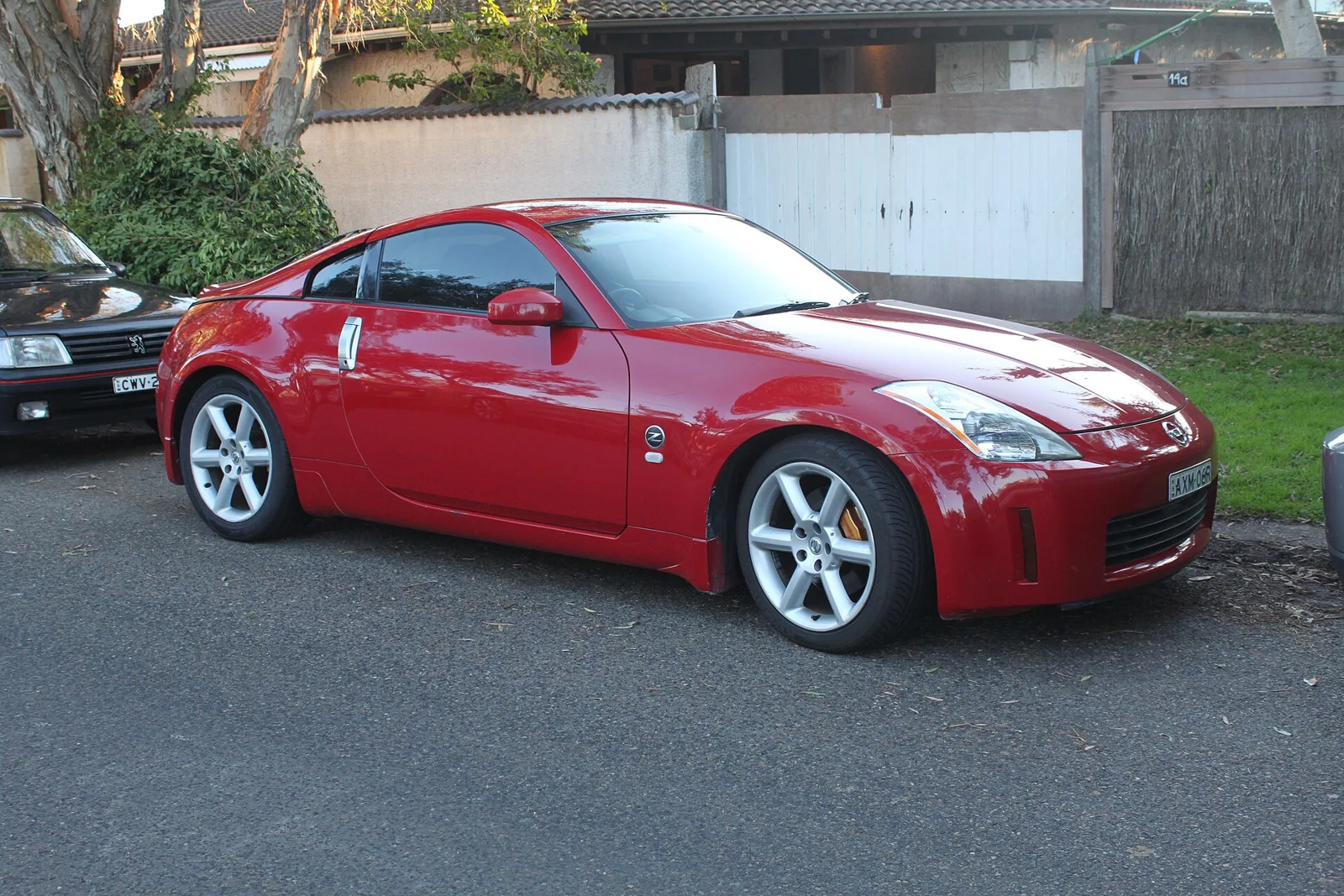
The Z32 was designed by Isao Sono and Toshio Yamashita, and it was approved in final form on 1 October 1986. The second generation was driven up-market, with higher prices than its predecessor and a redesign aimed at greater speed and more advanced technology.
Its body was wider, with a rounder profile and fewer hard edges. The drag coefficient rose slightly to 0.31 from the Z31's 0.30, and Nissan used a Cray-2 supercomputer and CAD software to develop the shape.
A two-seat convertible by ASC arrived in 1992, the first open-top version of the Z32. The Z32 was offered as a 2+2 as well as a two-seater, so buyers still had a choice of body style.
How powerful was the Z32?
The naturally aspirated VG30DE V6 produced 222 bhp (225 PS; 166 kW) at 6,400 rpm in the Z32. The twin-turbo VG30DETT was rated at 300 bhp (304 PS; 224 kW) at the same engine speed, and its torque reached 384 N m (283 lb ft) at 3,600 rpm.
Cars fitted with the optional automatic transmission were detuned to 280 bhp (209 kW). The twin-turbo line was therefore split between the full-output manual and the slightly softer automatic.
How did the Z32 perform on the road?
In instrumented testing by Car and Driver in 1989, the naturally aspirated car reached 60 mph (97 km/h) in 6.7 seconds. Its quarter mile took 15.0 seconds at a 93 mph (150 km/h) trap speed, and its maximum speed was 143 mph (230 km/h).
The Z32 carried a governed top speed of 155 mph (249 km/h). The four-wheel steering system Super HICAS had first appeared on the R31 Skyline, and Nissan brought it to the Z32 as part of its performance package.
How did US sales of the Z32 run?
The Z32's extended model year sales reached 39,290 units in 1990. US sales then ran at 17,652 units in 1991, 6,708 in 1992, 11,599 in 1993, 5,320 in 1994, 3,135 in 1995 and 2,929 in 1996.
American Z-car sales had reached one million during the 1990 model year. That was a major milestone, and it made the later decline in sales all the more noticeable.
Why did North American sales end in 1996?
North American 300ZX sales ended in 1996 after over 80,000 sales. The mid-1990s trend toward SUVs and a rising yen against the dollar both contributed to the decline.
The final 300 North American cars were sold as a Commemorative Edition, which marked the close of the car's run in the United States.
How did the Z32 vary by market?
In Japan the 300ZX continued until August 2000, and the domestic market was offered variants that the international market never saw. These included the Version S and the Version R, which was a preset-option trim sold on the 2+2 body.
In Europe the Z32 was sold only in 2+2 twin-turbo form from 1990 to 1996. In Australia it was offered in 2+2 naturally aspirated form from 1990 to 1995, which gave the two markets different engine choices.
What was the SR-71 Z32?
The SR-71 Z32 was a 1990 collaboration between Motorsports International and HKS, and it was named after the Lockheed SR-71 Blackbird. Its base price was $65,000, and 100 orders were already in hand when it was announced.
The plan called for 500 cars a year through 1993. It is claimed, however, that just eight cars were built.
What was the Steve Millen SMZ?
In 1995 and 1996 Steve Millen Motorsports, known as Stillen, developed the SMZ with Nissan North America. The upgrades included Skyline GT-R brakes, a high-flow intake and a free-flow exhaust.
The SMZ brought total output to 365 bhp (272 kW) and 332 lb ft (450 N m). A total of 104 SMZs were made, each costing $14,000 more than the standard Twin Turbo, and every car was numbered in the engine bay and interior.
How did the 300ZX race?
The 300ZX was campaigned in showroom stock racing during 1984 and 1985, and it scored a Trans Am win in 1986 at Lime Rock, driven by Paul Newman for Bob Sharp Racing. That was the only Trans Am win by a 300ZX.
Between 1985 and 1987, the GTP ZX-Turbo, developed by Electramotive, raced in the IMSA GT Championship's GTP class, using a Lola T810 chassis and a VG30ET engine. It became dominant in IMSA GT in 1988.
How did the twin turbo win at Daytona and Le Mans?
Steve Millen took the wheel of the twin-turbo 300ZX for Clayton Cunningham Racing between 1990 and 1995. The car dominated IMSA in its GTO and later GTS categories, and Millen earned two IMSA GTS Driving Championships.
The biggest triumph was the 1994 victory at the 24 Hours of Daytona. At the 1994 24 Hours of Le Mans the 300ZX finished first in the GTS-1 class and 5th overall, before IMSA ruled the twin-turbo VG engine ineligible for 1995.
The 1995 GTS 300ZX used a V8 VH engine, and it won the GTS-1 class at the 12 Hours of Sebring.
Did the 300ZX set a land speed record?
The JUN-BLITZ Bonneville Z32 holds the E/BGMS class land speed record at 260.809 mph (419.73 km/h). It was a partnership between JUN Auto and BLITZ, and the record came in 1991 at Bonneville.
How did critics rate the Z32?
The Z32 earned a place on Car and Driver's Ten Best list for seven years running, and Motor Trend named it the 1990 Import Car of the Year. Automobile listed it among the 100 coolest cars of all time in 2004.
What were the Z32's advertising and safety stories?
Nissan aired a 1990 Super Bowl XXIV commercial directed by Ridley Scott, but it ran only once. The commercial was one of the more memorable moments of the car's life in the United States.
A 1996 commercial called Toys drew a lawsuit from Mattel in 1997, which the companies settled. In US crash tests the 1991 to 1993 300ZX earned 3 out of 5 stars in front driver collision ratings from the NHTSA.
What are the key 300ZX figures?
| Specification | Detail |
|---|---|
| Production | Japan 1983 to 2000; United States 1984 to 1996 |
| Z31 drag coefficient | 0.30 |
| 200ZR engine | Turbocharged RB20DET 2.0 L straight-six, 180 PS (132 kW) |
| Z31 turbo (1986 facelift) | 195 PS (143 kW), net rating |
| Z32 drag coefficient | 0.31 |
| Z32 naturally aspirated | 222 bhp (225 PS; 166 kW) at 6,400 rpm |
| Z32 twin turbo | 300 bhp (304 PS; 224 kW) at 6,400 rpm, 384 N m |
| Z32 automatic | Detuned to 280 bhp (209 kW) |
| Z32 naturally aspirated 0-60 mph | 6.7 seconds (Car and Driver, 1989) |
| Z32 governed top speed | 155 mph (249 km/h) |
| SMZ output | 365 bhp (272 kW), 332 lb ft (450 N m) |
_coupe_01.jpg)