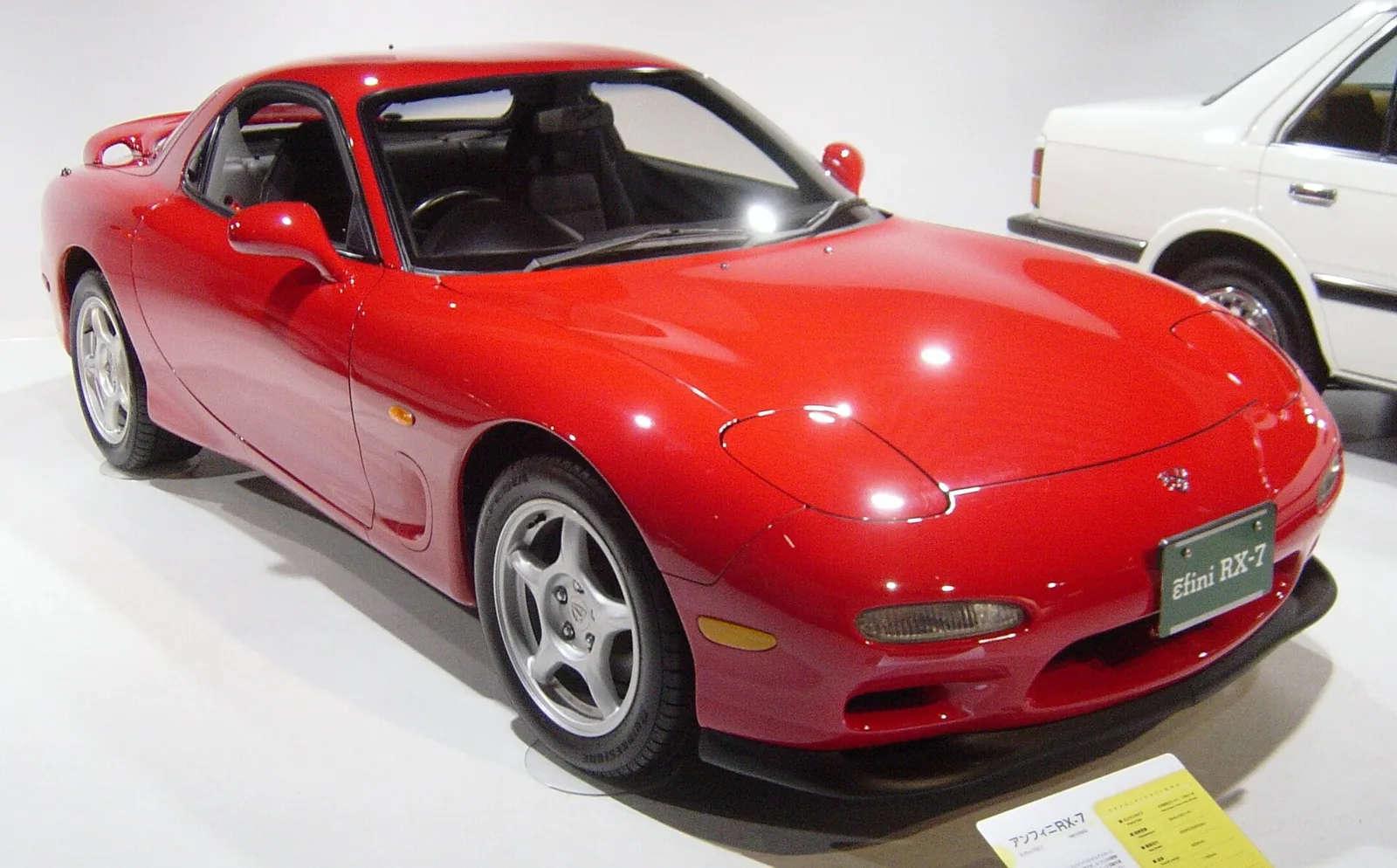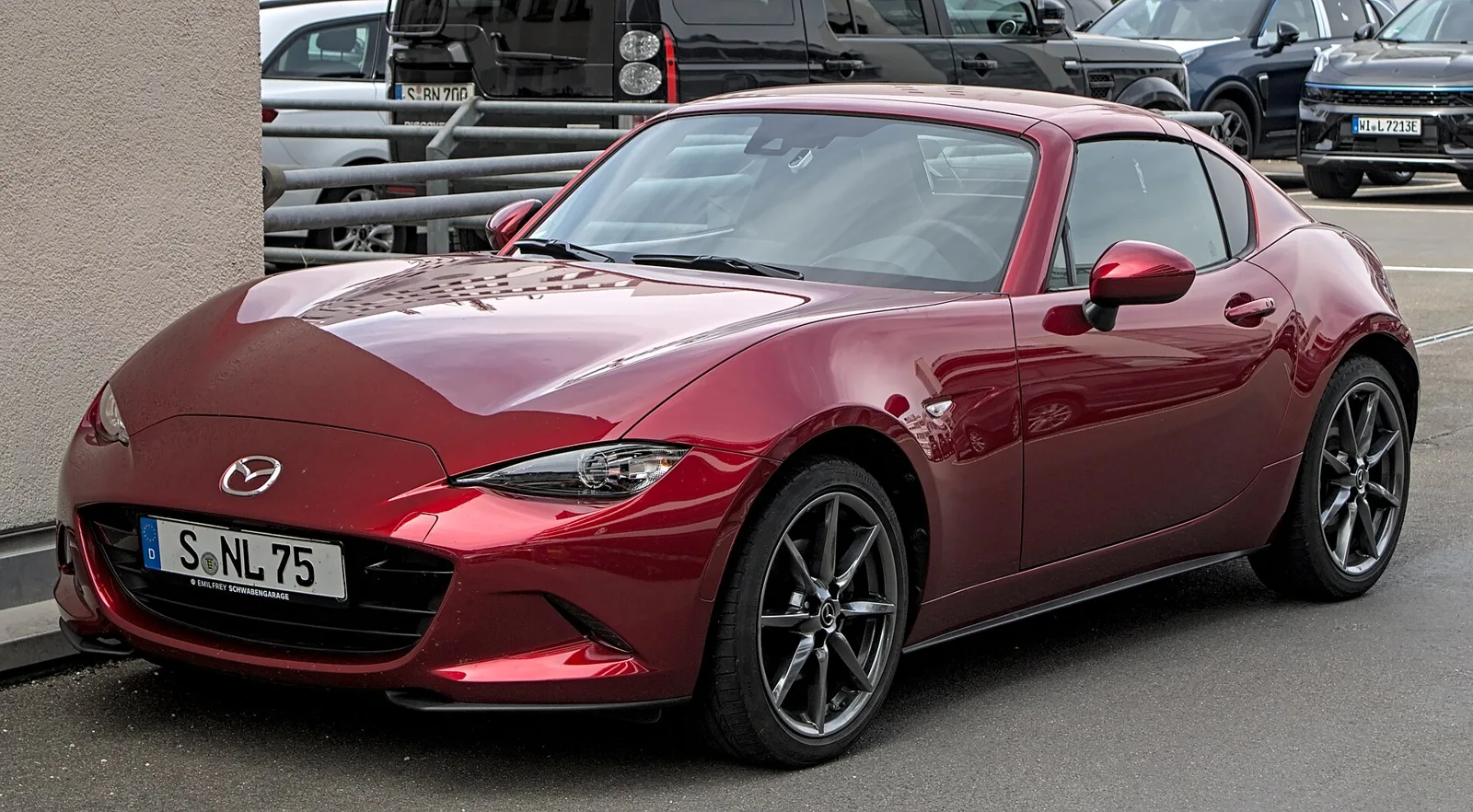
From its 1989 Chicago debut to the fourth generation ND, the MX-5 kept a small, light and balanced formula and passed one million sales.
The Mazda MX-5 is a lightweight two-seat roadster sold as the Miata in the United States and the Roadster in Japan. Introduced in 1989 and built in four generations, it is known for balanced handling and a minimalist design, and it remains the best-selling two-seat sports car on record.
Mazda's MX-5 set out to revive the small, light roadster at a time when such cars had almost disappeared. It was built at the Hiroshima plant and debuted at the Chicago Auto Show in February 1989. Four generations later, sales have passed one million.
Where did the MX-5 idea come from?
The idea began in 1976, when Bob Hall, a Motor Trend journalist and expert on Japanese cars, met Kenichi Yamamoto and Gai Arai at Mazda. Hall told them that someone should build an inexpensive roadster. Years later, Yamamoto gave the go-ahead to research the project that became the MX-5. By then he was chairman of Mazda Motors and remembered the conversation.
Hall moved into product planning at Mazda USA in 1981 and hired designer Mark Jordan for a new design studio in Southern California. The concept was approved in 1983 under the Offline 55 programme, an internal initiative to change how new models were developed. Tokyo and California teams then competed to design the car.
A small, light, balanced roadster that kept its character through four generations and more than one million sales.
What made the MX-5 different from its rivals?
At launch the MX-5 faced very few direct rivals. The Alfa Romeo Spider was one of the few small roadsters still in production, but it cost significantly more. Mazda's car offered a lightweight, unibody roadster at a far lower price, and demand soon ran ahead of supply.
The car was positioned as the spiritual successor to classic roadsters such as the MGB, Triumph TR7, Triumph Spitfire and Fiat Spider. The Lotus Elan served as its design benchmark, so the new car echoed the proportions and layout of those earlier models.
Its unibody structure weighed under 1,100 kg (2,500 lb). A Powerplant Frame, a longitudinal truss, ties the engine rigidly to the differential, which reduces flex and improves balance.
Which design won the competition?
The Duo 101, produced by the California team, won the contest in August 1984 after full-scale clay models were judged. The design was a front-engine, rear-wheel drive roadster that matched the car's British ancestry, and it could take either a soft top or a hardtop. Its Japanese rivals had favoured front-wheel drive or a mid-engined layout.
The mid-engined option looked promising on paper in April 1984, when designs were judged without models. The Duo 101 drew cues from the Lotus Elan, including the door handles and tail lamps.
How did the MX-5 reach production?
International Automotive Design in Worthing, England, built a running prototype codenamed V705, which was completed in August 1985. The prototype used a fibreglass body and components from early Mazda models. Final approval followed on 18 January 1986.
The project was renamed P729 for production and placed under Toshihiko Hirai. Five engineering mules were built, and the first front and rear crash tests were run on the P729. Tom Matano, Mark Jordan, Wu-huang Chin, Norman Garrett and Koichi Hayashi worked on the final design, before the project moved to Japan for engineering and production details.
Demand was strong from the start. Dealers in the United States charged up to US$10,000 over the list price of $14,000 to $16,000, and waiting lists stretched to several months.
What did the first-generation NA offer?
The first-generation NA ran from 1989 to 1997 and started with a 1.6 litre straight-four producing 116 horsepower. A 1.8 litre engine became standard in most markets in late 1993. Base cars had steel wheels and no power steering, air conditioning or sound system, which kept the price and weight down. Like the rest of the line, the NA was produced at Mazda's Hiroshima plant.
The NA was built with a five-speed manual as standard, with a four-speed automatic available as an option. Its pop-up headlights were unique to this generation. Automobile Magazine named it its 1990 Automobile of the Year, and Car and Driver put it on its 10Best list from 1990 to 1992.
What changed with the NB generation?
The NB, sold from 1998 for the 1999 model year, kept the NA's proportions but dropped the retractable headlamps to meet tougher pedestrian safety tests. A 2001 update changed the front and rear styling and added variable-valve timing to the 1.8 litre engine, which made 106 kW (142 hp).
The Mazdaspeed MX-5, built for the 2004 and 2005 model years, is the only factory turbocharged example. Its 1.8 litre engine produced 133 kW (178 hp) and reached 0-97 km/h (0-60 mph) in 6.7 seconds. The quarter mile took 15.2 seconds, and the car had stiffer springs, Bilstein shocks and 17-inch wheels.
What did the NC and ND generations bring?
The NC arrived in 2005, taking design cues from the 2003 Ibuki concept car. Its headline feature was the Power Retractable Hard Top, which folded away without encroaching on boot space. The NC won Car of the Year Japan for 2005 and 2006.
The fourth-generation ND was unveiled in 2014 and went into production in 2015. It introduced the Retractable Fastback variant, which has a rigid roof and a more coupe-like silhouette. The ND also became the basis for the Fiat 124 Spider and Abarth 124 Spider.
The 2019 update raised the engine to 135 kW (181 hp) and added a dual-mass flywheel to the manual gearbox. Visually it matched the pre-update car, so the mechanical changes were the main news for owners.
What are the MX-5 generation specifications?
| Generation | Years | Engine highlight | Notable fact |
|---|---|---|---|
| NA | 1989-1997 | 1.6 litre straight-four, 116 horsepower | 228,961 units sold |
| NA late | From late 1993 | 1.8 litre engine standard in most markets | Steel wheels on base cars |
| NB | 1998-2005 | 1.8 litre, 106 kW (142 hp) after 2001 | Retractable headlamps removed |
| Mazdaspeed | 2004-2005 | Turbo 1.8 litre, 133 kW (178 hp) | 0-97 km/h in 6.7 seconds |
| NC | 2005-2015 | Power Retractable Hard Top | Car of the Year Japan 2005-2006 |
| ND | 2015 onward | 135 kW (181 hp) from the 2019 update | World Car of the Year 2016 |
How does the MX-5 handle?
The MX-5 has a roughly 50:50 front and rear weight balance, which gives it nearly neutral handling. Oversteer is easy to induce and easy to control, which is part of the reason the car is so popular in racing. The design credo behind the car, Jinba ittai, means unity of horse and rider.
Some models have a limited-slip differential, traction control and anti-lock braking. Those features were not standard on every version, so buyers need to check the specification of the car they are considering.
The Powerplant Frame also keeps the engine and differential in a rigid relationship, which limits flex. Together with the weight split, that rigidity is a large part of the car's balance.
Which awards did the fourth-generation ND win?
The fourth-generation ND won the 2016 World Car of the Year award and the Red Dot Best of the Best prize for product design in 2017. It was also named Car of the Year Japan for 2015 and 2016 and appeared on Car and Driver's 10Best list from 2016 to 2019. Those honours arrived within a few years of the ND's 2015 production start.
The Retractable Fastback variant of the ND has a rigid roof and buttresses that give it a more coupe-like silhouette than the soft top. The 2014 unveiling and 2015 production start opened the fourth generation.
What do the generation codes mean?
Each generation is identified by a two-letter code, starting with NA for the first generation. The NB arrived in 1998, the NC in 2005 and the ND in 2015. Although each generation was redesigned, the core idea, dimensions and basic technology stayed the same.
How many MX-5s have been sold?
More than one million MX-5s have been sold. Guinness named the car the best-selling two-seat sports car in 2000, when total production stood at 531,890 units. The 250,000th car rolled out on 9 November 1992, the 500,000th on 8 February 1999 and the 900,000th in February 2011.
The 750,000th car came in March 2004, the 800,000th in January 2007, and the one millionth MX-5 was produced on 22 April 2016. Those milestones span all four generations, which shows how the car's appeal has lasted.
How has the MX-5 performed in motorsport?
Lightly modified MX-5s are a favourite for amateur circuit racing and form the basis of several spec series. Spec Miata is a US racing class, the Global MX-5 Cup is an IMSA-sanctioned Spec Miata series, and the MaX5 Racing Championship runs in the United Kingdom.
Grassroots Motorsports named the MX-5 the most important sports car of the previous 25 years.
What awards did the MX-5 win?
The MX-5 has won Wheels Car of the Year in 1989, 2005 and 2016, along with the 2005 Australian Car of the Year award. Car and Driver has placed it on its 10Best list 17 times, and Edmunds named it a 2019 Editor's Choice winner for Best Sports Car.
Car and Driver also named it its 2024 Editor's Choice Affordable Sports Car. Wheels has chosen the car as Car of the Year in three separate years.
Other honours include Auto Express's 2017 Roadster of the Year, the 2018 What Car? award for Best Convertible under 25,000 pounds and the New York Daily News DNA Award in 2018. The 2016 UK Car of the Year and the Daily Telegraph's 2016 Car of the Year also went to the fourth generation.
Who builds custom MX-5 bodies?
Simpson Design is a US-based custom coachbuilder that produces bodies and interiors for the Miata MX-5. Its work is one of the clearest examples of how the car supports a custom aftermarket, with bodies and cabins built around the existing platform.