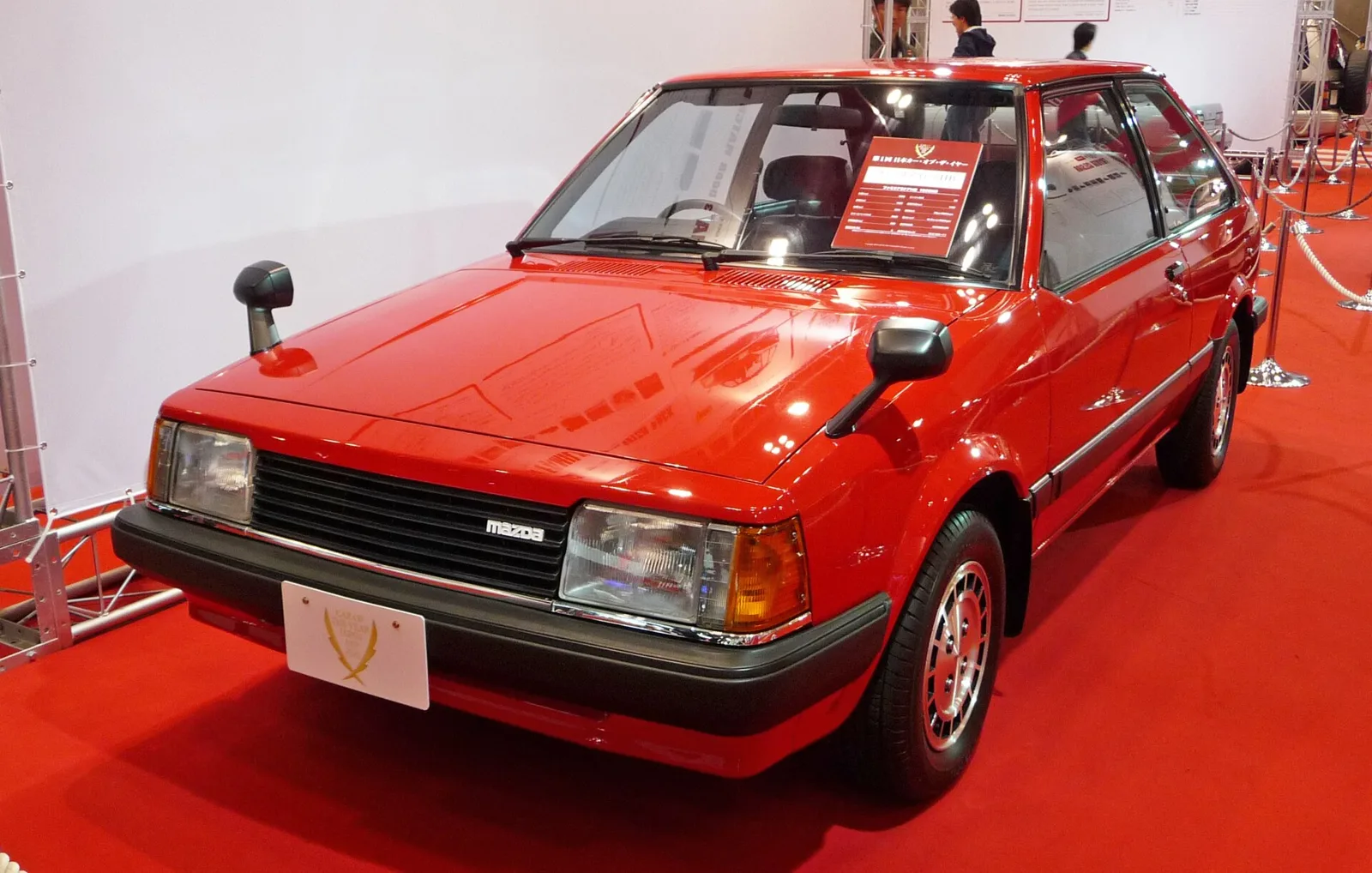
Mazda's small family car ran from 1963 to 2003, sold as the 323 and Protege abroad, with rotary, turbo and four-wheel-drive versions along the way.
Mazda's Familia ran as a small family car from 1963 until the Mazda3 succeeded it for 2004. Abroad it was often called the 323, and the range offered a Wankel rotary model, turbo versions and four-wheel-drive variants along the way.
Mazda's small family car ran for four decades, from the first two-door van of 1963 to the last car built in October 2003. It was sold under several names, and it was marketed as the 323 and Protege in most export markets.
Where did the Familia come from?
The Mazda Familia was a small family car built from 1963 to 2003, and it was replaced by the Mazda3 (Axela) for 2004. Mazda's plan began with the R360 kei car in 1960, and the Familia extended that early work into a larger family car.
A Mazda 700 prototype was shown at the eighth Tokyo Motor Show in 1961, which marked a step in the company's small-car planning. The first Familia appeared in October 1963 as a commercial two-door van.
About 400,000 first-generation Familias were built, and about 10,000 of them were exported, mainly to Australia and Oceania. Mazda Familias were built at Hiroshima and in knock-down kits in several countries.
Kia built the second-generation Familia as the Brisa from 1973.
A small Mazda family car that ran for four decades and carried the 323 name across export markets.
What was the Familia called in other markets?
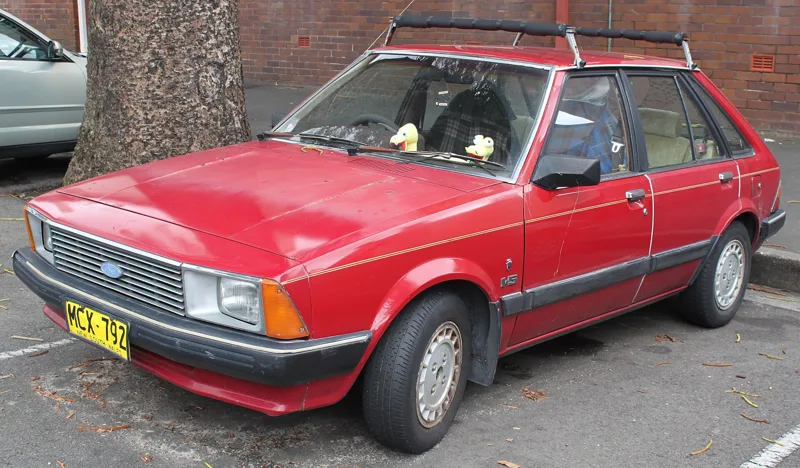
The car was known as the Familia in Japan and as the 323 in Europe after 1977. It was rebadged as the Ford Laser and Ford Meteor in Asia and Oceania, and from 1991 it was sold as the Ford Escort and Mercury Tracer in North America.
Its variants also carried local names. The Presto name was added to the range in April 1970, and Mazda Marella was the name used for the Presto in Finland.
The 323 name first appeared for export markets only, and it was used alongside the Astina name in several markets. The Familia Astina was the Japanese name for the 323 Astina.
What body styles did the Familia come in?
Fourth-generation cars were offered in several hatch and wagon forms, while the BF of 1985 offered a hatchback, saloon and wagon, which kept the range varied for buyers of the period. The BG of 1989 was a hatchback, liftback and saloon, and the BJ generation also included a four-door saloon.
The Familia Presto and the Astina sat within this range, and the Astina used pop-up headlights in its front end. Astina was built from 1989 to 1994, and the Eunos 100 luxury version was sold in Japan.
Vans used the Familia Presto name while pickups did not. The BJ generation offered all-wheel drive as an option, which widened the choice of drivetrains in the final years of the range.
How did the Familia reach Australia and other markets?
About 10,000 first-generation cars were exported, mainly to Australia and Oceania. In Asia and Oceania the car also appeared under Ford's own Laser and Meteor badges.
The name changes reflected each market's own badging arrangements, since Ford sold the car under its own names in those regions, and the same body carried several different labels. Kits were also assembled abroad, which spread production beyond Japan.
In Europe the car was sold as the 323, and the 323F name also appeared. That European naming became the most widely recognised version of the car outside Japan.
What was the Astina?
The Astina was a Familia variant with pop-up headlights, built from 1989 to 1994. It was the Familia Astina in Japan, the 323F in Europe and the 323 Astina in other markets.
Its pop-up headlights gave the front end a distinctive look, and the name ran alongside the Presto and the Infini as part of the range's badging.
How was the early Familia designed?
The first production Familia was styled by Giorgetto Giugiaro at Bertone, and it appeared as a commercial two-door van in October 1963. Its first engine was a 782 cc SA four-cylinder, known as the white engine.
The 1965 Familia 1000 coupe used a 985 cc SOHC PC engine, and the 1968 Mazda 1200 export used a 1169 cc straight-four. Those early engines show how the range grew from small capacities to larger units.
The 1970 Presto introduced a 1.3-litre TC overhead-cam engine. The April 1970 facelift added a chrome strip around the front grille.
What made the Familia Rotary special?
The Familia Rotary R100 used a 982 cc 10A Wankel engine, and it was rated 100 PS (74 kW) with a small carburettor. The rotary engine was offered only in the second-generation Familia.
The R100 had twin round tail lights and a T-Dash cockpit. Its Wankel engine set it apart from the piston-engined cars in the range.
The fourth-generation wagon continued in production until 1986, after the rotary model had already been offered in the second generation.
How did the later generations evolve?
The BD 1980 was Mazda's first front-engine, front-wheel-drive subcompact, and its development had input from Ford, which held a stake in Mazda. The BD took the inaugural Car of the Year Japan Award in 1980.
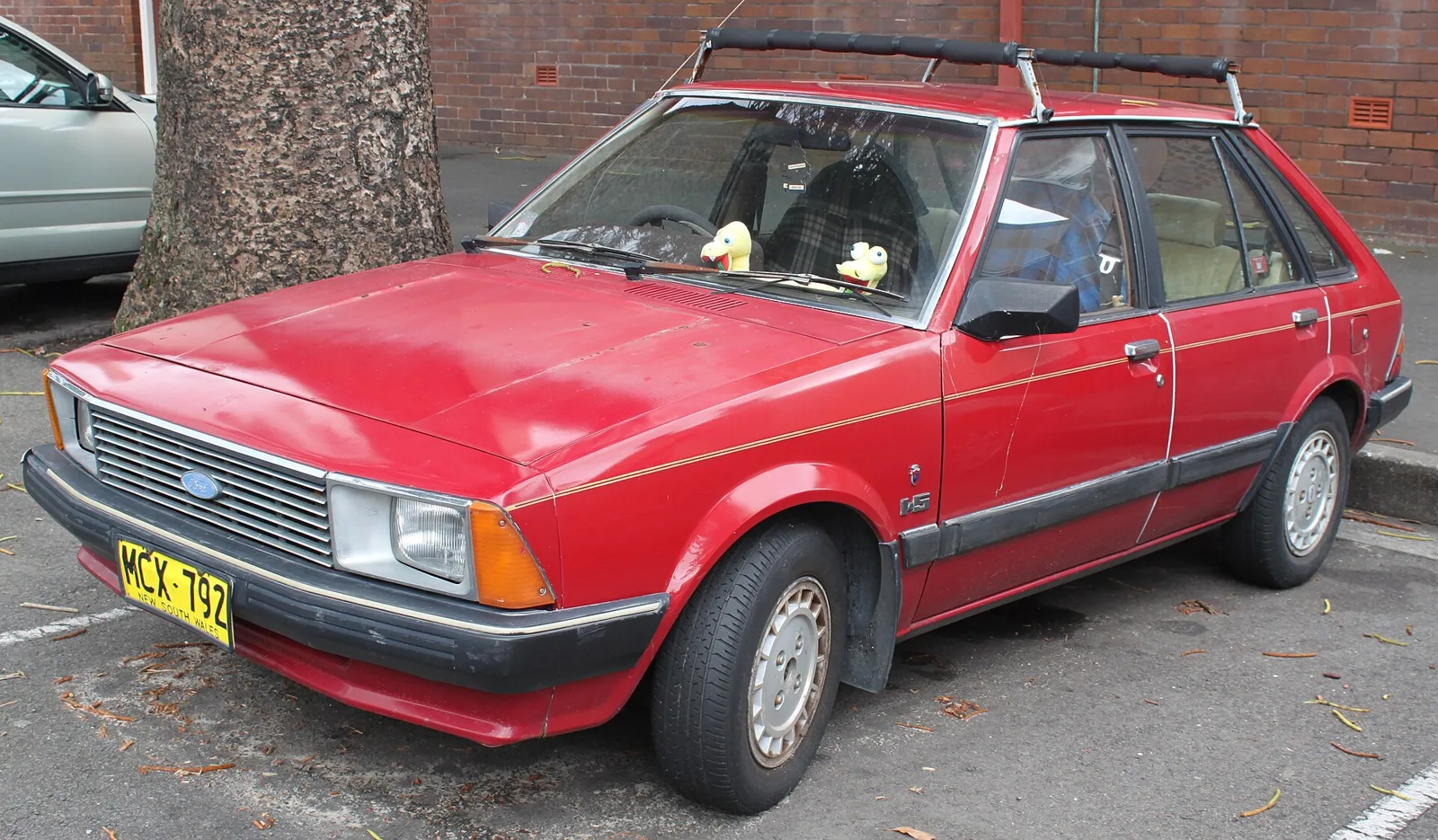
BD engines were the 1.1 L E1, 1.3 L E3, 1.5 L E5 and E5S, with the top E5S rated at 88 PS (65 kW; 87 hp). The fourth generation came as three- and five-door hatchbacks and wagons, and the 1979 facelift replaced round headlights with rectangular units.
The ninth generation, the BJ of 1998, included the five-door S-Wagon, which was sold as the Protege5 in North America. The 2001 facelift brought new styling, revised suspension and a new audio system to the range.
What was the BF generation like?
The BF of 1985 came as a hatchback, saloon and wagon, and a coupe called Etude followed in 1987. Its BF turbo used a 1.6 L B6T that produced 140 PS (103 kW; 138 hp).
The XGI Turbo arrived in June 1983 as Mazda's first turbocharged piston engine, which opened a new performance chapter for the range.
How did the BG and BH generations differ?
The seventh generation, the BG of 1989, came as a hatchback, liftback and saloon shared no body panels, and its GT-X 1.8 L BPT turbo produced 185 PS (136 kW; 182 hp). The BH 1994 saloon had a wheelbase only 5 mm short of the Mazda 626.
The BG GT-R produced 210 PS (154 kW; 207 hp) in Japan, while the GT-R produced 185 PS (136 kW; 182 hp) in Europe. The Japanese and European versions of the same model therefore differed in output.
BG four-wheel-drive cars used viscous limited-slip differentials, and all-wheel-drive models were introduced in August 1989. A BG turbocharged engine was developed for Group A rally homologation.
GT-A and GT-Ae were limited homologation cars for the rally debut.
What engines did the later Familias use?
A 1.7 L PN diesel produced 58 PS (43 kW) naturally aspirated, while the petrol range ran from the 1.1-litre E1 up to the 1.8-litre turbo. That spread gave buyers a choice of economy and performance.
The Familia Infini used a 1.8-litre DOHC engine borrowed from the Protege LX, with a close-ratio five-speed manual and a viscous limited-slip differential. It was a Japan-only special model based on the GT saloon.
The Mazdaspeed Protege had a 170 hp (127 kW; 172 PS) turbocharged engine in 2003, which marked a late appearance of a turbo unit in the range.
How many Familias were sold?
Cumulative Familia production passed five million in November 1986, and Mazda built about 40,000 Familia/323s per month that year. The FA4 generation sold about 890,000 examples in three full years.
Kia Brisa passenger cars totalled 31,017, and including pickups the total was 75,987. Brisa exports reached 1,526 units, and passenger production halted in 1981.
Special editions were small. The Familia Infini had about 1,000 built for Mazda's 70th anniversary in 1990, while the Mazdaspeed Familia numbered 200 units, all in Starry Blue Mica.
The Protege MP3 saw 1,500 built, with 1,000 in blue and 500 in yellow, and Mazdaspeed Protege production totalled 4,500 cars.
How did the Familia perform in motorsport?
The Familia Rotary coupe won its first outing at the Grand Prix of Singapore in April 1969. Two Familia Rotary coupes finished fifth and sixth at the 1969 Spa 24 Hours, and the Familia won the 1969 Suzuka All-Japan Grand Cup easily.
The Familia placed eighth at the RAC Tourist Trophy in June 1970, and Sigma fielded a rotary-engined 323 in the South African national rally championship. Mazda's rotary Le Mans entries of 1970 were followed by a win 21 years later with the 787B.
The Singapore Police Force used 323s as Fast Response Cars until 2016.
How was the Familia received?
Wheels magazine named the 1980 Familia its car of the year, and the BD won the first Car of the Year Japan Award in 1980. The BD also outsold the Toyota Corolla on several occasions in Japan.
Sao Penza was sold in the UK from June 1991 and withdrawn in 1993 after just over 1,000 sales. It struggled against South Korean and Eastern European rivals.
The Brisa appeared in the 2017 South Korean film A Taxi Driver, and in 2019 DVLA records showed one Sao Penza still in use in the UK.
How did the Familia end production?
Production ended on 2 October 2003, and the Mazda3 (Axela) took over for 2004. Haima Family was built in China from 2003 to 2010.
Pickups were built until 1991 for South Africa, Zimbabwe and the Philippines. The fourth-generation wagon had stopped in 1986, and the third generation, the FA3 series 2 car of 1973, had carried the name through the rest of the decade.
What are the Mazda 323 specifications?
The Mazda 323's core figures range from a 782 cc first-generation engine to a 210 PS (154 kW; 207 hp) BG GT-R turbo. The table below sets out the key figures across the range.
| Specification | Detail |
|---|---|
| Production span | 1963 to 2003 |
| First-generation engine | 782 cc SA straight-four |
| Familia Rotary R100 | 982 cc 10A Wankel, 100 PS (74 kW) |
| BD top engine | 1.5 L E5S, 88 PS (65 kW; 87 hp) |
| BF turbo | 1.6 L B6T, 140 PS (103 kW; 138 hp) |
| BG GT-R | 1.8 L BPD turbo, 210 PS (154 kW; 207 hp) |
| 1.7 L PN diesel | 58 PS (43 kW), naturally aspirated |
| First-generation production | About 400,000 built |
| FA4 generation sales | About 890,000 in three full years |
| Last production day | 2 October 2003 |
| Successor | Mazda3 (Axela) for 2004 |
_at_the_TMS_2009-1.JPG)