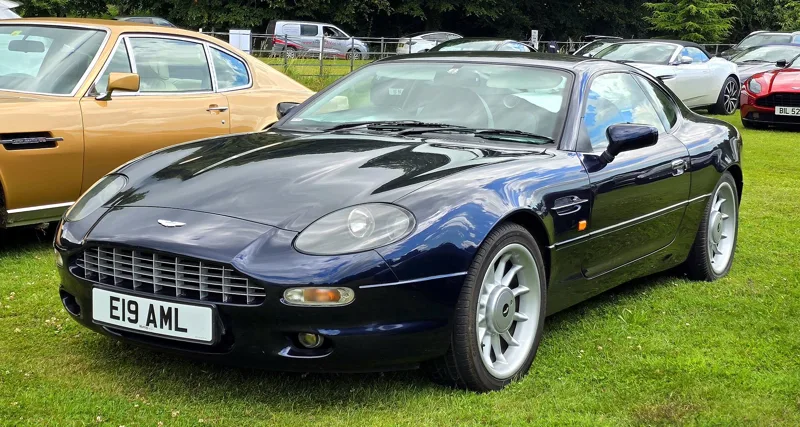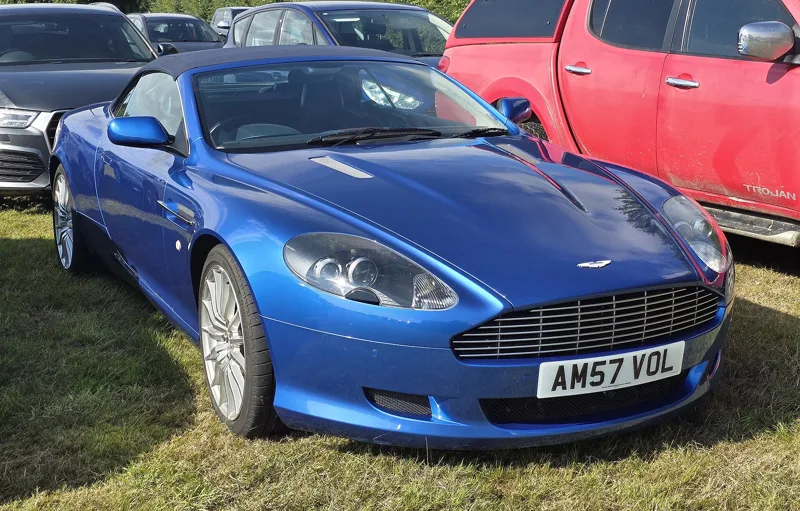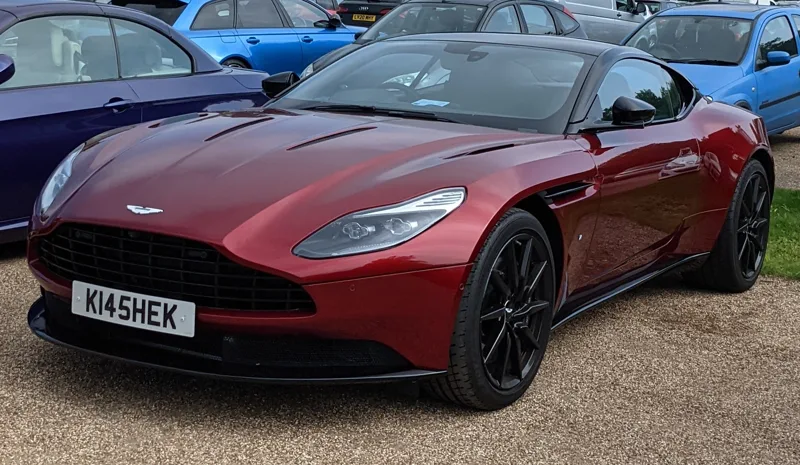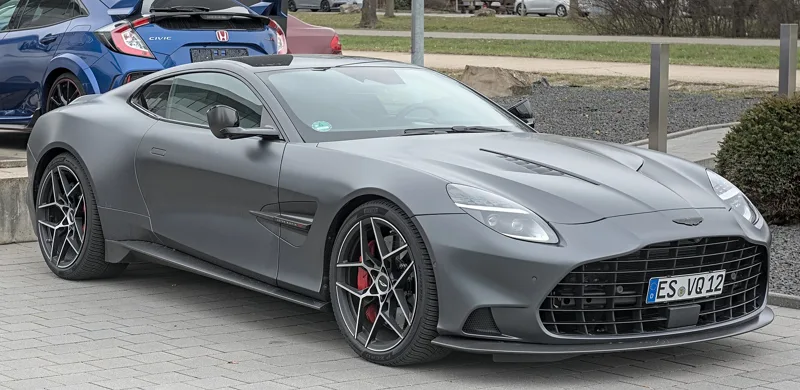
A hand-built British V8 that replaced Aston Martin's older flagship, grew into the Vantage and Volante family, and came back in 2011 with a V12.
The Virage was Aston Martin's V8 flagship from 1989 to 2000, produced in coupe and Volante forms. It was supplanted by the Vanquish, and a V12 model under the same name returned in 2011 before being dropped in 2012.
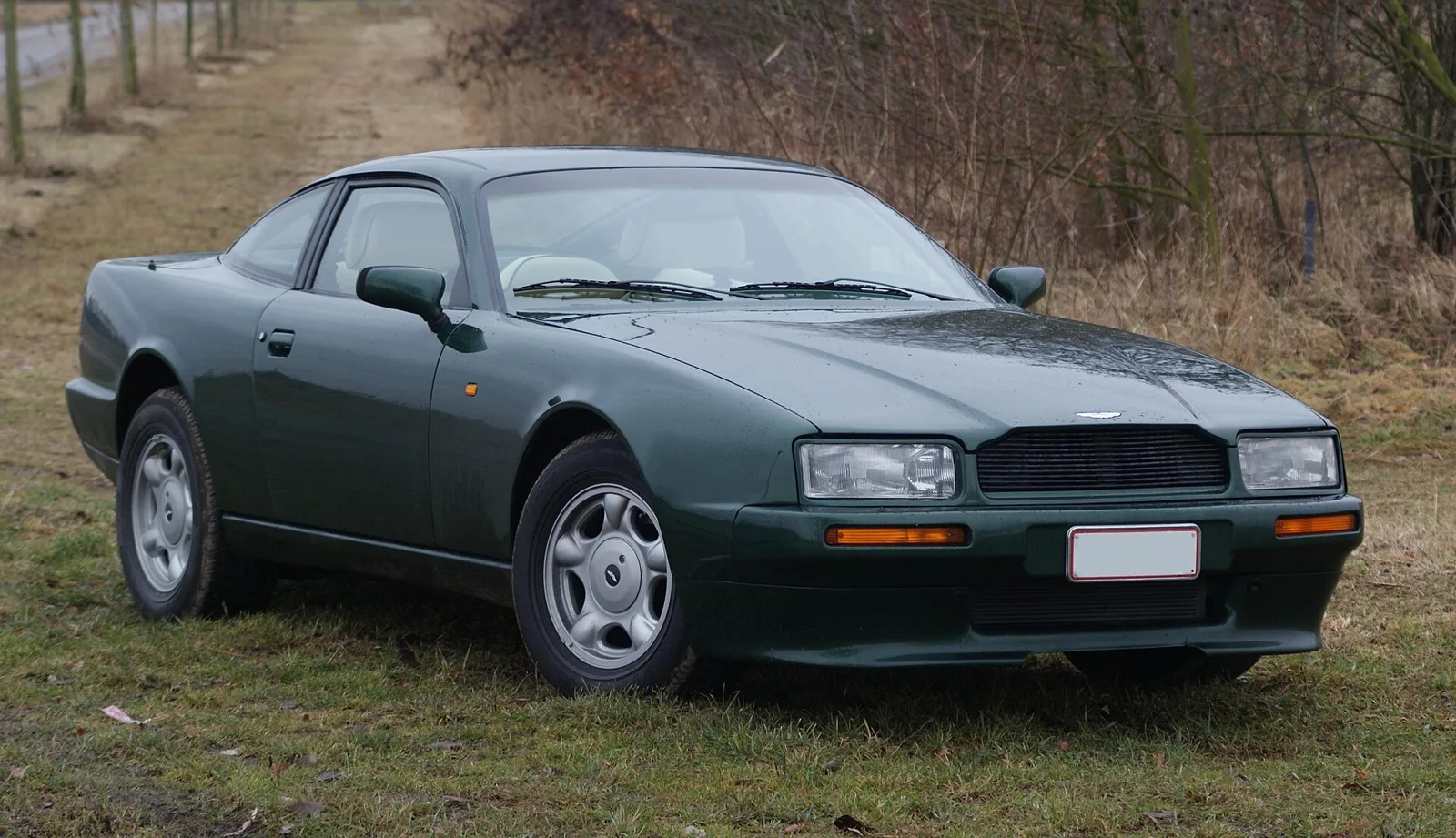
The Aston Martin Virage was a British luxury coupe that replaced Aston Martin's older V8 models as the company's flagship. It was introduced at the Birmingham Motor Show in 1988, and it was joined by the high-performance Vantage in 1993 before the base model became the V8 Coupe in 1996.
The Virage name appeared on two very different generations. The original car, built from 1989 to 2000, was a hand-finished V8 coupe and convertible, while the 2011 model was a V12 grand tourer that sat between the DB9 and the DBS in the range.
Where did the Aston Martin Virage come from?
The Virage was designed to be a more modern flagship than the V8 it replaced. Its chassis evolved from the Lagonda's, and it used a de Dion tube at the rear with a Watts linkage, located by triangulated radius rods, with double wishbones at the front.
Aston Martin had been bought by Ford shortly before the Virage debuted, and the car became the first model introduced under the new ownership. The company's wider sourcing strategy led to borrowed parts from other manufacturers, which kept development costs down.
Parts came from many suppliers. The headlights were taken from the Audi 200, the taillights from the Volkswagen Scirocco, and General Motors, Jaguar, Citroen and Ford supplied the steering column, climate panel, mirrors and dashboard switches.
A hand-built British V8 flagship that grew into a supercharged Vantage and returned in 2011 with a V12 engine.
What was the original Virage like to drive?
The Virage was large and heavy despite its all-aluminium body, weighing 1,790 kg (3,946 lb). Its 5.3-litre V8 had 32 valves and a displacement of 5,340 cc, and it produced 494 Nm (364 lb ft) of torque that gave it near sports car pace.
Power output was 330 hp (246 kW; 335 PS) in the early cars, with Callaway-designed heads and Weber-Marelli fuel injection. Top speed was 254 km/h (158 mph), and the automatic reached 97 km/h from a standstill in 6.5 seconds, while the manual took 7.4 seconds.
Period testing claimed the catalysed European engine produced 310 PS at 5,300 rpm and reached 100 km/h in about eight seconds with the automatic. A power upgrade to 350 hp was announced at the 1996 Geneva Motor Show, which kept the car competitive as the decade ended.
Which transmissions did the Virage use?
The five-speed ZF Friedrichshafen manual was fitted to about 40 percent of the cars. The more popular option was the Chrysler three-speed Torqueflite automatic, which was replaced by a four-speed unit for the 1993 model year.
A six-speed manual borrowed from the Vantage was offered toward the close of production. The company had hoped to build 275 cars a year, yet the real totals came in at about a third of that across seven years, Volante included.
What was the Works Service 6.3 conversion?
In January 1992 Aston Martin introduced a conversion service that turned the Virage into a 6.3. The centrepiece was a bored and stroked 6.3-litre V8 derived from the AMR1 racing car, with 6,347 cc and a power output of between 456 and 500 hp.
The 6.3 produced 480 lb ft (651 Nm) of torque at 5,800 rpm and reached 175 mph (282 km/h). It also carried 14-inch ventilated disc brakes, which were the largest used on a passenger car until the Bentley Continental GT arrived, along with 18-inch wheels and wide flared bumpers.
The Works Service cars were visually aggressive, with air dams, low sills, side air vents and wide flared wings. They were a clear expression of the company's ambition to push the Virage towards a sports car feel.
Did the Virage come as a shooting brake or saloon?
A shooting brake version of the Virage debuted at the March 1992 Geneva Motor Show. Aston Martin's Works Service built it in-house, and six are believed to have been made, priced at 165,000 pounds each.
The Lagonda Virage saloon was a long-wheelbase four-door built in very limited numbers from 1994. It used a 12-inch chassis extension, though two were ordered with an 18-inch extension, and eight or nine were thought to have been built, with six ordered by the royal family of Brunei.
A five-door Lagonda Virage shooting brake was also produced, with one or two examples built for the market and a further six made for a royal family. Its existence reflects how the Virage could be stretched and adapted for private commissions.
What was the Virage Volante?
The convertible Virage Volante debuted as a strict two-seater at the 1990 Birmingham Motor Show. A 2+2 version appeared at the 1991 Geneva Motor Show, and all production examples from 1992 featured 2+2 seating.
Between 224 and 233 Volantes were built before production ended in 1996. The last 11 cars used the naturally aspirated 1995 engine, which produced 359 PS (264 kW; 354 hp) and was paired with an improved four-speed overdrive automatic.
A Wide Body Volante with the regular 5.3-litre engine was cosmetic only, aimed at the US market where the 6.3 was not certified. Thirteen were built for the US, while seven standard Volantes were delivered there, and a longer V8 Volante LWB followed from 1997.
What was the Vantage version?
The Vantage was shown at the Birmingham Motor Show in September 1992 and built from 1993 to 2000 as the high-performance model. It shared only the roof, doors and wing mirrors with the Virage, and it was wider, lower and fitted with four round taillights.
The big change was under the bonnet, where the 5.3-litre V8 used twin superchargers. It produced 550 hp (410 kW; 558 PS) and 555 lb ft (752 Nm) of torque at 4,000 rpm, with top speed of 300 km/h (186 mph) and 0-60 mph in 4.6 seconds.
From 1998 owners could return their cars to Works Service for conversion to V600 specification, which raised output to 600 hp at 6,200 rpm and torque to 600 lb ft (813 Nm) at 4,400 rpm. The V600 used Dymag magnesium wheels, a feature the Le Mans cars also carried.
What was the V8 Vantage Le Mans?
The V8 Vantage Le Mans was the final model in the V8 Vantage line, built after new European emissions and safety rules forced an end to production. It honoured Aston Martin's 1959 Le Mans victory and was presented at Geneva in 1999, on the 40th anniversary of that win.
A limited run of 40 cars was planned, and each one was sent back after delivery for engine work that raised output to 612 PS (450 kW; 604 hp) and torque to 820 Nm (605 lb ft). Claimed top speed was 320 km/h (200 mph), and 0-100 km/h took 3.9 seconds.
The Le Mans car copied the side vents of the DBR-1 that won the race in 1959, and the interior was reworked with a large tachometer, titanium trim and full Connolly leather. Each car was built to special commission, and its number plate carried the name of the first owner.
Who owned an Aston Martin Virage?
The Virage attracted some well-known owners. Rowan Atkinson owned coupe chassis 50010, which appeared on the front cover of Car magazine in May 1990, and the car was shown at the start of his 1991 TV series The Driven Man.
Lennox Lewis, Elton John and Chris Eubank also had Virages in their garages. The Virage also earned praise in the enthusiast press, where Sports Car International highlighted its acceleration on a first test.
Atkinson's remarks in that Car feature focused on the climate control, which he found remarkable for a car of its age. He could hardly believe that warm air would come from the footwell within 90 seconds of start-up, a level of comfort well beyond what a veteran Aston owner had expected from a hand-built car.
Sales never came close to the company's plans, which is one reason every surviving Virage now carries a story of its own.
Why did the Virage leave the US market?
The Virage went on sale in the US in summer 1990, while the Volante convertible arrived later, in 1992. The later V8 Coupe and Vantage were never officially offered in America.
US availability ended after the 1993 model year because the car lacked passenger airbags and could not meet emissions regulations of the time. The lack of certified versions shaped the US market for the rest of the Virage's life.
Did Aston Martin revive the Virage in 2011?
A new Virage debuted at the 2011 Geneva Motor Show, reviving the name first used on the 1989 to 2000 model. Series production started that March at Gaydon in Warwickshire, where each car took two hundred hours to build, seventy of those hours on the interior.
Designed by Marek Reichman, the 2011 car used a bonded aluminium structure and a 5.9-litre V12 shared with the DB9. The engine produced 490 hp at 6,500 rpm and 569 Nm (420 lb ft) of torque at 5,750 rpm, while the car reached 97 km/h in 4.6 seconds.
The 2011 Virage used a six-speed Touchtronic II paddle automatic from ZF, mounted in a rear transaxle, along with carbon ceramic brakes and six-piston front calipers by Brembo. A Volante variant followed, and its boot measured 172 litres, about 6.5 percent less than the coupe.
What are the Aston Martin Virage specifications?
| Model | Engine | Output | Notes |
|---|---|---|---|
| Virage (1989) | 5.3-litre V8, 32 valves, 5,340 cc | 330 hp (246 kW; 335 PS) | 494 Nm (364 lb ft); 1,790 kg (3,946 lb) |
| Virage 6.3 (Works Service) | 6.3-litre V8, 6,347 cc | 456 to 500 hp | 480 lb ft (651 Nm) at 5,800 rpm |
| V8 Coupe (1996 to 2000) | 5.3-litre V8 | 350 hp (261 kW; 355 PS) | 101 built |
| Vantage (1993 to 2000) | Twin-supercharged 5.3-litre V8 | 550 hp (410 kW; 558 PS) | 555 lb ft (752 Nm) at 4,000 rpm |
| V600 conversion | Twin-supercharged 5.3-litre V8 | 600 hp (447 kW; 608 PS) at 6,200 rpm | Available from 1998 |
| V8 Vantage Le Mans | Modified Vantage V8 | 612 PS (450 kW; 604 hp) | 820 Nm (605 lb ft) |
| Virage (2011) | 5.9-litre V12 | 490 hp at 6,500 rpm | 569 Nm (420 lb ft) at 5,750 rpm |