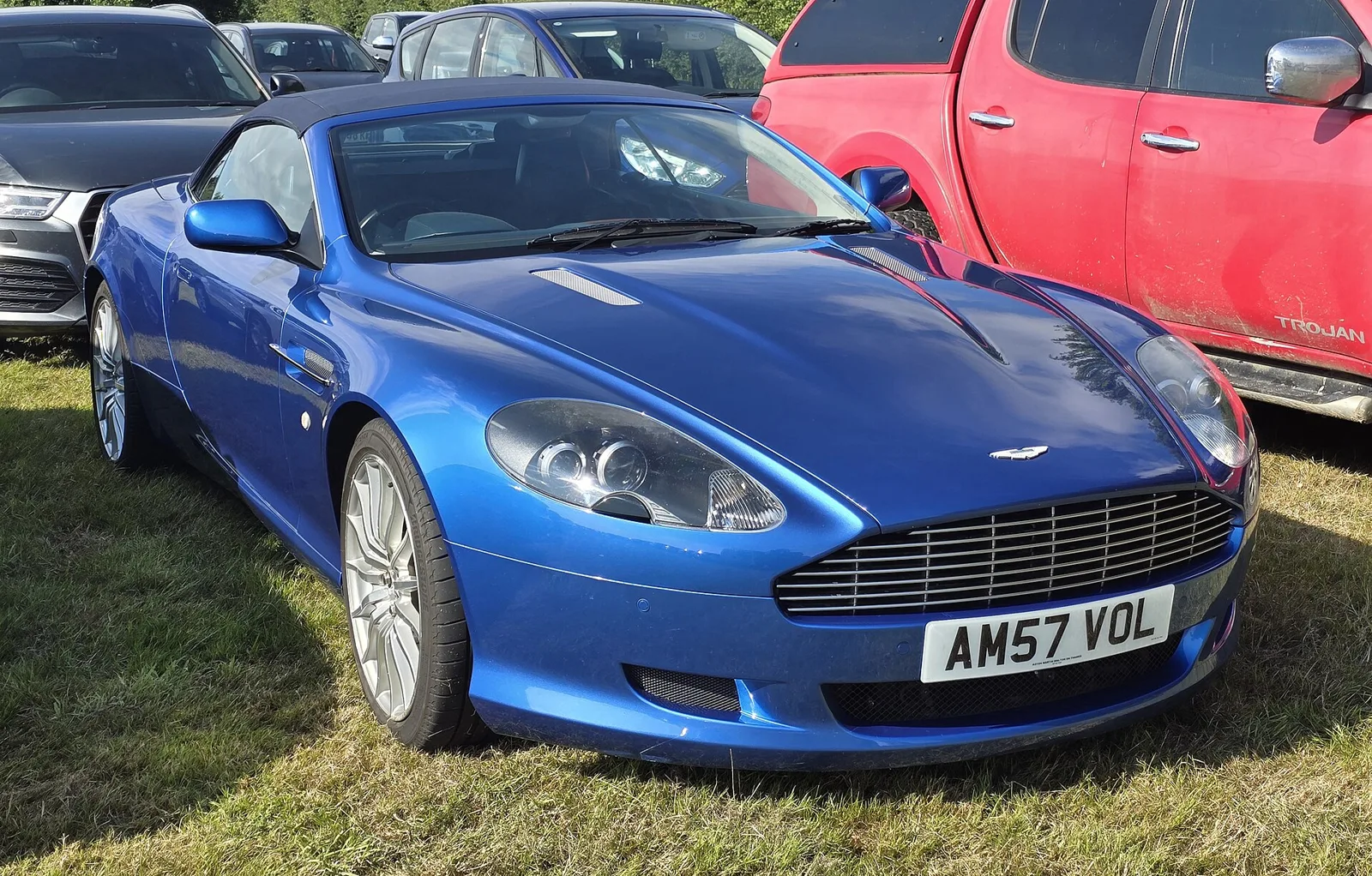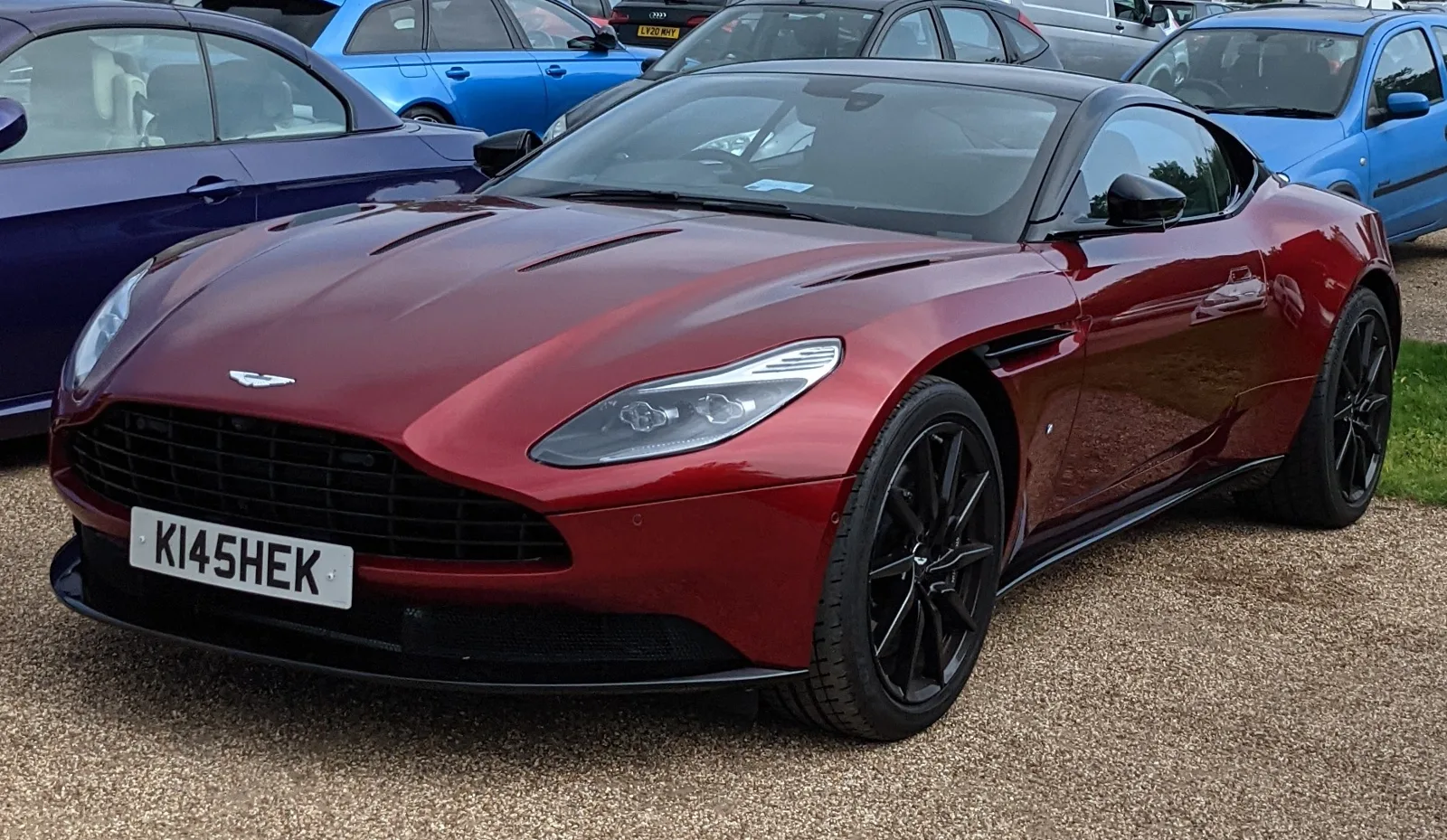
Aston Martin's grand tourer, built at Gaydon with a V12 and a V8 and sold as a coupe and a Volante convertible from 2016 to 2023.
Aston Martin's DB11 was a two-door grand touring car, sold as a coupe and as the Volante convertible. It was built at Gaydon from 2016 to 2023 with a 5.2-litre twin-turbo V12, joined in 2017 by a 4.0-litre twin-turbo V8. It was replaced by the DB12.
The DB11 was the British carmaker's replacement for the DB9 and the first model of its second-century plan. Sold as both a coupe and the Volante convertible, it was built from 2016 until 2023, when the DB12 took over.
Where did the DB11 come from?
Aston Martin named the DB11 as the DB9's successor in 2015, and the car made its debut in March 2016 at the Geneva show. The DB9 it replaced had been built from January 2004 until July 2016, and in total 16,500 of them left the factory during that twelve-year production run.
The DB9 became the first car to use the company's vertical-horizontal platform, a layout that relies heavily on aluminium in its construction. The same base also carried the Lagonda Taraf (2014), the Vanquish (2012), the Rapide (2010), the DBS (2007) and the Vantage (2005).
Marek Reichman had been appointed lead designer in May 2005, and he directed the refreshed design approach for the new range. Reports at the time suggested that each model would be made more distinct from the others, bringing the line closer in character to Ferrari.
Production started on 28 September 2016 at the Gaydon plant in Warwickshire. Andy Palmer, then the chief executive, personally inspected the first 1,000 cars to show how seriously the company took quality.
The DB11 opened Aston Martin's second-century plan with a single aluminium platform, a V12, a V8 and a convertible.
How was the DB11 designed?
The DB11 was styled under Marek Reichman and built on an aluminium-heavy platform shared with the 2018 Vantage and DBS Superleggera. Its aerodynamics relied on a flat underbody, a rear diffuser, a large front splitter and a system called AeroBlade, which together reduce lift and drag.
The body panels combine aluminium with composite materials, and the bonnet is formed as a single unit. Compared with the DB9, the chassis is lighter and stiffer.
AeroBlade draws in fast-moving air at the C-pillars, routes it through ducts beneath the bodywork, and releases it through slots in the boot lid. The effect copies a large rear spoiler without adding bulk, and an extendable active spoiler improves the system at higher speeds.
The doors swing on swan hinges, as they did on the DB9. Inside, the infotainment runs on an 8 in (200 mm) screen operated by a rotary controller or an optional touchpad.
The standard audio system is rated at 400 watts. It also brings USB connectivity, satellite radio from SiriusXM, and a hotspot that works with iPhones.
Upgrade options included a 700-watt system and a 1,000-watt unit from Bang & Olufsen. The boot holds 270 litres (9.5 cu ft), and each DB11 was handcrafted with approximately 600 engineers and around 250 hours of work to complete each car.
What engines did the DB11 use?
The DB11 launched with a twin-turbocharged 5.2-litre V12 built by Aston Martin, and an entry-level 4.0-litre twin-turbocharged V8 from Mercedes-AMG arrived in June 2017. Both drove the rear wheels through an eight-speed automatic transmission from ZF Friedrichshafen. The coupe seated four, and the Volante convertible followed later.
The V12, catalogued as the AE31, began development in the summer of 2012 under Brian Fitzsimons. Initial test firing took place in October 2012, production approval followed in January 2013, and the engine stuck with manifold injection rather than direct injection, because of worries about particulate emissions from direct-injection petrol units.
The V8 weighed 115 kg (254 lb) less than the V12, giving a kerb weight of 1,760 kg (3,880 lb). Its weight split is 49 per cent front, the reverse of the base car's bias.
How much power did the V12 make?
Its peak was 447 kW (600 hp; 608 PS), reached at 6,500 rpm, and torque was 700 Nm (516 lb ft) between 1,500 and 5,000 rpm. Aston Martin quoted 3.6 seconds for the sprint to 97 km/h (60 mph), with a top speed of 320 km/h (200 mph).
The V12 covered the quarter mile in 11.7 seconds, according to the figures published for the car. Its torque was spread over a broad band of engine speeds.
The V12 was in production for eighteen months before Aston Martin Racing replaced it with the AMR version in May 2018. That model raised output to 470 kW (630 hp; 639 PS) at 6,500 rpm, and its torque stayed at 700 Nm (516 lb ft) but arrived from 1,500 rpm.
The AMR needed 3.7 seconds to reach 97 km/h (60 mph), and its top speed rose to 335 km/h (208 mph). Shift programming was revised, the rear suspension was firmer and stiffer, and the twenty-inch forged wheels weighed 3.5 kg (7.7 lb) less. That sprint is a touch slower than the standard V12's 3.6 seconds despite the extra power, so the published sprint times deserve a second look.
How did the V8 version differ?
The original V8 was rated at 375 kW (503 hp; 510 PS), with 675 Nm (498 lb ft) of torque. The sprint to 97 km/h (60 mph) took four seconds, and the top speed was 301 km/h (187 mph). A 2021 revision later changed the output and sprint figures.
The V8 joined the V12 as an entry-level option rather than replacing it. Its engine is a twin-turbocharged 4.0-litre unit from the M177 family, developed by Mercedes-AMG, and its torque figure sat a little below the V12's 700 Nm.
In July 2021 Aston Martin revealed the upgraded V8, which made 535 PS (393 kW; 528 hp). The upgraded car needed 3.9 seconds to reach 97 km/h, and its top speed reached 309 km/h (192 mph), both improvements on the original car.
The Volante convertible and special editions
Aston Martin introduced the Volante in October 2017. It runs a 4.0-litre twin-turbocharged V8 like the coupe's, but with more torque, 696 Nm (513 lb ft). It needs 4.1 seconds for the 97 km/h (60 mph) sprint, and its top speed is 301 km/h (187 mph).
Its weight split is 47 per cent front and 53 per cent rear. Strengthening the lower body and fitting the electric roof mechanism add roughly 110 kg (240 lb) over the coupe.
A limited run of 100 AMR Signature Edition cars came at the start of production, finished in Stirling Green with lime green accents. Deliveries began in the second quarter of 2018, and the car reached 97 km/h (60 mph) in 3.5 seconds, which is 0.2 seconds quicker than the standard AMR.
In July 2021 Aston Martin dropped the AMR name from the V12 car as part of a revised model lineup. The same month brought the upgraded V8, so the range changed in a single move.
How did the DB11 drive and handle?
The DB11 uses double wishbone suspension with coil springs and anti-roll bars, and it offers three drive modes that adjust both the drivetrain and the chassis. Weight is split 51 per cent front and 49 per cent rear on the base car, close to an even balance.
Normal mode suits daily driving, sport mode sharpens precision, and Sport+ intensifies the sport character. The same three settings apply to the drivetrain and the chassis, so the whole car changes character together.
The gearbox is rear-mounted and works alongside a front-mid engine layout that sends power to the rear wheels. The V8 puts 51 per cent of its weight over the rear axle, and the Volante puts 53 per cent there, making it the most rear-weighted of the three.
On the combined cycle, Motor Trend gave the DB11 a figure of 14 L/100 km (20 mpg-imp; 17 mpg-US), while Auto Express put the CO2 rating at 270 g/km (15 oz/mi).
How was the DB11 received?
Reviewers mostly liked the DB11. Jeremy Clarkson wrote in The Sunday Times that it was phenomenally good, while Top Gear called it a solid start for the range, and the car won the 2017 Golden Steering Wheel for most beautiful car of the year.
Clarkson joked that the car would suit a late-night party in Paris followed by a tennis match in Monte Carlo the next afternoon, and that you would step out of it feeling as if you had just come from the bath.
Peter Bleakney, writing for The Gazette, praised the Volante's looks and described it as a car that glides along yet engages on a challenging road.
Jack Rix at Top Gear saw the DB11 as a promising opening for a range that would later bring flashier and faster models, while noting it was ideal for everyday enjoyment wherever you were going.
Car was less impressed with the AMR's interior. It said the storage lid looked close to the end of its life and that the infotainment, particularly the satellite navigation, was poor. Even so, it called the car pleasing to look at and to drive, especially at speed.
Matt Saunders at Autocar noted that the sills are slimmer than the DB9's, which makes getting in easier, and that the footwell feels deep and roomy.
Legacy and the move to the DB12
Production of the DB11 ended at the close of June 2023, after the Gaydon plant had been building the car since late September 2016. The DB12 replaced it after its May 2023 reveal at the Cannes Film Festival.
The DB11 remains significant as the lead car of Aston Martin's second-century plan. It paired an aluminium-heavy platform with a V12, a V8 and a convertible option.
Across its production run from 2016 to 2023, the DB11 bridged the DB9 and the later models. Its design direction also aimed to give each model in the range a more distinct identity.
What are the Aston Martin DB11 specifications?
| Specification | Detail |
|---|---|
| Layout | Two-door grand tourer, front-mid engine, rear-wheel drive |
| Seating | Four-passenger coupe; Volante convertible follows |
| Transmission | Eight-speed automatic by ZF Friedrichshafen |
| V12 engine | 5,204 cc (5.2 L) AE31 twin-turbocharged |
| V12 output | 447 kW (600 hp; 608 PS), peak at 6,500 rpm |
| V12 torque | 700 Nm (516 lb ft) between 1,500 and 5,000 rpm |
| V12 0-97 km/h (60 mph) | 3.6 seconds |
| V12 top speed | 320 km/h (200 mph) |
| AMR output and sprint | 470 kW (630 hp; 639 PS); 3.7 seconds; 335 km/h (208 mph) top speed |
| V8 engine | 4.0-litre twin-turbocharged, Mercedes-AMG M177 |
| V8 output | 375 kW (503 hp; 510 PS); 675 Nm (498 lb ft) |
| V8 0-97 km/h (60 mph) | Four seconds; 301 km/h (187 mph) top speed |
| V8 2021 upgrade | 535 PS (393 kW; 528 hp); 3.9 seconds; 309 km/h (192 mph) top speed |
| Volante | 696 Nm (513 lb ft); 4.1 seconds; 301 km/h (187 mph) top speed |
| Kerb weight (V8) | 1,760 kg (3,880 lb) |
| Weight distribution | 51/49 base car; V8 49/51; Volante 47/53 (per cent front/rear) |
| Combined fuel use | 14 L/100 km (20 mpg-imp; 17 mpg-US) |
| CO2 | 270 g/km (15 oz/mi) |
| Boot | 270 litres (9.5 cu ft) |