The Affalterbach performance arm that began in 1967 as a racing engine shop, grew into Mercedes-Benz's high-performance division and built the Hammer, the Black Series and the GT.
Mercedes-AMG is the high-performance subsidiary of Mercedes-Benz, based in Affalterbach. Founded in 1967 as a racing engine maker, it became fully owned by Mercedes-Benz in 2005, and its hand-built engines, Hammer sedan and Black Series cars define the brand. A dedicated AMG showroom in Sydney opened in 2018.
Mercedes-AMG is the performance arm of Mercedes-Benz, working from a base in Affalterbach in Baden-Wurttemberg. It started in 1967 as a maker of racing engines and became a wholly owned part of the Mercedes-Benz Group in 2005. This history covers the founders, the road-car packages, the racing record and the engines that gave the brand its reputation.
How did AMG start as a racing engine shop?
Hans Werner Aufrecht and Erhard Melcher, both formerly of Mercedes-Benz engineering, set up the business in 1967 to build racing engines. It opened at Burgstall an der Murr, close to Stuttgart, and the name combined the initials of Aufrecht, Melcher and Grossaspach, the town where Aufrecht had been born.
Most activity moved to Affalterbach in 1976, while racing engine development stayed for a time at Burgstall. Melcher stepped away from the partnership at that point but kept working at the Burgstall site, and the centre of the firm shifted to the new base.
From a 1967 racing engine shop to a hand-built performance brand inside Mercedes-Benz, AMG has always put the engine first.
How did AMG become a road-car tuner?
Having proved itself on the track, the company began building custom road cars based on standard Mercedes models. Its unofficial upgrade and accessory packages covered the R107 and C107 SL roadsters, the W116 S-Class, the W123, the W124 and the W126, and later the R129 roadster and the W201 compact.
Typical enhancements included bigger displacements, ported and polished heads, lighter valve trains and sharper camshafts. Buyers could also specify a Getrag five-speed manual, because Mercedes had not sold a manual V8 for decades before that point.
Body kits sold just as well. They ran from discreet front spoilers to aggressive wide-body kits for the W126 coupes, and some of those cars reached high prices on the classic market in 2022.
What made the 1986 Hammer famous?
An AMG-tuned W124 E-Class was once claimed to be the fastest passenger sedan in the world. Nicknamed the Hammer, it carried a 5.6-litre DOHC V8 with four valves per cylinder, and AMG said it could out-accelerate a Lamborghini Countach between 100 and 190 km/h.
Later Hammer models were stronger still and introduced 17-inch AMG Aero 1 wheels. The car showed how AMG could combine serious engine work with a dramatic road presence, a formula it would refine for decades.
When did Daimler take control of AMG?
AMG and Daimler-Benz signed a co-operation agreement in 1990, after which AMG options and cars appeared in Mercedes-Benz showrooms. Earlier, the company had sold its engine upgrades on its own, so the deal brought it inside the official line-up for the first time.
A further agreement in 1993 let AMG use the Daimler-Benz dealer network and develop joint models. The first of these was the Mercedes-Benz C36 AMG, a car that marked the start of a closer working partnership.
On 1 January 1999 DaimlerChrysler, as the group was then known, took 51 percent of AMG and the business became Mercedes-AMG GmbH. The racing engine side was spun off as HWA, and when Aufrecht sold his last shares on 1 January 2005, the company became fully owned by Mercedes-Benz.
Why did AMG leave supercharging behind?
In the early 2000s AMG built much of its performance around supercharged V8 and V6 engines. In 2006 it turned to the naturally aspirated 6.2 L M156 V8, developed entirely within the company, which marked the end of the supercharged era.
Mornhinweg told the trade press in 2006 that turbocharging, not supercharging, would provide the extra output in future. The M157 5.5 L bi-turbo V8 followed for 2011, replacing the M156 in the larger cars and filtering down to the CLS, E-Class and ML.
In 2012 chairman Ola Kallenius ruled out diesel engines, which would have placed AMG against the tri-turbo diesels of BMW's M Performance range. The company's emphasis stayed on petrol power and high-revving performance.
Why are most AMG cars automatics?
AMG did offer manual gearboxes in several models during the 1980s, but almost all later cars used automatics. The line moved from 5G-Tronic to 7G-Tronic and then to the 9G-Tronic with Speedshift.
BMW M kept manual gearboxes and later switched to dual-clutch units. AMG takes a broader view of sport, aiming to combine performance with relaxed handling, comfort and everyday practicality.
How did AMG race?
In 1971 AMG ran a large 300SEL 6.3 saloon, nicknamed the Red Sow, in a 24-hour race at Spa and a European touring car series. Later it teamed up with Mercedes on W201 cars for the 1988 German touring car series, and AMG became the official partner.
When the majority stake passed to DaimlerChrysler in 1999, the motor racing department was split off into HWA AG. HWA's first car was the difficult Mercedes-Benz CLR, and from 2000 HWA built and ran the Mercedes cars in the DTM series.
In 2000 AMG built a one-off CLK 55 for the 2001 Targa Tasmania seven-day race, with Mick Doohan as the works driver. Six lightly modified AMG models have also been used as Formula One safety cars, the latest being a C190 GT Black Series.
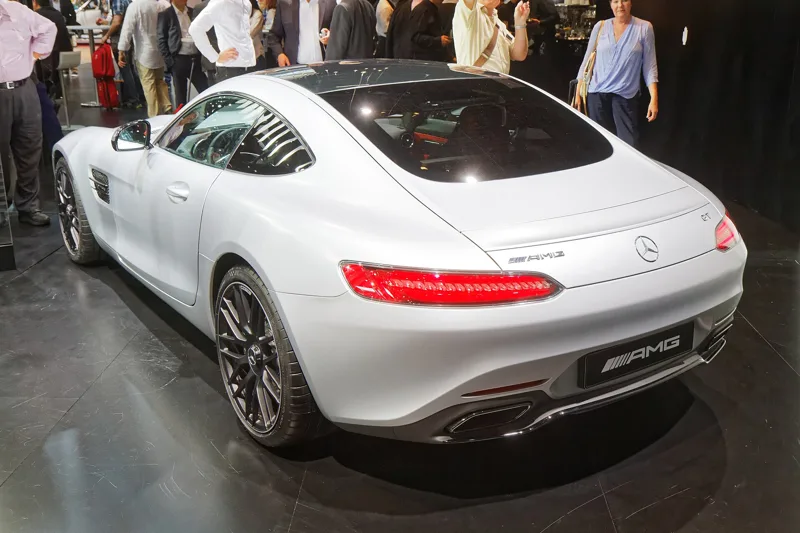
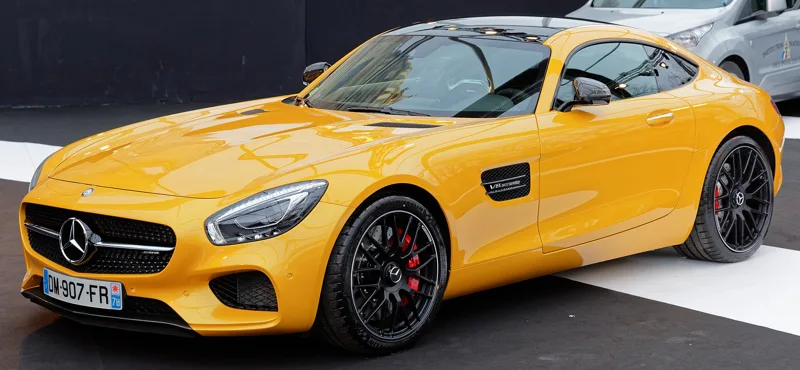
Since 2010 the SLS AMG GT3 and then the AMG GT3 have raced in GT events worldwide, including the 24 Hours of Nurburgring and the Bathurst 12 Hour. From 2012 the Formula One team ran as Mercedes AMG Petronas, using the AMG name for its racing effort.
From 2013 to 2015 three AMG E-Class V8 Supercars ran in the Australian Supercars Championship, run by Erebus Motorsport through the AMG customer programme.
How are AMG engines assembled?
Most AMG engines are assembled by hand in Affalterbach under a one man, one engine approach. Each builder adds a personal plaque to the unit, and the company says roughly 50 engine builders work on the programme.
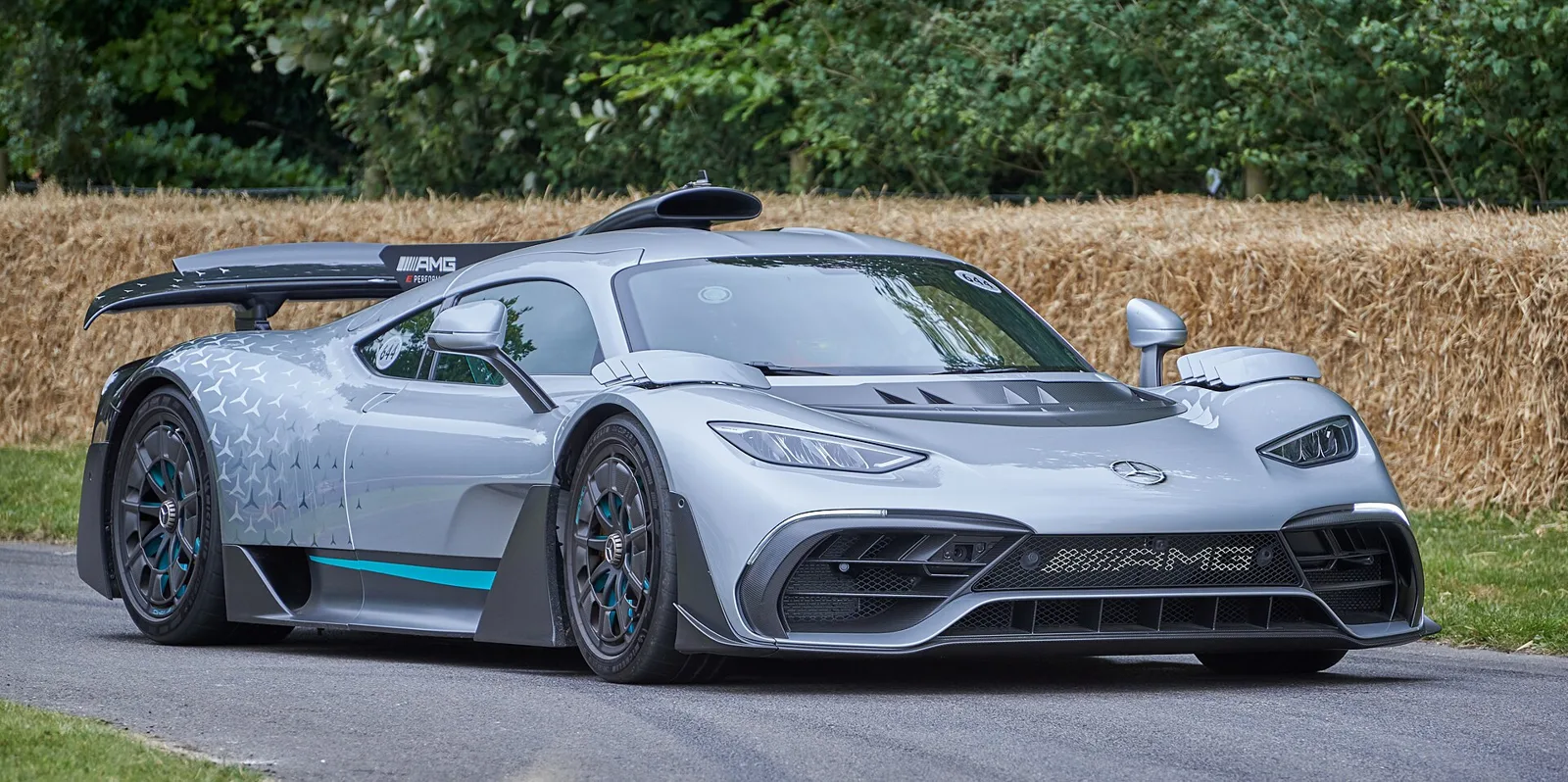
The 35, 43 and 53 models are the exceptions, and so is the 1.6-litre V6 hybrid engine in the AMG One. The hand-built method ties every engine to a named person, which is part of the brand's appeal to enthusiasts.
What do the AMG model numbers mean?
AMG cars use two numerals where standard Mercedes-Benz models use three, so an E 63 is an AMG model and an E 350 is not. The numbers do not always match engine size, but they nod back to older cars like the 300 SEL 6.3.
The newer V8s in the 63 range carry 4.0-litre engines even though the number points back to the 6.3-litre era. Buyers learn the code quickly, since it signals performance rather than displacement.
What are the Black Series models?
Black Series cars sit at the top of the range. They are two-door models that gain lighter weight, bucket seats, revised bodywork and interior, more power, greater traction and sharper handling, with the work carried out by the AMG Performance Studio in Affalterbach.
Motor Trend timed the SLS AMG Black Series at 3.2 seconds from 0-60 mph and recorded a quarter mile in 11.1 seconds. By May 2026 the GT Black Series ranked fifth among the quickest road cars on the Nordschleife.
AMG's approach has always treated the whole car as the product, from engine and chassis to brakes and interior, rather than chasing a single headline figure.
Which engines power the current range?
The modern range is organised by engine family. The 35 and 43 models use a 2.0-litre four or a 3.0-litre six, the 45 models a 2.0-litre four, and the 53 models a 3.0-litre six, with hybrid options in several lines.
The 45 S variant made 416 hp from its M139 four-cylinder, which was once the most powerful four-cylinder in production. The C 63 S E-Performance pushed the same engine to 469 hp, and its 350 kW output made it a benchmark for four-cylinder performance.
What about electric AMG models?
In 2013 AMG revealed the SLS AMG Coupe Electric Drive, its first zero emissions car. It drew on Formula One technology and produced 740 hp, with a claimed 0-60 mph time of 3.9 seconds.
The EQ family later brought dual-motor models in the 43 and 53 designations, including the EQE, EQE SUV and EQS. Those cars took the performance approach into battery power.
Which partners has AMG worked with?
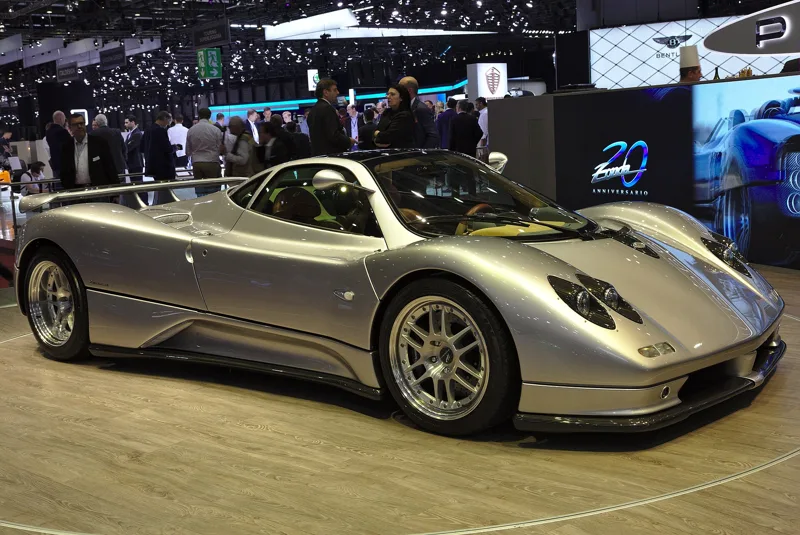
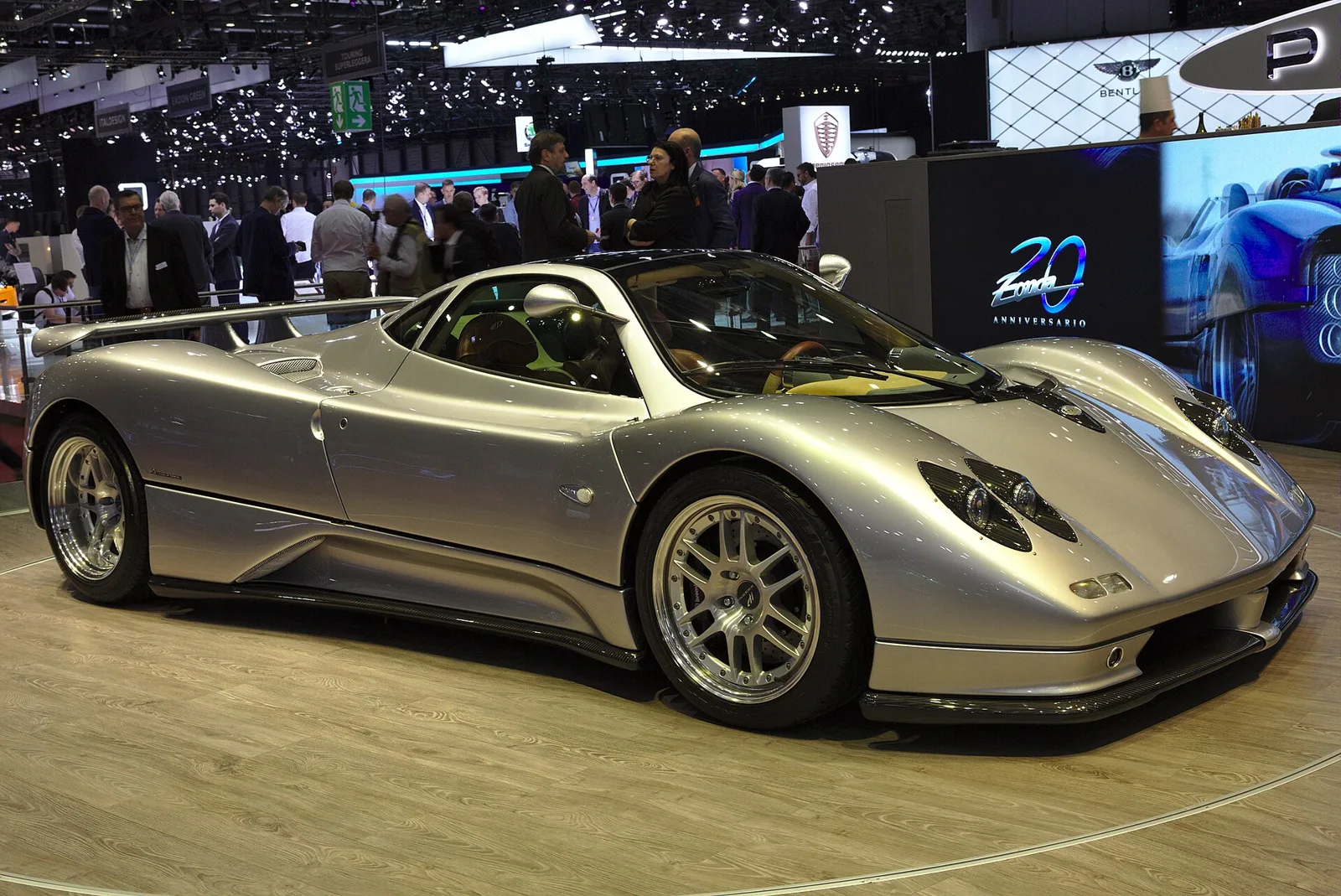
AMG supplies engines for Pagani's Zonda, Huayra and Utopia. The 7,291 cc V12 was first used in the 1998 CLK GTR and later offered to Pagani, and it remains the largest naturally aspirated engine AMG has supplied.
In 2013 Aston Martin and Daimler agreed a technical partnership with Mercedes-AMG, giving Aston Martin access to bespoke V8 work. The two brands have shared the role of official Formula One safety car supplier since 2021.
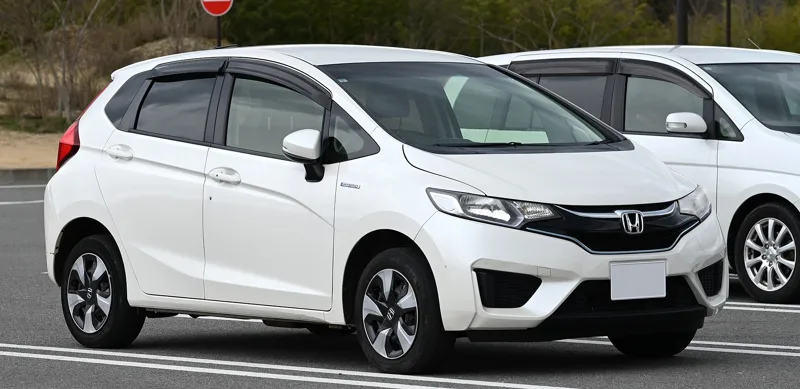
AMG also supplies the M139 four-cylinder for the Lotus Emira, and it has built special versions of Mitsubishi and Honda cars. The Mitsubishi Debonair V3000 Royal AMG appeared in 1987, followed by the Mitsubishi Galant AMG in 1989.
Who has led AMG?
Aufrecht and Melcher ran the company from 1967 to 1999. Volker Mornhinweg led it from 2005 to 2010, Tobias Moers from 2013 to 2020, and Philipp Schiemer from 2020 to 2023, with Michael Schiebe in charge since 2023.
Each chief faced different pressures, from the early racing years to the decision to run a full performance brand inside the wider Mercedes-Benz group. Today's leadership runs a business that sells AMG cars alongside the standard range in many markets.
Where is AMG sold directly?
The Sydney showroom, which opened in 2018, was the first dedicated AMG dealership anywhere. The showroom gave Australian buyers a dedicated place to see and buy AMG cars, separate from the general Mercedes-Benz network.
The showroom shows that the brand is willing to invest in dedicated retail space, rather than relying only on general Mercedes-Benz outlets to sell its performance models.
What are the key figures for AMG?
| Specification | Detail |
|---|---|
| Founded | 1967, by Aufrecht and Melcher |
| Headquarters | Affalterbach, Germany |
| DaimlerChrysler stake | 51 percent from 1 January 1999 |
| Full ownership | 1 January 2005 |
| Naturally aspirated V8 | 6.2 L M156, from 2006 |
| Bi-turbo V8 | 5.5 L M157, from 2011 |
| Hammer | 1986 W124 E-Class, 5.6-litre V8 |
| Hand-built engine builders | About 50 |
| First stand-alone dealership | Sydney, 2018 |
| Electric showcase | SLS AMG Electric Drive, 740 hp |