A Milan-born driver who raced in Formula One from 1982 to 1987, took pole for the Indianapolis 500 as a rookie and later won the World Endurance Championship with Jaguar.
Italian driver Teo Fabi raced 71 Formula One Grands Prix from 1982 to 1987. He took pole for the 1983 Indianapolis 500 as a rookie, raced Indy cars and sports cars, and later won the World Endurance title with Jaguar in 1991.
Teo Fabi was an Italian racing driver from Milan who competed in Formula One from 1982 to 1987. He also raced in CART and Indy car events, claimed pole position for the 1983 Indianapolis 500 as a rookie, and won the World Endurance Championship drivers title with Jaguar in 1991. His career moved between open-wheel racing and sports cars throughout the 1980s and 1990s.
Fabi's career divides into four overlapping strands: karting and junior single-seaters, Formula One, Indy car racing and sports car endurance events. Each strand produced results of its own, and together they show a driver who adapted to very different machinery.
Where did Teo Fabi's racing career begin?
Fabi began in karting and became European Karting Champion in 1975. He won the European Formula Ford 1600 title in 1977, then moved up through European Formula Three and Formula Two. His Formula Two results, including three wins in 1980, led to his Formula One debut two years later.
Raised in Milan, Fabi was the older brother of Corrado Fabi, who also drove in Formula One. In European Formula Three in 1978 he drove a March-Toyota for Forti Corse, contesting seven races and finishing fourth in the points with 45. The following year he moved to European Formula Two with March Racing and scored 13 points, with second at Circuit Park Zandvoort as his best finish.
The 1980 Formula Two season was his breakthrough. Driving a March 802-BMW for ICI Roloil Racing, he won three races, two of them at Hockenheimring and one at the Nurburgring. He also qualified on pole at Zolder and Hockenheimring, and finished the championship third with 38 points.
A rookie on pole at Indianapolis, and a driver who kept moving between open wheels and sports cars.
How did Fabi perform in Formula One from 1982 to 1987?
Fabi started 71 Formula One Grands Prix between 1982 and 1987 and scored 23 championship points. He took three pole positions, two fastest laps and two third-place finishes. His best championship placing, ninth, came in 1987 with Benetton, a season in which he scored points on five occasions.
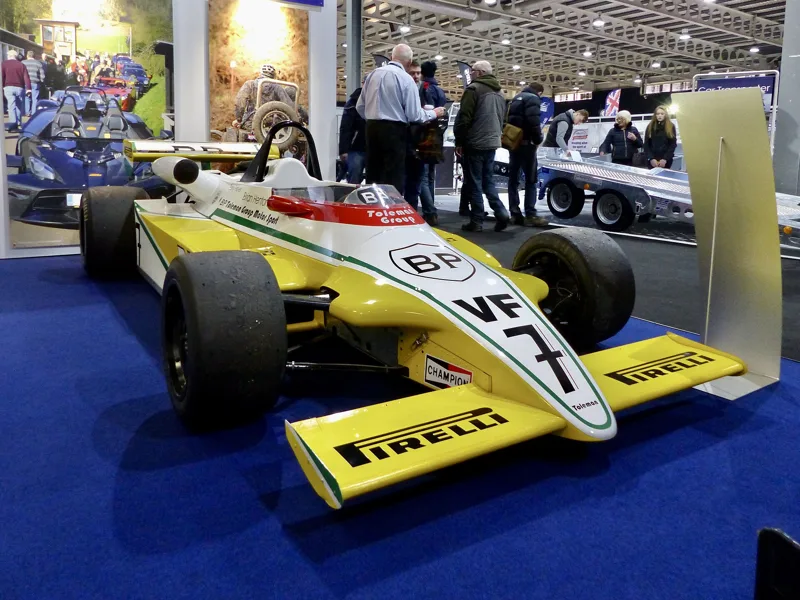
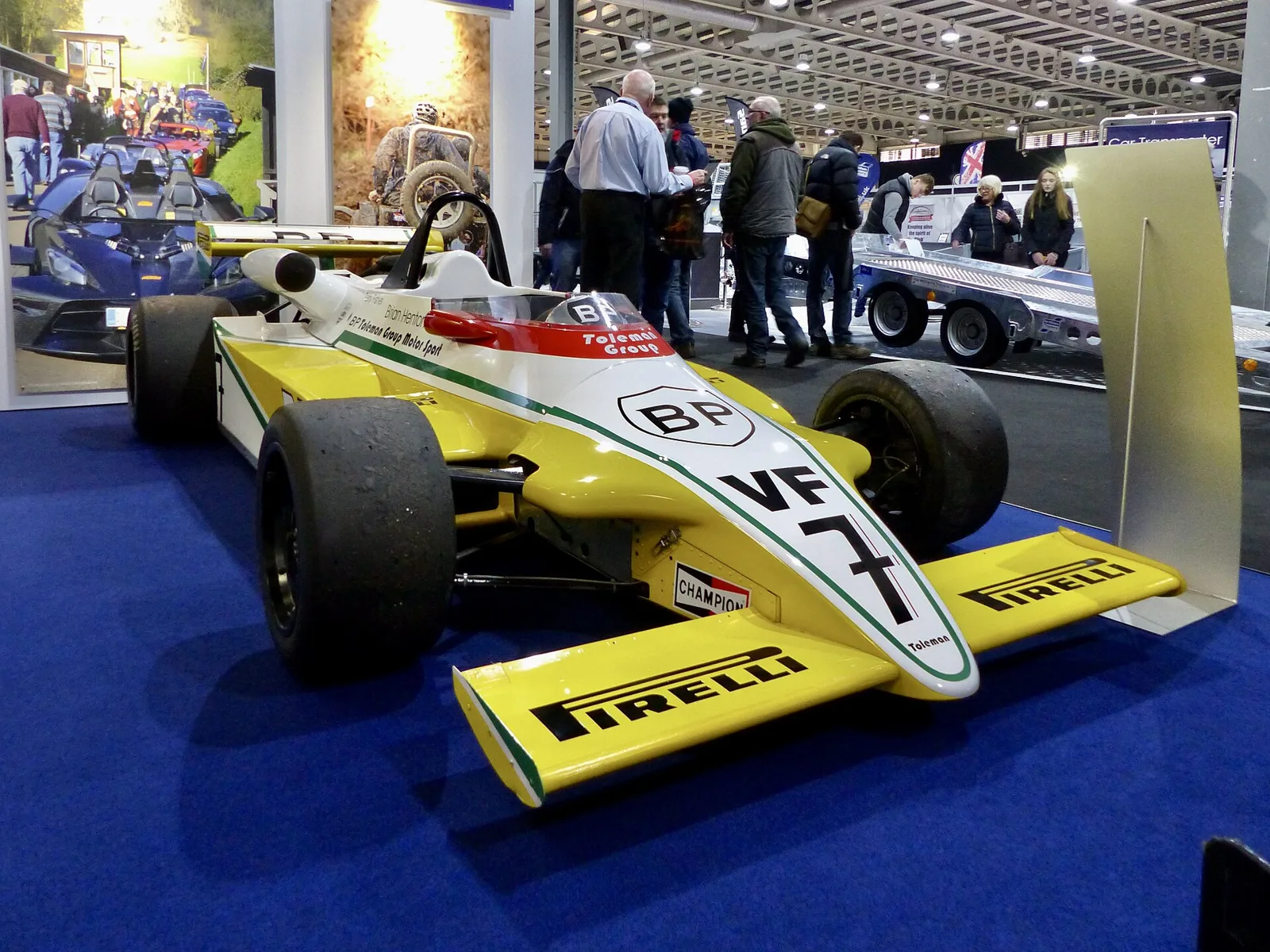
His first season with Candy Toleman in 1982 was a hard one. The team had qualified only twice the year before, and the TG181C was uncompetitive. Team manager Alex Hawkridge pressed him to break the strike at the season-opening South African Grand Prix, and Fabi was the only driver to do so. Lead driver Derek Warwick received most of the team's attention.
Fabi qualified for six of the 14 races that year. The dispute between FISA and FOCA meant only 14 cars attempted to qualify for the San Marino Grand Prix, and he finished seventh there, eight laps down. He failed to qualify at Monaco, skipped Detroit and Canada, and was not able to get a grid place at the German Grand Prix.
He returned to Grand Prix racing with Brabham for 1984 as the number two driver to reigning champion Nelson Piquet. Parmalat, which wanted an Italian driver in the team, backed the move. He missed three Grands Prix that year while his younger brother Corrado drove in his place, and by mid-season he had decided to concentrate solely on Formula One.
Results improved as the year went on. Early in the Italian Grand Prix he ran second behind Piquet, but engine failure ended his race, and engine trouble was the main problem for Brabham that year. His best start was sixth at the South African Grand Prix, his best finish before leaving CART was ninth at the French Grand Prix, and his best finish overall was third at Detroit. He ended the year twelfth in points with nine.
The 1985 season began late for Toleman, which lost its tyre supply when Michelin left Formula One. Fabi was quick enough to take the team's only pole position, at the German Grand Prix on the new Nurburgring, but a slipping clutch ruined his start. He finished only twice that year and scored no points. His best result was twelfth at the Italian Grand Prix.
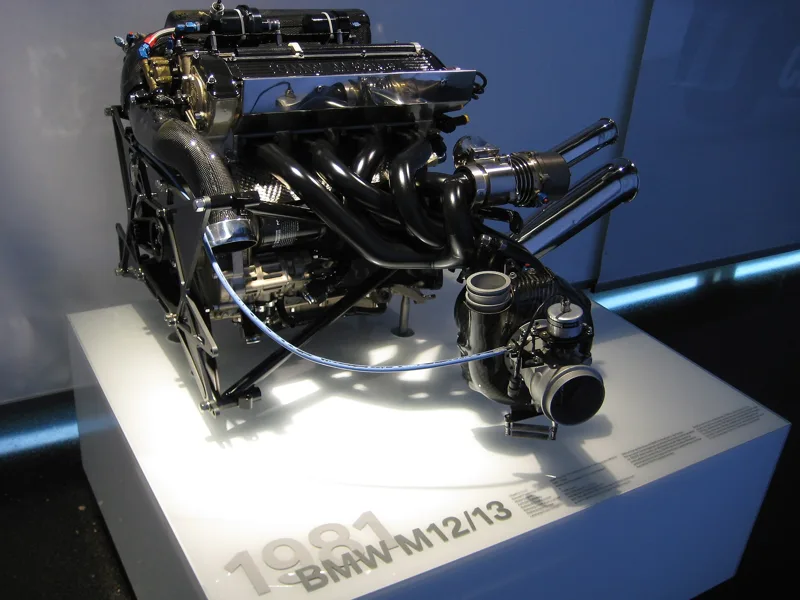
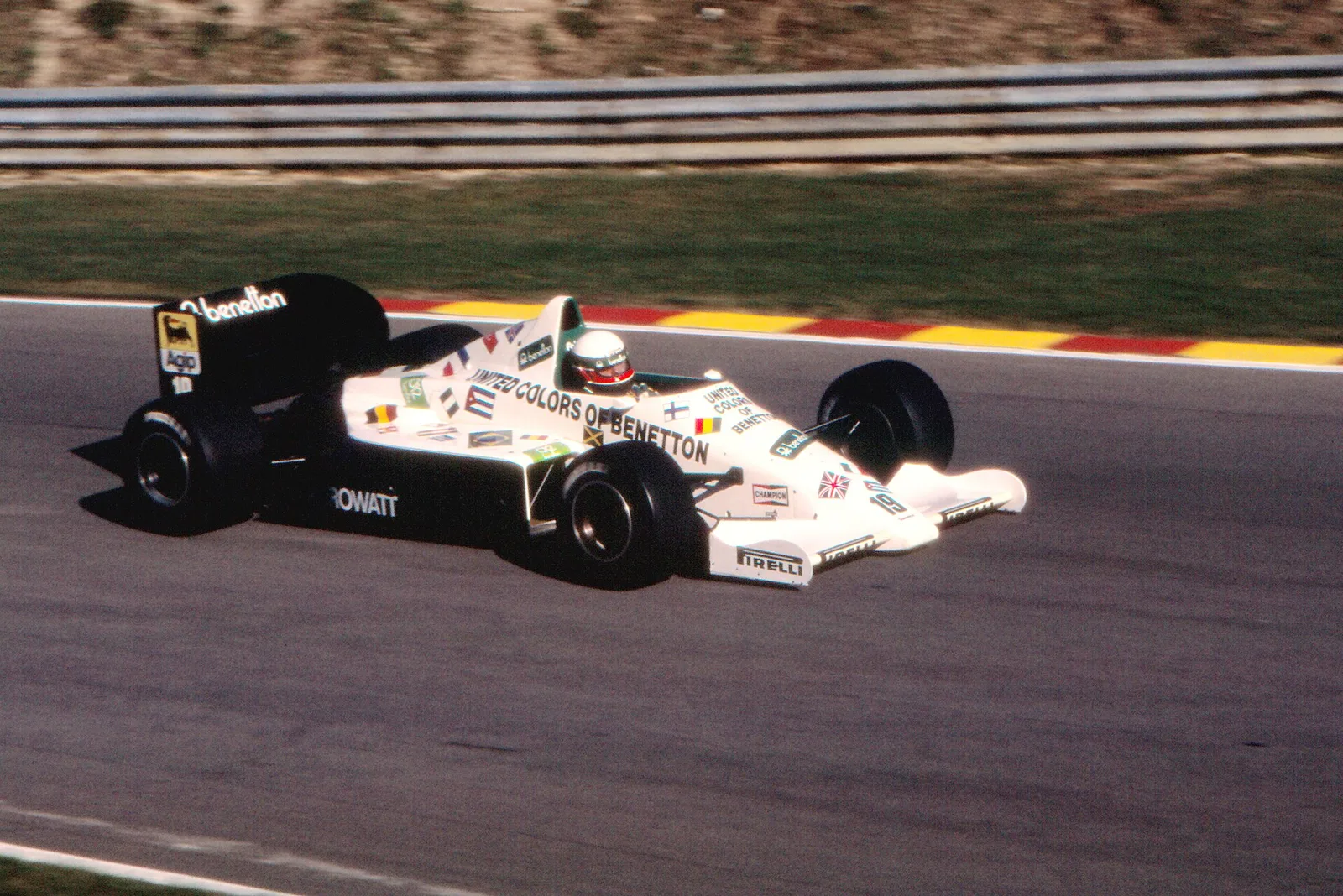
Benetton, which had absorbed Toleman, gave him a stronger package for 1986 with a BMW turbo engine. He took pole at the Austrian Grand Prix and the Italian Grand Prix, both at the two fastest circuits on the calendar, and his best finish was fifth at the Spanish Grand Prix. The car was fast but fragile, and the Pirelli tyres were demanding. Fabi often qualified better than he raced.
For 1987 Benetton ran a Ford Cosworth V6 alongside Thierry Boutsen. The package was less quick but more consistent. Fabi's best finish was third at the Austrian Grand Prix, a circuit he counted among his favourites, and he ended the season ninth in points, his career-best championship result.
His last Grand Prix was the 1987 Australian Grand Prix. Frustrated at having no seat for 1988, he spent many laps deliberately blocking his teammate, who finished third. When Boutsen confronted him afterwards, Fabi told him to come back once he had a pole position.
Why did the 1983 Indianapolis 500 pole matter?
Fabi's Indy car debut came in 1983 with Forsythe Racing in a March 83C-Cosworth. He qualified on pole for the Indianapolis 500 with a four-lap average that was a track record at the time. That made him the first rookie to claim pole since Walt Faulkner in 1950.
Fabi was in front for 23 of the first 47 laps before a fuel filter failure ended his race at the second pit stop. He was credited with twenty-sixth place and still took the rookie of the year award.
Fabi then took pole for the Dana Rex Mays Classic in Wisconsin and finished fourth there. His 1983 season also included wins at Pocono, Mid-Ohio, Laguna Seca and Phoenix. The Phoenix finale was decisive. Fabi took pole, led 138 of 150 laps in the Miller High Life 150 and won, but Al Unser finished fourth and took the championship.
What happened to his Indy car career after 1983?
Fabi raced for Forsythe again in 1984, then from 1988 to 1990 for Porsche Motorsports. His last Indy car victory came at Mid-Ohio in 1989, and he finished that season fourth in points with 141. Later spells with Hall Racing, Forsythe and PacWest produced several top-ten finishes but no further wins.
The 1984 season was split between CART and Formula One. He qualified third at Long Beach and finished second at Phoenix. At Indianapolis he qualified fourteenth and retired after 104 laps with a fuel system failure, and he finished the partial season twenty-fifth in points.
Porsche's engine was less competitive than the Ilmor-Chevrolet and Cosworth units. Fabi still reached fourth at Pennsylvania International Raceway in 1988 and finished tenth in points with 44. In 1989 the engine began to compete for wins. Fabi took pole at Portland, finished second in the Marlboro 500 at Michigan, and then won at Mid-Ohio, where he led 71 of 84 laps.
The 1990 season was harder. Porsche's plan for an all carbon fibre chassis was voted down by its rivals, so the team used a year-old March 89P early on. Fabi took pole at Denver but crashed after seven laps. He started 23rd at Indianapolis and retired with transmission trouble after 162 laps. He finished third at the Meadowlands, ended the year 14th in points, and Porsche withdrew from Indy car racing at the season's end.
His later Indy car years were patchy. He stepped in for Mario Andretti at Detroit in 1992, qualifying third for Newman-Haas Racing and finishing sixth. In 1993 he drove for Hall VDS Racing and finished ninth at the Indianapolis 500. In 1995, driving for Forsythe, he took pole at Milwaukee, and he finished eighth at Indianapolis that year.
Which sports car races defined his later years?
Fabi's sports car work ran alongside his single-seater career. In 1981 he raced Can-Am for Newman Freeman Racing in a March 817-Chevrolet, winning at Mosport Park twice, at Mid-Ohio and at Laguna Seca, and finishing second in the points with 456. In 1980 he drove a Lancia Beta at the 24 Hours of Le Mans, where it retired after six laps with an oil pump failure.
Fabi later won the 1000km of Nurburgring in 1982 with Michele Alboreto and Riccardo Patrese in a Martini Racing Lancia LC1, and the 1000km of Imola in 1983 with Hans Heyer. In 1991 he joined Tom Walkinshaw Racing's Jaguar team and won the Castrol BRDC Empire Trophy at Silverstone with Derek Warwick.
That Jaguar programme produced a third-place finish at Le Mans with Bob Wollek and Kenny Acheson, after the car started 27th. Fabi and his partners then secured the World Endurance Championship, finishing on 86 points. In 1993 he drove a Peugeot 905 Evo 1B with Thierry Boutsen and Yannick Dalmas to second overall at a Le Mans race held without championship points, completing 374 laps.
He also drove a Toyota TS010 for Team Tom's at Le Mans. The car started fourth and finished eighth, with 331 laps completed, and was fifth in its class. That result came in a Toyota with a V10 engine, a different machine from the Jaguar and Peugeot cars he drove in the same period. Across his sports car work, Fabi was more often a contender for podiums than a regular winner, although the 1991 title was the high point.
Career summary by series
| Series | Years | Teams | Standout result |
|---|---|---|---|
| Formula One | 1982 to 1987 | Toleman, Brabham, Benetton | 71 starts, three poles, 23 points |
| Indy car | 1983 to 1996 | Forsythe, Porsche, Hall, PacWest | Pole for the 1983 Indianapolis 500 |
| Can-Am | 1981 | Newman Freeman Racing | Second in points with 456 |
| World sports car and endurance | 1980 to 1993 | Lancia, Jaguar, Toyota, Peugeot | 1991 drivers title with 86 points |
What is Teo Fabi's legacy?
Fabi's legacy rests on a small group of results: the 1983 Indianapolis 500 pole, his Formula One pole positions and the 1991 endurance title. He also moved between Formula One, Indy cars and sports cars in overlapping years, which gave his career a wider range than many single-series drivers.
His results in the two disciplines differed sharply. In Formula One he scored 23 points over six seasons, while in endurance racing he reached the top of the drivers standings. The 1993 Le Mans second place remains his best finish at the 24 Hours.
His Formula One record is modest in numbers but includes a pole at the German Grand Prix in 1985 and two in 1986, a reminder of his pace. He was at his most competitive on faster circuits, while slower and more technical tracks were harder for him.
The Indianapolis connection also lasted beyond his own career. In 1984 he was the final current Grand Prix driver in the Indianapolis field, a distinction that held until Alonso raced there in 2017, linking his era to a later generation of drivers.