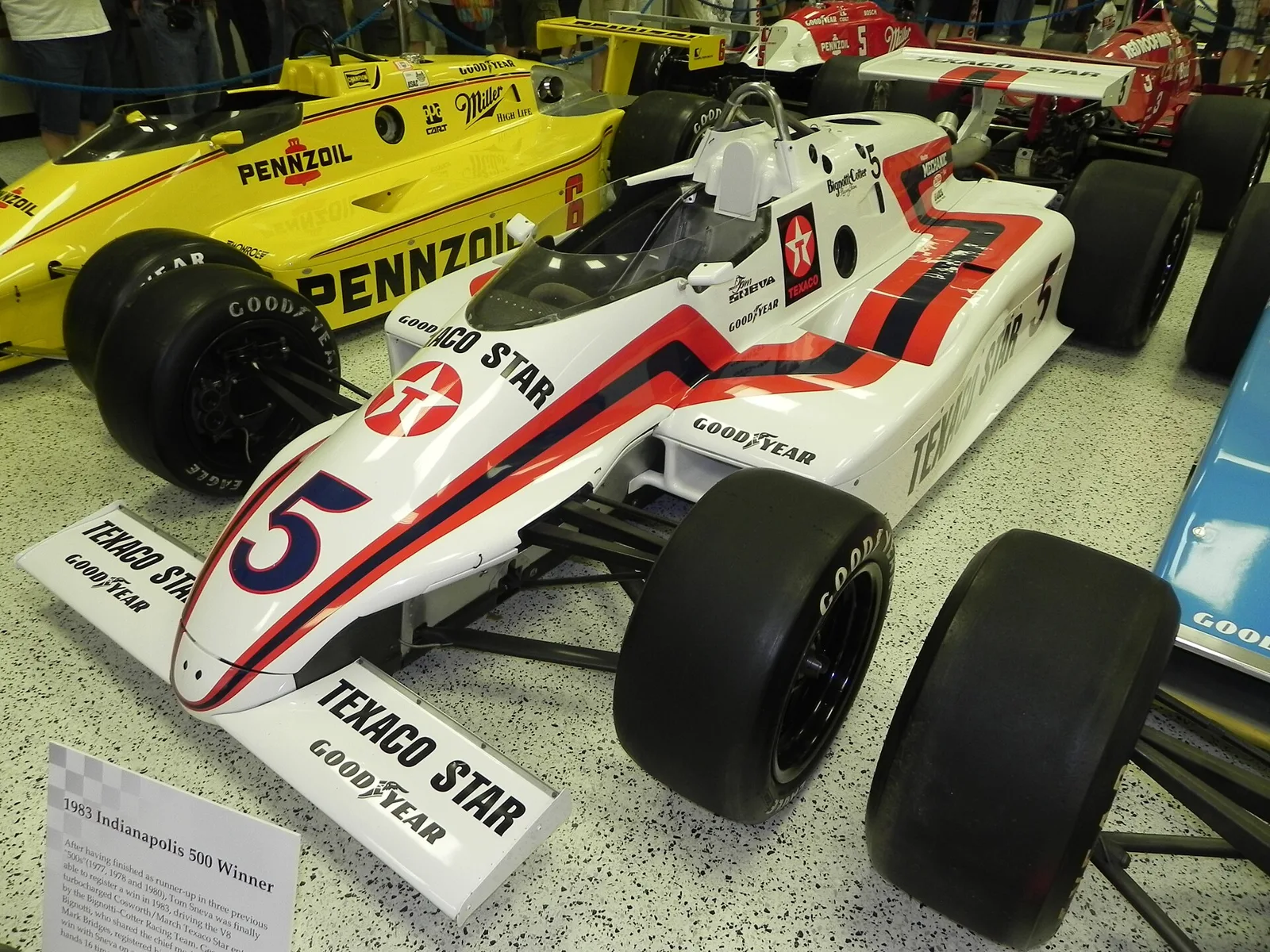
Tom Sneva finally won the Indianapolis 500 after three runner-up finishes, beating Al Unser Sr. as Al Unser Jr. became the centre of a blocking row.
The 1983 Indianapolis 500 was the sixty-seventh running of the race, held on 29 May 1983 at the Indianapolis Motor Speedway. Tom Sneva won by 11.174 seconds from Al Unser Sr., after a late controversy in which Al Unser Jr. seemed to obstruct Sneva to aid his father.
Tom Sneva won the sixty-seventh Indianapolis 500 on 29 May 1983, ending a run of three runner-up finishes. His victory came at the end of a race in which Al Unser Jr. appeared to block the leaders, setting off a controversy that outlasted the chequered flag.
Why did the 1983 race mark a new era?
The race came after four years of conflict between USAC and CART, and the two bodies had reached an amicable truce. The Indianapolis 500 was sanctioned by USAC but recognised on the CART schedule, so it counted towards the CART points championship.
The field was made up mostly of CART-based teams, along with one-off entries known as Indy-only. That arrangement lasted, with relative harmony, through 1995, although squabbles over details continued.
A rookie on pole, a fuel gasket that ended his race, and a win decided by traffic and a restart that nobody forgot.
What rule changes shaped the 1983 field?
USAC scaled back side skirts for 1983 and insisted that every body and aerodynamic piece stand a full inch clear of the tub's base. Turbo boost limits were also tightened, from 48 inHg in 1982 to 47 inHg, a further limit that teams had to design around.
Some teams said USAC enforced the rules unevenly, measuring with a less accurate tool than CART used elsewhere. In the qualifying line, 15 cars failed pre-qualifying technical inspection, and tempers rose as a result.
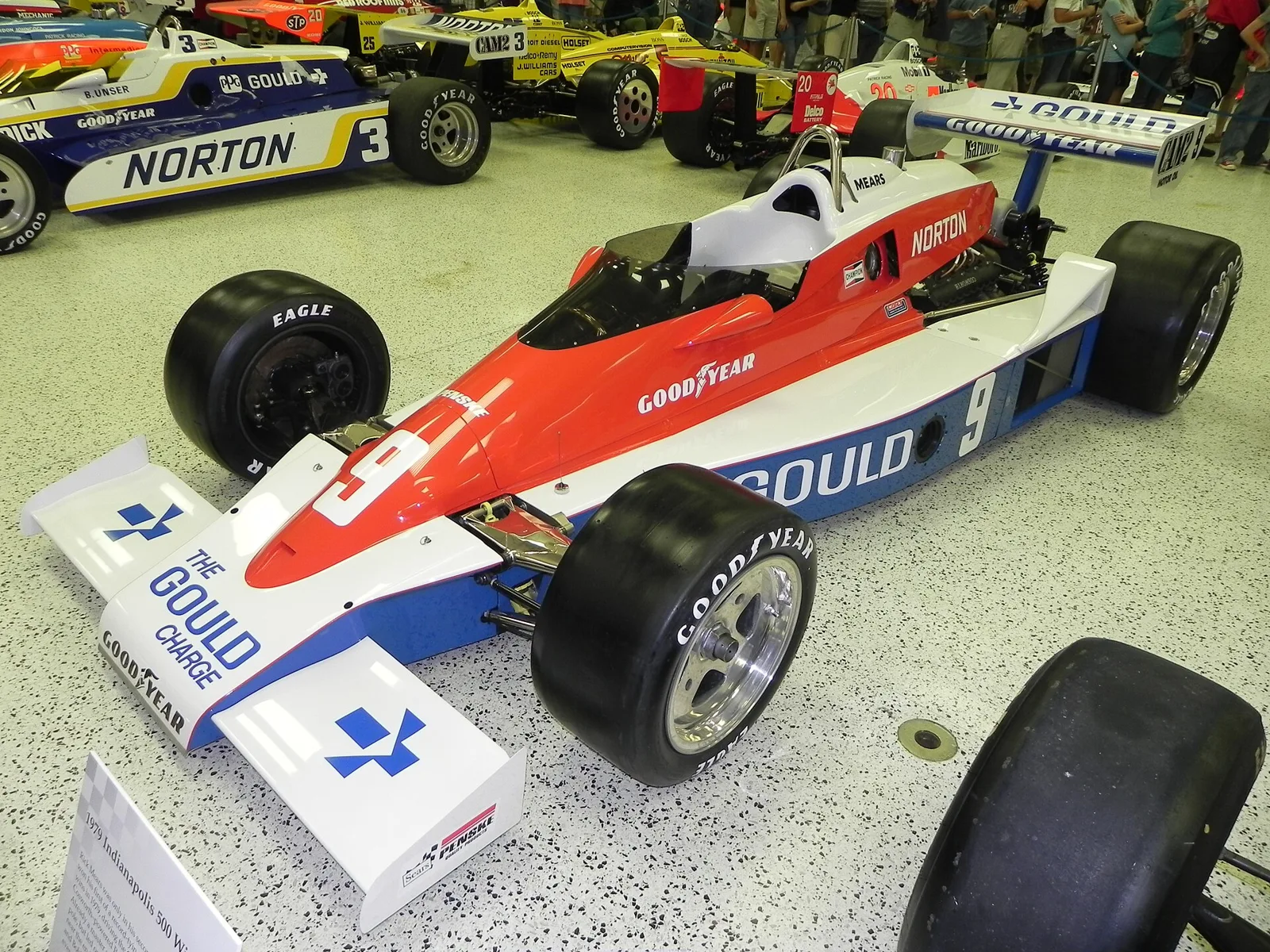
The March chassis became the car to have. The 81C had appeared at Indianapolis in 1981, the 82C followed in 1982, and the new 83C arrived in time for the race. Paired with the Cosworth DFX engine, the customer-car model took hold across the grid.
Penske and other top teams scaled back their own chassis programmes in favour of March. The English-built cars claimed 18 of the 33 places on the grid, pole among them, and in the race they placed five cars in the top nine.
March won its first 500, and that was the opener of five straight triumphs for March Engineering. The chassis had become the favourite thanks to its aerodynamic advances, its downforce and its affordable cost.
Why were the time trials delayed?
Pole day was scheduled for Saturday 14 May, but rain kept cars off the track almost all day. The track opened briefly at 4:15 p.m., then shut at 5:49 p.m. with not one qualifying attempt made, and Sunday's rain washed out the entire day.
No car had qualified on the opening weekend since 1978. Pole day moved to the second weekend, under a rule that ended pole qualifying once the cars had made one rotation of the qualifying draw.
Johnny Rutherford, a three-time winner, was sidelined after two major crashes. He hit the wall in turn one on 8 May with minor injuries, and on 18 May he crashed in turn three, breaking his left foot and ankle, which ruled him out of the race.
New ground effect rules meant speeds dipped slightly compared with 1982. Because the first weekend was rained out, drivers had roughly two weeks of practice, and Danny Ongais posted the quickest practice time on Friday 20 May.
How did pole day unfold?
Mike Mosley took an early top spot, and Rick Mears and Tom Sneva were close behind without bettering it. Teo Fabi, a rookie, then set a new one-lap track record and a four-lap record to take pole, a feat no rookie had managed since Walt Faulkner in 1950.
Across the day there were 42 attempts, and 33 cars completed runs, so the whole field was set in a single session. Mears had fallen short of his own target, and Sneva settled into the third-fastest slot for a time.
The day also brought sad news. Tony Foyt Sr., father of A. J. Foyt and once his chief mechanic, died after a battle with lung cancer. A. J. Foyt had flown to Houston to see his ailing father after qualifying, and his father died that evening.
What happened on Bump Day?
Bump Day, 22 May, opened with John Mahler on the bubble, but rain hampered time trials again and the track stayed shut until close to 2 p.m. Dennis Firestone then bumped Mahler with a run completed as heavy rain began, and the track closed for the day.
Phil Krueger wrecked during a practice run. Gary Bettenhausen waved off a run after a lap that looked fast, a decision that later cost him his place. When the 6 o'clock gun fired, Bettenhausen, Bill Alsup and Dick Ferguson were still sitting in line.
Who led the race, and why did the lead change?
Teo Fabi, the pole sitter, took the lead from the front row and led the first 23 laps. A faulty fuel gasket ended his run, and during an early pit stop a refuelling mechanism failure spilt fuel around his car, though it did not ignite.
A. J. Foyt, who had attended his father's funeral earlier in the week, retired early with a broken transmission linkage. His other car, driven by George Snider, also retired with ignition failure, and both Foyt cars were out a little after the 50-mile point.
Foyt's season ended early. A few weeks later he crashed while practising for the Daytona Firecracker 400, shattering two vertebrae in his back, so Indianapolis was his only IndyCar race of 1983.
On lap 81, Johnny Parsons lost control and collided with Mario Andretti in turn one, and both cars hit the outside wall hard. It was Andretti's first Indy outing with Newman/Haas Racing and another setback in his long record at the 500.
How did the second half set up the finish?
Tom Sneva and Al Unser Sr. controlled the second half, while Kevin Cogan and Geoff Brabham were also in the mix close to the top five. On lap 172 Sneva led Unser Sr., but Mike Mosley spun in front of Sneva and hit the outside wall.
Sneva was tucked behind the slower lapped car of Mosley when his crew signalled him in. Mosley suffered a bruised foot, and Sneva steered to the inside to avoid the wreck. Mosley's bad luck at the Speedway ended there, as he died in a road accident within twelve months.
Sneva then pitted under the yellow for his last scheduled stop of the day. Unser Sr. also pitted, but he chose not to change tyres and emerged in the lead, with Sneva second. Earlier, Bobby Rahal, who had led laps at the speedway for the first time, had dropped out with a punctured radiator.
What happened in the final laps?
The green flag returned on lap 176 with Unser Sr. leading. Al Unser Jr., five laps down, jumped the restart and passed both Sneva and his father, and by lap 180 officials were showing him the blue flag. His move stirred immediate debate about whether he was helping his father or simply in the way.
Al Jr. then let his father by and sat between him and Sneva, and it soon looked as if he was running interference for Al Sr. He was known for openly backing his father, and on that day it was Al Sr.'s 44th birthday.
Unser Jr. created a great deal of dirty air and denied Sneva the preferred line, although many observers felt he did not make clear blocking moves. Unser Sr. could not pull away, and the three cars ran very close together.
With 13 laps to go, Sneva drew level with Unser Jr. on the frontstretch, and they ran wheel to wheel into turn one, yet Unser Jr. would not yield the ground.
With ten laps to go, the leaders caught slower traffic. Unser Jr. was stuck behind Dick Simon, and Sneva dived low, passed Unser Jr. and Simon in consecutive corners, then set up a clean pass on Unser Sr. going into turn three.
With a clear track ahead, Sneva pulled away from Unser Sr. and won by 11.174 seconds. It was his first Indy 500 win after three runner-up finishes, and his first 500-mile victory since the 1977 Pocono 500. Bignotti, his chief mechanic, had now been part of a record seventh Indianapolis 500 win.
Unser Jr. was left without fuel on the last lap, stalled short of the line and was classified six laps down.
What was the blocking controversy after the race?
USAC handed Al Unser Jr. a two-lap sanction for passing under yellow before the restart, but it did not change his finishing position, and no penalty was given for blocking. He later admitted he had run interference for his father.
Al Unser Sr. said he could not see what was happening behind him, because one rear-view mirror was gone and the other was broken. He also admitted a miscalculation on his final stop, when he ordered no tyres, which left his car loose in the closing laps.
Years later, Unser Sr. said the press had blown the episode out of proportion and that his son had merely been using the air. Unser Jr. joked that Sneva had simply been too fast for his father.
Sneva had accused Unser Jr. of jumping the restart and passing before the green, an infraction that set the stage for the blocking row. Despite the penalty he ended inside the top ten as the leading rookie, yet he missed out on the rookie of the year title.
What did Teo Fabi achieve in 1983?
Fabi won the pole, led the first 23 laps and was voted rookie of the year ahead of Unser Jr. He won four races in that campaign and was runner-up to Al Unser Sr. in the CART points standings. His first season was a strong one by any measure.
Who finished where?
| Driver | Result | Note |
|---|---|---|
| Tom Sneva | Winner | Won by 11.174 seconds, his first Indy 500 win |
| Al Unser Sr. | Second | Sought a record-tying fourth win; passed by Sneva late on |
| Teo Fabi | Retired | Pole sitter who led 23 laps; bad fuel gasket |
| Mike Mosley | Crashed on lap 172 | Bruised foot; his last lap at the Speedway |
| A. J. Foyt | Retired just past the 50-mile mark | Broken transmission linkage |
| George Snider | Retired | Ignition failure |
| Johnny Parsons and Mario Andretti | Crashed on lap 81 | Andretti penalised one lap and placed 23rd |
| Al Unser Jr. | Scored six laps down | Two-lap penalty for passing under yellow; ran out of fuel |
Fabi's, Foyt's and Mosley's exits left the front of the field to Sneva and Unser Sr.
How did broadcasting cover the race?
ABC Sports carried the race on a same-day tape delay, with Jim McKay as anchor and Sam Posey as driver expert. The broadcast also introduced the first RaceCam, but cameras fitted to Rick Mears and Al Unser Sr. both failed partway through.
Paul Page anchored the radio coverage for a seventh year. Viewers could later catch the race on ESPN Classic, beginning in May 2011.