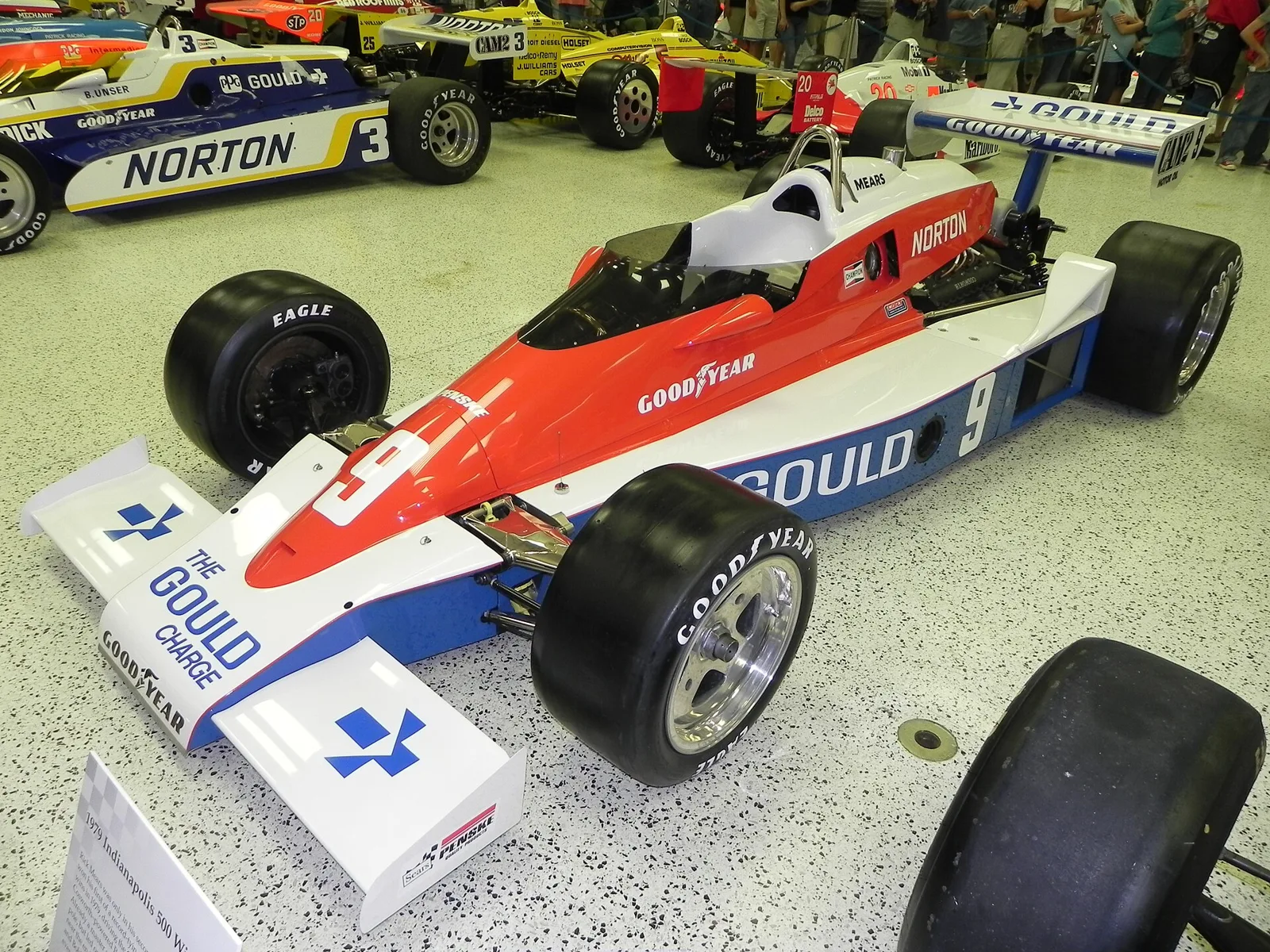
A month of boycotts, disqualified wastegates and a special qualifying session ended with a first win for Rick Mears.
Rick Mears won the 1979 Indianapolis 500 on May 27, 1979, in only his second start. The race followed a month shaped by the first open-wheel split, wastegate disqualifications and a special qualifying session that brought the field to 35 cars.
The 1979 Indianapolis 500 was the 63rd running of the race, held on Sunday, May 27, 1979. Al and Bobby Unser led 174 of the 200 laps between them, but Rick Mears took the lead late on to win his first Indy 500, in a month dominated by the first open-wheel split.
Why was the 1979 race so controversial?
The month was dominated by the first open-wheel split. CART-based teams had formed in the offseason, and USAC responded by rejecting the entries of six of them. The rejected teams went to court, and a judge issued an injunction that allowed them to race.
The split had been building for some time. After the death of Tony Hulman in October 1977, owners and participants were anxious to reorganise the sport, and poor promotion, low revenue and weak television coverage added to the dissent.
Dan Gurney published a white paper criticising USAC and the Speedway, and in late 1978 several existing owners broke away to create Championship Auto Racing Teams. The first major blow fell on March 25, 1979, as CART teams stayed away from the USAC Datsun Twin 200 at Ontario Motor Speedway.
A. J. Foyt had first sided with the CART teams, but he switched back to USAC and urged that they be refused entry to the Indianapolis 500. On April 19 the USAC board voted to reject six teams with 19 cars between them, calling them harmful to racing and not in good standing.
The rejected teams filed suit on April 26, citing antitrust and restraint of trade. On May 5 a judge, James Ellsworth Noland, granted the injunction while barring the teams from interfering with the event.
A split that caused boycotts, disqualified wastegates and a special session, won by Rick Mears in his second start.
How did the engine rules change during the year?
The 1979 engine rules were rewritten several times. Competitors had complained that the newer V-8 engines, led by the Cosworth DFX, had a horsepower advantage over the venerable four-cylinder Offenhauser, so USAC drafted new boost and engine rules in 1978.
Pop-off valves were required during practice, qualifying and the race, not only during official qualifying. The rules were changed again in January 1979, and the competitors left that meeting claiming that USAC had mostly ignored their technical input.
By May, USAC had tweaked the rules once more. The Offenhauser's boost was raised to 60 inHG, while the V-8s stayed at 50 inHG. The cars were limited to 280 gallons of methanol for the 500 miles, a load that demanded at least 1.8 miles per gallon.
What were the wastegate disqualifications?
A second controversy erupted over the turbocharger wastegate. A few teams used a larger diameter pipe and welded a washer inside it with a precise opening, which created back pressure in the hope of overriding the pop-off valve and over-boosting the engine.
USAC disqualified Dick Ferguson, Steve Krisiloff and Tom Bigelow on May 19, the third day of time trials, and imposed a $5,000 fine. An appeal the next morning was denied, and a memo then required that any car qualifying on May 20 have unrestricted pipes exactly 1.470 inches in diameter or greater.
Teams complained that USAC had changed the rules in the middle of qualifying, which affected cars that had already qualified during the first weekend. The controversy led to a fifth day of time trials, held on May 26, the day before the race.
Why did pole day produce no qualifying runs?
Rain kept the track closed on pole day, May 12, until after 4 p.m. When the track opened, Danny Ongais, a favourite for the front row, wrecked in turn four during the first practice session after completing a lap at 191.205 mph.
Ongais was pinned in the car for more than twenty minutes and suffered a concussion. He was taken to hospital for observation and then returned home to California to recuperate.
The day ended at 6 p.m. without a single car making a qualifying attempt, so pole qualifying moved to Sunday, May 13. That day a hectic, non-stop session saw no fewer than 45 cars pull away for attempts.
Who won the pole in 1979?
Rick Mears took the pole with a four-lap average of 193.736 mph, his first of what would become six career Indianapolis pole positions. Tom Sneva, who had been on top at 192.998 mph, was bumped to second on the grid.
Johnny Rutherford was the first driver to complete a run, at 188.137 mph, and Wally Dallenbach briefly took the pole at 188.285 mph. Al Unser Sr. took the provisional pole at 192.503 mph shortly before 1 p.m., and his brother Bobby briefly moved into second at 189.913 mph.
Sneva had been seeking a record third consecutive Indianapolis 500 pole, and at 4 p.m. he took the top spot. Only A. J. Foyt and Mears were left with a legitimate shot at the pole, and Foyt's run of 189.613 mph secured him a place in row two.
How did the field grow to 35 cars?
On Saturday, May 19, Jim McElreath filled the field to 33 cars at 1:15 p.m. The bubble then moved with each bump, and Dick Ferguson's disqualification was followed by a reinstatement that put John Martin back in the field.
Bump Day, May 20, was a complicated one. Some teams said it was unfair for USAC to change the rules midway through time trials, and drivers argued it was difficult for a legal car to bump out a car that had cheated.
Danny Ongais returned to the cockpit after lobbying from Al Unser, and Tom Bigelow and Steve Krisiloff bumped their way back into the field. John Mahler took the track at 5:59 p.m. and bumped his way back in as the last act of the day.
Eleven bumped entries were then allowed a special qualifying session on Saturday, May 26. Only two cars, Bill Vukovich II and George Snider, were fast enough, and the final grid had 35 cars, the most since 1933.
How did the special qualifying session work?
Only the 11 bumped entries could run, and each had a single attempt with no wave-offs allowed. A car had to beat the speed of Roger McCluskey, the slowest car already in the field, and two cars did so.
The rule meant that a record 44 cars could have started, but only two made it. Their places were added to the back of the grid, giving the field its 35 starters.
Bill Vukovich II later charged from 34th on the grid to finish eighth. Howdy Holmes was the lone rookie to make the field and took the rookie award by default.
How did the race start?
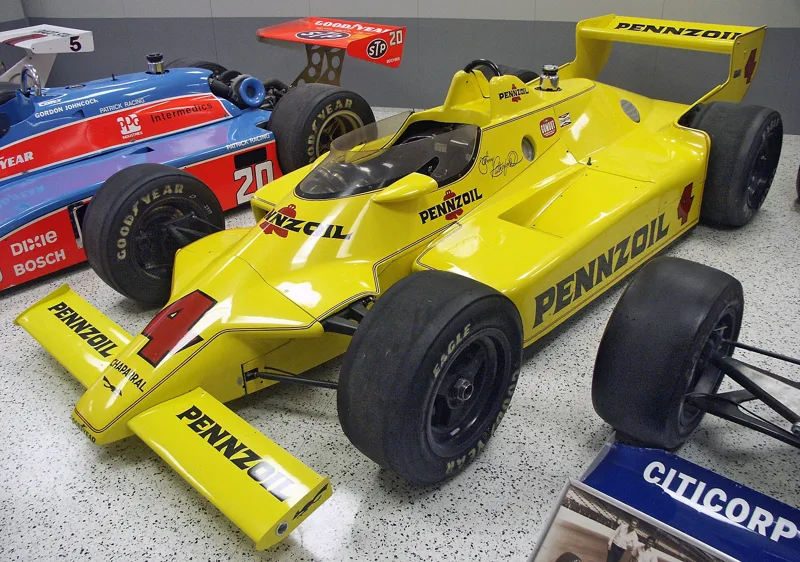
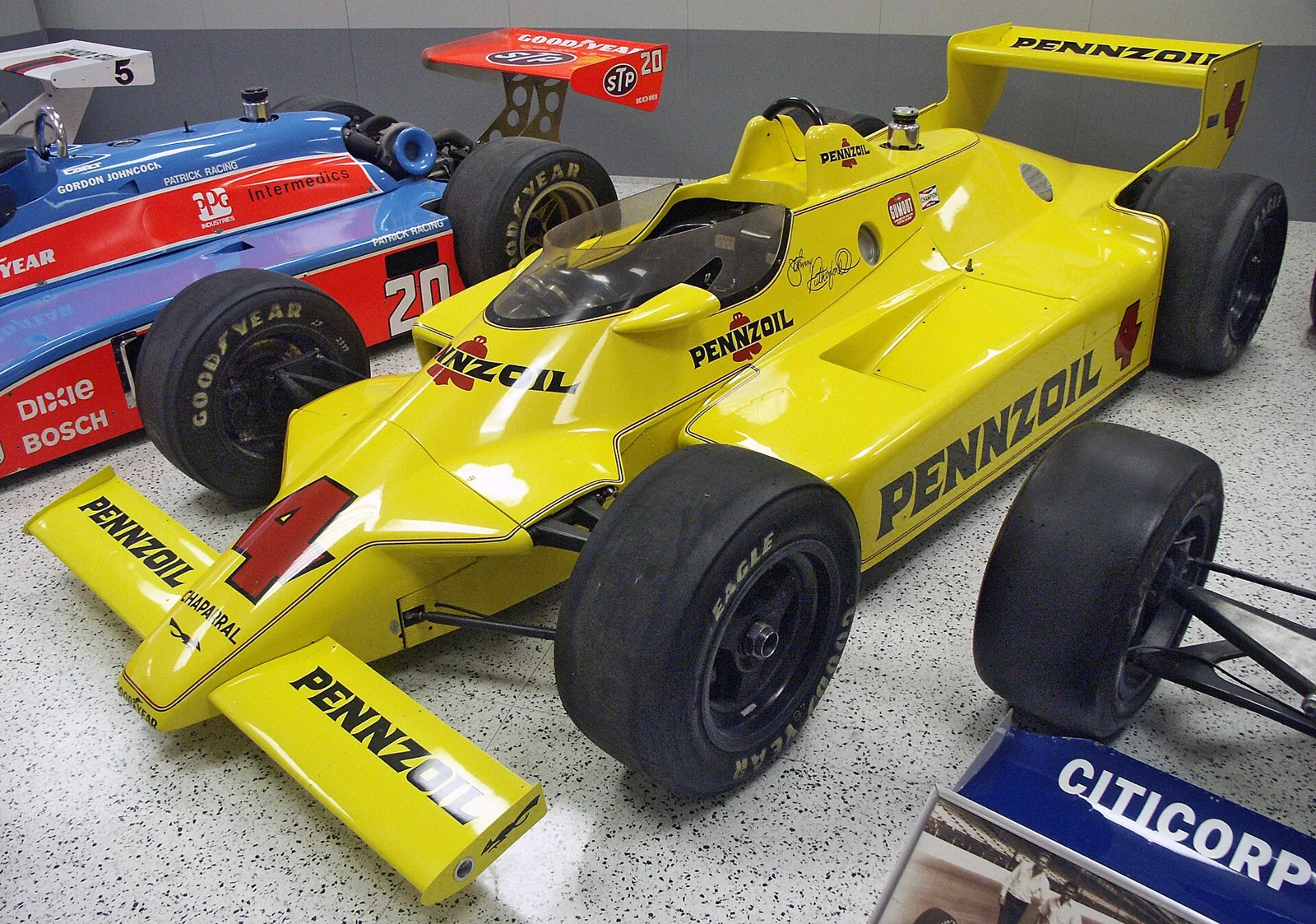
Rain had fallen overnight, but the skies cleared, the track dried and the race began on time. At the start, Al Unser Sr. swept from the outside of the front row into turn one, and he pulled out to a commanding lead in Jim Hall's new Chaparral 2K.
Unser led the first 24 laps. Heavy early attrition saw seven cars out with mechanical problems by lap 22, Janet Guthrie being the most notable among them.
Cliff Hucul stalled on lap 28 during the first sequence of pit stops, which brought out the first caution of the race. Unser was again dominant when the field went back to green.
What was the pack-up rule?
The 1979 race was the first to use the pack-up rule during caution periods. The pace car picked up the leader, and the rest of the field bunched up behind at reduced speed, replacing the Electro-PACER Light system that had been used from 1972 to 1978.
USAC announced the change on May 14. The new system matched the format used in NASCAR and at other Indy car races, and it ended the old light-based approach.
How did the Unsers' race unravel?
On lap 97 Unser pitted under caution, and the team then checked the back of the car for a suspected leak or smoke. After a quick consultation he returned to the track, and the green flag came out with Bobby Unser leading.
On lap 103 Al Unser's Chaparral suffered a failed transmission oil fitting. Heavy smoke and flames came from the back of the car, and he was out of the race.
Al Unser later decided to leave the Jim Hall team at the end of the season. In two seasons with Hall he had won three of six 500-mile races, which gave him a win rate of 50 per cent in those events.
With Al out, Bobby was in control, with his Penske teammate Rick Mears holding second and A. J. Foyt moving up to third, one lap down. Johnny Rutherford had also suffered a broken gear and lost time to repairs.
How did the lead change hands in the closing laps?
With about twenty laps to go, Bobby Unser led Mears by a few car lengths. On lap 181 he drifted to the inside with gearbox trouble, which handed the lead to Mears with 19 laps to go.
Less than a lap later, Foyt got by Mears to unlap himself. Bobby Unser nursed his car to a fifth-place finish in third gear.
Mears made his final pit stop from the lead on lap 185, taking on fuel only. Foyt followed with a fast pit stop of 8.5 seconds, and Mears then held a 38-second lead over him.
What happened at the finish?
With eight laps to go Sneva's crash in turn four brought out the yellow and closed up the pack. The green flag came back for one last sprint with four laps to go, and Mears led with Foyt at the tail of the pack.
Foyt was held up in heavy traffic and needed to pass at least 14 cars to catch Mears. His engine then lost a cylinder and began to slow, and Mike Mosley was running third, one lap down.
Coming off turn four with the checkered flag waving, Foyt's engine quit and he coasted down the frontstretch. Mosley came down the straight at full speed, but Foyt crossed the line 2.3 seconds ahead to hold second.
After the race, officials found a scoring error that had not credited Mosley with a lap at the start. In the official results Mosley was credited with third place, just behind Foyt.
Why does Mears's first win matter?
Mears won in only his second start, and it was the first of four Indianapolis 500 victories. He was born in 1951, which made him the first Indy 500 winner born after World War II.
The Chaparral 2K design that Unser drove would win the race the following year with Johnny Rutherford behind the wheel.
It was also the last checkered flag for the USAC chief starter and flagman, Pat Vidan. Team McLaren's final Indy 500 came that year, and the team left Indy car racing as a team until its return in 2017.
Who else made an impact on the month?
Johnny Rutherford won the 3rd annual Miller Pit Stop Contest for McLaren, beating Tom Sneva in the final round. It was McLaren's second consecutive victory in the contest.
Mario Andretti missed the Indianapolis 500 for the first time since arriving as a rookie in 1965, because he chose to race in Monaco. Danny Ongais returned to the cockpit after his practice crash and qualified.
How was the 1979 race broadcast?
ABC Sports carried the race on a same-day tape delay. Jackie Stewart drove the Ford Mustang pace car at the start and reported live, while Sam Posey was absent, covering the Monaco Grand Prix.
On radio, Paul Page served as anchor for the third year, and Lou Palmer reported from victory lane. Billy Scott, who failed to qualify, was the driver expert.
Bob Jenkins debuted on the backstretch that year, while Jim Shelton retired from the crew after 31 years on the broadcast.
What were the key figures for the 1979 race?
| Item | Detail |
|---|---|
| Date | Sunday, May 27, 1979 |
| Venue | Indianapolis Motor Speedway |
| Winner | Rick Mears, his first Indy 500 victory |
| Pole | Rick Mears, four-lap average of 193.736 mph |
| Second place | A. J. Foyt, by 2.3 seconds over Mike Mosley |
| Field | 35 cars, the most since 1933 |
| Fuel allowance | 280 gallons of methanol, 1.8 miles per gallon |
| Unser laps led | 174 of 200 between the brothers |
| Rookie of the year | Howdy Holmes, by default |