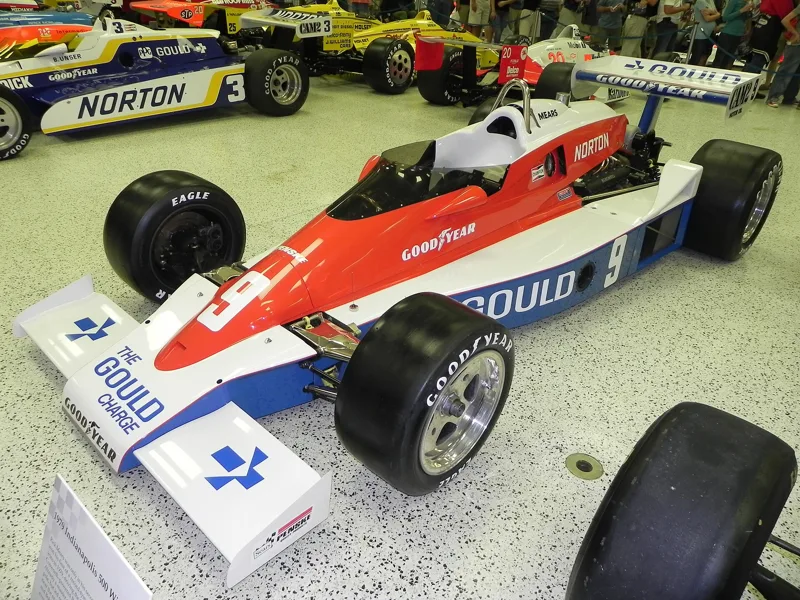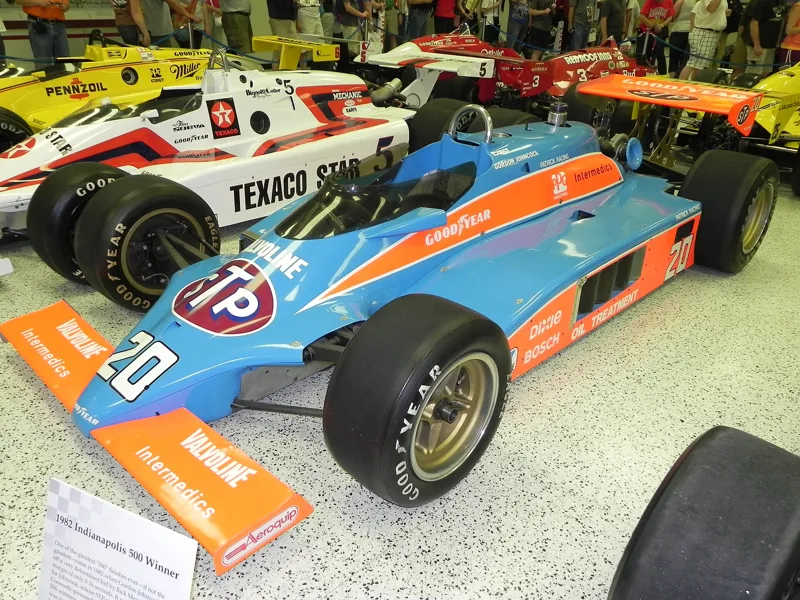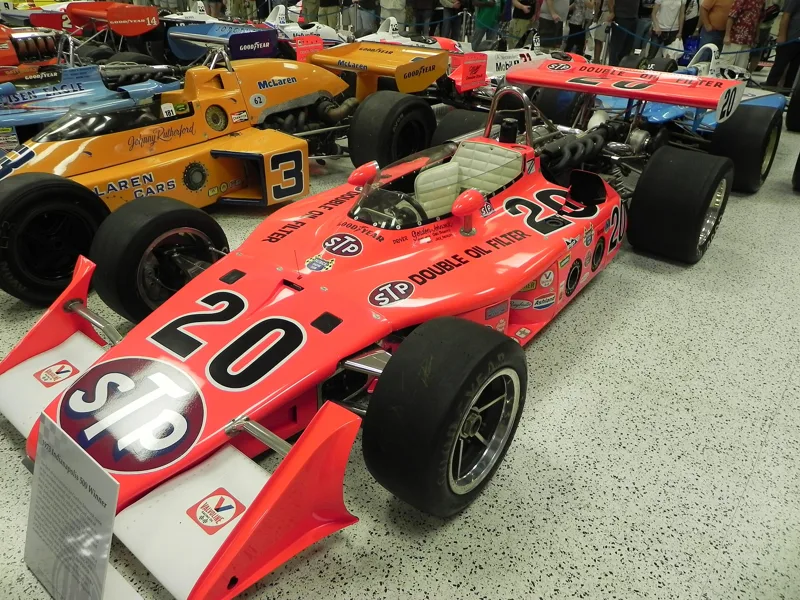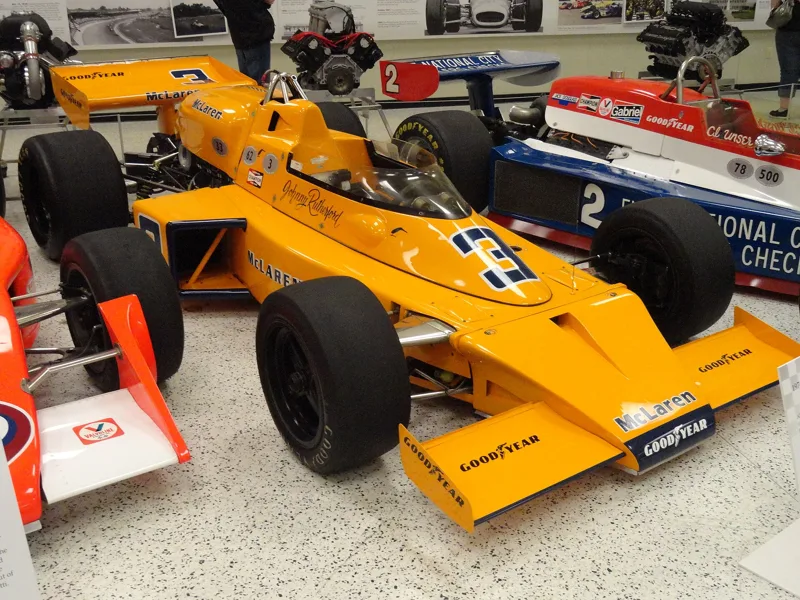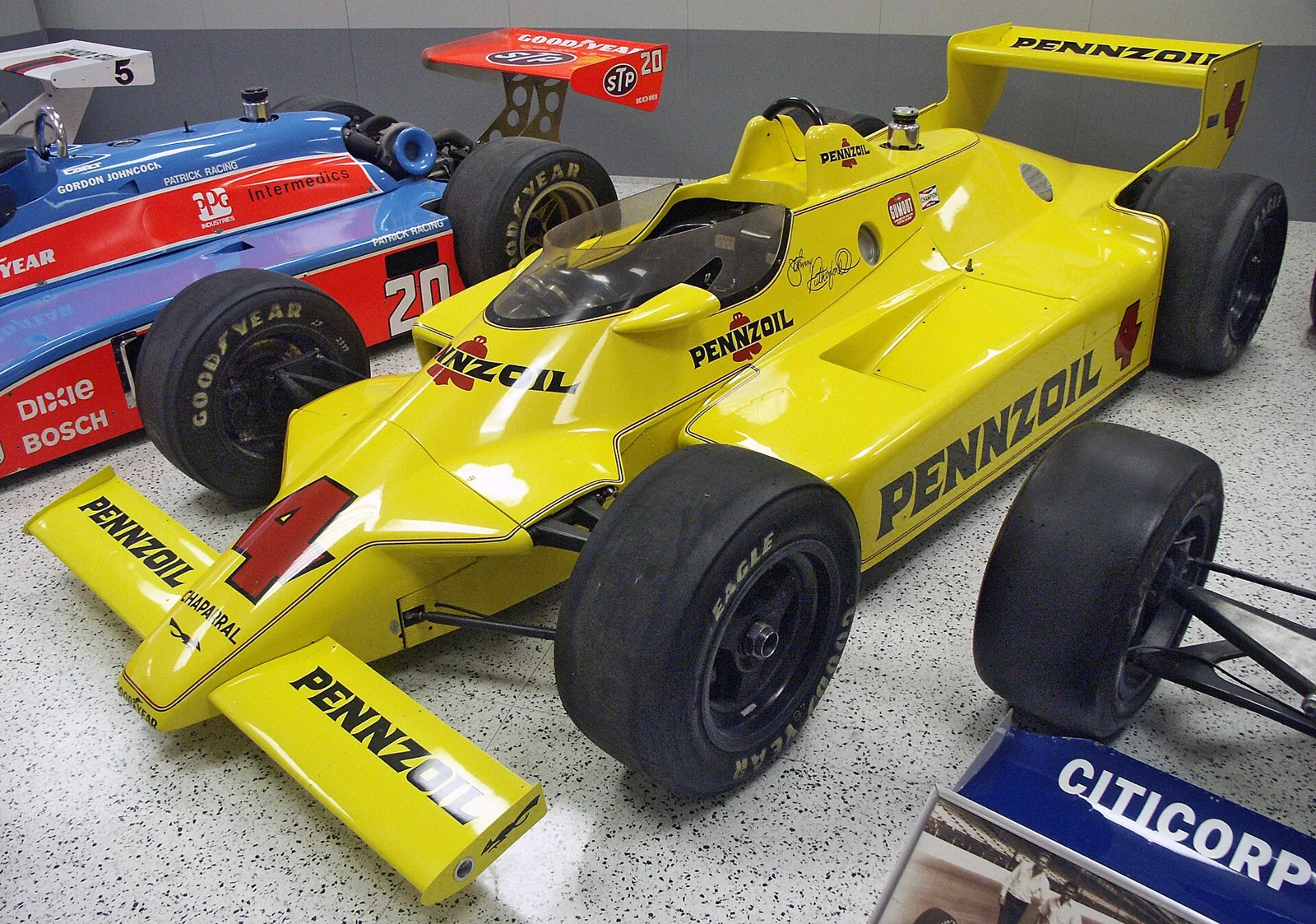
Johnny Rutherford won in Jim Hall's Chaparral 2K, while Tom Sneva started 33rd and finished second, a first in the race's history.
Johnny Rutherford won the 1980 Indianapolis 500 on Sunday 25 May 1980 from the pole, leading 118 of 200 laps in Jim Hall's Chaparral 2K. Tom Sneva, who had started last after a practice crash, finished second, 29.92 seconds behind.
The 1980 Indianapolis 500 was the 64th running of the race, held at the Indianapolis Motor Speedway on Sunday 25 May 1980. Johnny Rutherford won from the pole, leading 118 of the 200 laps in Jim Hall's Chaparral 2K and finishing 29.92 seconds ahead of Tom Sneva. Sneva had started last after a practice crash, and his climb to second place was a first in the race's history.
Who won the 1980 Indianapolis 500?
Johnny Rutherford won the race for the third time, making him the sixth driver to win the Indianapolis 500 three times. He was on pole, led 118 of the 200 laps, and finished 29.92 seconds ahead of Tom Sneva in the Chaparral 2K.
The Chaparral had failed to finish the year before with Al Unser at the wheel, so Jim Hall's ground-effects design was a heavy favourite going into May. Rutherford took over the car, and the team executed what was close to a flawless race.
Rutherford also finished the season with the most points under both USAC's five-race system and CART's twelve-race championship. That gave him what many observers called an undisputed championship for the calendar year.
Johnny Rutherford's Chaparral 2K won, and Tom Sneva's climb from 33rd became the most talked-about story of the race.
How did Tom Sneva end up starting last?
Sneva qualified 14th on Pole Day, but he crashed in practice afterwards. His team replaced the car with a backup, and under the rules the car had to start from the rear of the grid, 33rd. From that position Sneva drove his way to the front in a race slowed by record cautions.
He led the race on lap 74 and led 16 laps across two stints, becoming the first driver to start last and lead.
He then finished second, which made him the first driver in the race's history to start last and finish second. Scott Goodyear matched that feat in 1992.
That made three second places in four seasons for Sneva. Bill Holland had matched the same run of second places in 1947, 1948 and 1950, and Sneva's efforts were often branded with the bridesmaid label until he finally won in 1983.
What did the 1980 field look like?
The starting lineup included ten rookies, a sharp contrast to 1979, which had only one. The three drivers starting in the final row all finished in the top eight for the first time in the race's history: Sneva second, Gary Bettenhausen third and Tom Bigelow eighth.
The race counted towards the 1980 CRL Championship, a joint arrangement between USAC and CART. USAC pulled out of the CRL in the middle of the season, and separate championships were awarded afterwards.
The Indianapolis 500 had changed status for 1980. It became an Invitational event rather than an Open one, which was designed to prevent the uproar over denied entries that had followed the 1979 race.
Under the new invitation criteria, any team in USAC or CART that intended to make a qualifying attempt was likely to be included. Brand-new teams had to submit written operational plans before they were accepted.
The earlier plan to give automatic invitations to teams that had raced all three 500-milers in 1979 was dropped, because only Danny Ongais had done so, and Ontario had switched to the CART series.
What rule change came before the race?
Going into May, USAC cut turbocharger boost to 48 inHG across the board. Boost had been 50 inHG the year before and 80 inHG before that, and the cut slowed cars by as much as 8 to 10 mph. Drivers were unhappy.
A. J. Foyt described the rule as taxicab racing, and Rutherford said it made passing other cars difficult.
Pole Day, step by step
Pole Day was Saturday 10 May, and the first car out was Rick Mears at 187.490 mph. Spike Gehlhausen moved to 188.344 mph an hour later, and Mario Andretti took the provisional pole at 191.012 mph at 12:45 p.m.
Rutherford took the track at 2:08 p.m. in the Chaparral 2K, a car nicknamed the Yellow Submarine for its bright yellow livery. His four-lap average of 192.256 mph secured the pole.
Bobby Unser squeezed onto the front row at 189.994 mph. A. J. Foyt went out twice, waving off his first attempt and then aborting the second when rain returned. After a rain and hail delay of more than an hour and a half, he got one final run and qualified 12th at 185.500 mph.
By the end of the first day the field stood at 16 cars. Danny Ongais was the fastest on Second Day, at 186.606 mph, and Gordon Johncock got into a backup car after breaking an ankle in practice, starting 18th.
Tim Richmond, the rookie who had turned the fastest practice lap of the month at 193.507 mph, was sidelined by a crash on the morning of Pole Day. Mario Andretti had already secured his place on the middle of the front row, and he then travelled to Monaco for the Grand Prix there.
At Monaco Andretti finished seventh, three laps down, and he returned to Indianapolis for Carburetion Day. Tom Sneva's crash in practice came after his qualifying, and that is what moved him to the back.
What happened on Bump Day?
Bump Day was Sunday 18 May, and 14 spots were open when the track opened at noon. About 38 drivers had cars ready in the garage area, and the afternoon promised to be frantic. Non-stop qualifying followed, and the field was full at 33 cars by 2:40 p.m.
Richmond posted the day's quickest time at 188.334 mph, which ranked fifth in the field, while Tony Bettenhausen Jr. at 176.410 mph was the first driver on the bubble.
John Martin bumped Bettenhausen Jr., and by 4 p.m. seven drivers had been bumped. Martin was then bumped himself. With rain approaching at 4 o'clock, Gary Bettenhausen, Tony's brother, held on through three attempts over fifteen minutes and made the field.
What happened in practice and in the infield?
Carburetion Day was Thursday 22 May. Mario Andretti set the best lap of the session at 189.954 mph, while Tom Bagley spun and crashed in turn three, unhurt. Bill Vukovich blew an engine, and thirty-one of the thirty-three qualified cars ran laps.
The day was marred by a death in the infield. Timothy Scott Vail, 19, of Indianapolis, died when his jeep overturned in the Snake Pit area of the turn one infield, and he suffered a fractured skull.
Who won the Pit Stop Contest?
The fourth annual Miller High Life Pit Stop Contest was expanded from eight to twelve participants for 1980, with each team changing two tyres and simulating a fuel coupling. Greg Leffler and Ron Shuman were among the quickest in preliminaries, and Vern Schuppan was also in the field.
In the final, Tom Bigelow's crew beat Greg Leffler's with a 14.04-second stop, against 14.50 seconds. Two cars from the Sherman Armstrong team also advanced to the final round.
How did the race start?
Mary F. Hulman gave the order to fire the engines a little before 11 a.m. Janet Guthrie had failed to qualify, so the traditional call of Gentlemen, start your engines! returned for the first time since 1976. While on the grid, Johnny Rutherford said a ladybug had landed on his uniform, which he took as a good luck omen.
At the green flag he and Bobby Unser went side by side into turn one, and Rutherford took the lead, while Mario Andretti settled into third.
Larry Cannon and Mike Mosley retired with engine trouble within the first five laps. The first caution came on lap 4 when Cannon was towed in, and on lap 9 Bill Whittington and Dick Ferguson crashed, leaving Ferguson with a broken toe and Whittington with a broken leg.
A then-record 13 cautions slowed the race for 65 laps. Those records stood until 1988 and 1992, respectively, and they remain a feature of the 1980 race.
What happened in the middle of the race?
Tim Richmond led on lap 73. On lap 74 Tom Sneva took the lead after starting last, and he led the next 11 laps. It was the first time a driver from the back had led in the race's history.
Mario Andretti also led laps for the first time since his 1969 victory, but he dropped out with engine trouble after 10 laps in front. At the halfway point 20 cars were still running, and Bobby Unser was in front.
Unser's race ended with a turbo failure after 126 laps. On lap 132 Jerry Sneva, two laps down, went into the wall in turn one, and the race settled into a contest between Rutherford, Sneva and Rick Mears.
On lap 172 Rick Mears took the lead, with Sneva second and Rutherford third. One final scheduled stop remained for the leaders.
How did the leaders decide the race?
Rutherford pitted first under green. A. J. Foyt then stalled in turn three on lap 177 and brought out the yellow, and Mears held a 20-second lead. Sneva came in under the yellow for new tyres and fuel. In the final 20 laps Rutherford pulled away at will.
Mears, one lap later, gambled on track position and took on just fuel. Rutherford took the lead under the same caution, and Mears' strategy failed, dropping him to third.
Sneva was second and unchallenged, and his later comment about his own result captured his frustration.
What decided third place?
The battle for third was between Gary Bettenhausen and Gordon Johncock, with Danny Ongais, a lap down, close behind them. On the final lap Ongais hit the outside wall exiting turn four, and Johncock attempted a slingshot pass at the line.
Bettenhausen held his car-length advantage and kept third place by 0.27 seconds. Rutherford's margin over Sneva was 29.92 seconds.
As Rutherford took his victory lap, Richmond ran out of fuel at the head of the main straight. Rutherford stopped beside him, and Richmond rode back to the pits on the sidepod of the winner's car to applause from the crowd.
Why was Pancho Carter penalised?
Pancho Carter lost a lap as a penalty for overtaking the pace car while the yellow was out on lap 58. He had been running second, and the penalty dropped him to sixth. His team argued that he had been waved past the pace car, yet USAC kept the penalty.
How was the race broadcast?
The IMS Radio Network carried the race with Paul Page as chief announcer in his fourth year. Lou Palmer reported from victory lane, and Rodger Ward joined as driver expert, the first former winner to hold that role. Bob Jenkins had his final year on the backstretch, and Darl Wibel's final season on the crew came in 1980.
Turn one reporting moved to a platform atop the Southwest Vista grandstand.
On ABC the broadcast was extended to three hours. Chris Schenkel rode in one of the pace cars and reported from inside it at the start, while Sam Posey came back as a reporter, having missed the 1979 race. The broadcast was later repeated on ESPN Classic from May 2011.
Key figures for 1980
| Measure | Detail |
|---|---|
| Date | Sunday 25 May 1980 |
| Winner | Johnny Rutherford, his third Indy 500 win |
| Car | Jim Hall's Chaparral 2K |
| Pole | Johnny Rutherford, 192.256 mph four-lap average |
| Margin | 29.92 seconds over Tom Sneva |
| Winner's laps led | 118 of 200 |
| Sneva | Started 33rd, finished second |
| Cautions | 13 for 65 laps |