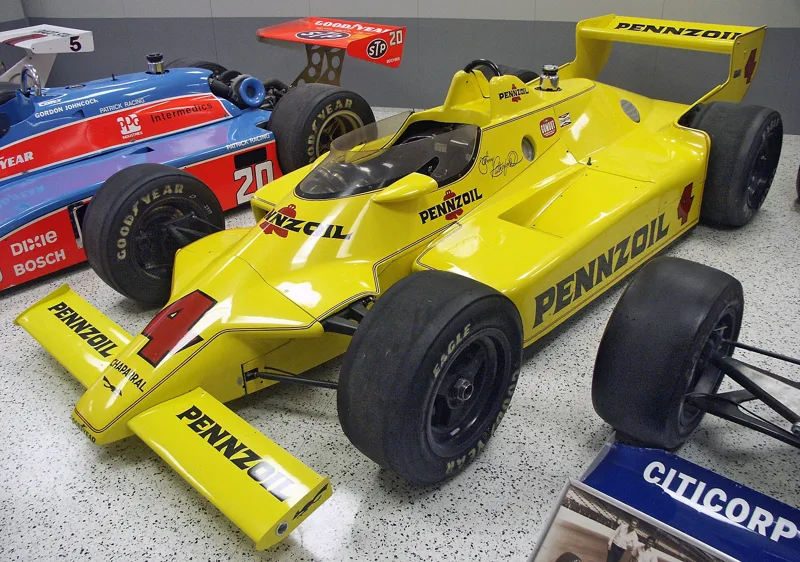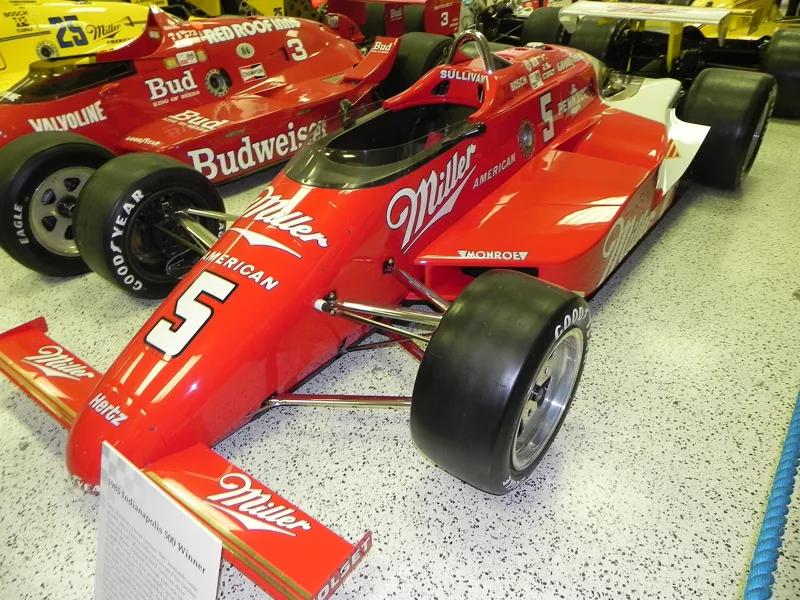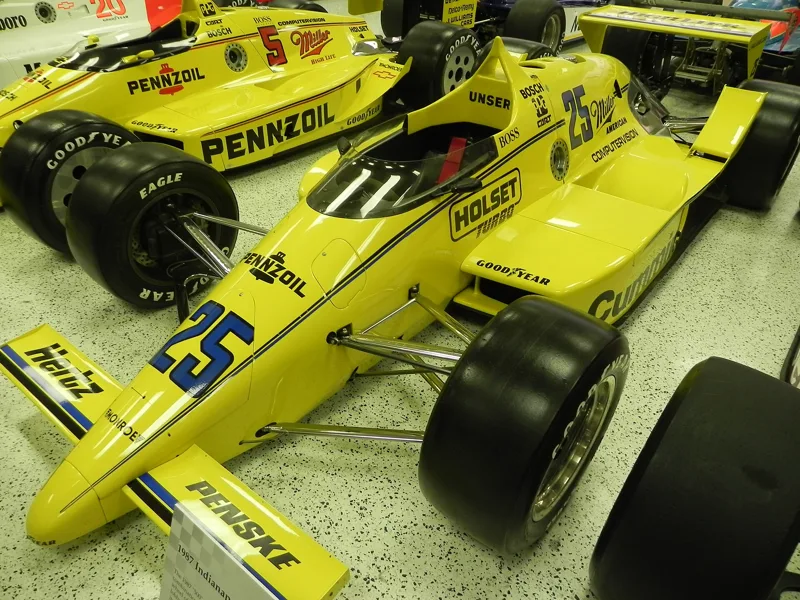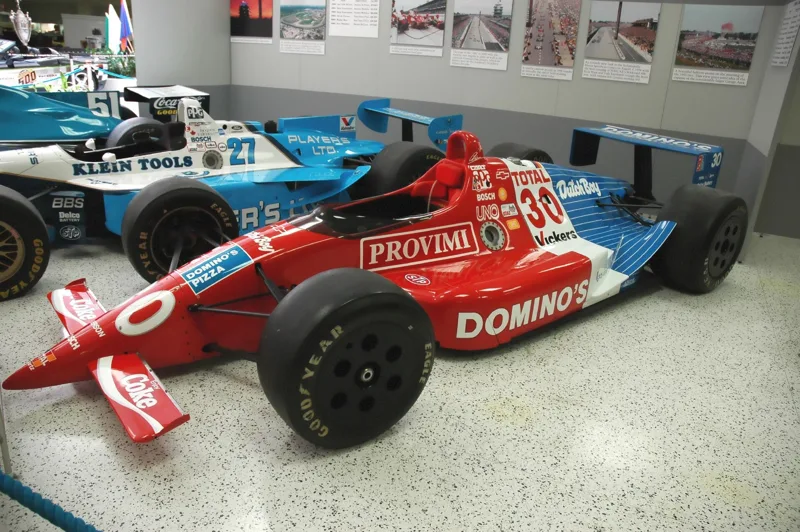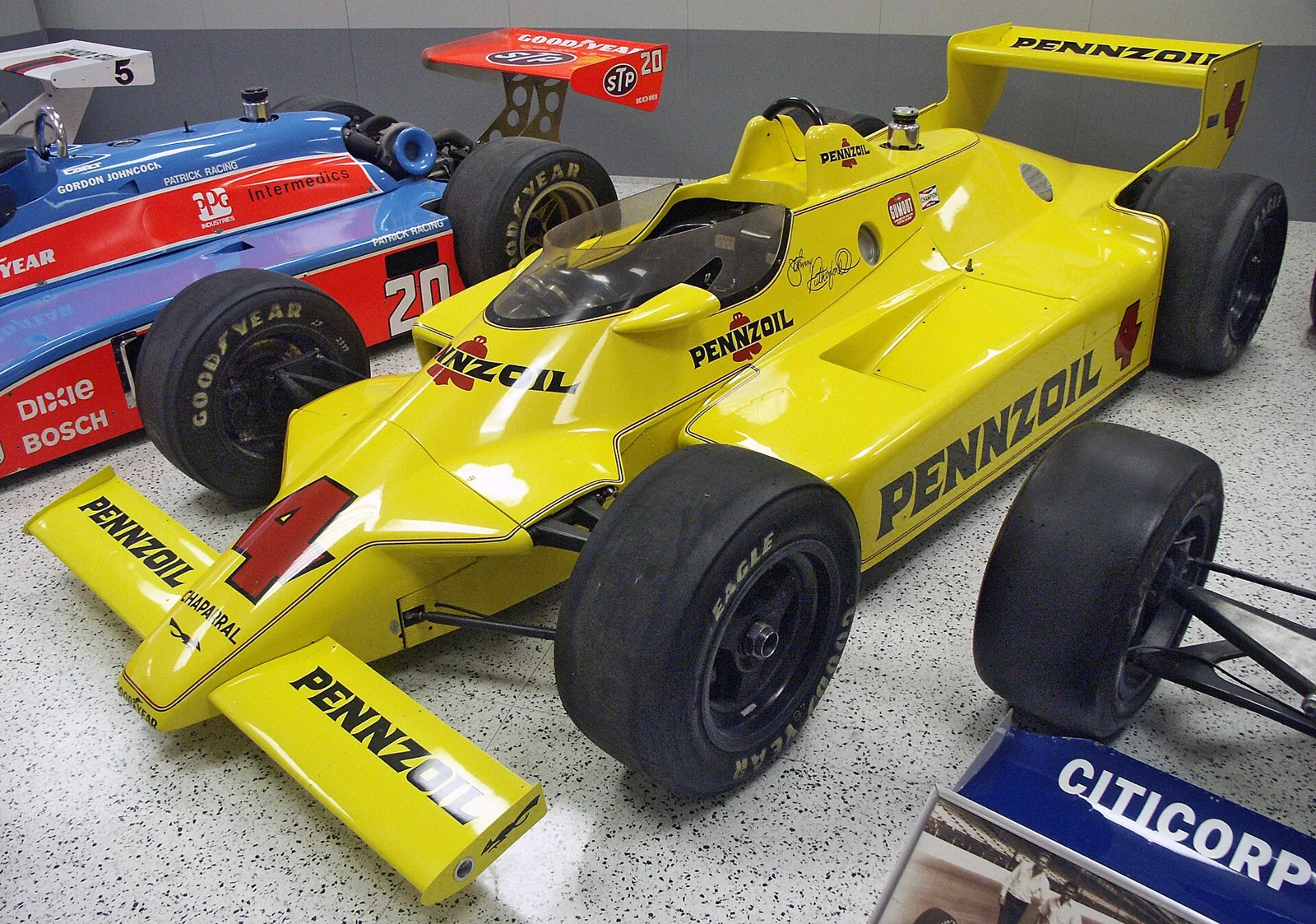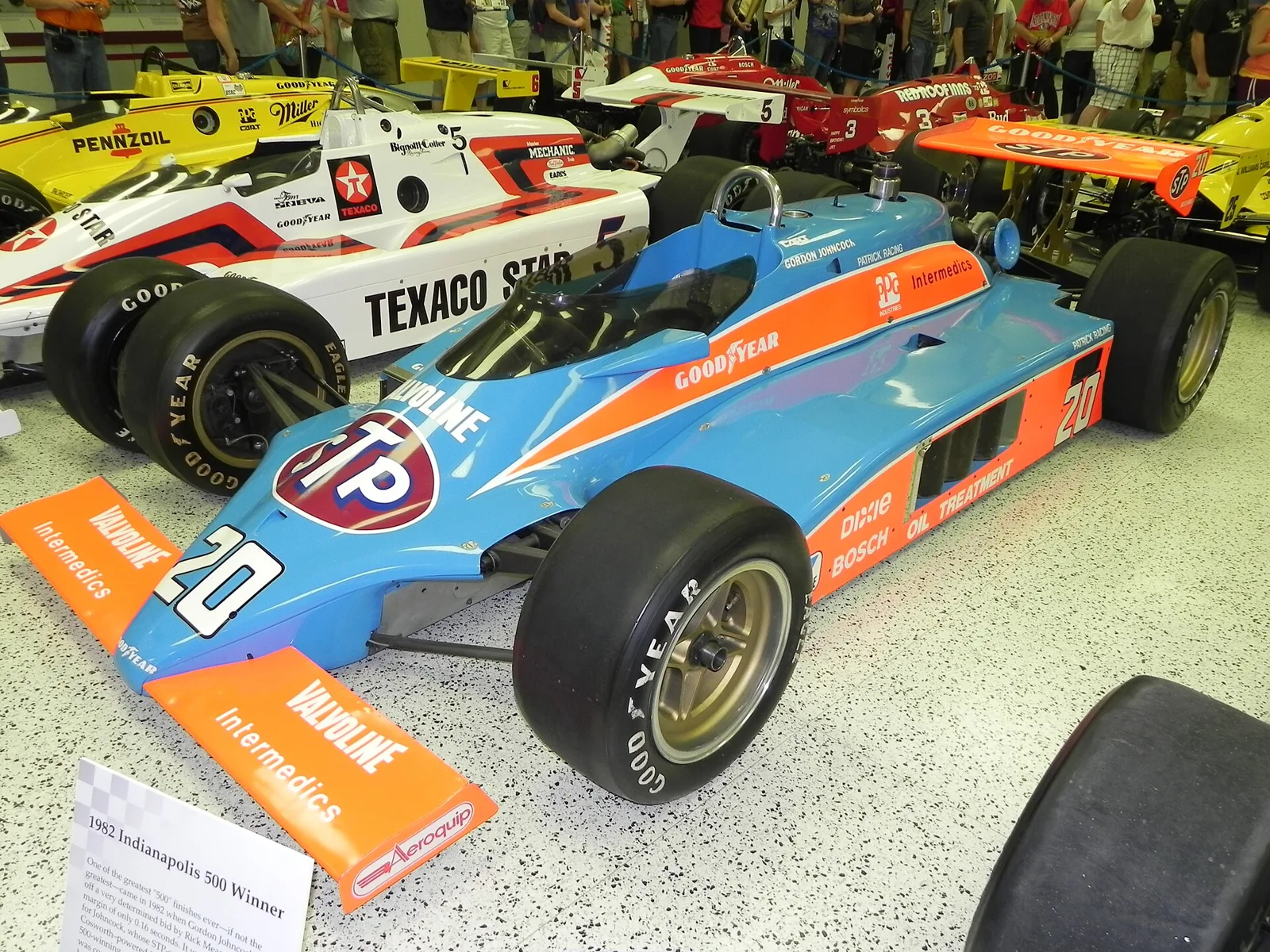
The closest finish in Indy history, a start crash from the front row and a fatal accident in pole week make 1982 a race of extremes.
Gordon Johncock won the 1982 Indianapolis 500 on May 30, 1982, beating polesitter Rick Mears by 0.16 seconds. That was the closest finish in the race's history at that point, and the start crash and pole-week death made the event one of extremes.
The 1982 Indianapolis 500 was the 66th running of the race, held on Sunday, May 30, 1982. Gordon Johncock, who had won the rain-shortened 1973 race, beat polesitter Rick Mears by 0.16 seconds, but the month was also shaped by a fatal crash in time trials and a chaotic start.
Why is the 1982 race remembered as one of the best?
Historians, media and fans count the 1982 race among the greatest editions of the event. Johncock and Mears dueled over most of the final forty laps, and Johncock held off Mears on the last lap by the narrowest margin in the race's history up to that point.
Johncock opened a considerable gap after his last stop, on lap 184. Mears then began closing the gap in the waning laps, and the crowd grew louder as the two cars came together for the finish.
The race was officially part of the 1981-82 USAC season. Most of the entrants, however, took part in the 1982 CART PPG Indy Car World Series, and championship points from the 500 were not awarded toward the CART title.
A race of extremes: the closest finish Indy had seen, a start crash from the front row and a fatal accident in pole week.
How big was the 1982 entry list?
The list closed on April 17 with a record 109 entries. Seven former winners were on it, along with 28 prospective rookies, which made the field one of the most varied of its era.
The return of A. J. Foyt was one of the month's main stories. He had been hurt in July 1981 at the first Michigan 500, breaking his right arm in a compound fracture and taking a wound to his leg. He was out for months while he healed.
Mario Andretti was back with Patrick Racing for a full CART season, and he scaled back his Formula One commitments to do so. It was the first time in several years that he would spend the entire month in Indianapolis, rather than travelling back and forth to Europe.
Bobby Unser took a sabbatical from racing, and he would ultimately retire from the cockpit. That left the 1981 controversy between Penske and Patrick Racing as a background story rather than a live contest in the same form.
What rule changes shaped the 1982 race?
Qualifying allowed two warm-up laps for each car, down from three, a rule that had applied since 1946. Safety changes followed two pit fires in 1981, and the engine rules were eased after a plan to ban the Cosworth DFX was reversed.
After two major pit fires in 1981, one involving Rick Mears at the Indianapolis 500 and one involving Herm Johnson at the Michigan 500, new rules required pitside fuel tanks to be anchored to the ground. High-pressure water hoses were installed the length of pit lane.
Positive shutoff valves on the pitside fuel tanks became mandatory, and all pit personnel had to wear fire-resistant clothing. That included scorers and the television and radio reporters, who began wearing specialised firesuits as well.
During May 1981, USAC had been preparing to change the engine formula, and the plan would have effectively banned the Cosworth DFX V-8. That engine had won the Indianapolis 500 for the previous four years, from 1978 to 1981. The plan was reversed in summer 1981, and the turbocharged DFX remained permitted with a smaller turbocharger unit.
How fast was pole day?
Kevin Cogan set a one-lap record of 204.638 mph (329.333 km/h) on pole day, Saturday May 15, and a four-lap average of 204.082 mph (328.438 km/h). He was then beaten by his Penske teammate Rick Mears, whose four-lap average of 207.004 mph (333.141 km/h) took the pole.
A total of nine cars completed runs on the day, including Gordon Johncock, rookie Bobby Rahal and Danny Ongais. The speeds set in the morning were the standard the rest of the week had to meet.
What happened in the Gordon Smiley crash?
Gordon Smiley was killed at 12:15 p.m. on pole day, when his car crashed head-on into the concrete wall in turn three at about 200 mph (320 km/h). He had left the pits to start his qualifying run and was on his second of two warm-up laps.
The back end of the #35 Intermedics March 81C-Cosworth became loose on the approach, and Smiley over-corrected. The impact was so violent that the fuel tank exploded, and the car broke into large sections, with the rest of it scattered across the track.
Smiley was the first driver killed at Indy since 1973, and the most recent death in a qualifying attempt so far. Because the crash happened in a remote part of the track, without video boards or live television, most fans in attendance did not see it up close.
Track announcer Tom Carnegie learned of the death at 12:48 PM and told the grandstands. The track then remained closed for over two hours, while the catch fencing was repaired, debris was cleared and a patch of asphalt was laid over a gash in the surface.
How did the rest of pole day unfold?
Once officials sent cars out to test the pavement and found it suitable, qualifying resumed. Foyt lined up on the outside of the front row, with Mario Andretti fourth after qualifying, before the session halted around 4:55 p.m. with the field at 20 cars.
On Sunday May 16 few drivers took to the track after the tragedy. A rain shower cut the session short, leaving the field at 22 cars.
The second week of practice brought more activity. On Saturday May 22 qualifying was busy, and the field reached 31 cars. Mike Chandler set the best time of the day at 198.042 mph (318.718 km/h).
Bump day, Sunday May 23, opened with two empty positions. Josele Garza and Pete Halsmer went out and filled the field, and only two cars were bumped all day. Desire Wilson announced she would not make an attempt, which ended her chance to become the second female to qualify at Indy.
How did the final practice and pit contest go?
Carburetion Day was Thursday May 27. Of the 33 qualified cars, 31 took laps, and Kevin Cogan was the fastest at 202.292 mph, with Mario Andretti close behind at 202.247 mph.
The 6th annual Miller High Life Pit Stop Contest was held on May 26. Rick Mears was fastest of the eight participants at 14.94 seconds, and he defeated A. J. Foyt in the final round, which gave Penske Racing a second win in a row.
How did the start turn into a crash?
Cogan was placed in the middle of the front row, beside Mears and Foyt. As the field approached the start/finish line, Cogan swerved right, touched Foyt's car and then slid into the path of Mario Andretti, collecting him.
Further back, Dale Whittington almost hit Geoff Brabham, then lost control, spun across the track and struck the back of Roger Mears. Both of those cars were eliminated, and the green flag had not yet come out when the race was red-flagged.
Four cars were eliminated in total, including Cogan. Foyt's team made repairs during the red flag, and Foyt returned for a second attempt at the start, when 29 cars took the green flag.
The delay lasted more than 45 minutes. Bobby Rahal reported being hit from behind but was undamaged, and the grid had holes where the eliminated cars had been.
Who was blamed for the start?
Andretti and Foyt were furious with Cogan, and Andretti walked away from an exchange with him in the pit lane. Foyt and Andretti both spoke publicly against Cogan, while Cogan tried to explain himself without success.
Gordon Johncock, Johnny Rutherford and Bobby Unser later placed some of the blame on Mears, arguing that he had brought the field down to a very slow pace. Mears said his intention was to keep the same pace rather than speed up and slow down.
In a 2009 interview, Johncock pointed out that Andretti had jumped the start, and that he could have avoided Cogan's spinning car had he been lined up better in the second row. Andretti disputed that account.
What caused the Cogan accident?
Penske Racing never explained the accident. Derrick Walker, the team manager at the time, said the team found no cause, but several experts offered different views, including locked rear brakes and a broken CV joint.
Rodger Ward, working for the IMS Radio Network, believed the rear brakes had locked up. It was common in the turbocharged era for drivers to ride the brakes during warm-up laps to engage the turbocharger.
Foyt later gave a more analytical account in his autobiography, though he still placed most of the responsibility on Cogan. Donald Davidson, the Speedway historian, pointed out that Mears had a nearly identical accident during private testing at Michigan.
Why did Cogan lose his place in the team?
Cogan quickly fell out of favour after the crash, and the press and fans turned against him. He did not win a race in 1982, and Roger Penske replaced him with Al Unser for 1983.
The incident also reopened a feud between Penske Racing and Patrick Racing, which had been the key fixture of the controversial 1981 race. Cogan nearly took out two of the most successful IndyCar drivers of all time in one move.
How did A. J. Foyt's race end?
Foyt took the lead at the start, which was the first time in his 25-year Indy career that he had led the first lap. His start was his record 25th at Indianapolis, and he went on to lead 32 laps before his car gave up.
On lap 95 a failed transmission linkage stopped him from leaving the pits in the normal way. Foyt climbed out, grabbed a hammer and a screwdriver, and tried to fix the car himself, but the effort was in vain.
Foyt later said the Cogan crash had damaged the car's toe-in alignment, and that the car had handled poorly all race. The 1982 race was the last Indy 500 in which Foyt led any laps.
What happened in the middle of the race?
Mears established himself as the fastest car in the first half and took the lead. Danny Sullivan crashed in turn four on lap 154, bringing out the final caution of the race.
On the restart with 42 laps to go, Johncock came up to speed faster than Mears and passed him for the lead on the backstretch. The pair ran nose to tail for twenty laps, with Mears better in the turns and Johncock quicker on the long straights.
With 18 laps to go, Mears pitted and was trapped behind the slower car of Herm Johnson. He locked his brakes, bumped Johnson's back wheel and lost several seconds, and his crew filled his car with 40 US gallons (150 L) of fuel.
Two laps later Johncock pitted, and his stop was many seconds quicker than Mears's. He pulled away from the pit box with the lead.
How close was the 1982 finish?
Johncock led by more than eleven seconds after his stop, but his car began to push, and Mears closed by more than one second a lap. The final margin was 0.16 seconds, the closest finish in Indy 500 history at that time.
Mears closed to under 3 seconds with three laps to go, and the margin was under 1 second with two laps to go. Only six other cars were still running, so traffic was not a factor in the closing stages.
Tom Sneva's car began smoking, and he pulled to the inside to avoid a yellow. Pancho Carter slipped by into third, while Sneva limped home for fourth.
On the final lap Mears pulled alongside Johncock on the main straight. Johncock held the lead through turn one, and Mears tried to slingshot past out of turn four, but Johncock held him off and won by 0.16 seconds.
Mears finished just over one car length behind. That margin stood as the closest finish in race history for ten years, and as of 2026 it ranks seventh in the race's history.
What did the winner and runner-up say afterwards?
Johncock won his second Indy 500, and he admitted to Chris Economaki in Victory Lane that he had been worried about the handling as Mears closed in. He said he had no intention of backing off in turn one on the final lap.
Johncock's mother Frances died the day after the race. Johncock learned of her death at the Monday banquet, which made the victory bittersweet for him.
Mears was thrilled to be part of the most dramatic finish in Indy history. He conceded that Johncock's block in turn one was not a dirty move, and later said he would not change the result.
Why does the 1982 race still matter?
The 1982 race is often considered one of the greatest editions of the event. The race was an unusual combination of a historic finish, a chaotic start and a fatal accident in the same month.
Smiley's death was one of four fatal motorsport accidents in four months. It came one week after the fatal crash of Gilles Villeneuve during qualifying for the Belgian Grand Prix at Zolder.
About one month later, Riccardo Paletti was killed at the start of the Canadian Grand Prix in Montreal, and about two months after that Jim Hickman was killed at the Milwaukee Mile.
How was the 1982 race broadcast?
The race was carried on ABC Sports on a same-day tape delay. Sam Posey went back into the booth as driver expert, and Jack Whitaker added in-depth features and commentary.
Jackie Stewart was moved from the booth to a new host role in ABC Race Central after the previous year's controversy. Clyde Lee, the anchorman for the ABC affiliate in Indianapolis, reported on drivers who dropped out.
On radio, Paul Page served as anchor for the sixth year, and Sally Larvick joined as a roving reporter. The broadcast was re-aired numerous times on ESPN Classic from April 2000 onward.
What were the key figures for the 1982 race?
| Item | Detail |
|---|---|
| Date | Sunday, May 30, 1982 |
| Venue | Indianapolis Motor Speedway |
| Winner | Gordon Johncock, his second Indy 500 |
| Margin | 0.16 seconds |
| Pole | Rick Mears, 207.004 mph (333.141 km/h) four-lap average |
| Entries | A record 109 |
| Field for the restart | 29 cars |
| Fuel allotment | 280 US gallons (1,100 L) of methanol |
| Fatality | Gordon Smiley, during pole day |