A short Formula One stint, a 1986 IndyCar win at Phoenix, a second place at Indianapolis and a 1982 start-line crash that shaped the rest of his racing life.
Kevin Cogan, born in 1956, was an American driver who failed to qualify for two Formula One races in 1980 and 1981. He won at Phoenix in 1986, finished second at the Indianapolis 500 that year, and stopped racing after the 1993 season.
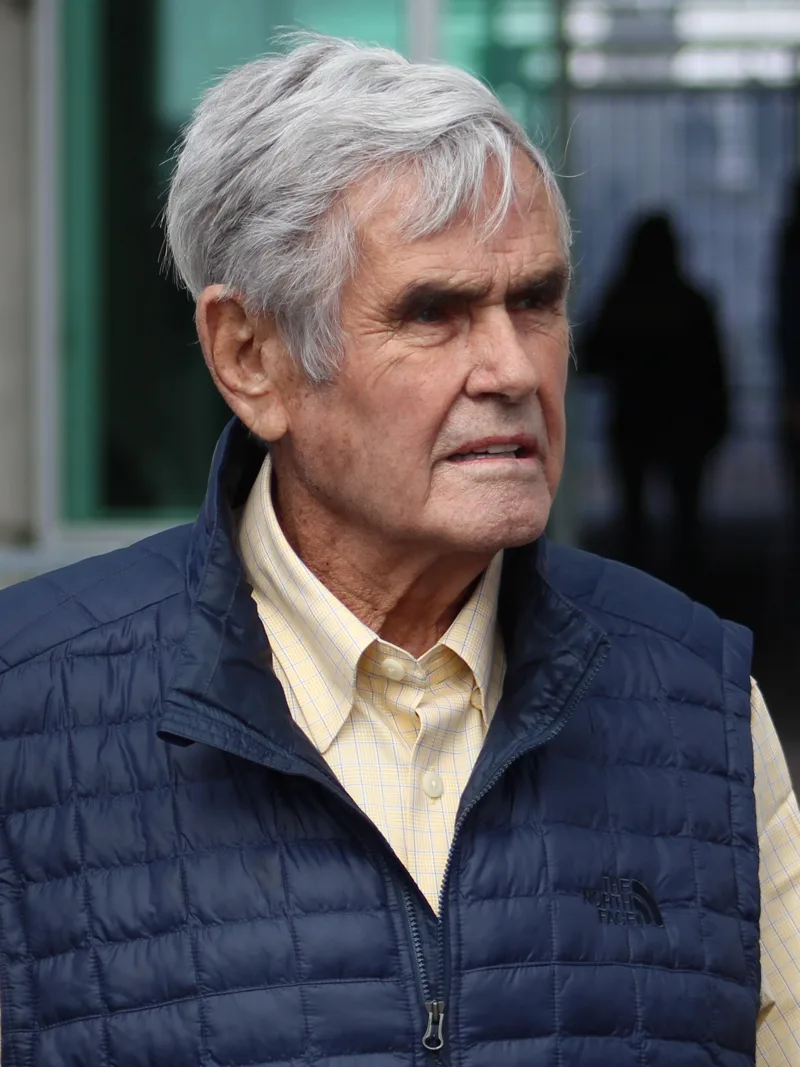
John Kevin Cogan was an American racing driver from Culver City, California, who raced in Formula One in 1980 and 1981 and then in American open-wheel racing until 1993. He won one IndyCar race, at Phoenix in 1986, and finished second at that year's Indianapolis 500. His career is also remembered for a crash at the start of the 1982 Indianapolis 500, which became one of the most debated incidents in the race's history.
Who is Kevin Cogan?
Cogan is a retired American driver whose Formula One attempts in 1980 and 1981 both ended before the start. He later became known for a Phoenix victory, a near-win at Indianapolis and a start-line incident that followed him for years.
He was born on 31 March 1956 and grew up in Southern California. He graduated from West Torrance High School in 1974, and his path into racing took him from the Formula One paddock to the USAC and CART ranks in the United States.
One IndyCar win, a second place at Indianapolis and a 1982 start-line crash that defined the rest of a short career.
How did Cogan's Formula One attempts go?
Cogan's Formula One career was short. He tried to qualify for the 1980 Canadian Grand Prix in a RAM Williams, and he failed to make the grid. He repeated that result in 1981, driving for Tyrrell at the United States Grand Prix West.
Neither weekend produced a race start, so his Formula One record consists of two non-qualifications. He then moved to the oval-and-road-course American series, where he found more consistent opportunities.
How did Cogan start in American open-wheel racing?
Cogan made his Indianapolis 500 debut in 1981, racing a Phoenix PR-01 Cosworth for Jerry O'Connell Racing in the USAC Gold Crown Championship. He qualified 12th and finished fourth after 197 laps, a strong showing that did not win him the Rookie of the Year award, which went to Josele Garza.
He then raced in the rival CART series for O'Connell, and in his first CART event at the Gould Rex Mays Classic on the Milwaukee Mile he qualified seventh and finished second. He ended the season fifth in points after that race, and he took 23rd in the CART championship over the full year.
The 1981 Indianapolis finish was not counted in USAC points, because he ran the race without a Class I licence. He ended the USAC Gold Crown season 47th in points as a result.
What happened at the 1982 Indianapolis 500?
In 1982 Cogan joined Team Penske, driving the No. 4 Norton Spirit PC-10 Cosworth. He qualified on the middle of the front row beside pole-sitter Rick Mears, and in qualifying he set a new one-lap track record of 204.638 mph (329.333 km/h) and a four-lap average of 204.082 mph (328.438 km/h).
As the field approached the start-finish line, Cogan suddenly swerved right. He touched and bounced off A. J. Foyt's car, then ran into the path of Mario Andretti. Four cars were taken out, including Cogan and Andretti, and the race was red-flagged while the wreckage was cleared. Foyt's team repaired its car and made the restart attempt.
Foyt and Andretti were both furious and spoke out publicly. Andretti shrugged off Cogan's attempts to explain himself and complained that he could not handle the responsibilities of the front row. Foyt also criticised Cogan in his remarks to the broadcaster, and the crash became a major talking point of the race week.
Why was the 1982 crash so controversial?
The accident was never clearly explained by the Penske team. Team owner Roger Penske stood behind Cogan in a post-race interview but neither confirmed nor denied a broken CV joint, which had been suggested as the cause. Other observers pointed to rear brakes locking, which was a common technique in the turbocharged era when drivers rode the brakes on warm-up laps.
Commentators disagreed about the cause. Some blamed Mears for the slow pace of the field, and others felt Andretti had jumped the start. A broadcaster's remark that he had no explanation also added to the debate, and many concluded that Cogan himself may have been responsible.
The episode had lasting effects. Cogan struggled with the stigma of the crash, and he never won another race. He finished 1982 sixth in the CART points, behind teammate Mears, who won the championship. Penske released him at the end of the season, and Al Unser replaced him in 1983.
| Season | Team | Best result | Points finish |
|---|---|---|---|
| 1981 | Jerry O'Connell Racing | Second at Milwaukee; fourth at Indianapolis | 23rd (CART) |
| 1982 | Team Penske | Third at Phoenix; second at Pocono | Sixth |
| 1983 | Bignotti-Cotter Racing | Fifth at Indianapolis | 15th (CART) |
| 1984 | Forsythe Racing | Eighth at Michigan | 24th |
| 1985 | Kraco Racing | Fourth at Michigan | 14th |
| 1986 | Patrick Racing | Win at Phoenix; second at Indianapolis | Sixth |
| 1987 | Patrick Racing | Fifth at Mid-Ohio and Nazareth | 16th |
| 1988 | Machinists Union Racing | Third at Long Beach | 13th |
| 1989 | Machinists Union Racing | Eighth at Laguna Seca | 14th |
| 1993 | Galles-Kraco Racing | 13th at Cleveland | No points |
How did Cogan fare from 1983 to 1985?
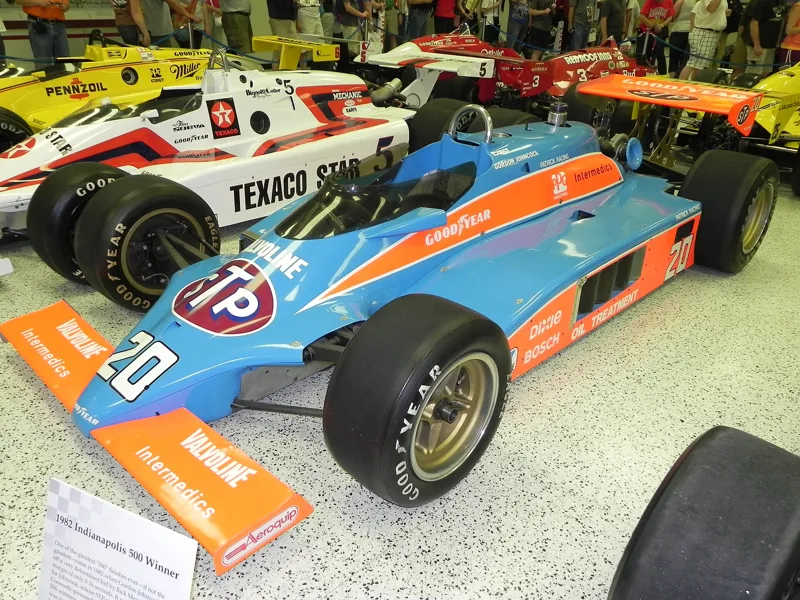
In 1983 he drove for Bignotti-Cotter Racing, and his best finish was fifth at Indianapolis, where teammate Tom Sneva won. The team then turned its efforts to a new car, and at year's end co-owner George Bignotti retired and sold his share, leaving Cogan without a seat for 1984.
The 1984 season was harder. He returned to the 500 with a Ligier and later with Curb-All American Racers, qualified 27th, and retired 20th after a frozen wheel at lap 137. He then drove for Forsythe Racing and finished eighth at Michigan and tenth at Road America, but a crash in practice for the Pocono 500 broke both of his heels, tore an Achilles tendon and shattered a talus bone, ending his season.
In 1985 he joined Kraco Racing. He nearly failed to qualify at Indianapolis, eventually starting 32nd and finishing 11th. He added fourth at Michigan and fifth at Portland, and he finished 14th in the championship.
What was Cogan's 1986 season?
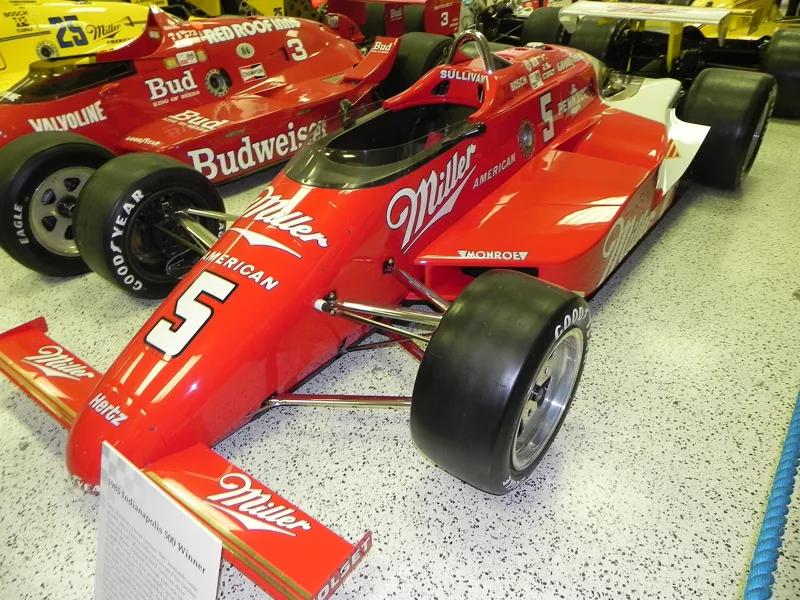
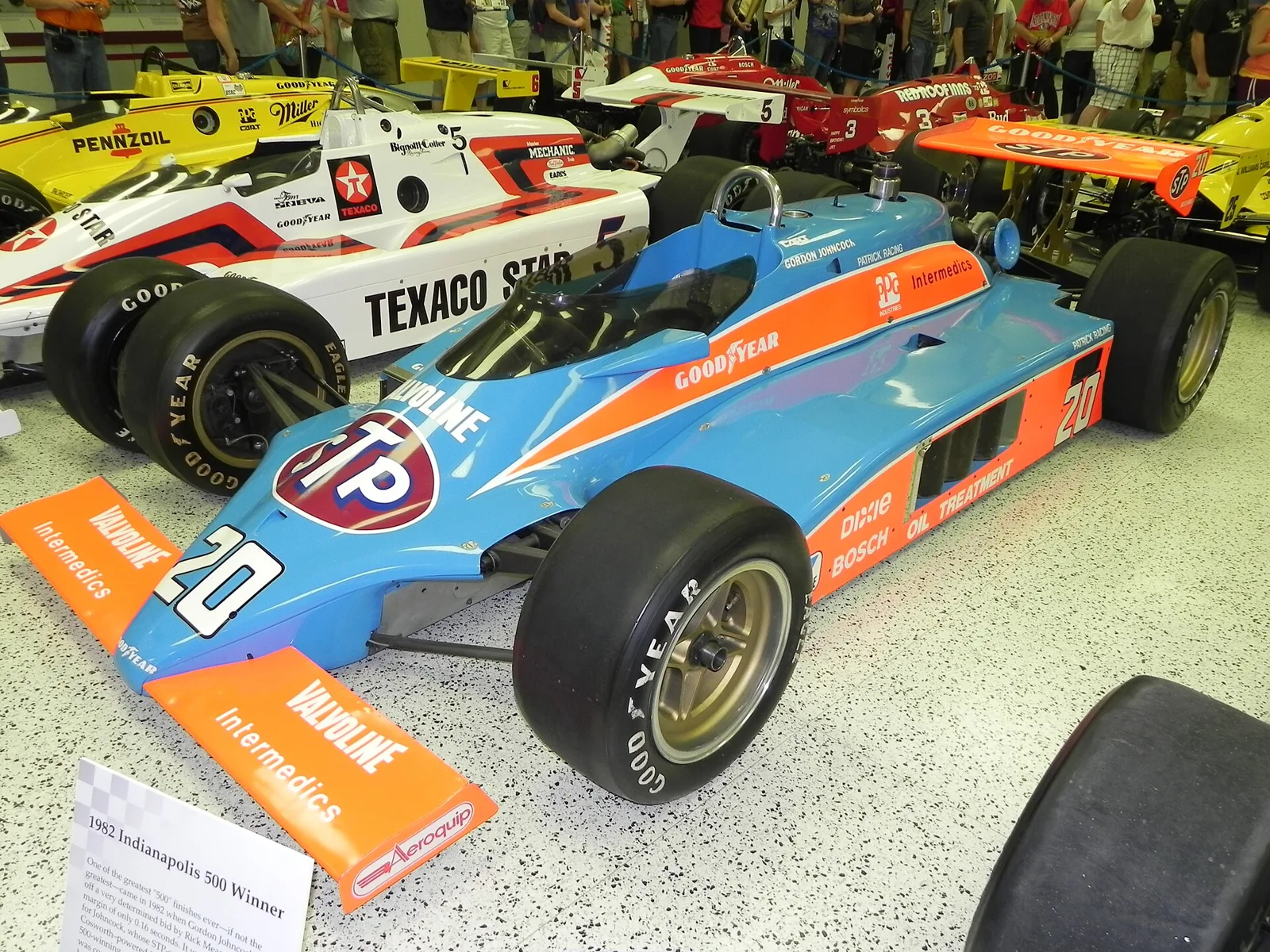
In 1986 Cogan drove for Patrick Racing, and the season began with the best result of his career. He won the Dana 200 at Phoenix, the season opener, leading second-place finisher Tom Sneva by a full lap. It was his only IndyCar win, and it gave him the lead of the CART standings for the first time in his career.
At Indianapolis he made a daring move with 13 laps to go, passing Rick Mears and Bobby Rahal in less than a lap as both were held up by Randy Lanier. He led by three seconds before a caution on lap 195 for an accident by Arie Luyendyk. He had a poor restart on lap 198, was passed by Rahal, and finished second.
He still led the standings after Indianapolis, but he retired in seven of the fourteen remaining races and dropped to sixth in the championship. That season remains the high point of his career in the record books.
How did Cogan's final racing years unfold?
In 1987 he returned to Patrick Racing with an Ilmor-Chevrolet engine. The season was a disappointment, and his best finishes were fifth at Mid-Ohio and fifth at the Nazareth race, leaving him 16th in the points.
In 1988 he drove for Machinists Union Racing. He was third at Long Beach, but an injury at the Molson Indy Toronto kept him out of four races. He finished 13th in the points after a fourth-place finish at Tamiami Park. In 1989 he stayed with the team, finishing 14th overall with a best result of eighth at Laguna Seca.
His 1989 Indianapolis race ended in a crash on the third lap. He spun in turn four, hit the pit lane entrance, and his car broke in half before sliding to a stop on its side. He climbed out unhurt from the wreckage.
In 1991 he drove for Team Menard at Indianapolis, but he was involved in a crash with Roberto Guerrero on lap 25. Cogan suffered serious injuries, including a right femur broken in four pieces, and the surgery took seven and a half hours. He missed the rest of the year and the next, scoring no points.
He returned in 1993 with Galles-Kraco Racing, qualifying 14th at Indianapolis after a tense bubble day. His best finish that year was 13th at Cleveland. He retired at the end of 1993 with no points and a career that had produced one win.
Why was the 1991 crash debated?
Cogan blamed Roberto Guerrero for the 1991 Indianapolis crash on lap 25, which broke his right femur in four pieces and injured his right forearm and shoulder. An amateur home video shot from the grandstands suggested that Cogan may have moved up into Guerrero, so the cause was never fully settled.
Television footage at the time was inconclusive. Cogan firmly placed the blame on Guerrero, saying Guerrero had cut across his line, while the home video suggested the incident may have been a simple racing accident.
The crash ended his 1991 season, because Team Menard did not plan further races, and he missed the following year as well. He returned in 1993 with Galles-Kraco Racing, and that comeback was the last chapter of his driving career.
Did Cogan's career recover after 1982?
Cogan's career never regained the front-running form of 1982, although he stayed in American open-wheel racing for more than a decade. He won once, at Phoenix in 1986, and his teams during that period included Bignotti-Cotter, Forsythe, Kraco and Patrick Racing.
Fans and the press turned against him after the 1982 accident, and the controversy followed him for the rest of his career. The team changes that came after it show how hard consistent rides were to hold, with a new entry almost every season.
Between 1983 and 1989 he drove for Bignotti-Cotter, Forsythe, Kraco, Patrick Racing and Machinists Union Racing. His 1986 season at Patrick Racing stands out, because it produced both the Phoenix win and the Indianapolis second place.
The later years followed a similar pattern. In 1990 he finished ninth at Indianapolis for Vince Granatelli Racing after qualifying 15th, and he made a second start that season at Michigan for Stoops Racing, finishing 20th.
How is Cogan remembered?
Cogan is remembered mainly for the 1982 Indianapolis start-line crash and for his second place in the 1986 Indianapolis 500. His single IndyCar win at Phoenix came early in that year, and his best championship finishes were sixth in 1982 and sixth again in 1986.
After racing, he turned to a real estate business in Palos Verdes Estates, California. He has said that his interest in the sport faded after the death of Scott Brayton in 1996. He declined invitations to take part in the Indianapolis centennial in 2009, and he refused to join the 2011 Indianapolis 500 festivities. In a 2015 interview he described lingering pain from his crashes, including balance problems.
For a driver whose top-level career ran from 1980 to 1993, the 1982 Indianapolis start remains the moment most often recalled. The lack of a settled explanation has kept it in the record books, and the uncertainty around it still shapes how his career is discussed.