From a 1966 sports car debut to a record 20 Indianapolis 500 wins, Team Penske has spread its reach across IndyCar, NASCAR, IMSA and Supercars.
Owned by Roger Penske, this American organisation runs IndyCar, NASCAR and IMSA programmes and holds the record for Indianapolis 500 victories. Its record includes more than 500 race wins, and its programmes have also reached Formula One and the Can-Am and Trans-Am series.
Team Penske is an American racing organisation that has competed in IndyCar, NASCAR and IMSA, and it holds the record for Indianapolis 500 victories with 20 wins. Its competitive history began in 1966, and it has since raced in Formula One, Can-Am, Trans-Am and Supercars.
Where did Team Penske begin?
Its first race as a competitor was the 1966 24 Hours of Daytona, and today it operates as a division of Penske Corporation. Roger Penske owns and chairs it, and its record includes more than 500 race victories and over 40 championships.
Its open-wheel division moved to Reading, Pennsylvania in 1973. Its Formula One and CART-era cars were built in Poole, Dorset, England, which also housed the Formula One operation.
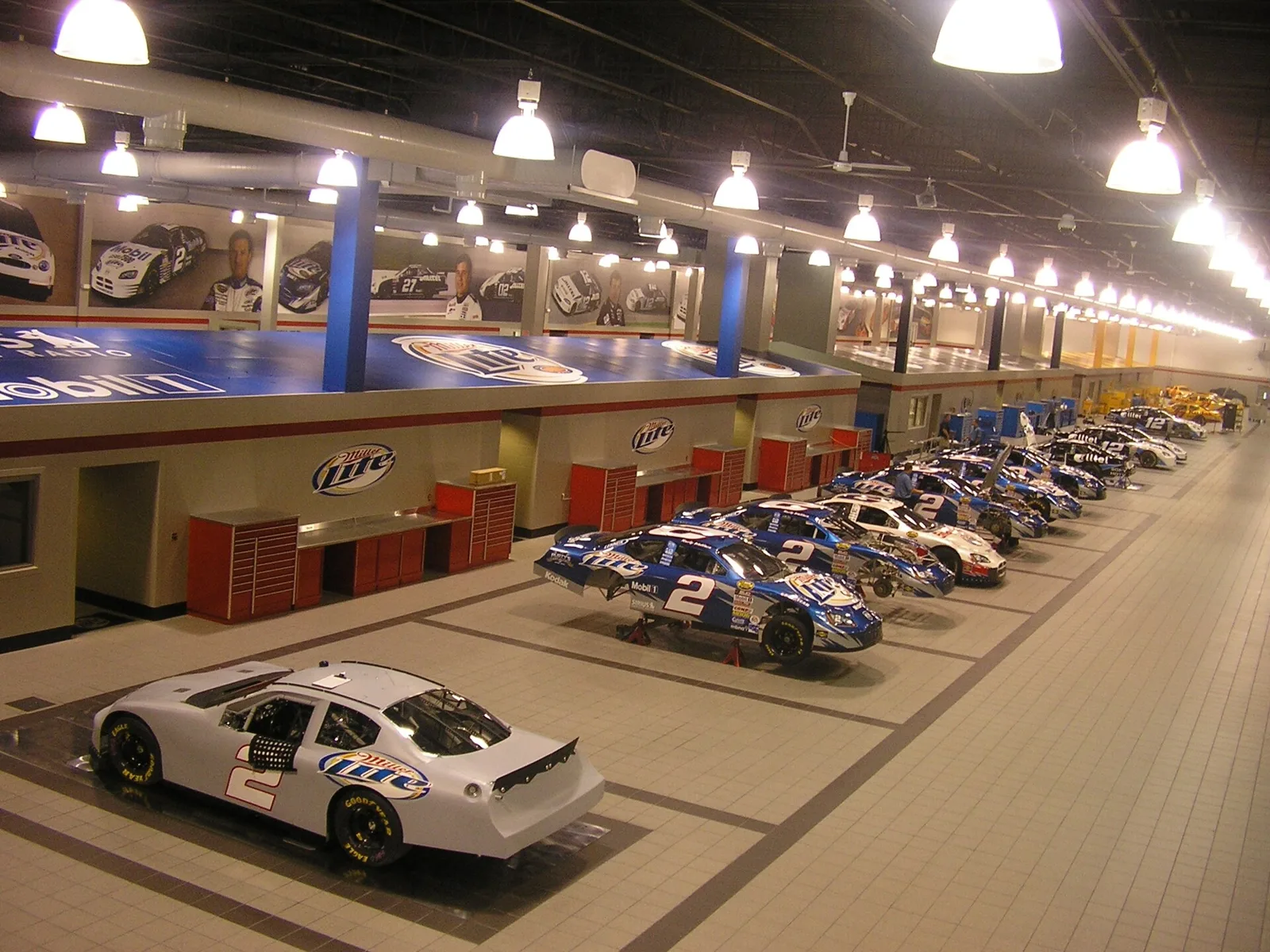
The IndyCar and NASCAR operations were later consolidated at Mooresville, North Carolina. That move came earlier than planned because of flooding in Pennsylvania in 2006.
The Penske Racing Museum opened in 2002 in Scottsdale, Arizona, within a complex of Penske dealerships. Its 9,000 square feet hold about 20 historically significant cars, along with trophies, engines and memorabilia.
Twenty Indianapolis 500 wins, one Formula One victory and a sports car programme that never stopped changing.
How did the IndyCar team start in the late sixties?
Roger Penske entered IndyCar in 1968, running an Eagle chassis with a stock-block engine, and Mark Donohue was at the wheel. The team made its Indianapolis 500 debut in 1969, and Donohue earned Rookie of the Year honours there. The Eagle was a modest start for an operation that would later dominate the Indianapolis 500.
In 1971 Donohue won the Pocono 500, the team's first IndyCar victory, and the next year he took its first Indianapolis 500 win in May 1972.
Penske joined other owners to create CART in 1978, after disputes with USAC. Pat Patrick and Dan Gurney were among the co-founders, and the new body governed the Champ Cars that became known as IndyCar.
Penske counts 20 Indianapolis 500 victories and 13 open-wheel championships. Its IndyCar record stands at 2,064 starts and 244 wins.
Penske's next Indianapolis victory came in a controversial finish. Bobby Unser passed eleven cars under a yellow flag, and the win was stripped the next morning in favour of Mario Andretti. Once the appeal had run its course, the result was restored and Unser paid a fine instead.
How did engine partnerships shape the team?
Penske's IndyCar results moved with its engine suppliers. Oldsmobile power came in 2001, Chevrolet from 2002, Toyota from 2003 to 2005, and Honda from 2006 to 2011, before Chevrolet returned in 2012. Each change brought a new supplier and a new set of expectations for the cars.
Penske returned to Indianapolis in 2001 after a five-year absence, fielding rookie Helio Castroneves and Gil de Ferran. The pair finished 1-2, and Roger Penske later called the win the biggest of all his Indianapolis 500 victories.
In 2002 Castroneves won again, narrowly beating Paul Tracy in a finish that drew questions from video of the final caution. The appeal upheld the result, and the win stood.
The Toyota years started well, with Gil de Ferran winning the 2003 Indianapolis 500. Performance then slipped, and a modest recovery followed.
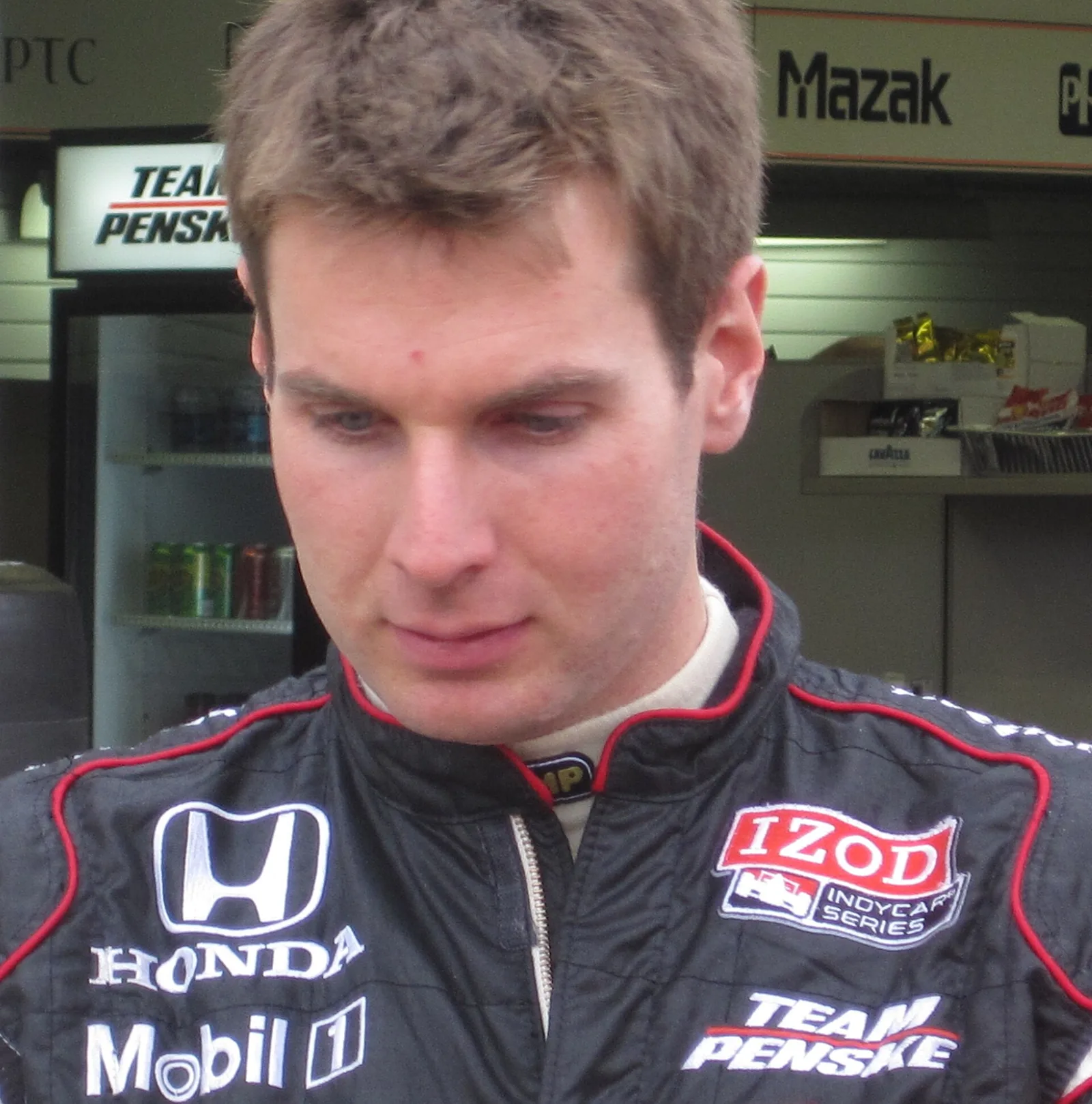
The Honda period opened with Sam Hornish Jr. winning the 2006 Indianapolis 500 and the championship. Castroneves and Briscoe joined him, and Will Power arrived as a third full-time car in 2010.
The 2010 season brought nine wins, thirteen poles and six fastest laps, although a suspension failure at Homestead ended Power's title hopes. Penske ended the Honda partnership after 2011, and Chevrolet came back for 2012 with full factory backing.
The 2011 season ended in tragedy at Las Vegas, when Dan Wheldon died in a 15-car crash. The championship then reverted to the pre-race standings, which gave Dario Franchitti his fourth title.
What did the 1994 season look like?
The 1994 IndyCar World Series was one of the most dominant seasons in American open-wheel history. Penske's PC-23 chassis, paired with an Ilmor-Indy V8, won 12 of 16 races and carried the team to the drivers', constructors' and manufacturers' titles.
At the 1994 Indianapolis 500 the team introduced the Mercedes-Benz 500I engine, which exploited a loophole in the rules written for stock-block engines. The team took pole and the outside front row, and Al Unser Jr. won the race.
The engine was later banned, and in 1995 Penske failed to qualify any car for the Indianapolis 500.
Who were the team's key IndyCar drivers?
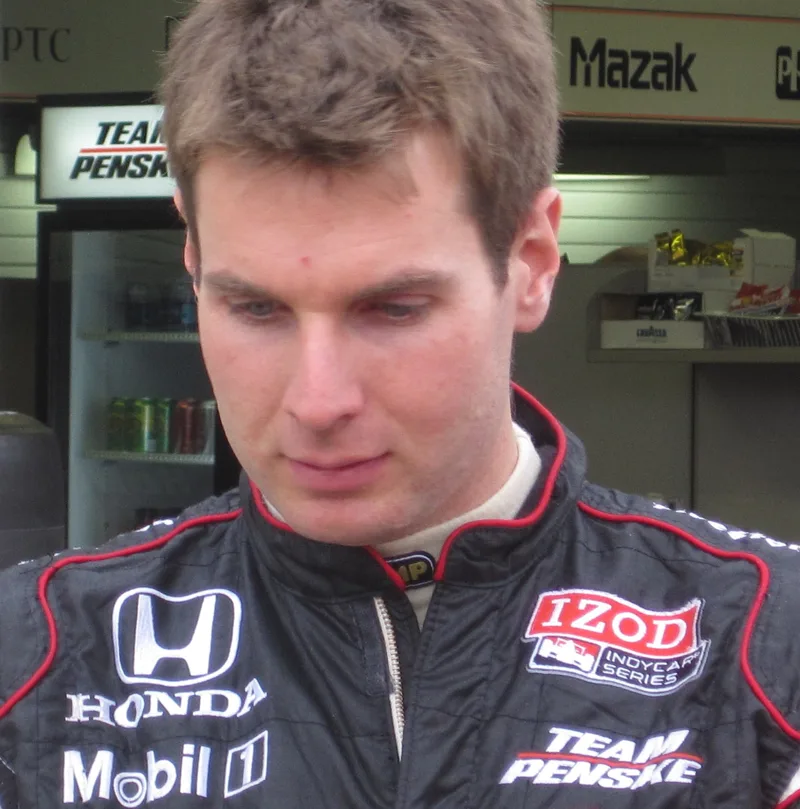
Mark Donohue, Rick Mears, Al Unser Jr., Helio Castroneves, Will Power and Josef Newgarden are among the names the team is best known for. Many of them won titles or Indianapolis 500s while driving for the team, and the team has also signed drivers from other categories, such as Scott McLaughlin, a three-time Supercars champion.
Newgarden joined from Ed Carpenter Racing in 2017 and claimed titles in that year and in 2019. Simon Pagenaud took the 2016 title, and Power won the 2014 championship before his 2022 title.
Scott McLaughlin joined for 2021 after three Supercars titles, when the team ran four full-time entries.
The 1988 Indianapolis 500 was the team's most dominant showing, with its drivers leading 192 of the 200 laps.
How did the recent Indianapolis 500 wins come about?
Penske's recent Indianapolis 500 victories include Will Power in 2018, Simon Pagenaud in 2019 and Josef Newgarden in 2023 and 2024. Newgarden's second straight win made him the latest back-to-back winner for the team. Those results kept the team's Indianapolis tally at the top of the all-time list.
The 2023 race was the 107th running, and it came in a season that was otherwise underwhelming, with only one driver finishing in the top three of the standings.
The 2024 season was clouded by Newgarden's disqualification from his St. Petersburg win, which followed illegal ECU software that allowed push-to-pass during restarts. Penske did not appeal, and Tim Cindric, the team president, was handed a paddock ban covering several races.
How did the team's sports car programme develop?
The sports car story starts in 1966, when a Lola T70 was entered for the Can-Am championship, and it later ran Porsche prototypes in the American Le Mans Series. The team's 2006 LMP2 championship and 2008 Sebring overall win were key results in that period.
In Trans-Am the team's Camaros won the 1968 and 1969 titles, and a McLaren M6 won at Bridgehampton in 1968. Penske was Porsche's official Can-Am partner from 1972 to 1974, and George Follmer won the 1972 series for the team.
A Lola T70 Mk IIIb won the 1969 24 Hours of Daytona, and in 1971 a 512 M Sunoco car took pole at the Daytona 24.
The American Le Mans programme began with Porsche RS Spyders in 2005, and a 2006 LMP2 class title followed. It later entered Grand-Am with a Riley in 2009 and closed that programme soon after.
The Acura partnership in IMSA began in 2018, and Penske won IMSA drivers' titles in 2019 and 2020. Porsche 963 entries followed from 2023, before the team left the WEC after the 2025 season.
What was Penske's Formula One record?
Penske was a Formula One constructor between 1974 and 1977, and its works entry ran from 1974 through 1976. Its sole Grand Prix victory arrived at the 1976 Austrian Grand Prix, making it the final American-licensed constructor to win a race.
The PC1 debuted at the 1974 Canadian Grand Prix, with Mark Donohue finishing 12th. He took fifth at the 1975 Swedish Grand Prix in the PC1, but that car was retired after the French race, and Penske ran a March for a time.
The PC3 and PC4 cars followed in 1976, with John Watson scoring two podiums in France and Britain. Penske withdrew from Formula One at the end of 1976 to concentrate on IndyCar, and the European operation went to Gunter Schmid.
The ATS-Penske PC4 ran in 1977 with Jean-Pierre Jarier scoring the team's single point. In 1979 Penske built the Rebaque HR100 for Hector Rebaque, which entered the final three races of that season without qualifying or finishing in each case.
How did the Supercars spell go?
Penske bought 51% of Dick Johnson Racing in September 2014 and entered Supercars in 2015 as DJR Team Penske. Scott McLaughlin won the drivers' title in 2018 and again in 2019, and he took his first Bathurst 1000 in 2019.
The Supercars chapter ended when Penske sold its shareholding back in October 2020, leaving McLaughlin's titles as the lasting legacy of the partnership.
Which Indianapolis 500 races stand out?
| Year | Winner | Note |
|---|---|---|
| 1972 | Mark Donohue | The team's first Indianapolis 500 win |
| 1988 | Penske drivers | Led 192 of the 200 laps |
| 1994 | Al Unser Jr. | Won with the Mercedes-Benz 500I engine |
| 2001 | Helio Castroneves | A 1-2 finish for the team |
| 2002 | Helio Castroneves | A narrow win over Paul Tracy |
| 2003 | Gil de Ferran | Won on Toyota power |
| 2006 | Sam Hornish Jr. | Also won the championship |
| 2015 | Juan Pablo Montoya | His second Indianapolis 500 victory |
| 2018 | Will Power | First of back-to-back wins |
| 2019 | Simon Pagenaud | Second of back-to-back wins |
| 2023 | Josef Newgarden | The 107th running |
| 2024 | Josef Newgarden | A second straight win |
How did sponsors shape the team's identity?
Marlboro sponsored the team from the 1989 Indianapolis 500 and became the primary sponsor of its IndyCars in the early nineties. The association ended in 2010, when Philip Morris stopped after 19 years, and Verizon Wireless took over as primary sponsor.
Advertising restrictions led the team to remove Marlboro branding from its cars, although the red and white colours stayed for a time. The black and white livery with red trim that followed was a new identity built around Verizon.