Eleven different winners, a turbo V6 rule change, Kanaan's late win at Fontana and a title settled by a penalty for Helio Castroneves.
The 2014 IndyCar Series was won by Will Power, who took his first drivers' title by 62 points over Helio Castroneves. The season had eleven different winners and a switch to mandatory turbocharged V6 engines.
The 2014 Verizon IndyCar Series was the 19th season of the championship and produced Will Power's first drivers' title, won by 62 points over Helio Castroneves. Eleven different drivers won races, a total that tied a record set in CART in 2000 and 2001, while the series switched to mandatory turbocharged V6 engines and Ryan Hunter-Reay took the Indianapolis 500 by 0.06 seconds.
What was the 2014 IndyCar Series?
The 2014 campaign was the 19th year of the IndyCar Series and the 103rd of American open-wheel racing. Scott Dixon arrived as the reigning champion, and Chevrolet was the reigning Manufacturers' champion. The premier event was the 98th Indianapolis 500, held on Sunday 25 May and won by Hunter-Reay.
The season featured eleven different winners, which tied a CART-era record from 2000 and 2001. The schedule ran eighteen races at fifteen tracks, with three doubleheaders at Detroit, Houston and Toronto, and it ended with a finale at Fontana that still had four drivers mathematically alive.
Eleven winners, a new V6 era and a title settled by a penalty: the 2014 season had something for every fan.
How did the series change its engines?
Full-time entries began using mandatory twin-turbocharged V6 engines from 2014, a change announced on 25 July 2013. The single-turbocharged engines that Honda had run in 2012 and 2013 were officially banned, so every manufacturer moved to the new unit at the same time.
Several teams switched engine suppliers when their original leases came up for renewal. Chip Ganassi Racing moved from Honda to Chevrolet after using Honda engines since 2006, while Andretti Autosport returned to full-works Honda engines on a multi-year deal after running Chevrolet in 2013. That arrangement brought full factory support from Honda Performance Development.
Who was the new title sponsor?
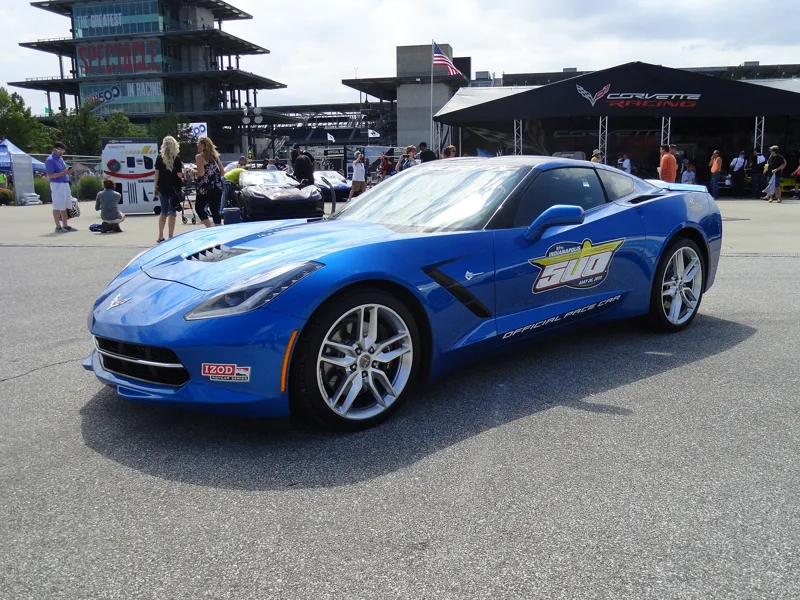
IZOD ended its sponsorship after the 2013 season, two years before its contract was due to finish. Verizon Wireless was announced as the new title sponsor on 14 March 2014, which gave the series its Verizon name for the year.
The sponsorship change came alongside a chassis that had not changed in essence. All teams used the Dallara DW12 IndyCar Safety Cell chassis with a Dallara aero kit, and every team ran Firestone tyres. Firestone had extended its deal with the series as official supplier through 2018.
Which drivers arrived and left in 2014?
Juan Pablo Montoya returned to IndyCar after a 13-year absence, driving the No. 2 Chevrolet for Penske. Because of his CART experience he was not classed as a rookie. Carlos Munoz, who had finished second at the 2013 Indy 500, made his full-time debut with Andretti Autosport in its fourth car, taking over from E. J. Viso.
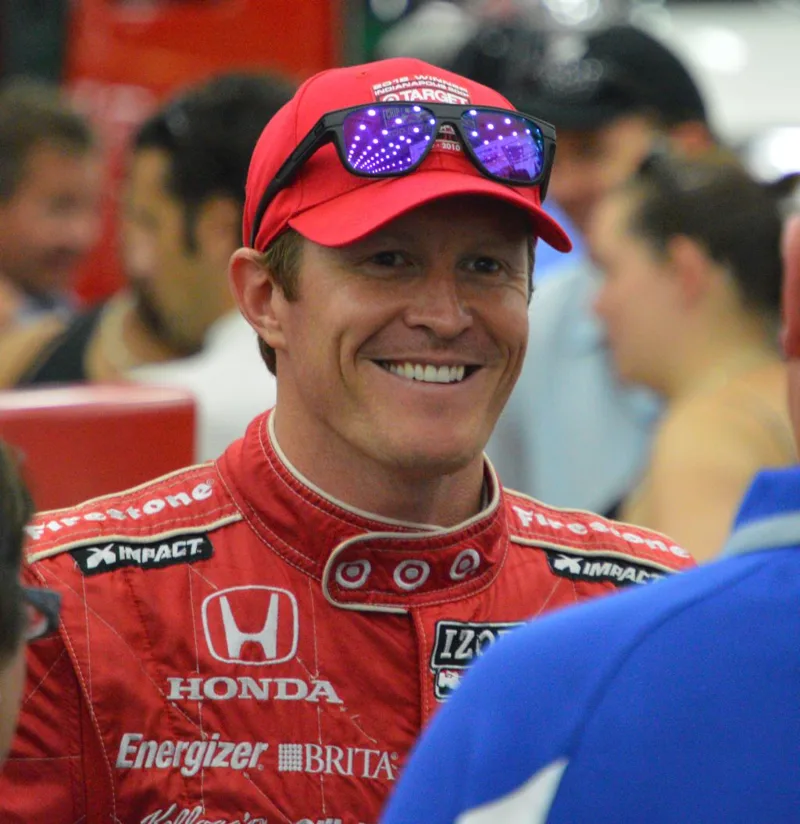
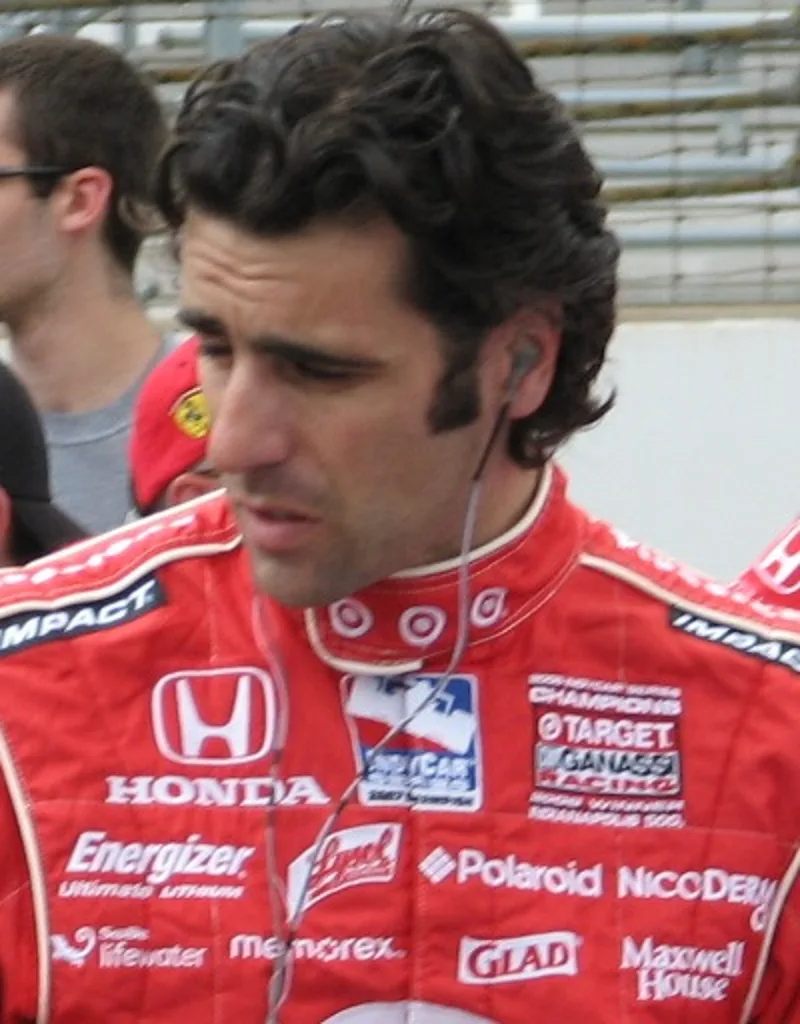
Tony Kanaan left KV Racing Technology for Chip Ganassi Racing and replaced Dario Franchitti, who retired on medical advice after his 2013 Houston crash. Sebastien Bourdais left Dragon Racing for KV on a two-year deal, and his old Dragon teammate Sebastian Saavedra followed him to KV. Ryan Briscoe came back to a full-time seat in Ganassi's No. 8 Chevrolet.
Mikhail Aleshin, the 2010 Formula Renault 3.5 Series champion, replaced Tristan Vautier in a second Schmidt Peterson Motorsports entry and became the first Russian driver in the series. Dragon Racing skipped the 2014 IndyCar season to prepare for the 2014-15 Formula E season, and Simona de Silvestro left after four seasons for a testing role with Sauber F1. Panther Racing did not field a 2014 entry after losing its National Guard sponsorship to Rahal Letterman Lanigan Racing.
How was the 2014 calendar built?
The schedule was announced on 17 October 2013 on NBC Sports Network's championship preview show. It had eighteen races at fifteen tracks and fourteen venues, and three weekends were doubleheaders. A new race on the Indianapolis road course opened the May festivities.
The Triple Crown linked the 500-mile races at Indianapolis, Pocono and Fontana. A driver who won all three would have collected $1,000,000, and $250,000 went to anyone who won two. Neither prize was claimed. It was the first season since 2002 without any races outside the United States and Canada, after Surfers Paradise, Motegi and Sao Paulo had left the calendar.
Several races changed length. Pocono was extended to 500 miles from 400, and Texas was extended to 600 kilometres from 550 kilometres. Iowa became a 300-lap event. Baltimore did not run because of scheduling conflicts, and the Sao Paulo Indy 300 was removed.
How did the opening rounds unfold?
At St. Petersburg, Sato took pole but lost the lead to Will Power on lap 30. Power led the most laps and held off Hunter-Reay and Castroneves, while Sato finished sixth. A restart on lap 82 produced an accordion effect, and Marco Andretti and rookie Jack Hawksworth crashed into the inside barrier.
Long Beach was decided by a controversial crash on lap 56 that took out six cars, including the leading three. Newgarden inherited the lead during the pit stops, and Hunter-Reay attempted a risky pass that put both cars into the wall. Dixon ran out of fuel late and had to pit with two laps to go, and Mike Conway, a part-time driver, held off Power and Munoz to win his second Long Beach Grand Prix.
Barber began after heavy rain and lightning delayed the start. Power led the first 15 laps before spinning at the turn 5 hairpin on lap 16, and Hunter-Reay went on to command 40 of the 69 laps. The race was shortened to a 100-minute timed event, and it finished under caution after Aleshin crashed heavily into the tyre barriers.
The inaugural Grand Prix of Indianapolis opened the month of May on the Speedway's road course. Polesitter Sebastian Saavedra stalled on the standing start, and a huge crash followed involving Saavedra, Munoz and Aleshin. Pagenaud held off Hunter-Reay late on, despite both drivers running low on fuel, and Pagenaud's car ran dry on the cool-down lap. Hawksworth led a field-high 31 laps and finished seventh from the front row.
Who won the 98th Indianapolis 500?
Hunter-Reay won the 98th Indianapolis 500 by 0.06 seconds over Castroneves, the second closest finish in the race's history. Ed Carpenter, an Indianapolis resident and oval-only driver, had taken the pole.
The race began with a long green flag run of 149 laps. Kimball and Dixon suffered single-car crashes, and Hinchcliffe and Carpenter tangled on a restart. A red flag came with nine laps to go after a crash involving Townsend Bell. Hunter-Reay and Castroneves then dueled for the win, with Marco Andretti close behind, and Hunter-Reay took the flag by the narrowest of margins.
How did the Detroit and Texas rounds go?
Power took the lead with 11 laps to go in the first Detroit race and held off Rahal over the final 10 laps. Hunter-Reay, the Indy 500 winner, finished 16th after spinning into a tyre barrier on the last lap. Castroneves won the second Detroit race, which gave Penske a weekend sweep, and Power finished second after an early drive-through penalty.
Texas was the scene of a strategic gamble. Carpenter and Power ran first and second on lap 213 of 248, but Power was penalised for speeding in the pit lane and dropped to sixth. A late caution on lap 241 let Power close, and Carpenter and Montoya stayed out to keep track position. When the green flag came with two laps to go, Carpenter got the jump, and Power charged through the traffic on fresh tyres. He passed Montoya for second in the final corner, but Carpenter cruised to the win.
How did the Houston races play out?
The first Houston race was soaked by rain and shortened to a timed race of one hour and fifty minutes. Colombian drivers Carlos Huertas, Montoya and Munoz swept the podium. Huertas took the lead with about seven minutes remaining, and Rahal ran into Kanaan on the final restart, later receiving a 30-second penalty. Huertas became the first rookie to win an IndyCar race since Rahal at the 2008 St. Petersburg race.
The second Houston race belonged to Pagenaud, who led the final 43 laps for his second win of the season. Aleshin finished second, which gave Schmidt Peterson Motorsports its first 1-2 finish in IndyCar. Power was running third in the closing laps when his suspension broke with less than two laps to go, and he finished 11th.
Why was the Pocono race a record?
Montoya won at Pocono, his first Indy car win since the 2000 CART season, after returning from six seasons in Formula One and seven in NASCAR. He led 45 laps and took the lead for the last time with three laps to go, after Kanaan had pitted on lap 197 and Newgarden had tried to gamble on a late yellow.
Castroneves finished second and left the race tied with Power for the points lead. Power led 69 laps but was penalised for blocking incidents that cost him a drive-through. The race ran caution-free for the first 158 laps, and its average speed of 202.402 miles per hour (325.734 kilometres per hour) was a new high for the fastest 500-mile race in Indy car history.
How did the summer races shape the title fight?
At Iowa, Kanaan dominated with 247 laps led, but Hunter-Reay passed him with two laps to go. Montoya had tangled with Carpenter on lap 281, bringing out the final caution, and Montoya accused Carpenter of turning down on him. Carpenter admitted taking a low line, but officials issued no penalty. Power fell from fourth to 14th in the final six laps after brushing the wall and losing a tyre's air pressure.
Toronto's first race was postponed to Sunday morning because of rain and standing water. Bourdais won it, the first Indy car race he had won since 2007 and his first as part of the IndyCar Series. The second Toronto race was won by Conway, and Kanaan finished third in the morning and second in the afternoon.
At Mid-Ohio, Dixon won for the fifth time in eight seasons and became the tenth different winner of 2014. It was Ganassi's first win of the year. Dixon started last after spinning in qualifying and rose through the field after the leaders' pit stops, capitalising on an error by Newgarden, who had run over an air hose and was penalised for hitting pit equipment. Castroneves, who had throttle problems on the grid, finished 19th, and Power became the new points leader by four points.
Power dominated Milwaukee, leading 229 of 250 laps. He beat Montoya by two seconds, and Kanaan took third while still without a win that season. Power left with a 39-point lead over Castroneves and two races to run.
How did the Sonoma and Fontana finales unfold?
An earthquake hit the region on the morning of the Sonoma race, but the schedule held. Power took an early lead and later spun, finishing 10th. Conway led 19 laps, and Dixon slipped past him going into turn one late on to win his second race of the year. Power's lead over Castroneves stood at 51 points before the finale.
Four drivers went into the Fontana finale mathematically alive: Power, Castroneves, Pagenaud and Hunter-Reay. Pagenaud fell out of contention early with handling problems, and the title became a fight between Power and Castroneves. Double points applied, as they did for all 500-mile events under the new rules. Montoya led much of the early running, and the only yellow came for a Hunter-Reay spin on lap 175.
Kanaan won at Fontana, his first victory since the 2013 Indianapolis 500 and the first of his season after a run of disappointments. Castroneves was penalised for an improper pit lane entry and fell a lap down. Power finished ninth, which was enough to clinch the drivers' title. Dixon finished third in the points, 67 behind the leader, and Montoya fourth, 85 behind. Castroneves finished runner-up for the second year in a row, 62 points behind.
How were points awarded?
A driver who led at least one lap earned one point, and the driver who led the most laps earned two additional points. Pole earned a point at every race except the Indianapolis 500. Entrant-initiated engine change-outs before the engine reached its required distance cost ten points.
Manufacturers scored points from their top five finishing drivers, provided they used one of four allotted engines. They earned ten points for each engine that reached the 2500-mile change-out threshold and lost ten for each engine that did not, or each engine used beyond the four-engine allotment per entrant.
Who won each round?
Power and Hunter-Reay each won three races, and Dixon, Conway and Pagenaud each won twice. Castroneves, Carpenter, Huertas, Montoya, Bourdais and Kanaan each won once, and eleven different drivers took a victory across the season.
| Round | Venue | Winner |
|---|---|---|
| 1 | St. Petersburg | Will Power |
| 2 | Long Beach | Mike Conway |
| 3 | Barber | Ryan Hunter-Reay |
| 4 | Grand Prix of Indianapolis | Simon Pagenaud |
| 5 | Indianapolis 500 | Ryan Hunter-Reay |
| 6 | Detroit (Saturday) | Will Power |
| 7 | Detroit (Sunday) | Helio Castroneves |
| 8 | Texas | Ed Carpenter |
| 9 | Houston (Saturday) | Carlos Huertas |
| 10 | Houston (Sunday) | Simon Pagenaud |
| 11 | Pocono | Juan Pablo Montoya |
| 12 | Iowa | Ryan Hunter-Reay |
| 13 | Toronto (Sunday morning) | Sebastien Bourdais |
| 14 | Toronto (Sunday afternoon) | Mike Conway |
| 15 | Mid-Ohio | Scott Dixon |
| 16 | Milwaukee | Will Power |
| 17 | Sonoma | Scott Dixon |
| 18 | Fontana | Tony Kanaan |