From a Varano workshop in 1972 to the sole chassis supplier of IndyCar, Dallara built a record across single-seaters, prototypes and road cars.
Dallara Group is an Italian racing car maker that Giampaolo Dallara founded in 1972 near Parma. It has supplied the single chassis for IndyCar since 2007, builds for the Formula 2 and Formula 3 championships, and designs the Haas Formula One cars.
Dallara Group is an Italian maker of racing cars, founded in 1972 by the designer Giampaolo Dallara. It is the sole chassis builder for the IndyCar Series and holds the same role for the FIA Formula 2 and Formula 3 championships. The company also designs the Haas Formula One cars, supplies sports prototypes and has produced a road car of its own.
Its story runs from a small workshop in Varano de' Melegari to a supplier that now shapes several of the world's leading open-wheel and prototype series. This guide follows the company's rise and the places where it has excelled.
How did Dallara start?
Giampaolo Dallara set up the company in 1972 at Varano de' Melegari, near Parma, having been with Ferrari, Maserati, Lamborghini and De Tomaso. Early work was for sports car racing and hillclimbs, where the firm competed in the smaller engine classes. He also co-founded the Autodromo Riccardo Paletti in Varano.
The first Formula Three car to carry the Dallara name appeared in 1981, but the company's first F3 design had come three years earlier, in 1978, for Walter Wolf Racing. A brief spell in Formula 3000 followed in the mid-1980s, before the firm settled into its main business of single-seater chassis.
Sports and endurance cars came later in the story, yet the single-seater business has defined the brand. Its engineers have also served other manufacturers, and the company has become a regular partner for road car and prototype projects that need outside engineering.
A small Italian workshop that became the single chassis maker for an entire American open-wheel series.
How did Dallara dominate Formula Three?
Dallara's Formula Three success began with its first named car in 1981 and surged after 1993, when the F393 swept every round of the Italian, French and German series. Dallara drivers have taken the Italian title every year since 1985 except 1990. The company has since collected the major Formula Three crowns.
The late 1980s and early 1990s brought wins in Germany and France. Dallara's German crown came in 1987, and French honours followed in 1987 and 1992. Its cars also won the Macau Grand Prix from 1993 onward. The breakthrough season was 1993, when the F393 introduced major aerodynamic changes and a monodamper front suspension layout.
The same year brought the first British Formula Three entries for Dallara. Several drivers abandoned Reynard or Ralt chassis to stay competitive, and Japan's TOMS, champions in 1993 and 1994, switched to Dallara after running its own cars.
Martini found success in France and Germany during the late 1990s, and Sebastien Bourdais won the French title in 1999 with a Martini car. Ho-Pin Tung later triumphed at the 2006 Recaro F3 Cup driving a Lola, although the field that day still included several Dallaras.
What was Dallara's Formula One record?
Dallara became a Formula One constructor in 1988, building chassis for BMS Scuderia Italia. Its best results came in 1989 and 1991, when Andrea de Cesaris and JJ Lehto each finished third. The Haas partnership, which began in 2015, is the most lasting Formula One relationship the company has had.
The results were modest. The team placed eighth in 1989, scoring 8 points, then slipped to 15th in 1990 without a point. It climbed back to eighth in 1991 with 5 points, and in 1992 it took 2 points for tenth, earned by Pierluigi Martini.
Dallara returned briefly in 1999, building a test chassis for Honda's planned comeback, which was later abandoned. In 2004 it recruited Gary Anderson, a former designer for Jordan, Stewart and Jaguar. Midland then announced a Dallara-built chassis for the 2006 season, but that car never appeared and the technical co-operation faded.
The Hispania project in 2010 went badly. Dallara built the F110 for the team, but money owed to the company and the state of the cars strained the arrangement, and the two parties ended it in May 2010. The car ran all season without development apart from its graphics. Geoff Willis, who joined the team in March 2010, later criticised the engineering.
Talks with Gene Haas were confirmed on 15 April 2014, and the first car, the VF-16, was unveiled on 21 February 2016. Dallara has designed every Haas car since then, and that agreement covers the 2026 season.
How did Dallara become the IndyCar chassis supplier?
Dallara entered IndyCar in 1997 as one of the first three chassis constructors for the Indy Racing League. It became the single chassis builder and supplier in 2007, and it has since built the core of every car in the series. Its chassis have won seventeen of the twenty Indianapolis 500s entered by the company.
The first Dallara win came at Phoenix on 23 March 1997, when Jim Guthrie took the chequered flag. Cheever gave the company its first Indianapolis 500 win in 1998, driving an Oldsmobile-powered IR-7, and The company also took the Indy Racing League title in both 1998 and 1999.
How did the IndyCar chassis change over time?
The first generation, the IR-7, was the 1997 model, and the IR-8 and IR-9 were updated versions of it. The second generation, the IR-00, arrived for 2000 and was revised as the IR-01 and IR-02. Dallara took the Indianapolis 500 in 2001 and again in 2002, a double that marked its strongest run in the series.
The IR-03 arrived in 2003 and became the de facto spec car. Aerodynamic kits later renamed it IR-04 in 2004 and IR-05 in 2007. Every team ran the IR-05 from 2007 to 2011, paddle shifters arrived in 2008, and the older IR-03 was still a race winner when Dan Wheldon took the 2011 Indianapolis 500 in a nine-year-old car.
From 2012 Dallara supplied the common safety cell, the shared monocoque and suspension, while other makers could build their own aero kits. The first universal kit was Dallara's own, used from 2012 to 2014. Chevrolet and Honda then produced separate kits for 2015 to 2017, and a universal kit called UAK18 has been in use from 2018 through 2026.
The DW-12 chassis of 2012 took its name from Dan Wheldon, who died two days after testing the car at Las Vegas Motor Speedway. Its new bumper section, or nerf bar, was designed to prevent crashes like the one that killed him.
Which other single-seater formulas use Dallara?
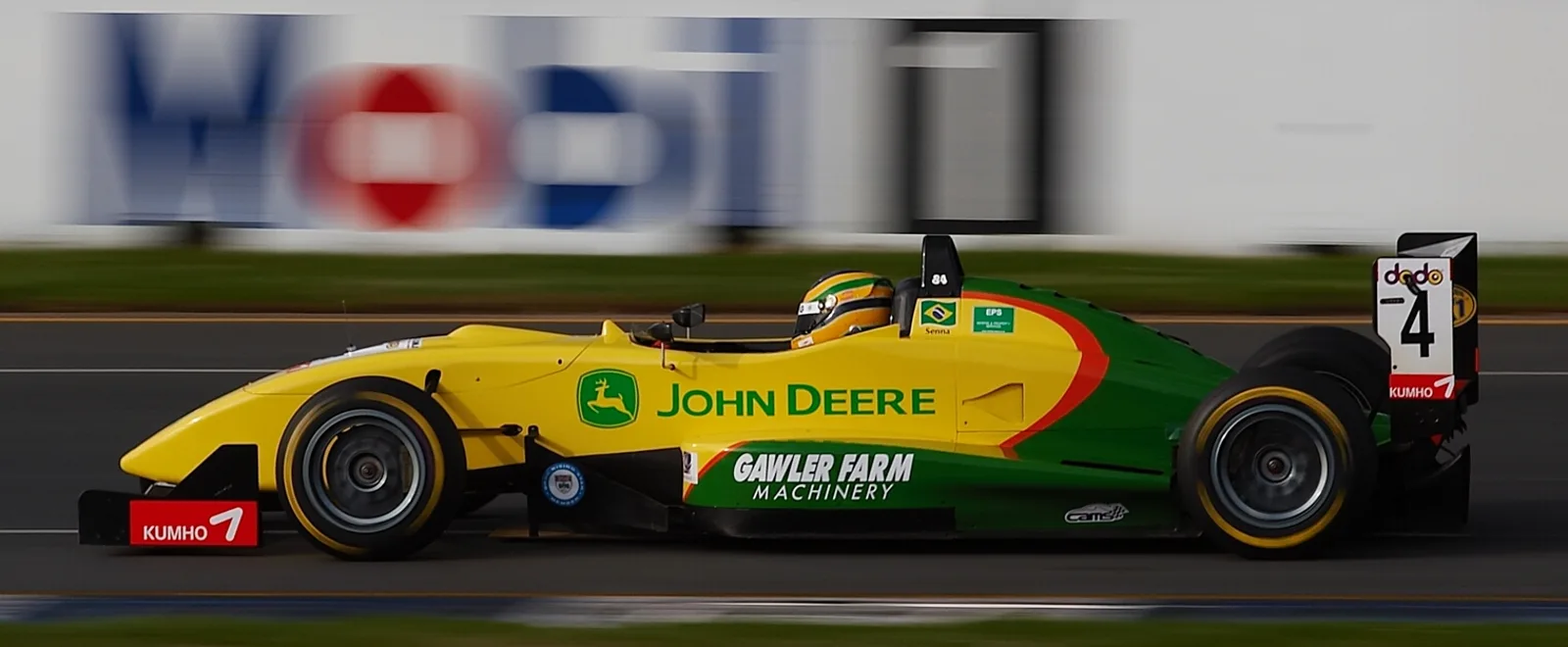
Dallara supplies spec chassis to several feeder series, including the Indy Lights car, now Indy NXT. It was the exclusive supplier to World Series by Nissan from 2002 and won the World Series by Renault contract in 2004. Its work as the spec supplier in those feeder categories also places it on a main route into Formula One.
In 2007 the company created the Formulino, a car intended to bridge karts and Formula Three. Its first user was the ADAC Formel Masters in 2008, while the MRF Challenge came later. For 2015 the Indy Lights car switched to the IL-15, which runs a Mazda 2.0-litre turbo four.
Super Formula has also used Dallara designs. The SF14 was followed by the SF19, which met newer FIA safety guidelines and added a halo. That Japanese series was once known as Formula Nippon.
What role did Dallara play in endurance racing?
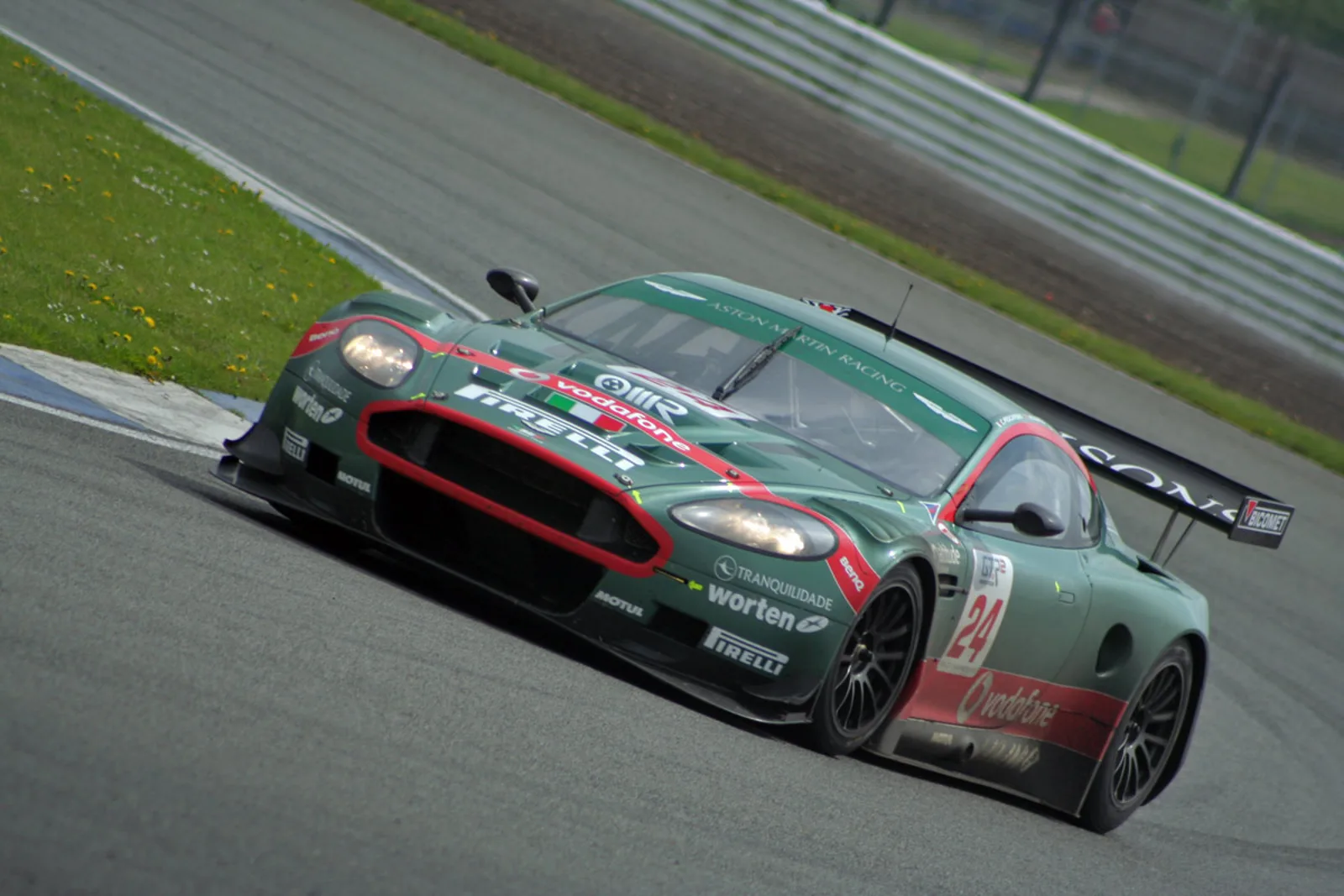
Dallara first worked on endurance cars in the early 1980s, when it built Lancia prototypes with Abarth. It returned to the field in 1993 with the Ferrari 333 SP, and later built chassis for Toyota, Audi and Chrysler. Its work for BMW and Cadillac today makes it a major supplier to modern prototype racing.
The 333 SP was built at Michelotto for the IMSA GT Championship and won a great number of races in North America and Europe. A racing version of the Ferrari F50, financed by Fabien Giroix, was abandoned in 1998 before it got off the ground.
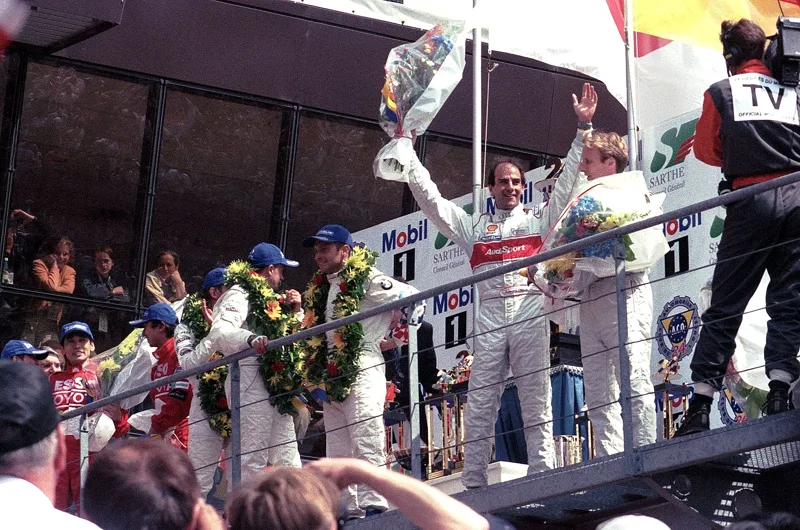
Audi's R8 chassis became the most dominant modern prototype at the 24 Hours of Le Mans and in the American Le Mans Series. Dallara's Chrysler prototype later became the SP1, a customer car for privateers, and Nissan once used it to test a planned Le Mans comeback that never happened. In 2002 the company built the GC21 for the Fuji Grand Champion Series, based on its Formula 3 cars.
The first Dallara Daytona Prototype arrived in 2008 through a joint project with Doran, for Wayne Taylor's team at SunTrust Racing. In 2015 the company was named one of four constructors for LMP2 and DPi cars from 2017, using its P217 chassis. By 2021 it was among four firms supplying chassis to the LMDh category.
Dallara's current endurance work includes the chassis for Ferrari's 499P and the BMW M Hybrid V8 and Cadillac V-Series.R programmes. It is also producing a chassis for an unnamed McLaren car due to debut in 2027.
Did Dallara build road cars and other machines?
Dallara has built road cars and engineering work for other makers, including Renault, Alfa Romeo, Bugatti, Maserati and Lamborghini. In 2007 it worked with KTM on the X-Bow, a two-seat sports car shown at the Geneva Motor Show in 2008.
The company's own road car, the Stradale, was shown in 2017 on the 81st birthday of Giampaolo Dallara. Dallara also produces handbikes under the Z-Bike name, and it designed a handbike for Alex Zanardi, who took 4 gold medals in 2012 and 2 silver medals in 2016 at the Paralympics.
Outside motor sport, Dallara designed the drill that forms part of the Philae lander carried by the Rosetta probe. The company also worked with Raytheon on the MALD programme for the US Air Force.
Dallara at a glance
| Area | Notable result |
|---|---|
| Formula Three | Italian title every year from 1985 except 1990; Macau Grand Prix wins since 1993 |
| Formula One | Constructor from 1988; best finishes third place in 1989 and 1991 |
| IndyCar | Sole chassis supplier since 2007; seventeen Indianapolis 500 wins from twenty |
| Endurance | Chassis for the Ferrari 499P and LMDh cars for BMW and Cadillac |
| Haas F1 | Design partner from the VF-16 in 2016 through the 2026 season |
| Road cars | KTM X-Bow in 2008 and the Stradale in 2017 |