A Nevada complex that began as a drag strip near an air base, grew into a superspeedway and still reinvents itself with new layouts and crowds.
Las Vegas Motor Speedway is a 2.414 km (1.500 mi) tri-oval in Nevada that opened on September 13, 1996. It sits beside a short oval and a road course, grew out of a 1970s drag strip, and now hosts two NASCAR Cup weekends each year along with other events.
Las Vegas Motor Speedway is a tri-oval in Nevada that has hosted NASCAR, IndyCar and Champ Car races since it opened in 1996. The complex also includes a short oval, a clay oval and a road course, and its roots reach back to a drag strip and a road course built in the early 1970s. NASCAR races have been part of its programme since the late 1990s.
Where is Las Vegas Motor Speedway and how is the complex laid out?
The main track is a tri-oval measuring 2.414 km (1.500 mi) in Las Vegas, Nevada. Its turns are banked 20 degrees and its straights 9 degrees, and the 0.604 km (0.375 mi) Bullring oval sits beside it, with an 0.805 km (0.500 mi) clay oval completing the group of tracks.
The turns were banked 12 degrees before a 2006 renovation pushed them to 20 degrees. The same project added a quarter-mile oval on the frontstretch, measuring 0.40 km, so the complex could host more than one kind of racing at once.
An infield road course was part of the original construction in 1996, and the complex has used a roval layout during select races. IndyCar measured the main oval at 2.485 km (1.544 mi) in 2011, which shows how the length depends on the series running on it.
The site covers more than 1,200 acres. Its facilities include a 60,000 square-foot media centre, now known as the LocaliQ Digital Center, and the Neon Garage, a redesigned garage that fans could visit for an extra fee after the 2006 work.
A Nevada complex that began as a drag strip near an air base now runs superspeedway racing, a short oval and a road course side by side.
How did the site begin as a drag strip and road course?
In 1970 the businessman Carl 'Curly' Price sought a lease on city land near Nellis Air Force Base, with plans for a drag strip, road course and oval. The complex was first called the Las Vegas Speedrome, and it was completed in 1972, when drag racing began on February 26 of that year.
The early plans also included road racing, and the track was scheduled for IMSA events later in 1972. Lighting on the road course malfunctioned during races that August, and the drag strip was handed to a local club under a fifteen-year agreement.
Price's dispute with the city grew bitter by the middle of the decade. His lease was terminated in July 1976 after he failed to keep the gravel stockpile required by his contract, and a court later ordered him to vacate the land and pay unpaid rent before he launched an appeal.
The city leased the complex to other operators while the case dragged on, including Show and Go in late 1977, and a Silverbird Race of Champions in 1978 drew movie stars but few spectators. Las Vegas Recreation, Inc. won a lease on February 21, 1979, but it gave up in November 1980 after months of poor timing systems and lighting.
Alex Rodriguez, a drag racer, and his son were later appointed by the city to take over. Rodriguez spent $75,000 on improvements and a repave early on, and by the late 1980s he had invested over $500,000, which helped the complex earn praise from the NHRA.
The lease disputes continued into the late 1980s. In March 1988 the city council weighed the revocation of Rodriguez's lease, citing unpaid rent and sales tax permits. The sale of the land was later approved on November 17, on condition that the buyer maintain the track for 10 years.
How did Richie Clyne and Bruton Smith shape the modern track?
Richie Clyne bought the complex in May 1989 for $1,070,000 and renamed it the Las Vegas International Raceway. His investor, G. Robert Diero, helped him plan a revamp of what the two described as a dangerous and worn-out complex. It was the start of a new phase for the site.
Smith had announced a project costing $75 million beyond the Mississippi, which later became Texas Motor Speedway, so rival plans for a modern Las Vegas track were in the news at the same time.
Clyne initially wanted to turn the land into an industrial park, but motorsport businessmen Bob Bahre and Tom Wheatcroft persuaded him otherwise. Under Clyne the first races included the Nissan 400, which later became known as the Mint 400.
In 1993 David Juberg and Craig Graham took over the lease, and the complex was renamed the Las Vegas Speedway Park. The track still lacked major events, and off-road racing was limited by environmental concerns.
Clyne announced a superspeedway plan in the 1990s, which first called for a 100,000-seat facility at an estimated cost of $65-70 million, and in January 1995 he confirmed that the track would be built on a 1,100 acre plot beside Interstate 15. An IndyCar race of 200 miles was announced for September 15, 1996, with Tony George of the Indy Racing League involved.
Ray Wilkings was named general manager in January 1996, and the project was projected to bring $890 million into the Las Vegas economy. Clyne bought out Juberg's share in April 1996, and in May Ralph Engelstad was revealed as the majority funder.
Bill Bennett, the owner of the Sahara Hotel, joined as a part owner in September 1996. Bruton Smith, whose Speedway Motorsports had grown quickly, announced a buyout of the complex in December 1998 for around $215 million.
Visitors first came through the gates on September 13, 1996, when IndyCar practice ran. Its first race was described as violent, with heavy winds and numerous crashes, and 67,132 people attended, roughly double the number expected.
Why did the track's capacity change so often?
The 2006 renovation budget was $25-27 million, and it set out to overhaul the track by taking the turns' banking from 12 degrees up to 20 degrees. It also narrowed the racing surface to 50 feet and aimed to lift capacity to 141,000.
The 2006 work also brought a redesigned garage, a new infield media centre and the Neon Garage, changes that reshaped the facilities for race weekends.
Drivers including Jeff Burton, Kyle Busch and Tony Stewart criticised the changes, while some reviewers praised them. The Air Force had also opposed a proposed 127-unit condominium tower overlooking the first turn, citing flight training and safety risks.
Since the mid-2010s the capacity has fallen several times, and those changes reflected a need for premium seating and RV parking. In 2015 about 15,000 seats were removed from turns three and four to make way for RV parking, and in 2017 the capacity was cut to about 80,000 to make room for premium seating. The 2017 change came two years after the 2015 removals, so the seating plan changed in stages.
A later report showed the lowest attendance recorded for a NASCAR Cup race at the 2018 South Point 400, and the track has refused to state an exact figure for the seats that remain.
Track milestones at a glance
| Milestone | Detail |
|---|---|
| Speedrome drag strip | Completed in 1972; drag racing from February 26, 1972 |
| Clyne purchase | May 1989 for $1,070,000 |
| Superspeedway opened | September 13, 1996 |
| Smith buyout announced | December 1998 at around $215 million |
| Renovation | 2006, with banking raised from 12 to 20 degrees |
| Seats removed | 15,000 in 2015 |
| Capacity | 80,000 as of 2023 |
Which NASCAR races take place at Las Vegas today?
The track hosts two NASCAR Cup weekends a year. The spring race is the Pennzoil 400, and the fall race is the South Point 400, and each weekend also includes O'Reilly Auto Parts Series races namely LiUNA! 300 in spring and Focused Health 302 in fall.
The Truck Series once raced here with the Ecosave 200, which has since left the schedule.
In 2018 the track won the right to host another Cup weekend in the fall. The 2025 Pennzoil 400 was followed by Chris Powell's retirement as general manager, and Patrick Lindsey, previously with the Shriners Children's Open, took over.
What open-wheel races have been held there?
IndyCar first raced at the track in September 1996. The Indy Racing League ran an annual race until 2000, and Champ Car held races in 2004 and 2005 after a change in ownership, before refusing to renew for 2006. The series' presence was intermittent after that, and the venue hosted its last open-wheel finale in 2011.
The 2011 IZOD IndyCar World Championship was supposed to be the season finale. Randy Bernard offered a $5 million prize to any driver outside IndyCar who could win, and the challenge fell to Dan Wheldon, a part-time driver who began from the rear of the field. He died on lap 11 in a crash involving 15 cars.
Wheldon's death was the first fatal auto racing accident at the venue, and IndyCar cancelled the race in its wake. The track and Speedway Motorsports later bought out their contract with IndyCar, which ended the open-wheel races for 2012.
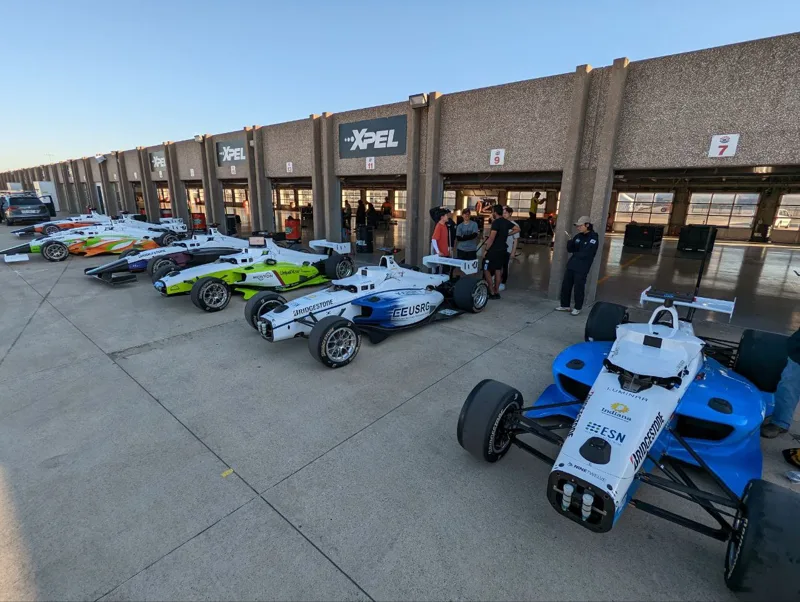
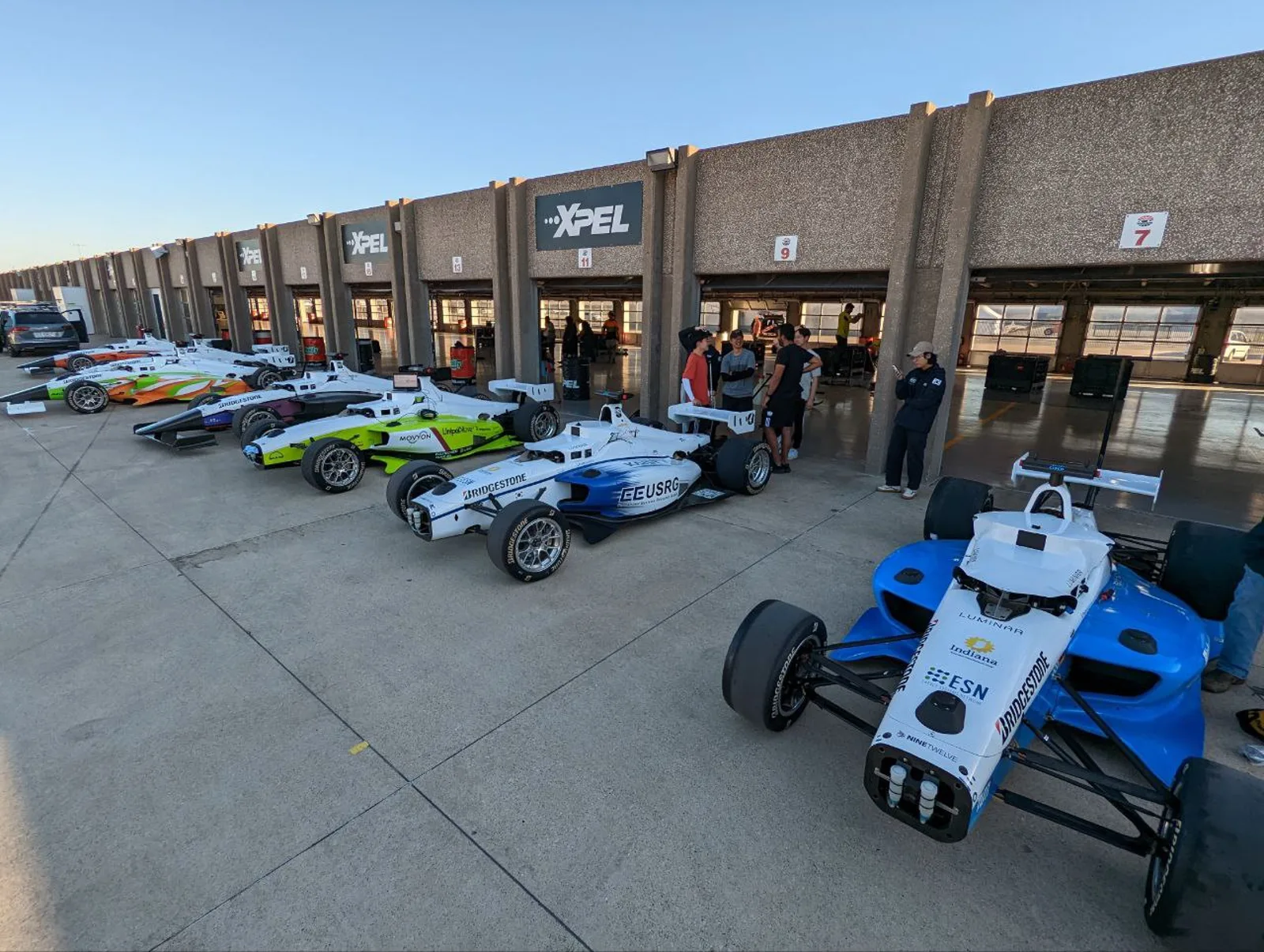
IndyCar returned in 2022 with the Indy Autonomous Challenge, staged during the Consumer Electronics Show. In that event college teams engineer modified Indy NXT cars to compete in driverless passing challenges.
Festivals, drag racing and other events
The 1999 announcement of a replacement drag strip followed Smith's buyout, and the original strip from 1972 gave way to a new layout of 0.250 mi (0.402 km) that opened in April 2000.
The Strip, a drag strip of 0.250 mi (0.402 km), opened in April 2000 and was expanded to four lanes in 2017, so that four cars could race at once.
The Electric Daisy Carnival moved its flagship event to the track in 2011 after controversies in Los Angeles that included underage drug use and a teenager's death, and it has been held there every year since. The World of Outlaws sprint cars also raced on the half-mile dirt track in several spells.
The Red Bull Air Race was scheduled at the track in 2014 but was abandoned because of bad weather, while the 2015 race was actually flown. Other events have included the World Long Drive Championship in 2013 and a graduation for Faith Lutheran High School in 2020.
The Dream Racing programme has allowed the public to drive exotic cars round a road course since 2012, and the Driver's Edge programme offers driving education. The Roborace Season Beta used the outer road course in 2020, and the FoodieLand Night Market has run a Las Vegas edition since 2023.