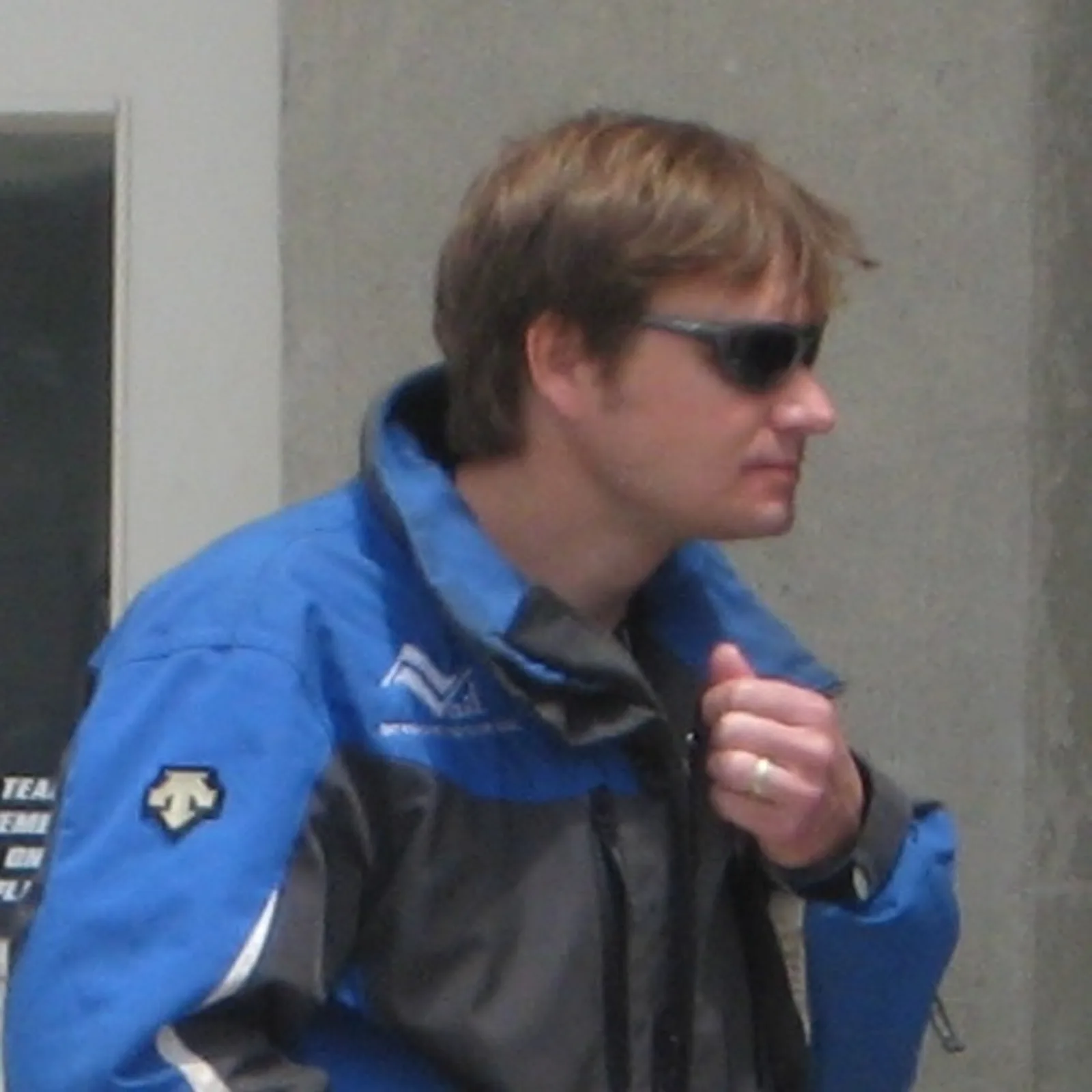
From Can-Am and Indy car rookie years to a 1996 Indianapolis 500 victory, the 2000 Indy Racing League title and a long run of starts at Indianapolis.
Lazier, an American former driver, won the 1996 Indianapolis 500 and the 2000 IRL championship. He also took the American Indycar Series title in 1988 and made many Indianapolis 500 starts in later years.
Robert Buddy Lazier, born on 31 October 1967, is a former American driver whose career peaked with a 1996 Indianapolis 500 victory and the 2000 IRL title. That 1996 Indianapolis 500 was his first IndyCar victory, and he later took the 2000 Indy Racing League title.
Where did Lazier's racing start?
Before cars, Lazier was a competitive skier, and he was part of the U.S. Olympic development programme. His father, Bob, raced cars and won the CART Rookie of the Year title in 1981, and the family runs the Tivoli Lodge in Vail, Colorado, which opened in 1968.
His first sports car campaign came in 1986 in the SCCA Canadian-American Challenge Cup with the Texas American Racing Team, in a Watson 82. He missed the opening race start but took part in later rounds, and he finished 26th in the standings with four points.
A Vail-born driver who came back from a broken back to win the 1996 Indianapolis 500 and then took the 2000 Indy Racing League title.
How did Lazier win the American Indycar Series title?
In 1987 Lazier remained with that squad, driving a March 85C. He qualified on pole and won the season-opening race at Willow Springs, and he took a pole and ninth at Wisconsin, a third at Pueblo and a fourth at Phoenix. He finished fourth in the championship with 62 points.
In 1988, once Bill Tempero had bought Can-Am, Lazier raced a March 85C for the outfit and won the inaugural American Indycar Series title with 152 points. His wins included the Illinois Grand Prix at St. Louis from pole, the Tioga race and both Bud Light 100 races at Willow Springs.
How did Lazier's first IndyCar seasons go?
Lazier's early CART years were hard going, with older chassis and engines. In 1989 he crashed in practice for the Indianapolis 500 and failed to qualify, and he also missed the field at the Laguna Seca season finale. He also appeared in the IMSA GT Championship's SunBank 24 at Daytona that year, where an engine failure ended his run after 395 laps.
In 1990 he made his first Indianapolis 500 start attempt, driving a Lola for Hemelgarn Racing. He crashed his primary car but made the field provisionally in his back-up, then was bumped on Bump Day. He drove a partial season for Hemelgarn, and his best result that year was twelfth at the Molson Indy Vancouver, which left him 29th in the standings.
Did Lazier qualify for the Indianapolis 500 in 1991?
Yes. In 1991 he qualified for the Indianapolis 500 for the first time, starting 23rd for Hemelgarn Racing. He hit the outside wall in avoidance of Gary Bettenhausen on the first lap and was credited with 33rd.
Across that season he drove for several teams, including Dale Coyne Racing and Todd Walther Racing. His best finish was ninth at Denver, and he ended the season 22nd in the standings with six points. Hemelgarn and Dale Coyne then combined to form Hemelgarn Coyne Racing.
What happened to Lazier in CART in the early 1990s?
The 1992 campaign with Leader Card Racing began with a crash in practice for the Indianapolis 500, from which he still made the field in 24th, before an engine failure after 139 laps. Lazier collected his first point of the season at Long Beach, finishing twelfth after running dry at 80 of 105 laps, and he recorded his best finish at the Marlboro 500 at Michigan in seventh.
The season closed with a career-best nineteenth in the standings, on ten points. In 1993 he could not get into the Indianapolis 500 after an engine blew in qualifying, and his best finish was fourteenth at Road America. He ended the season 35th.
The 1994 season began badly, with Lazier too slow to qualify at Surfers Paradise. His season-best finish was thirteenth at Phoenix, and he later lost his seat to pay driver Giovanni Lavaggi at Cleveland. He failed to qualify for the Indianapolis 500, practising three cars without making an attempt that succeeded.
How did Lazier's 1995 CART season look?
Lazier did not return to Leader Card in 1995. He drove for Project Indy, Payton/Coyne Racing and Team Menard. At the Indianapolis 500 he qualified 23rd on the second day, but retired after 45 laps with fuel system problems.
His best result that year was fourteenth at Michigan, after which he finished the season 35th in the standings. Those seasons prepared him for the newly formed Indy Racing League, which began in 1996.
How did Lazier win the 1996 Indianapolis 500?
The Indy Racing League's first season, in 1996, found Lazier in a Hemelgarn Reynard 95i. He took the series' first pole at the opening Indy 200 on the Walt Disney World oval, led 28 laps and then dropped out with brake failure after 61. Before the next race, a crash with Lyn St. James in practice for the Phoenix event fractured a vertebra, which ruled him out.
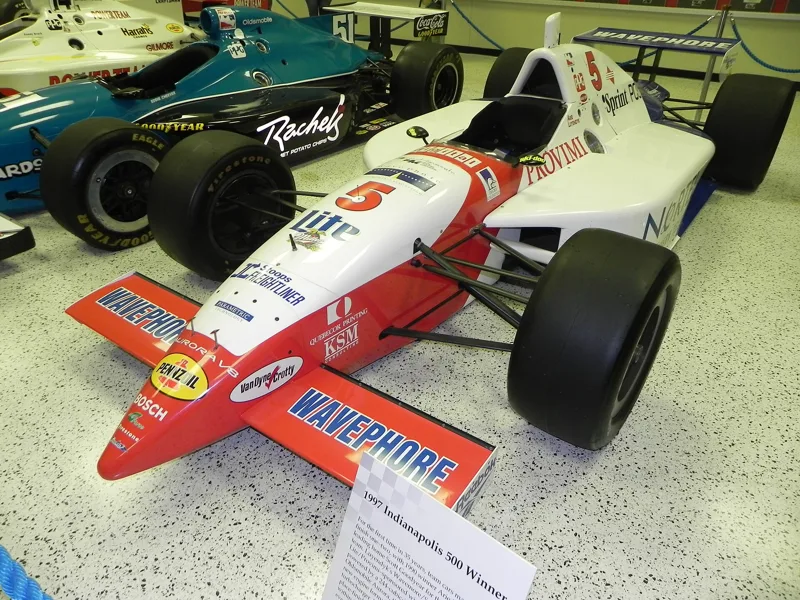
Still walking with a cane, he came back for the Indianapolis 500 two months later. A special shock-absorbing seat was fitted to reduce the risk to his back. He qualified seventh, then moved to fifth after Luyendyk's run was thrown out and Scott Brayton, the pole sitter, was fatally hurt in practice.
In the race he stayed near the front all day, duelling with Luyendyk, Guerrero, Jones and Stewart at various points. Stewart retired after 82 laps, and Luyendyk was eliminated in a collision. With ten laps to go Lazier was third, behind Jones and Alessandro Zampedri, and he passed both within two laps. He led the rest of the way and won his first IndyCar race, leading 43 laps in total.
Why were Lazier's 1996 and 1997 seasons notable?
He finished fourteenth in the 1996 championship with 159 points. In the opening race of the 1996-97 campaign at New Hampshire, he had been running second, the sole car still on the lead lap apart from Tony Stewart, when Stewart tried to lap him. The two cars touched and Lazier spun into the wall. An open microphone picked up his frustrated comments, and he later apologised for his language.
For 1997 he drove a Dallara IR7-Infiniti, backed by Xerox and Cinergy. He scored his first top five at the Indy 200, and he finished fourth in the Indianapolis 500 after leading seven laps. At the VisionAire 500 at Charlotte he started fifth, led 58 laps and won, his first win of the season. He finished eighth in the standings with 209 points.
How did Lazier's 1998 and 1999 seasons go?
In 1998 Lazier drove a Dallara IR8-Oldsmobile for Hemelgarn. At the Indianapolis 500 he qualified eleventh and closed to within 1.1 seconds of Eddie Cheever in the closing laps. A late caution did not help him, and Cheever won, with Lazier second.
He also finished second at Dover after leading seven laps, and he took third at the Las Vegas season finale after leading sixty laps. He finished fifth in the championship with 262 points, then his best season in the standings.
In 1999 he finished seventh at the Indianapolis 500 from 22nd on the grid, and he finished second at the MBNA Mid-Atlantic 200 at Dover. Lowe's Motor Speedway produced a tragedy that year, when a suspension failure sent debris into the crowd and three spectators were killed. The race was abandoned without points. He ended the season sixth with 224 points, and as high as fourth at one point.
How did Lazier win the 2000 IRL championship?
In 2000 Lazier drove a Riley & Scott Mk VII-Oldsmobile for Hemelgarn. At Walt Disney World he started fifth, led 47 laps and finished second. At Phoenix he started 26th after missing qualifying, and he took the lead on lap 151, then retook it on lap 161 and led the final 40 laps to win.
The Phoenix win made him the first IRL driver to win from last place, and the third in IndyCar history to win from last place at Phoenix. After it he led the championship points for the first time in his career.
In the Indianapolis 500 he qualified 16th and moved into the top five. He set the fastest lap of the race at 218.494 mph (351.632 km/h), but Juan Pablo Montoya took the win by 7.1839 seconds. At Texas he took pole and led 62 laps before finishing seventh.
At Atlanta he finished second, and at Kentucky Speedway he won his second race of the season after leading 40 laps. At the Excite 500 at Texas he needed only a fourth place to secure the title, and he finished with 290 points, 18 ahead of Scott Goodyear and 33 ahead of Eddie Cheever. He is the last driver born in the sixties to win an IndyCar championship.
What happened in 2001 and 2002?
In 2001 Lazier was back at Hemelgarn, in a Dallara IR01-Oldsmobile. He led the final 43 laps at Pikes Peak for his first win of the season, and then he won at Richmond, leading 224 of 250 laps, and at Nashville, which gave him the record for most IRL wins at six. He won at Kentucky as well.
Despite a season-high four wins, Lazier finished runner-up to Sam Hornish Jr. with 398 points. Hornish clinched the title with a round to spare.
In 2002 he qualified 20th at the Indianapolis 500 and was running sixth on the lead lap with twelve laps left. On lap 199 a lapped car collided with him, and at the same time Paul Tracy passed Helio Castroneves. Officials ruled that the pass came after the crash, so Castroneves was declared the winner.
Team Green protested, saying the caution light had not been displayed until after the pass, and the original results stood, leaving Lazier fifteenth. He closed the year in eighth overall, on 305 points.
How did Lazier's career fade from 2003 to 2006?
In 2003 he drove a Dallara IR03-Chevrolet for Hemelgarn, but he missed the opening race at Homestead and was absent from the series for the first time since 1996. At Indianapolis he qualified 21st and retired after 171 laps with an engine failure. His only top-ten finish of the year was tenth at Pikes Peak, and he ended the season 19th with 201 points.
In 2004 Hemelgarn could not find sponsorship, so Lazier entered only the Indianapolis 500. He practised for Dreyer and Reinbold Racing, became the fastest of the unqualified drivers, and started 28th in the back-up car. He retired after 164 laps with a fuel system failure and finished 30th in the standings.
In 2005 Panther Racing gave him a car at Indianapolis, where he qualified ninth and ran in the top ten for most of the race. He passed Sebastien Bourdais for fifth when Bourdais crashed out. Panther then fielded him in four more races, and he finished the season 23rd with 140 points.
In 2006 he returned to Dreyer and Reinbold Racing for his first full-time season since 2002, driving a Dallara IR03-Honda. At the Indianapolis 500 he qualified 25th and finished twelfth after a late pit stop for fuel, his best result of the season. He finished 18th in the standings with 122 points, and Ryan Briscoe and Sarah Fisher drove the car for much of the year.
What were Lazier's Indianapolis-only years?
In 2007 he had no team for a full season, and he drove for Sam Schmidt Motorsports at Indianapolis, where he qualified 22nd and finished nineteenth in a rain-shortened race. In 2008 he returned to Hemelgarn-Johnson for the 500 only, qualifying 32nd after a late attempt and finishing seventeenth.
In 2009 he failed to qualify for the Indianapolis 500, his first failure since 1994, as Milka Duno bumped him from the field and he could not get back in on Bump Day. In 2010 Hemelgarn closed, and he did not contest the race at all, the first time since 1988. In 2011 he was linked with Dragon Racing but did not attempt to qualify.
How did Lazier return with his father's team?
On 8 May 2013 his father Bob formed the outfit Lazier Partners Racing alongside Corbet Krause, Chris Nielsen and Jason Peters, and the team bought a Dallara DW12 chassis for 250,000 dollars. Lazier qualified 32nd on Bump Day and drove the No. 91 entry, which carried the Spirit of Oklahoma livery after the Moore tornados.
He retired after 44 laps with mechanical problems and finished 38th in the standings with eight points. The team returned in 2014, when Lazier qualified 33rd, retired after 87 laps with clutch problems and finished 32nd. With that start he tied Tom Sneva and Roger McCluskey for tenth on the all-time list of Indianapolis 500 starts, with eighteen.
In 2015 a gearbox problem kept him out of the early attempts. He improved to 220.153 mph during the Last Row Shootout, but time ran out and he did not make the field. Across these years he also reached seventh on the all-time list for laps completed in the race, with 2,797.
What did Lazier do in sports cars, IROC and NASCAR?
In 2001 Lazier drove a No. 74 Riley & Scott Mk III-Judd for Robinson Racing at the Rolex 24 at Daytona. He started second overall and led ten laps, but an engine failure after 563 laps ended his race. The car was classified fifth in class and 22nd overall.
Also in 2001 he competed in the International Race of Champions, driving a Pontiac Firebird Trans Am for the Indy Racing Northern Light Series, and he finished ninth in the standings with 31 points. In 2002 he returned, finishing second in the standings with 49 points, five behind champion Kevin Harvick.
His NASCAR involvement was brief. In 2005 he took a test in a Chevrolet Silverado for Billy Ballew Motorsports, and in 2007 he drove the team's No. 15 truck at the Smith's Las Vegas 350, starting 21st and finishing 24th.
What are the key results in one table?
| Year | Series or event | Result |
|---|---|---|
| 1987 | American Indycar Series | Pole and win at Willow Springs; fourth in the championship |
| 1988 | American Indycar Series | Champion with 152 points |
| 1991 | Indianapolis 500 | First start; 33rd after a first-lap crash |
| 1992 | CART championship | Career-best nineteenth with ten points |
| 1996 | Indianapolis 500 | Winner from fifth on the grid |
| 1996 | Indy Racing League | Fourteenth with 159 points |
| 1997 | VisionAire 500, Charlotte | Win from fifth on the grid |
| 1998 | Indianapolis 500 | Second, 1.1 seconds behind Eddie Cheever's line |
| 2000 | Indy Racing League | Champion with 290 points |
| 2001 | Indy Racing League | Runner-up with 398 points; four wins |
| 2002 | International Race of Champions | Runner-up with 49 points |
| 2013 | Indianapolis 500 | Qualified on Bump Day; retired after 44 laps |
| 2014 | Indianapolis 500 | Qualified 33rd; tenth-place tie on all-time starts with eighteen |
What is Lazier's legacy?
Lazier is remembered as an Indianapolis 500 winner who returned to driving after a serious back injury, and as the 2000 IRL champion. His early American Indycar title and long run of Indianapolis starts show a driver whose career spanned several eras of the sport.
His family's involvement in the sport continued through his father's team and his brother Jaques, who also raced in the Indy Racing League. Together they are the only brothers in the series to have both won races there.